- The paper demonstrates a novel integration of spectroscopy and interferometry to overcome spatial and spectral degeneracies in circumstellar disk studies.
- It employs multi-instrument approaches, including VLTI/AMBER and VLT/CRIRES, to map disk gaps, hydrocarbon features, and kinematics with sub-milliarcsecond accuracy.
- The results pave the way for routine velocity-resolved imaging and improved constraints on planet formation and disk evolution.
Synthesis of Optical Spectroscopy and Interferometry in High-Resolution Astrophysical Studies
Introduction
The integration of high-resolution optical spectroscopy and interferometry has initiated a paradigm shift in the exploration of circumstellar environments, emission-line stars, and protoplanetary disks. Classical spectroscopy offers critical constraints on chemical composition, kinematics, and physical conditions, but these are inherently degenerate regarding spatial geometry due to limited angular resolution. Optical interferometers, by coherently combining signals from multiple apertures, resolve structures at milliarcsecond scales but lack detailed spectro-kinematic discrimination. This work presents an in-depth discussion of contemporary approaches merging these modalities, emphasizing coordinated multi-modal observations, direct spectro-interferometry, and resource-efficient spectro-astrometry, incorporating key applications to star and planet formation science.
Complementary Constraints: Spectroscopy and Interferometry
The inherent ambiguity in traditional SED-based analyses, especially when applied to transition and pre-transitional disks, is underscored by the case of V1247 Orionis. SED modeling is insufficient to differentiate dust composition, gap architecture, and disk inclination due to parameter and model degeneracies. By combining spectral and interferometric data from VLTI, Keck, and Gemini, the geometry and dust mineralogy of the V1247 Ori disk are directly constrained. Interferometric visibilities spanning both near-IR and mid-IR wavelengths, together with wide-coverage spectroscopy, reveal an extended gap (from 0.2 AU to 46 AU) between optically thick inner and outer disk components, with a significant population of carbon-dominated optically thin dust in the gap region. This contradicts the canonical SED interpretation associating mid-infrared excess exclusively with an outer disk wall.
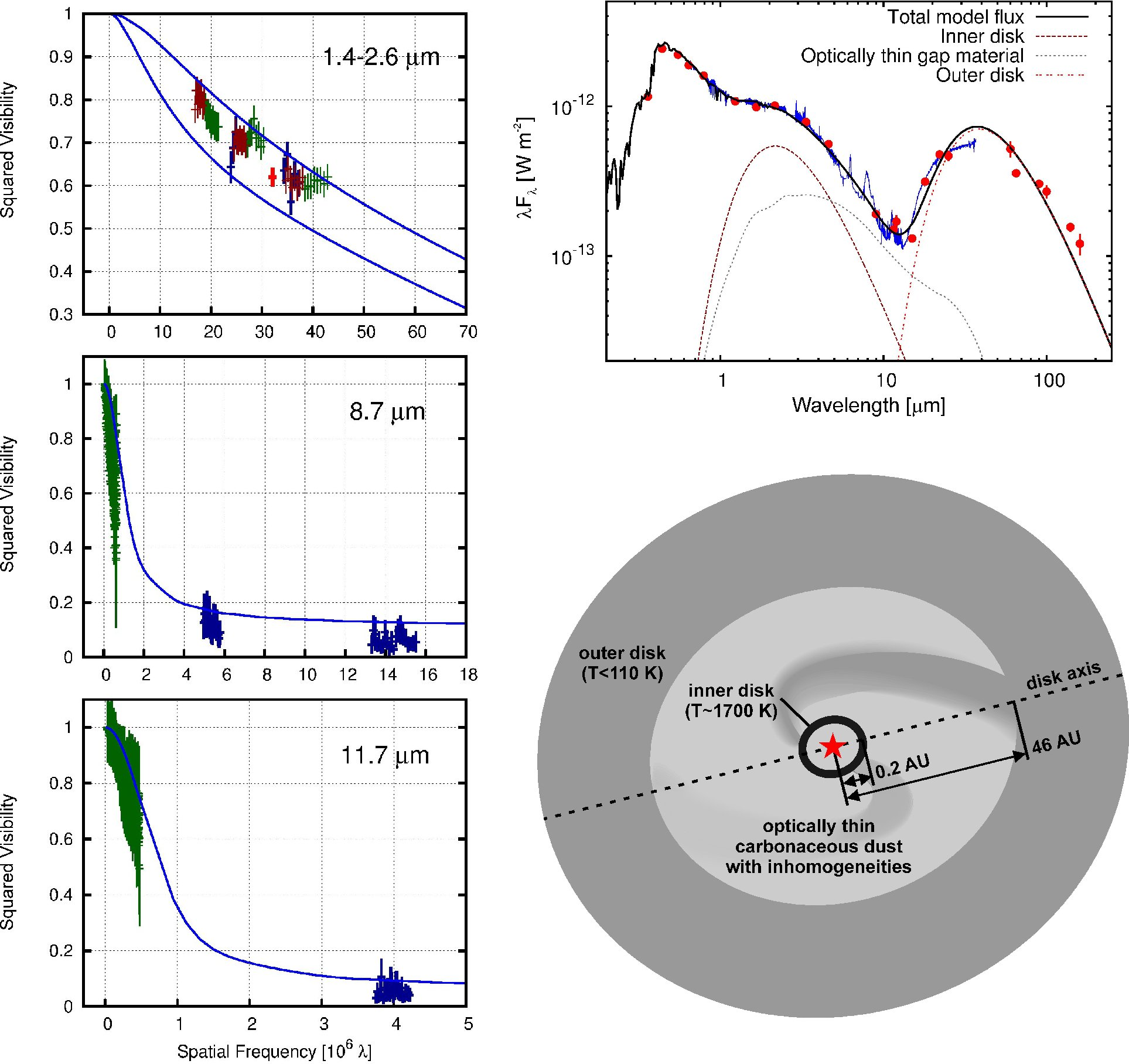
Figure 1: Multi-wavelength visibilities and SED constrain the disk geometry of V1247 Orionis, revealing an extended dust gap and complex disk architecture.
Spectrally dispersed mid-IR visibilities further allow spatial differentiation of continuum and PAH emission, indicating hydrocarbon features at larger stellocentric radii than the dominant dust continuum.
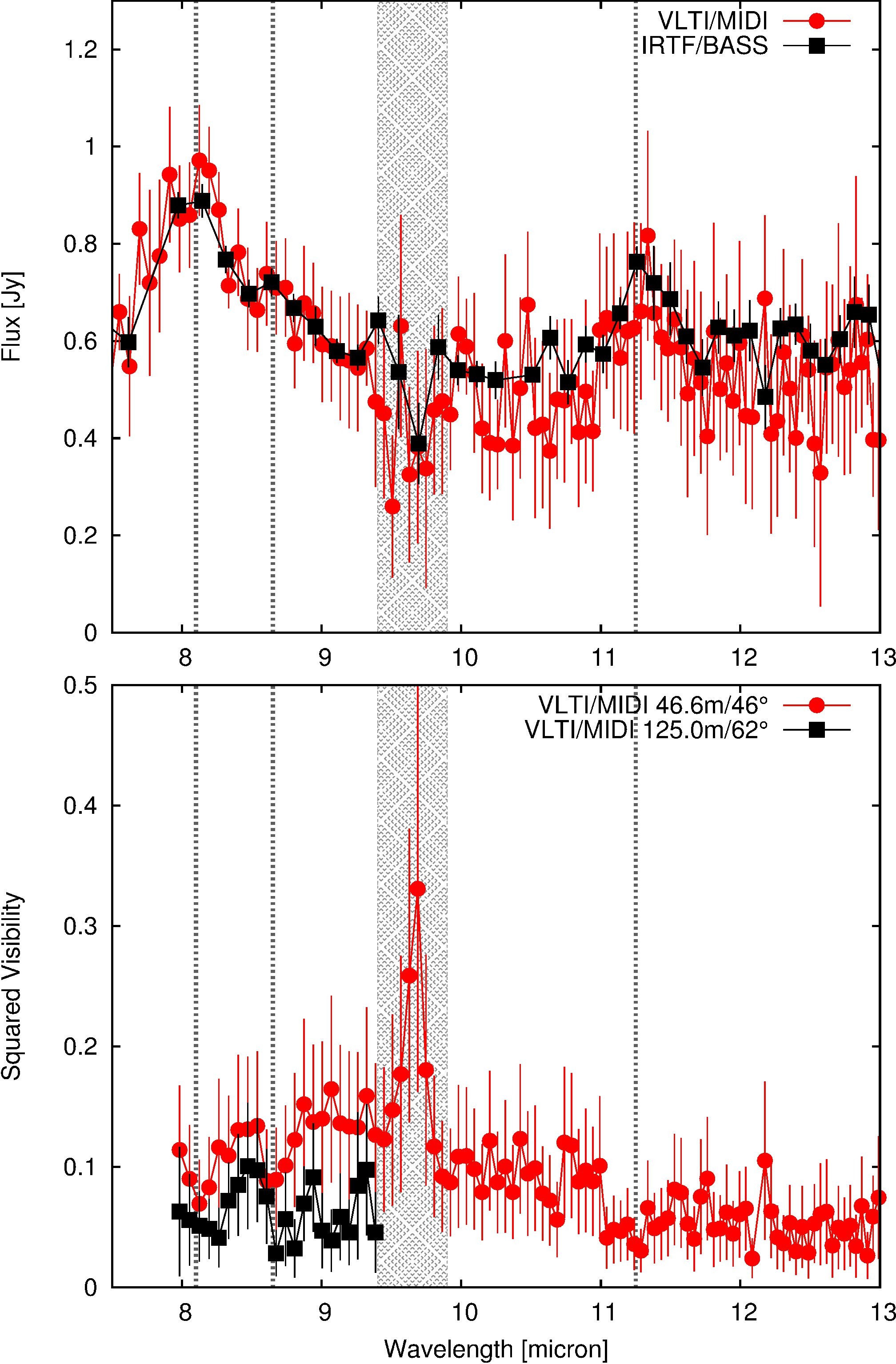
Figure 2: Mid-infrared visibilities during PAH features show a clear spatial separation from continuum emission, indicative of hydrocarbon processing in the outer disk.
Non-zero closure phase signals from aperture masking interferometry directly reveal asymmetric disk substructure within the gap, inconsistent with binary companions, implying dynamic interaction with possible planetary-mass bodies. This interplay is further corroborated by the anti-correlated NIR-MIR photometric variability, consistent with hydrodynamically induced disk warps or shadows from orbiting protoplanets.
Direct Spectro-Interferometry
Direct spectro-interferometric techniques utilize spectrally dispersed interferograms (e.g., VLTI/AMBER, CHARA/VEGA) to extract wavelength-dependent visibilities and differential phases over multiple spectral lines. The differential phase provides a robust measure of photocenter displacements between continuum and line emission, currently achieving sensitivities down to ∼0.012 mas for 100 m baselines.
Distinct application to the classical Be star ζ Tau demonstrates the utility of this approach. High spectral resolution coverage in the Brγ and Pfund series reveals velocity-resolved double-peaked profiles, with associated scans of phase and visibility across the line profiles. The associated photocenter displacements show blue and red-shifted emission on opposite sides of the disk, unambiguously resolving the rotation axis and spatial segregation of line-forming regions as a function of transition.
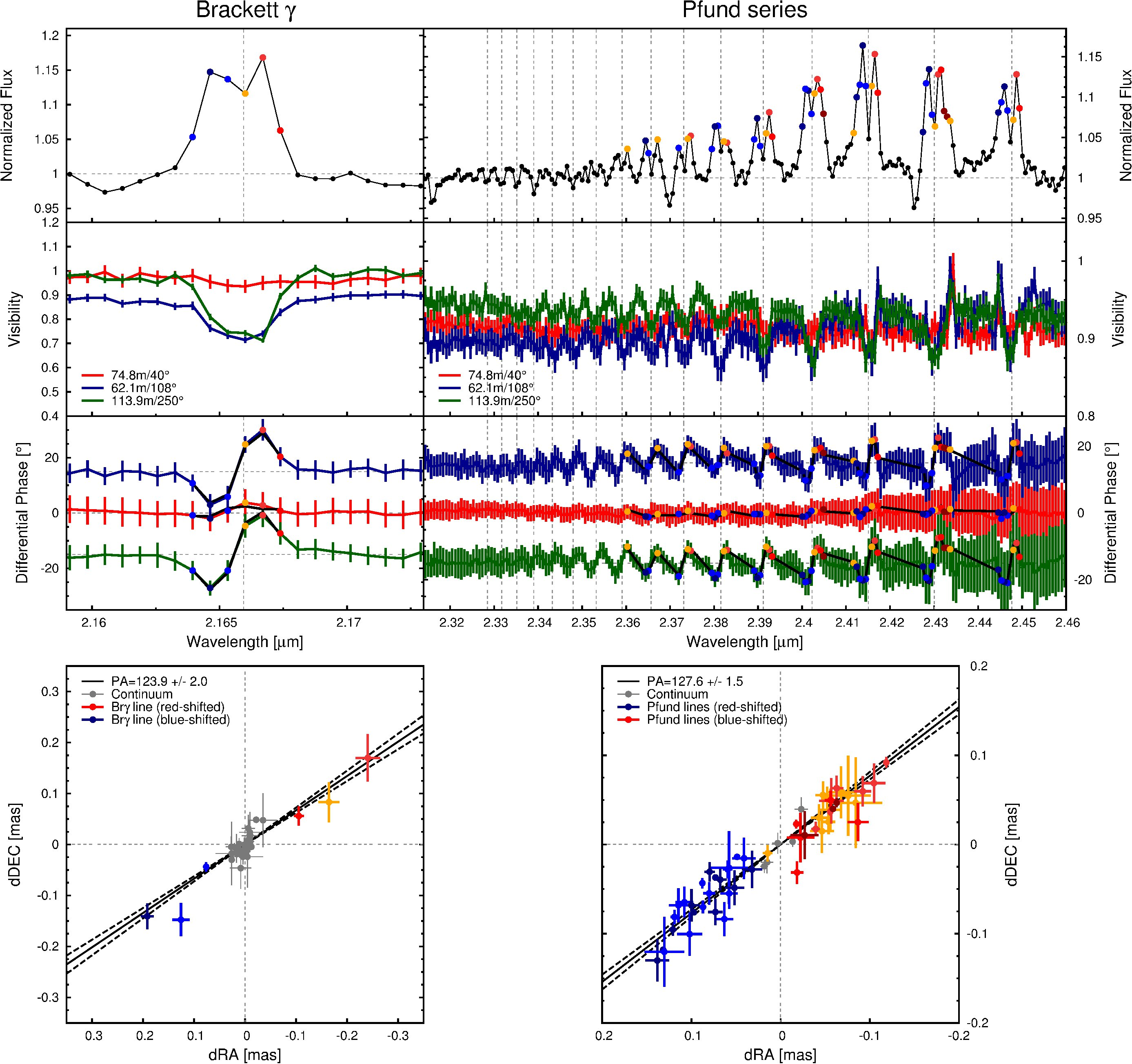
Figure 3: Spectro-interferometric observations of ζ Tau reveal the kinematic signature of disk rotation through line-resolved visibilities and photocenter displacements.
The spatial extent of various hydrogen transitions, recovered by this method, confirms Pfund emission emerges closer to the star relative to Brγ and Hα, in quantitative agreement with LTE disk models.
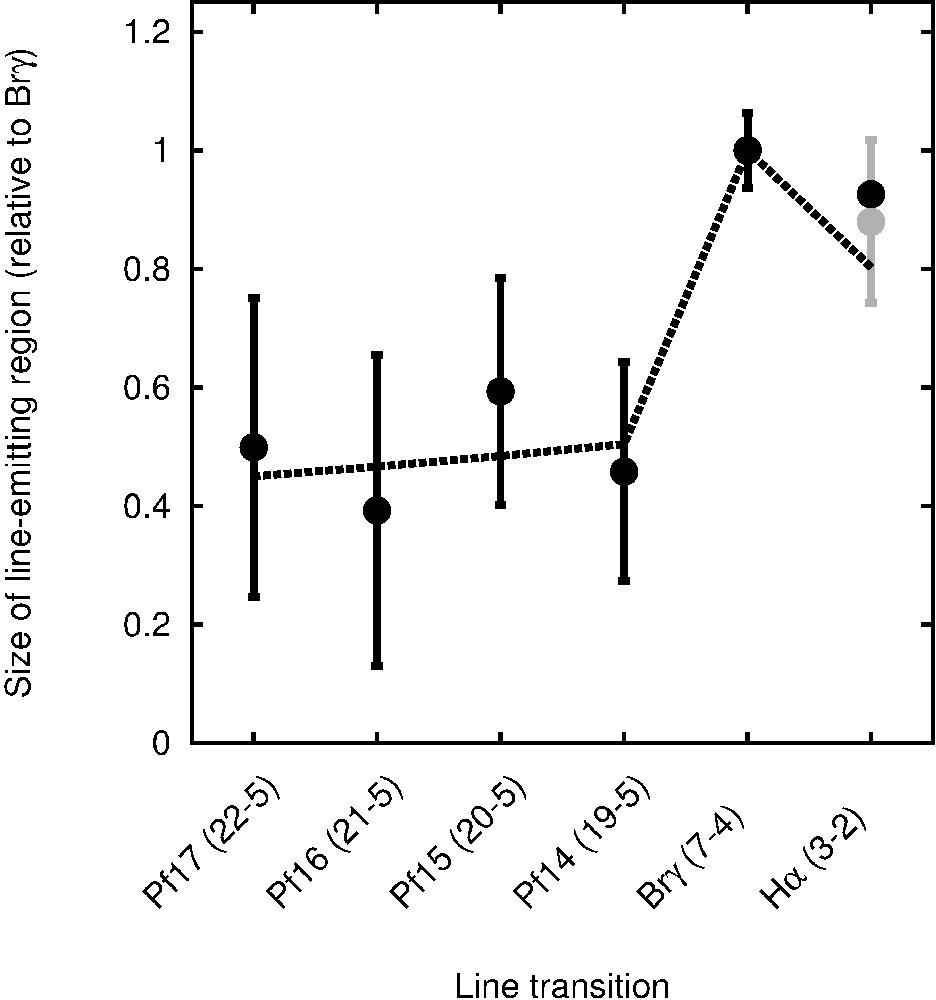
Figure 4: Measured radii for Hα, Brγ, and Pfund emission in ζ Tau empirically constrain the ionization and excitation structure of the decretion disk.
This direct channel mapping parallels techniques established at radio wavelengths and promises routine multi-velocity spatial imaging as uv-coverage improves.
Spectro-Astrometry as a Resource-Efficient Alternative
Spectro-astrometry leverages high-SNR, long-slit spectra to compute spatial centroid positions as a function of wavelength, offering sub-milliarcsecond sensitivity to asymmetric emission distributions. While it lacks direct imaging, when interpreted in conjunction with interferometric measurements, spectro-astrometric signals provide model-constraining power for kinematics and spatial distribution.
Observations of the B[e] star V921 Sco using VLT/CRIRES in multiple slit orientations produced spectro-astrometric signatures initially inconsistent with a disk: red-shifted line channels showed significant photocenter offsets, blue-shifted channels did not. However, model-independent interferometric imaging identified a close stellar companion, providing the missing context—stellar continuum is off-center, shifting the reference frame. Combined AMBER and CRIRES modeling then yielded a consistent Keplerian disk interpretation for the Brγ emission, and constrained the disk inner rim to ∼1.8 AU. This is in direct contrast to the outflow-dominated dynamics expected for a post-main-sequence B[e] decretion disk, providing decisive evidence for a pre-main-sequence classification.
Implications and Future Directions
These developments signify a transition from phenomenological SED fitting to physically grounded, direct measurement of spatial-kinematic disk structure. The joint application of spectroscopy and interferometry (including spectro-astrometry) uniquely disentangles degeneracies that have confounded disk-evolutionary interpretations for decades, especially in constraining gap clearing, disk warping, and the signatures of embedded protoplanets. As second- and third-generation spectro-interferometric instruments achieve higher spectral and spatial fidelity and expand their baseline geometries, routine velocity-resolved imaging and direct detection of planet-induced disk substructures will become feasible.
Furthermore, the methodologies articulated here present a template for epoch-resolved studies of time-variable phenomena, including accretion bursts, photometric occultations, and variability driven by disk-planet interaction. The combination of high-cadence spectroscopy and interferometric imaging will enable time-domain reconstruction of disk hydrodynamics at sub-AU resolution.
Conclusion
The integration of optical spectroscopy and interferometry, including spectro-interferometry and spectro-astrometry, enables decisive progress in resolving disk structure, kinematics, and evolutionary status in young and emission-line stars (1312.3835). Detailed case studies on V1247 Ori, ζ Tau, and V921 Sco illustrate the resolution of long-standing degeneracies and highlight the transformative potential of these approaches for constraining planet formation, disk evolution, and circumstellar gas dynamics.
Future technical advances and expanded multi-wavelength capability are expected to systematically address outstanding questions in star and planet formation and extend these methods to complex, dynamic, and extragalactic systems.