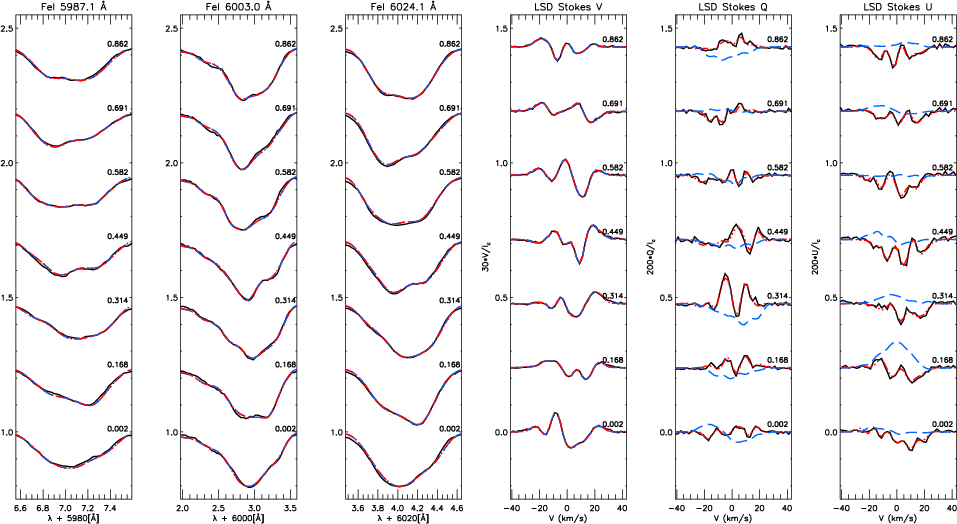
- The paper introduces a novel ZDI method that utilizes all four Stokes parameters for a more detailed magnetic field reconstruction.
- It employs Least-Squares Deconvolution of fully polarized spectra from CFHT observations of II Peg, significantly improving data analysis.
- Results show up to a 3.5-fold increase in magnetic energy and refined mapping of small-scale magnetic structures compared to traditional methods.
First Zeeman Doppler Imaging of a Cool Star Using All Four Stokes Parameters
Introduction
The study "First Zeeman Doppler imaging of a cool star using all four Stokes parameters" presents a compelling advancement in the characterization of magnetic fields in cool stars using Zeeman Doppler Imaging (ZDI). Traditionally, ZDI has focused primarily on circular polarization data (Stokes V) due to the technical challenges associated with detecting and analyzing linear polarization in cool stellar environments. This paper pioneers the application of a complete Stokes vector analysis (IQUV) to the magnetic field topology of the RS CVn binary star II Peg, revealing rich details about the star's magnetic structures that are otherwise inaccessible using partial Stokes data.
Methodology
The core innovation of this study is the holistic approach to Stokes parameter analysis. The researchers combined traditional temperature inversions with a new ZDI method that uses Least-Squares Deconvolution (LSD) profiles calculated from fully polarized spectrum synthesis. This approach allows for a more nuanced recovery of magnetic features by appropriately considering the intricate interactions between temperature inhomogeneities and magnetic fields.
The study is based on phase-resolved spectropolarimetric observations conducted with the ESPaDOnS spectropolarimeter at the CFHT, allowing the researchers to map both temperature and magnetic field distributions across two observational epochs: 2012.75 and 2013.05.
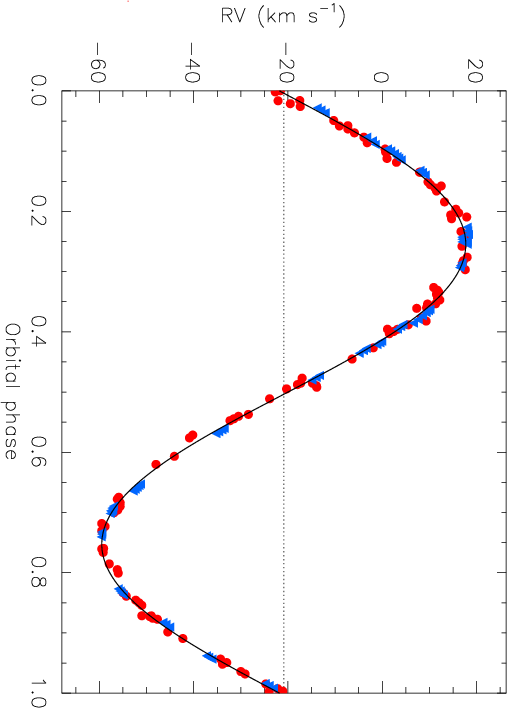
Figure 1: Radial velocity of II Peg as a function of orbital phase. The least-square fit is shown with the black solid line.
Results
LSD Profile Analysis
The observed LSD Stokes profiles exhibit marked complexity and variability across rotational phases. These profiles, as depicted in subsequent figures, underscore significant phase-dependent changes and showcase the enhancing effect of including linear polarization in magnetic inversions.
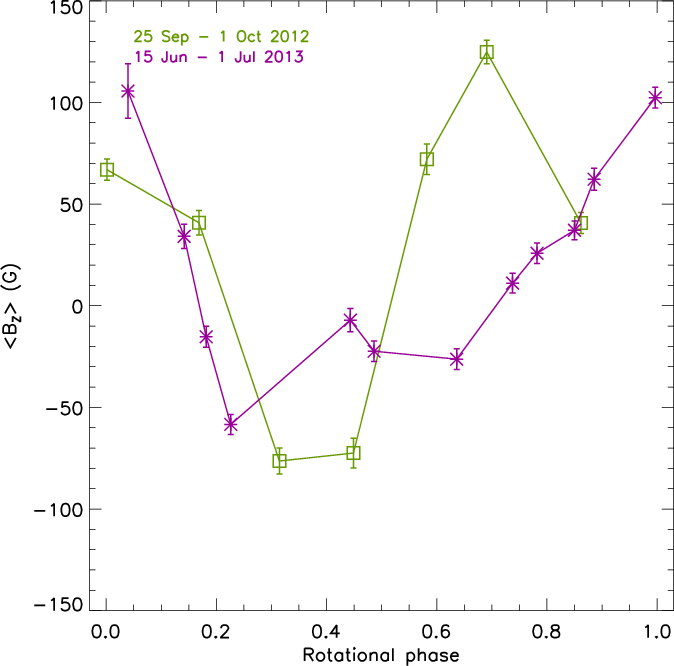
Figure 2: Mean longitudinal magnetic field of II Peg as a function of rotational phase. The green squares represent values from the 2012.75 set, and the purple stars from the 2013.05 set.
Magnetic Field Topology
The analysis yielded highly detailed magnetic maps, indicating that incorporating all four Stokes parameters leads to substantial differences in the derived magnetic field topologies compared to traditional Stokes IV inversions. Key observations include:
Energy Distribution and Extrapolated Fields
Energy distribution analysis (Figure 3) in terms of poloidal and toroidal components shows a more complex and intricate magnetic energy profile, demonstrating the nuanced structures that are recoverable when incorporating Stokes QU parameters.
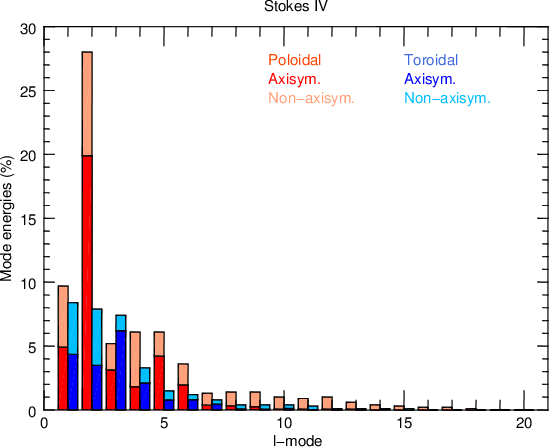
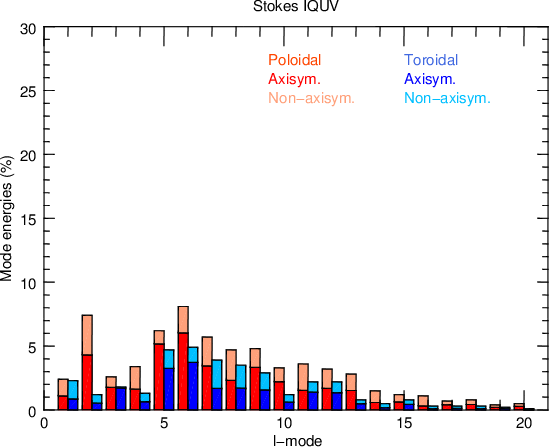
Figure 4: Distribution of the magnetic field energy between different spherical harmonic modes for the 2012.75 data set.
Discussion
The methodology and results underscore the importance of comprehensive Stokes parameter analysis in accurately characterizing the magnetic fields of active stars. The significant improvements in the fidelity of magnetic reconstructions highlight the limitations of classical ZDI methods relying solely on Stokes IV, which can underrepresent small-scale and weak-field structures.
The implications for astrophysics are substantial, as improved magnetic field modeling can influence our understanding of stellar evolution, dynamo mechanisms, and the interactions between stars and their environments.
Conclusion
The study rigorously demonstrates that including all four Stokes parameters in ZDI analyses provides markedly superior insights into stellar magnetic fields compared to analyses based solely on Stokes IV data. This advancement sets a precedent for more comprehensive stellar magnetism investigations in the future and stresses the need for further technical advancements to facilitate these enhanced observations across a broader range of stellar types.