- The paper establishes density results for s‑harmonic and Caputo‑stationary functions in Cⁿ, enabling precise local approximations absent in classical models.
- The paper introduces extension operators that transform nonlocal problems into weighted local PDEs, thereby transferring classical regularity estimates.
- The paper characterizes nonlocal minimal surfaces and boundary phenomena in variational problems, providing insights for both theoretical analysis and numerical simulation.
Some Nonlocal Operators and Effects Due to Nonlocality: An Expert Summary
Introduction and Scope
This work (1705.00953) provides a systematic and technical investigation of nonlocal operators, focusing primarily on the fractional Laplacian and fractional derivatives of Caputo and Marchaud types. The text develops both the analytic and probabilistic aspects of nonlocality, establishes connections with modern potential theory, and presents original results concerning regularity, approximation properties, and the subtle geometric phenomena exhibited by nonlocal minimal surfaces and related variational problems.
Probabilistic Motivation and Operator Definitions
A core framework in the study is the interpretation of the fractional Laplacian (−Δ)s as the infinitesimal generator of symmetric stable Lévy processes, replacing local diffusion with random walks permitting arbitrarily long jumps according to a specific probability kernel, as illustrated in (Figure 1).
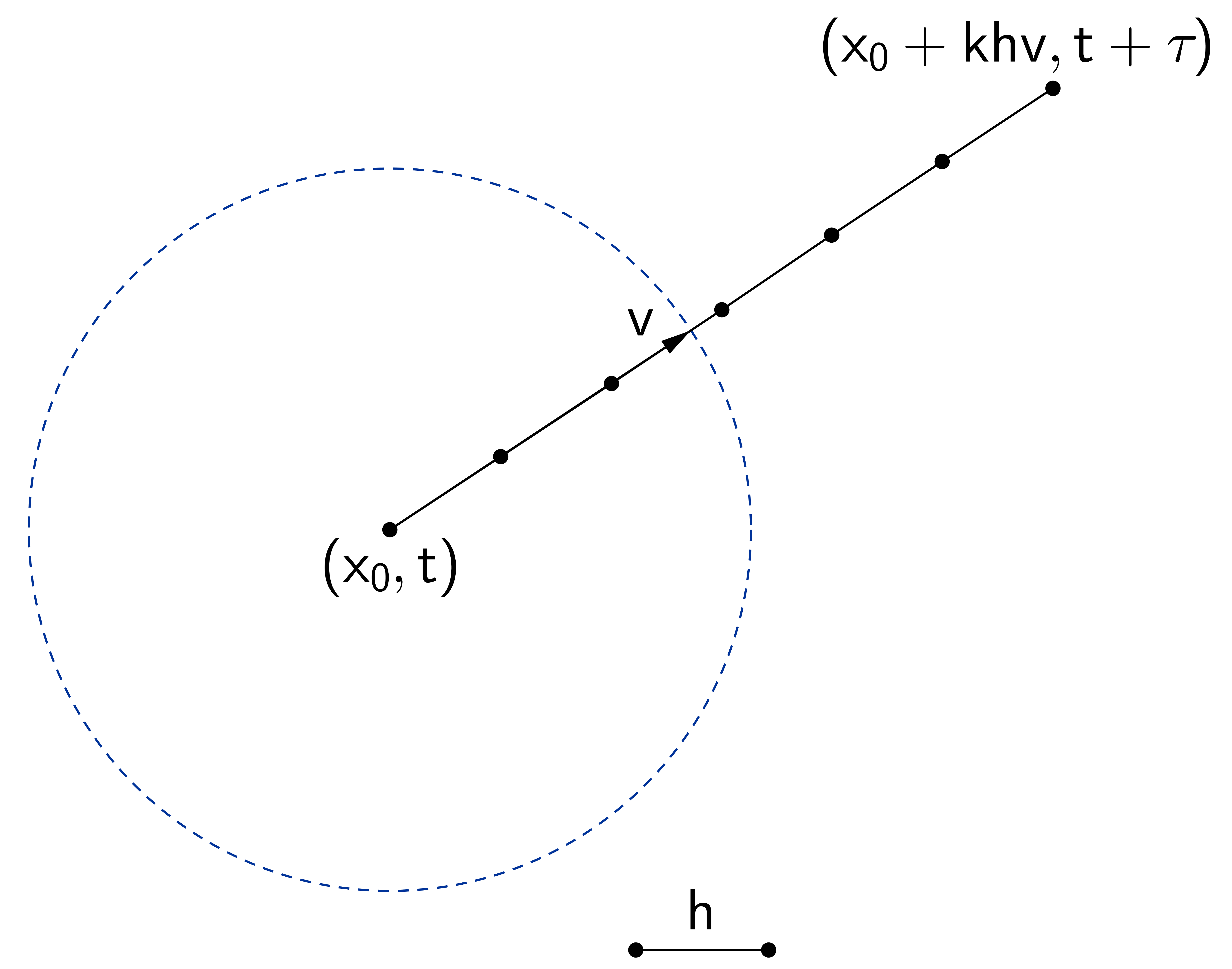
Figure 1: The random walk with jumps shows the probabilistic mechanics underlying fractional diffusion.
This probabilistic perspective generalizes to payoff-driven models where the exit behavior from a domain, driven by such jump processes, yields boundary data for s-harmonic functions, highlighting the nonlocal smoothing and propagation of information implied by the operator.
The theory is developed starting from classical representations in terms of principal value integrals, moments in Sobolev/Besov spaces, and as a Fourier multiplier with symbol ∣ξ∣2s. Rigorous justification for these equivalences is presented, as well as explicit computation of normalization constants, a nontrivial aspect given the singular kernels involved.
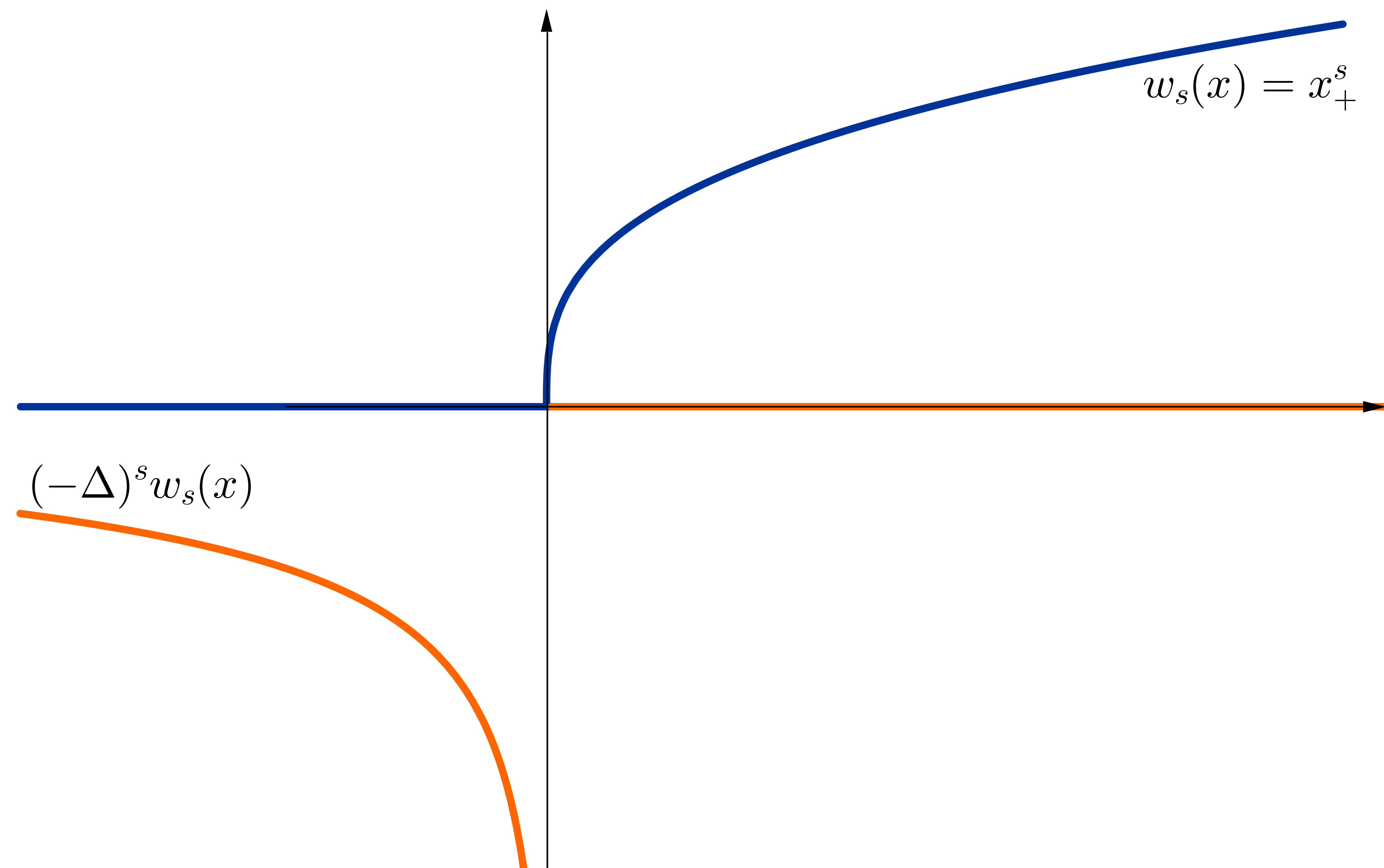
Figure 2: Canonical example of an s-harmonic function on the positive half-line.
Approximation Phenomena and Density Properties
A theme with no classical (local) analogue is established: every Ck function can be locally approximated arbitrarily closely (in Ck norm) by s-harmonic functions on open intervals, with support potentially disconnected from the approximation interval. The analytic construction relies on formulating appropriate boundary/exterior data for the nonlocal Dirichlet problem and then engineering the nonlocal interactions so as to tune the function and its derivatives to match arbitrary finite jets at a prescribed point.
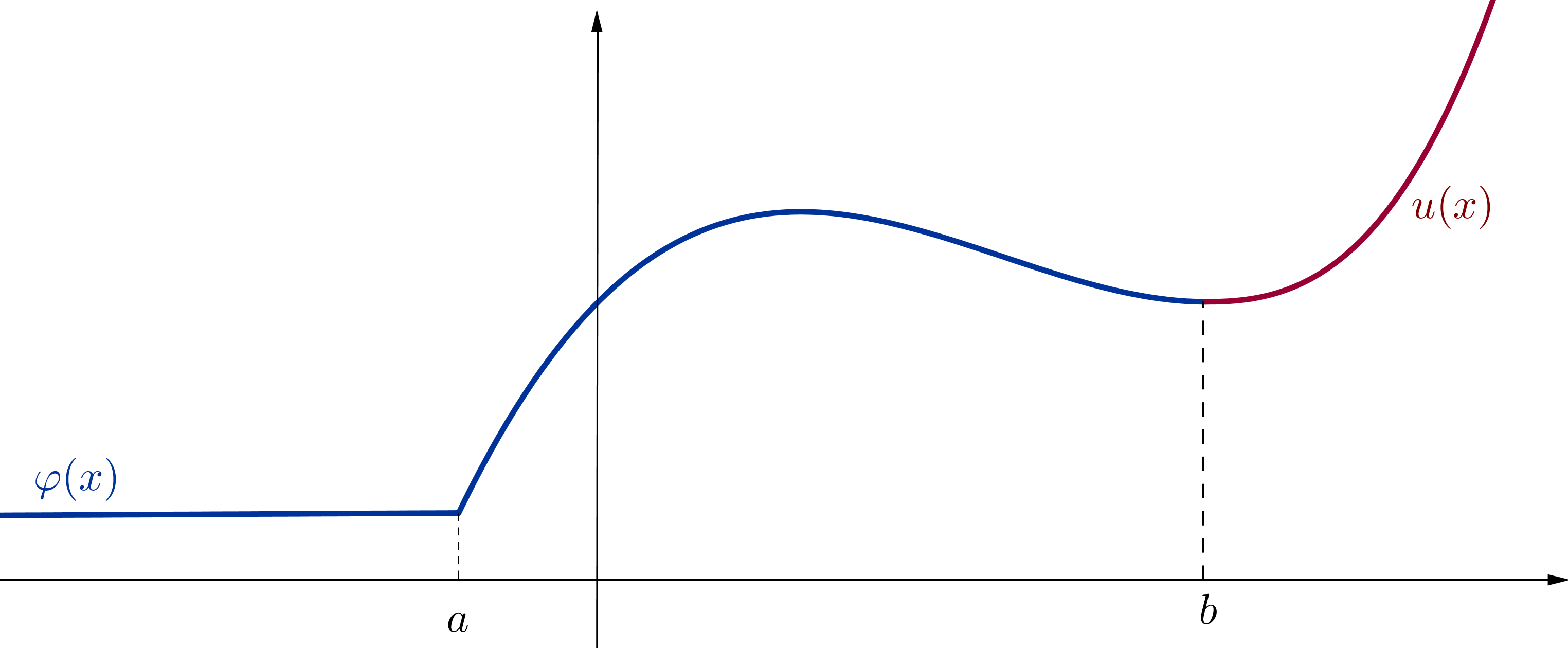
Figure 3: Caputo-stationary function in (b,∞) with boundary conditions on (−∞,b] demonstrates the flexibility in achieving prescribed behavior locally via nonlocal boundary data.
This property is transferred to the field of fractional derivatives: Caputo-stationary functions (those with vanishing Caputo fractional derivative in an interval) are also dense in Ck on any interval through analogous constructions. The proofs rely crucially on the linearity and long-range connections of the operators, as well as tailored sequence/approximation argumentations and rescaling procedures.
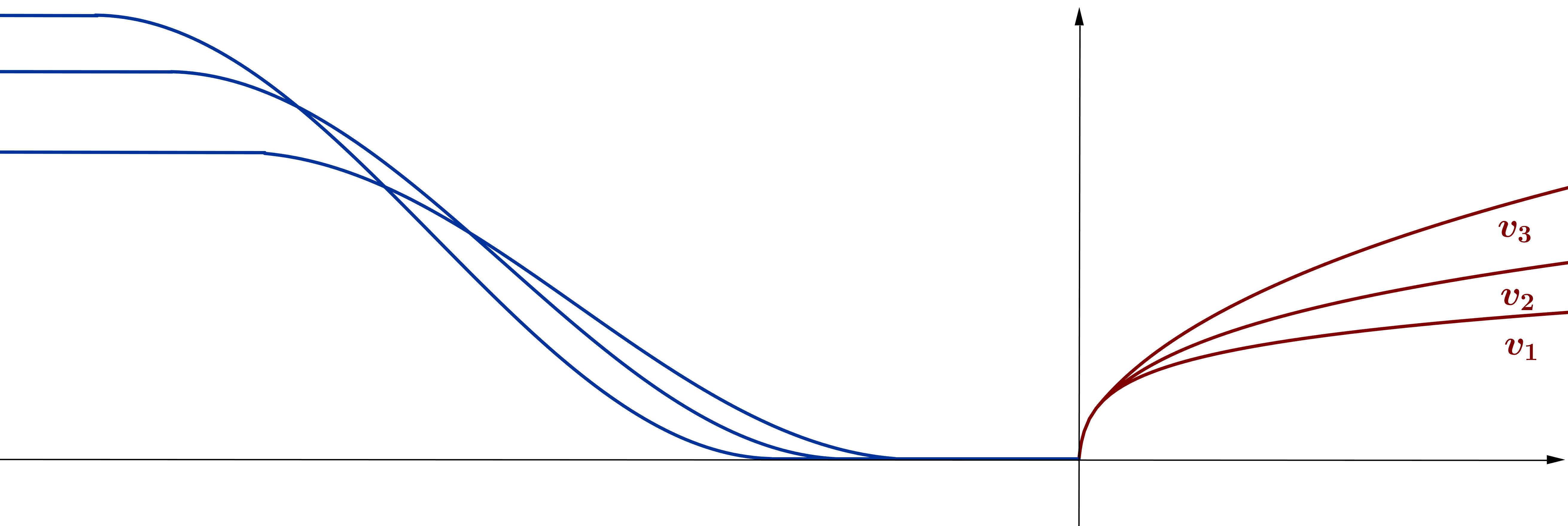
Figure 4: Sequence of Caputo-stationary functions in (0,∞) converging uniformly to xs on compacta, underlying density results.
Potential Theory, Schauder Estimates, and Harmonic Extensions
The potential-theoretic aspects are covered in detail, with explicit formulae for Green and Poisson kernels, solution representation theorems, and construction of fundamental solutions. This allows the paper to revisit regularity theory for nonlocal equations, producing a new proof of the Schauder estimate for (−Δ)su=f. The approach is direct and relies on potential theory, the properties of the singular kernel, and a dyadic decomposition similar to the harmonic case but adapted to the nonlocal scaling.
Extension Techniques for Nonlocal Operators
A significant technical innovation is the development of harmonic (Caffarelli–Silvestre) and parabolic (for Marchaud and Caputo-like derivatives) extension operators, which embed the evaluation of nonlocal expressions as traces of degenerate local PDEs on a higher-dimensional space. For Caputo and Marchaud derivatives, extension procedures provide both intuition and tools to port classical estimates (e.g., Harnack inequalities) into the nonlocal context.

Figure 5: Harmonic extension setup converts nonlocal problems into weighted local PDEs.
Nonlocal Variational Problems and Minimal Surfaces
The nonlocal Allen–Cahn and Peierls–Nabarro-type models analyzed encompass nonlocal phase transitions and crystal dislocation problems. Limit interfaces for vanishing ε or critical scaling are shown to converge to minimizers of the fractional perimeter—nonlocal minimal surfaces. The fine nature of these interfaces and their associated stickiness and regularity properties are explored, including bifurcations and threshold behaviors as the order s varies.
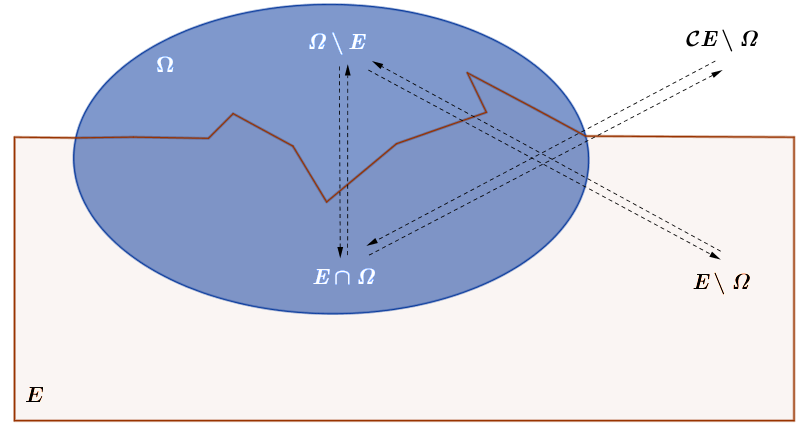
Figure 6: Fractional perimeter induces nonlocal interactions governing interface geometry.
Boundary phenomena are highlighted: for small s, minimal sets can "stick" to the boundary in a topologically dense manner or even be empty, depending on the asymptotic density of the boundary data at infinity. This results in optimal classification theorems distinguishing between the measure-theoretic occupancy of the domain and its exterior, as well as critical threshold effects.
Caputo and Marchaud Derivative Results
The density result for Caputo-stationary functions is established, with full technical details, including the construction of functions matching arbitrary finite Taylor jets at a point. For the Marchaud derivative, an extension operator in a higher-dimensional space is introduced, allowing reduction to a degenerate parabolic local PDE and transfer of classical regularity to the nonlocal setting.
Strong Claims and Numerical Behavior
- Caputo-stationary and s-harmonic functions are locally dense in smooth function spaces—contrasting sharply with the rigidity of their integer-order analogues.
- Boundary stickiness/empty interior for nonlocal minimal surfaces at small s is classified precisely in terms of asymptotic boundary data.
- Extension operators allow for the transfer of regularity and maximum principles from the local to the nonlocal setting—even for operators with apparent causality/memory constraints.
- Explicit constants, modulation equations, and asymptotics are provided throughout for Green functions, fractional Sobolev inequalities, and regularity exponents.
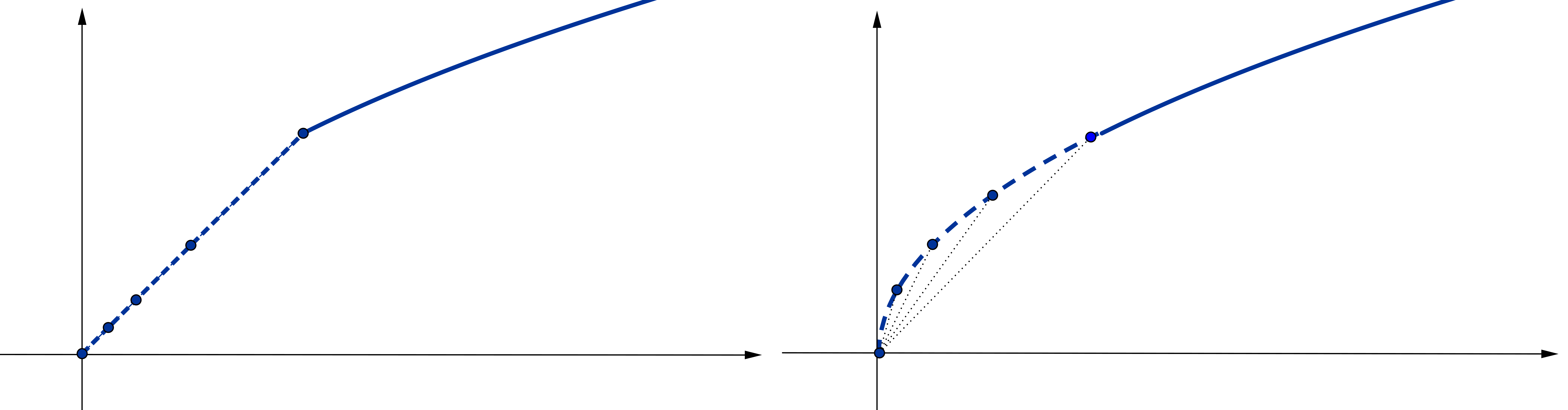
Figure 7: Payoff model, illustrating the difference in expected values and function profiles between local (s=1) and nonlocal (s<1) diffusions.
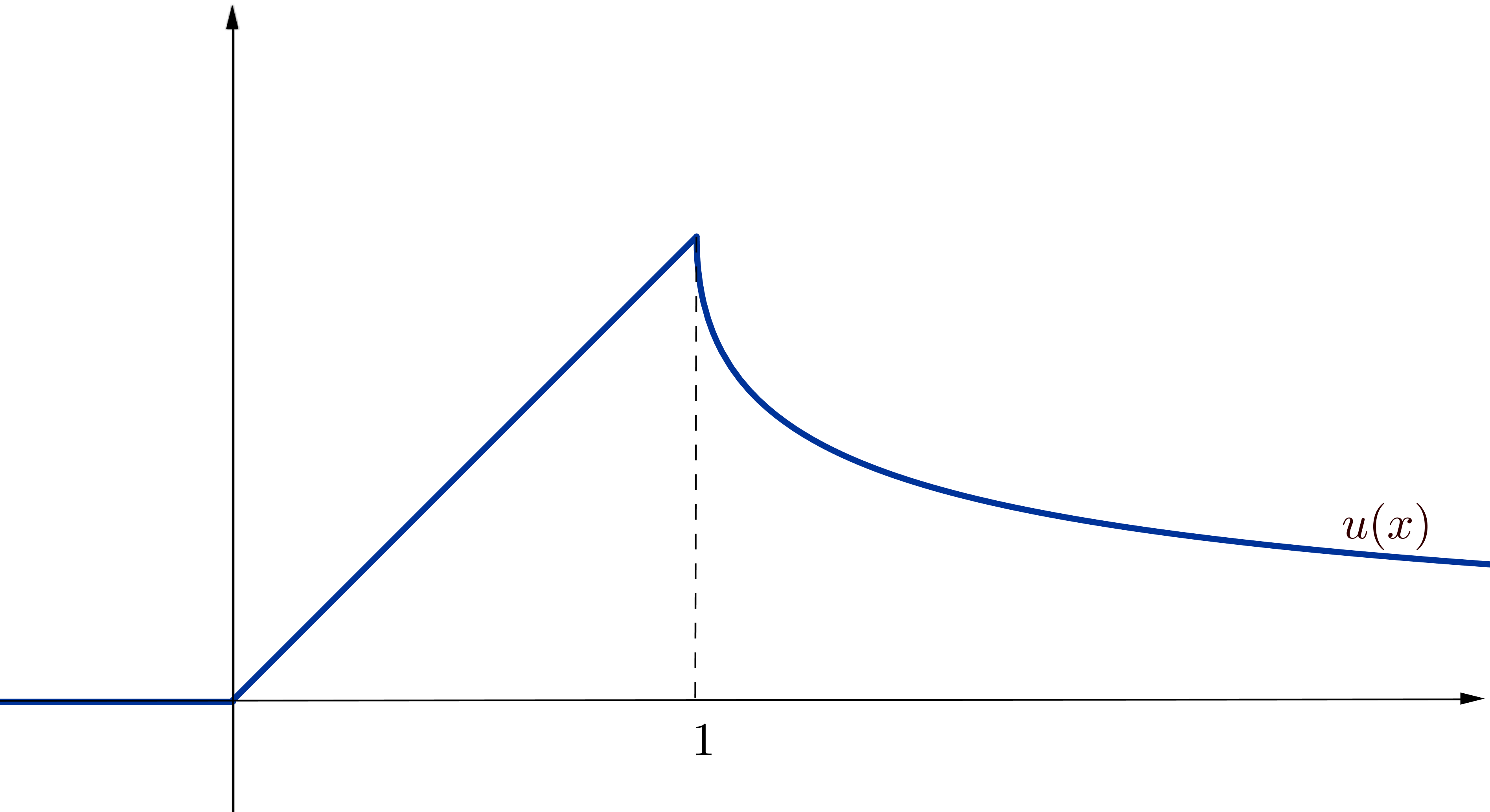
Figure 8: Fine-tuning Caputo-stationary functions via nonlocal boundary data to achieve prescribed Taylor expansions.
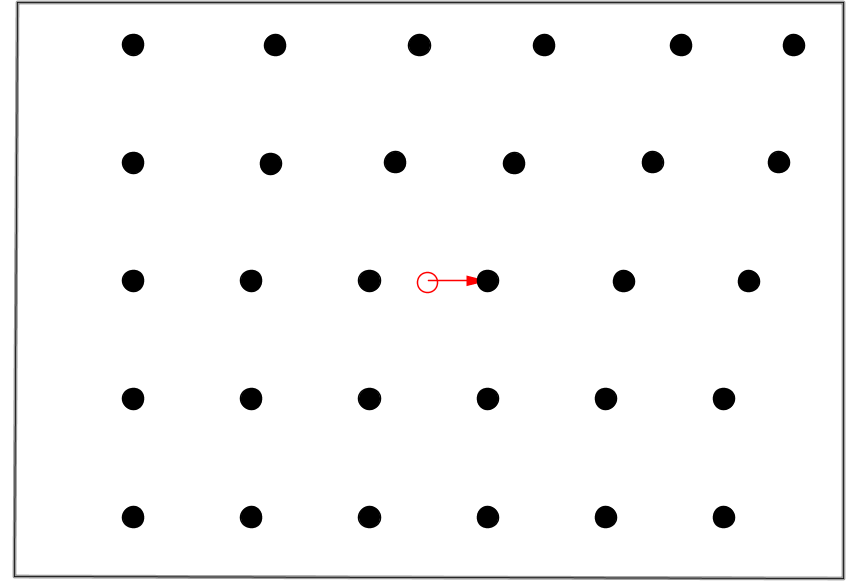
Figure 9: Crystal dislocation model motivating nonlocal geometric variational principles.
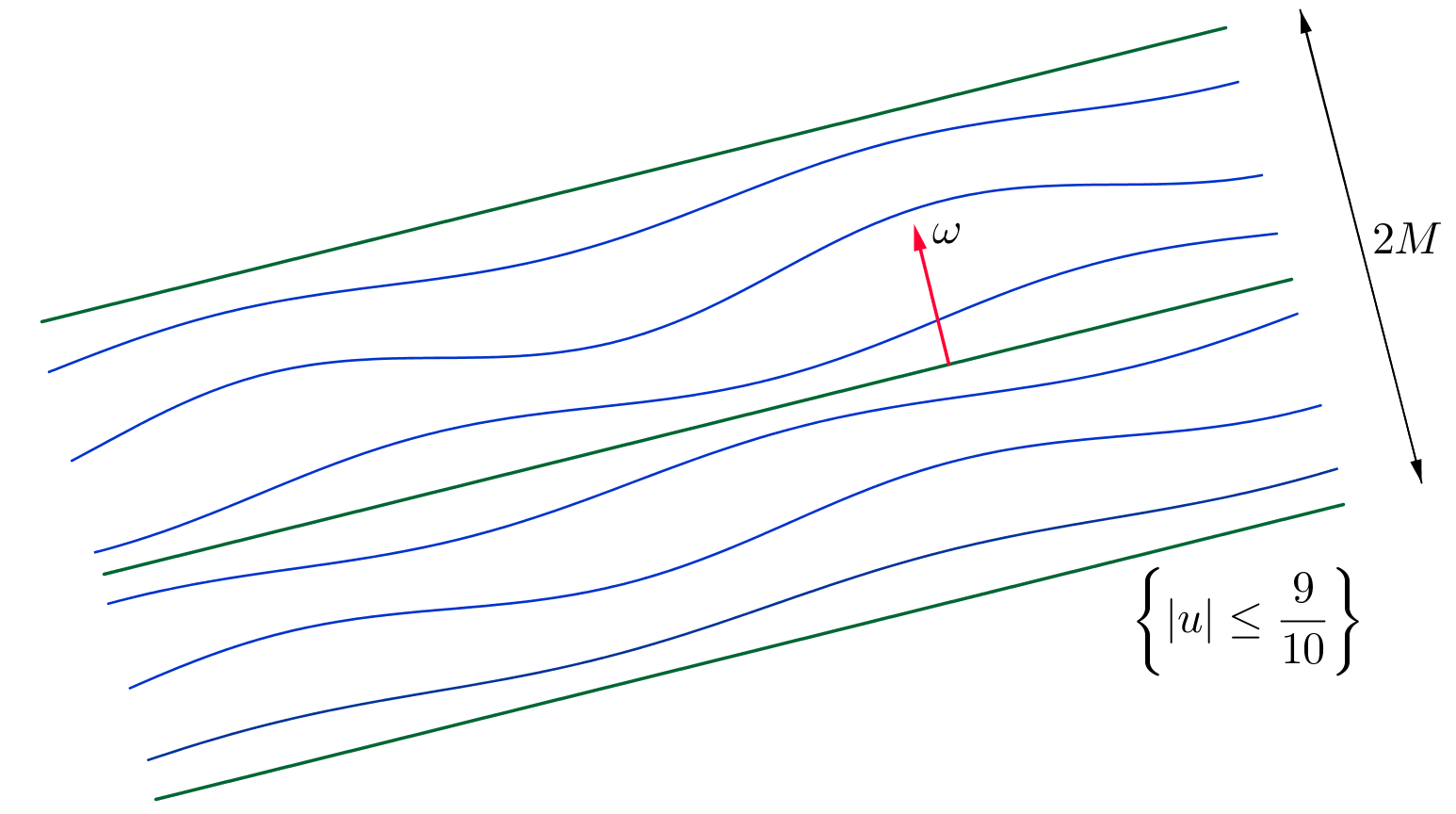
Figure 10: Behavior of minimal solutions and periodic microstructure under nonlocal perimeter minimization.
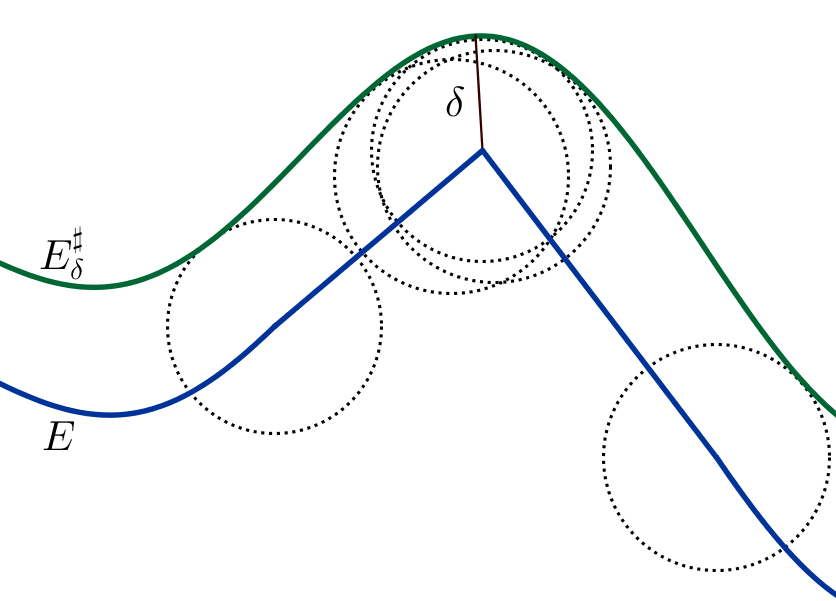
Figure 11: Illustration of nonlocal geometric operations, such as supconvolution, central in fractional isoperimetric problems.
Theoretical and Practical Implications
The density and approximation properties of nonlocal stationary functions shed light on the exceptional flexibility introduced by long-range interactions and indicate that nonlocal regularizers (e.g., in nonlocal models in PDE, imaging, or signal processing) display much less structural rigidity than their local counterparts. The rigorous understanding of stickiness and empty interior phenomena for s-minimal sets informs both the mathematical modeling of nonlocal variational problems and their numerical simulation, as such effects must be considered in both analysis and algorithm design.
The extension operator techniques open up a pathway to importing the arsenal of local PDE estimates and methods to nonlocal problems, with practical implications in the analysis and simulation of memory and hereditary systems.
Outlook and Future Directions
Potential future directions include:
- Analysis of nonlocal minimal interface regularity and singularity formation for s near critical thresholds.
- Transfer of the extension and density techniques to nonlocal nonlinear evolution problems.
- Exploration of nonlocal phase transition dynamics, mixing probabilistic and variational methods, especially in random media.
- Detailed investigation of the implications of approximation flexibility for inverse and control problems constrained by nonlocal operators.
Conclusion
The thesis presents a rigorous and deep exploration of nonlocal elliptic and parabolic operators, their probabilistic, analytic, and geometric properties, and delineates both classical and novel phenomena resulting from nonlocality. The results and methods developed provide critical tools for both the analysis of nonlocal PDEs and their applications in physics, biology, and materials science, highlighting the qualitative and quantitative differences from local models and setting the stage for further advances in the understanding of nonlocal effects and their mathematical treatment.