- The paper demonstrates that the STP mechanism incentivizes drivers through subgame-perfect equilibrium, reducing disruptive strategic relocations.
- It employs dynamic trip pricing based on welfare contributions and travel costs, effectively resolving mispricing issues.
- Simulations show that the STP mechanism outperforms traditional myopic pricing by enhancing social welfare and stabilizing driver earnings.
In the paper "Spatio-Temporal Pricing for Ridesharing Platforms" (1801.04015), the authors propose a new mechanism for pricing in ridesharing platforms that ensures drivers have the incentive to accept trips assigned to them continuously, rather than engage in strategic behavior that may disrupt service delivery such as relocating based on price surges. The mechanism promises smoother pricing both spatially and temporally, aligning with the mission of ridesharing platforms to provide reliable and flexible transport services.
The Spatio-Temporal Pricing (STP) Mechanism
Overview
The paper introduces the Spatio-Temporal Pricing (STP) mechanism, a model that operates under complete information and optimizes for social welfare, which is defined as rider values minus driver costs including travel and opportunity costs. Instead of using dominant strategy equilibrium, the mechanism relies on subgame-perfect equilibrium among drivers to ensure efficiency in trip acceptance.
Implementation
The STP mechanism operates by setting trip prices based on the welfare contribution of having an additional driver at both the origin and destination of a trip, plus the driver’s travel cost. This method resolves mispricing issues and inappropriate incentivization for drivers, ensuring that the prices reflect true market conditions.
Algorithm Outline:
- Compute Initial Plan: At the beginning of the planning horizon, compute a competitive equilibrium (CE) plan involving dispatch rules and payment structures based on driver-pessimal CE prices.
- Driver Dispatch: Assign available drivers to trips or relocations such that the strategy aligns with maintaining efficiency and balancing the market.
- Payment Structure: Present dynamic trip pricing where trip prices (a,b,t) are calculated as:
pa,b,t=Φa,t−Φb,t+(a,b)+ca,b,t
where Φa,t represents the welfare gain from an additional driver at location a and time t.
Key Properties
- Subgame-Perfect Incentive Compatibility (SPIC): Incorporates strategic-reasoning to motivate drivers to accept dispatches, with optimal decisions at every sub-stage of dispatch history.
- Core Selection & Envy-Freeness: The mechanism aligns pricing such that no group of drivers or riders can form an alliance to out-compete existing prices, ensuring fair treatment across all actors.
- Temporal Consistency: Adjusts to deviations without resorting to penalties or threats to driver position, important for real-time flexible work arrangements.
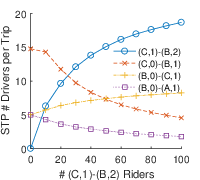
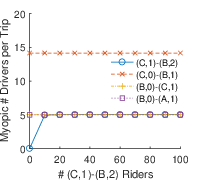
Figure 1: The STP mechanism ensures drivers uniformly follow the dispatch due to the incentive-aligned pricing structure.
In simulated scenarios comparing the STP mechanism to a traditional myopic pricing mechanism – which clears prices based on immediate demand and supply without future consideration – the STP consistently outperformed in terms of social welfare and time efficiency for drivers. It reduced event-driven price volatility and exhibited minimized variance in driver earnings, key issues in current models.
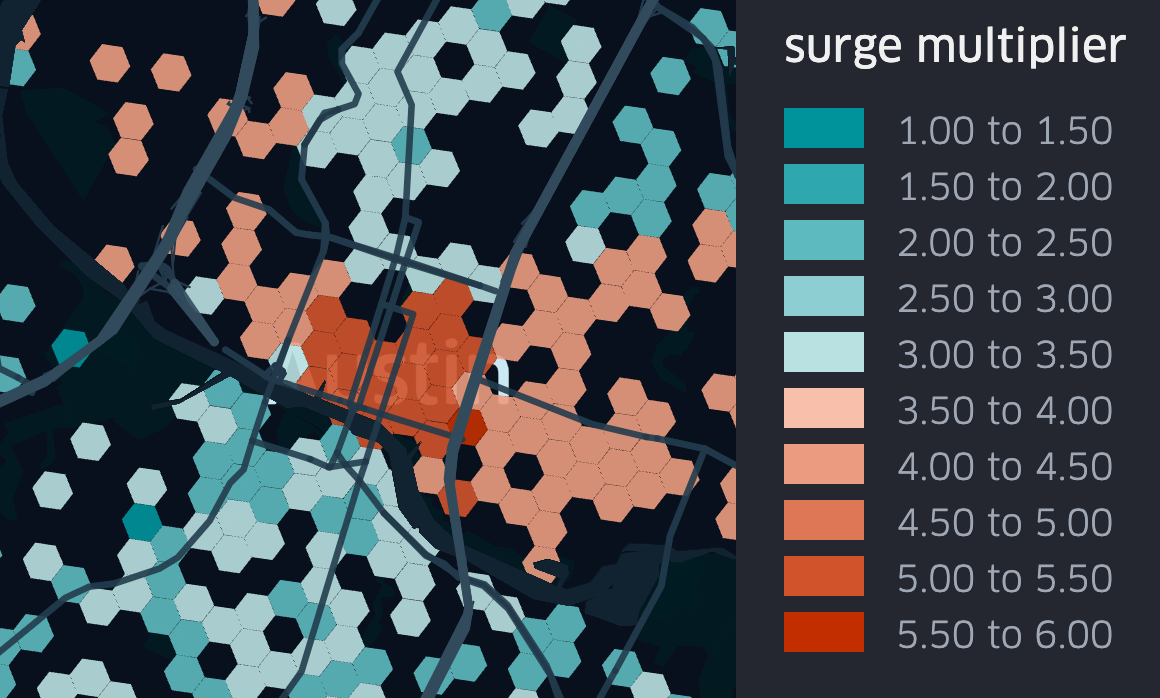
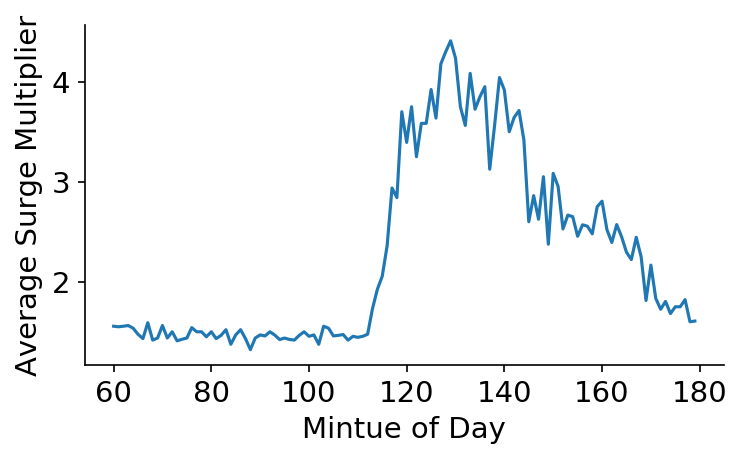
Figure 2: Spatial mispricing with conventional methods leads to drivers "chasing the surge". STP offers more balanced prices.
Implications and Future Work
The Spatio-Temporal Pricing mechanism presents a substantial leap in solving long-standing inefficiencies within ridesharing platforms, notably mispricing and service unreliability due to strategic driver behavior. By providing a structured economic model that dynamically balances trip costs and driver incentives, it enhances fair and efficient market operation.
Potential Developments
- Adaptation to Asymmetric Information: Future work could expand the model's application to scenarios where both drivers' and riders' preferences might not be fully observable, requiring mechanisms to elicit these reliably.
- Integration with Predictive Analytics: Adoption of forecasting for supply-demand dynamics could enhance the precision of welfare estimation and strengthen the robustness of the pricing model under uncertainty.
Conclusion
The STP mechanism addresses the inefficiency in spatial and temporal pricing on ridesharing platforms, ensuring drivers consistently accept their dispatches without needing strategic maneuvering. This optimization method not only promises improved service reliability but also fairness across drivers and riders, paving the way for advanced applications and emerging dialogues in dynamic networked economies.