- The paper introduces NetMix, a novel framework that automatically generates network models by optimally blending multiple generative processes using genetic algorithms.
- It achieves high fidelity replication of network characteristics, significantly reducing error in both synthetic and real-world evaluations.
- NetMix’s flexible design supports integration of additional processes, making it adaptable for diverse applications including network extrapolation and anonymization.
Automatic Generation of Adaptive Network Models Based on Similarity to the Desired Complex Network
This paper introduces "NetMix," a novel approach to the automatic generation of network models adapted to targeted complex network features using genetic algorithms. The research presents an innovative framework that composites multiple generative network processes to produce graphs akin to specified target networks.
Introduction
In recent years, the focus on modeling complex networks has escalated due to their omnipresence in systems such as social, biological, and technological domains. Traditional network models, like the Barabási-Albert or Watts-Strogatz models, are limited due to their rigid structure which inherently supports only a subset of desirable network features. To overcome this limitation, the authors propose a method whereby a mixture model, adaptive to a network's specific features, is automatically constructed for each desired network.
Proposed Methodology
Genetic Algorithm Design
The framework leverages a genetic algorithm (GA) to find optimal mixture configurations. Each individual in the GA population represents a configuration of process probabilities and parameters within the network model:
- Chromosome Encoding: Comprises of process probabilities (Pi) and configuration parameters (ri) for each candidate process (ci).
- Fitness Function: Utilizes NetDistance, which evaluates the dissimilarity between synthesized and target networks.
- Evolutionary Operators: Employ tournament selection, crossover, and mutation.
Network Process Composition
The candidate network processes incorporated within this framework include:
- Transitive/Random Attachment (TRA): Combines elements of the Watts-Strogatz model for high clustering and small-world characteristics.
- Preferential Attachment (PA): Mirrors the Barabási-Albert process for generating scale-free networks.
- Modular Attachment (MA): Supports the formation of community-structured modular networks.
- Assortative/Disassortative Mixing (ADM): Adjusts degree assortativity to align with the target network's characteristics.
Framework Execution
For each target network, the GA optimizes the process mixture and parameters, iteratively evolving configurations that yield synthetic networks with minimized error relative to the target's properties.
Experimental Evaluation
The framework's performance was scrutinized against both synthetic and real-world networks, with NetMix demonstrating superior fidelity in feature replication.
Synthetic Network Replication
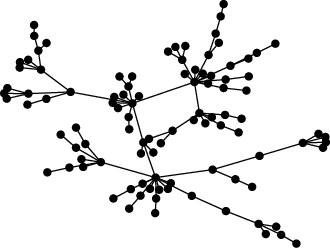
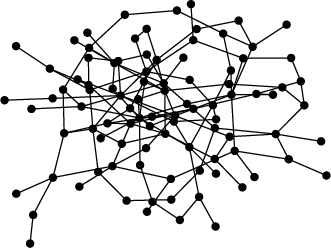
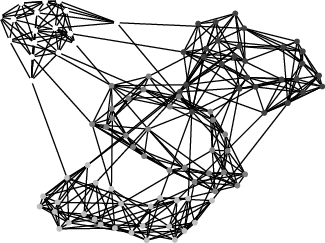
Figure 1: Sample graphs generated by our proposed method which are adapted to different target networks.
Degree distribution analyses (Figure 2) affirm NetMix's proficiency in replicating the specific characteristics of networks generated by classical models, such as the Barabási-Albert and Watts-Strogatz.
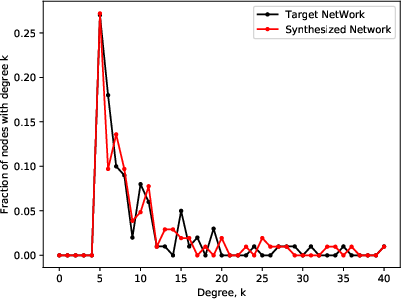
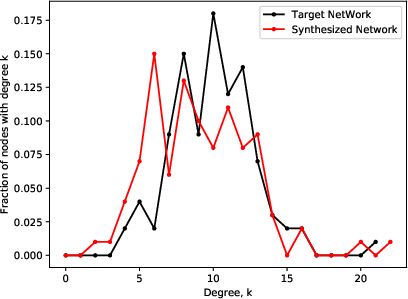
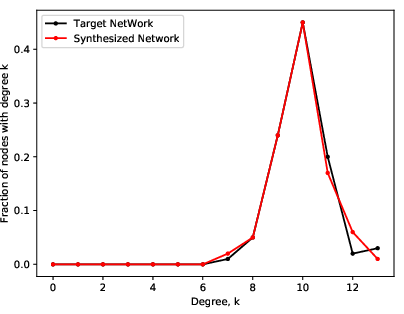
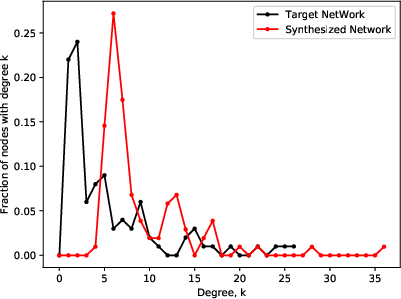
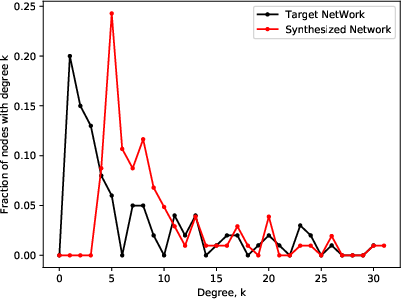
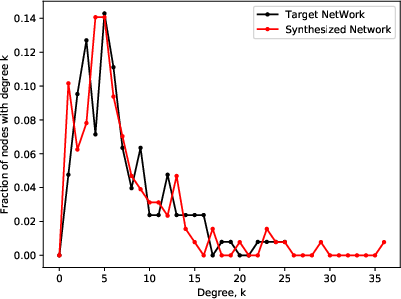
Figure 2: The degree distribution of networks synthesized by NetMix compared to their corresponding target graphs.
Real-World Network Application
NetMix's efficacy was further validated against a diverse array of real-world networks, including social, biological, and infrastructural datasets. As shown in Figure 3, NetMix consistently achieved lower average errors across a range of network properties compared to existing models like ABNG and classical network models.
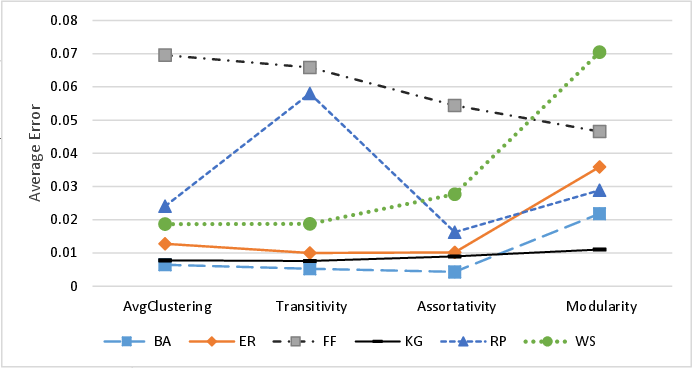
Figure 3: Average error of different methods for various properties in the real-world networks dataset.
Discussion and Implications
NetMix is uniquely positioned to accommodate various network structures and sizes, proving its versatility for applications like network extrapolation and anonymization. Its design allows for easy integration of additional generative processes, making it an adaptable solution for evolving network modeling demands.
Conclusion
NetMix represents a significant advancement in automatic network generation, effectively bridging the gap between theoretical complexity and practical applicability in network synthesis. Future work intends to extend the capabilities of NetMix by incorporating additional network processes and refining the GA-based optimization.
This framework has the potential to redefine adaptive network modeling by offering a robust approach that is both flexible and efficient across diverse network typologies.