- The paper presents a QCNN framework that reduces variational parameters to O(log(N)) for efficient quantum many-body problem solving.
- It integrates MERA and quantum error correction principles to accurately detect symmetry-protected topological phases and characterize phase transitions.
- The architecture optimizes quantum error correction and is implementable on current hardware, advancing quantum machine learning applications.
Quantum Convolutional Neural Networks
Introduction
The paper presents an innovative approach blending quantum mechanics and machine learning through the development of Quantum Convolutional Neural Networks (QCNNs), leveraging quantum computing capabilities to efficiently address complex quantum many-body problems. QCNNs utilize O(log(N)) variational parameters, offering efficient training and deployment on near-term quantum devices. The QCNN architecture extends principles of Convolutional Neural Networks (CNNs) into the quantum field by combining the Multi-scale Entanglement Renormalization Ansatz (MERA) and principles of Quantum Error Correction (QEC).
QCNN Circuit Model
The QCNN framework takes inspiration from classical CNNs by utilizing hierarchical, translationally invariant structures for processing quantum data. Each QCNN involves sequences of convolutional and pooling layers that effectively reduce input state complexity until a smaller, manageable representation is achieved, followed by fully connected layers to resolve classification tasks.
In contrast to classical CNNs, QCNNs incorporate quantum operations like controlled-unitary gates and qubit measurements that introduce entanglement and non-linearities. Critically, QCNNs exhibit a significant parameter reduction, allowing for scalable implementation on current quantum hardware.
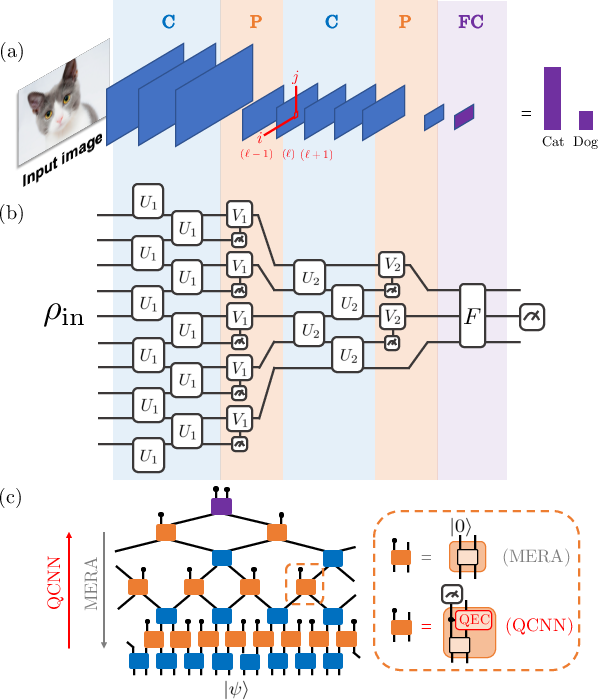
Figure 1: A conceptual diagram illustrating the similarities between classical CNNs, QCNNs, and the MERA approach.
Detecting 1D Symmetry-Protected Topological Phases
QCNNs demonstrate their utility through accurate identification of quantum states in a 1D symmetry-protected topological (SPT) phase, particularly detecting phases synonymous with the S=1 Haldane chain. By encoding quantum states' non-local properties within the QCNN framework, the architecture efficiently outputs the entire phase diagram, indicating phase transitions with high fidelity.
This accuracy is achieved by leveraging properties inherent in quantum mechanical systems such as entanglement and quantum error correction, constructing circuits that mimic renormalization group flow.
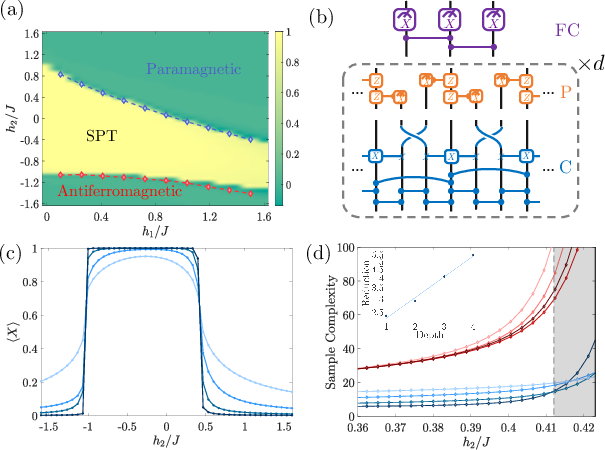
Figure 2: The QCNN circuit efficiently distinguishes phase transitions between SPT and paramagnetic phases.
Multiscale String Order Parameters
The paper illustrates the advanced capability of QCNNs to average over multiscale string order parameters, integrating contributions across various scales, enhancing the detection sharpness near critical phase transition points. This multiscale averaging effectively reduces the sample complexity compared to conventional string order parameter detection methods.
Quantum Error Correction Optimization
QCNNs extend beyond phase detection by optimizing QEC codes under unknown error models. By leveraging the QCNN structure to form both encoding and decoding schemes, the architecture significantly outperforms established quantum codes under specific conditions, especially when faced with correlated error models. The enhancement augments conventional error correction by adapting to anisotropic and correlated error landscapes.
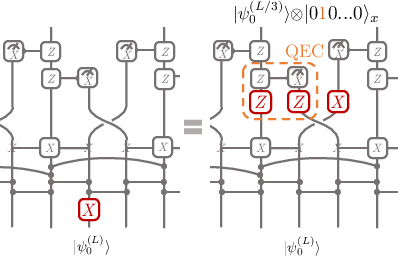
Figure 3: QCNN-enhanced QEC strategy demonstrating superior performance over conventional Shor code.
Implementation and Experimental Prospects
The paper discusses the practical applications and implementation feasibility of QCNNs on contemporary quantum hardware, including Rydberg atoms, ions, and superconducting qubits, highlighting the real-world viability of QCNNs as quantum technologies advance. These platforms provide the necessary capabilities for executing QCNNs by supporting efficient many-body quantum state preparation, gate operations, and rapid projective measurements.
Conclusion
QCNNs provide a versatile and scalable architecture for quantum machine learning, blending classical deep learning techniques with quantum computational power. By effectively simulating complex quantum states and optimizing QEC schemes, QCNNs position themselves as potent tools for tackling existing challenges in quantum physics and computation. As quantum hardware evolves, QCNNs hold significant potential for advancing both theoretical understanding and practical applications in quantum information science.