- The paper demonstrates an optimized QSVM that reduces quantum circuit depth on NISQ devices, enhancing feasibility for real hardware.
- The methodology integrates a specialized preprocessing unit and a modified HHL algorithm to minimize quantum noise and streamline data classification.
- Experimental results on simulators and IBMQX2 confirm high classification accuracy on benchmark datasets despite inherent quantum noise challenges.
Introduction
The paper "Support Vector Machines on Noisy Intermediate Scale Quantum Computers" (1909.11988) explores the implementation of support vector machines (SVM) on quantum devices, specifically targeting noisy intermediate-scale quantum (NISQ) computers. SVMs are fundamental in various machine learning tasks, such as classification problems where the aim is to separate data points using a hyperplane. Quantum computers offer the potential to execute these algorithms more efficiently compared to classical machines due to their inherent parallelism and quantum properties.
The authors introduce a quantum support vector machine (QSVM) system optimized for execution on NISQ devices. This optimization focuses on preprocessing units and a redesigned quantum circuit based on the Harrow-Hassidim-Lloyd (HHL) algorithm, aiming to enhance performance by reducing the depth of quantum circuits, thus making them suitable for NISQ architectures.
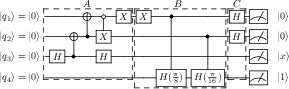
Figure 1: Optimized HHL quantum circuit for QSVM classification. It comprises three parts: part A, phase estimation; Part B, controlled rotation; and Part C, inverse phase estimation. The two X gates can be cancelled out.
QSVM Algorithm and Implementation
Quantum Preprocessing Unit
The preprocessing unit in QSVM optimizes the classification of two-dimensional datasets that are linearly separable. This unit comprises four main steps: calculating horizontal and vertical ratios, linear mapping, L2 normalization, and rotation angle calculation using trigonometric functions adaptable to all data quadrants. The preprocessing is crucial in normalizing input data into a format suitable for quantum operations.
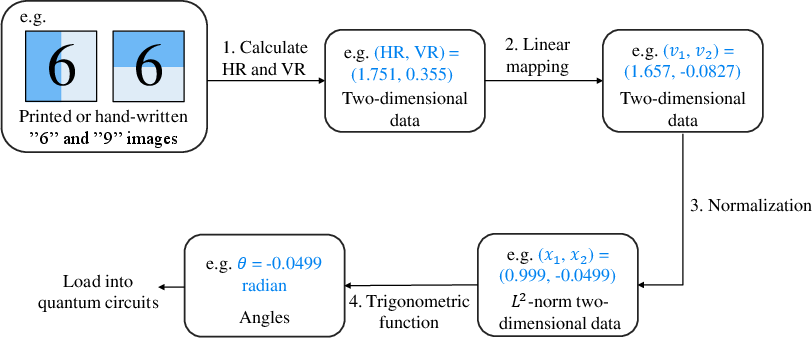
Figure 2: Data preprocessing flow chart.
Kernel Matrix Generation
The paper replaces quantum tomography for generating kernel matrices with a classical result readout method. This substitution significantly lessens the quantum circuit depth required, accommodating the constraints of NISQ devices. Additionally, the trade-off between circuit depth and qubit usage is addressed by introducing a new training-data oracle, reducing circuit complexity while leveraging more qubits for multi-data applications.
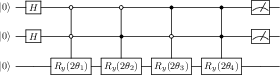
Figure 3: The original training-data oracle when loading four training data.
Optimized HHL Quantum Circuit
The HHL algorithm is fundamental for solving linear equations efficiently on quantum devices. The optimized QSVM implementation uses a reduced-depth quantum circuit, leveraging phase estimation, controlled rotation, and inverse phase estimation to classify data points on NISQ computers. This design change significantly improves the QSVM's applicability on real quantum hardware by minimizing decoherence-related errors.
Experimental Results
Simulation and Quantum Execution
Experiments conducted using the PyQuil Wavefunction Simulator and IBM's Qiskit on the IBMQX2 quantum computer validate the proposed QSVM implementation's efficacy. The results demonstrated high classification accuracy on both the OCR and Iris datasets, confirming the feasibility of deploying machine learning algorithms on quantum computers despite their inherent noise challenges.
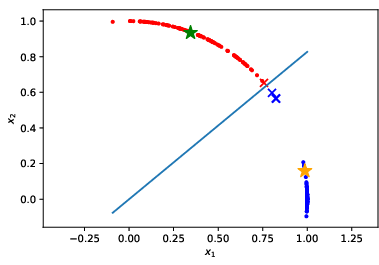
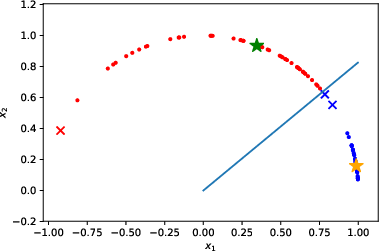
Figure 4: Classification results of the optimized baseline.
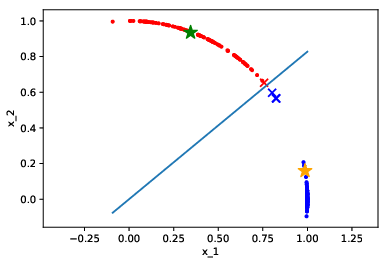
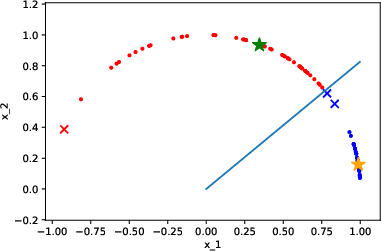
Figure 5: Classification results of our QSVM implementation.
Conclusion
The research presented in this paper advances the potential for QSVMs within the NISQ paradigm by significantly reducing quantum circuit complexity while maintaining high classification accuracy. The optimization strategies, especially in reducing circuit depth, highlight a viable path for machine learning applications on quantum hardware. Future work could expand the scope of QSVMs to accommodate non-linear separable datasets and enhance the system's robustness in the presence of quantum noise.
In conclusion, this work illustrates how quantum computing can potentially transform problem-solving in machine learning, given appropriate optimizations for the constraints of current quantum technology.