- The paper presents survey findings that conditional logic and general fixture practices are the primary contributors to test smells in code.
- The survey of 60 professionals indicates that test smells are prevalent irrespective of developers' experience levels.
- The study underscores the need for systematic training and automated measures to improve the readability and reliability of test code.
A Survey on Test Practitioners' Awareness of Test Smells
Introduction to Test Smells
The paper "A survey on test practitioners' awareness of test smells" (2003.05613) examines the introduction of test smells during the test code development process. Test smells represent suboptimal solutions in the implementation and design of test code. These smells can exacerbate the complexity of test suites, making them difficult to understand, evolve, and maintain. The presence of such smells can deteriorate the overall quality of software testing activities. Through a survey conducted among 60 professionals, the study aimed to elucidate whether test practitioners inadvertently introduce these test smells during their daily programming tasks.
Test Smells: Types and Impact
The study identified and evaluated 14 distinct test smells, frequently discussed in the literature and implemented in test smell detection tools. These include Assertion Roulette, Conditional Test Logic, Constructor Initialization, and others, each posing specific challenges to test code quality and maintenance. For instance, Assertion Roulette complicates fault localization due to the lack of descriptive assertions, while Conditional Test Logic undermines test determinism and consistency by incorporating conditional flows. The impact is significant: compromised test code can lead to unreliable software testing and maintenance activities.
Survey Design and Methodology
The survey employed a descriptive, case-control approach to analyze the habitual practices of developers which might lead to test smell introduction. Participants provided feedback on practices related to the various test smells, both from the test creation and execution perspectives. These practices were formulated without referencing the term "test smell," minimizing potential biases. The survey was structured into three blocks: participant profiles, test creation practices, and test execution practices. This design aimed at understanding participants' interactions with test smells while allowing for the analysis of consistency across different stages of professional experience.
Key Findings
Test Creation and Execution Practices
The survey revealed notable findings regarding the frequency of specific practices associated with test smell introduction. Conditional Test Logic and General Fixture were identified as the most frequently introduced smells during test creation. These findings suggest prevalent practices, potentially ingrained in both personal and company standards, which lead to introducing suboptimal patterns into test codes.
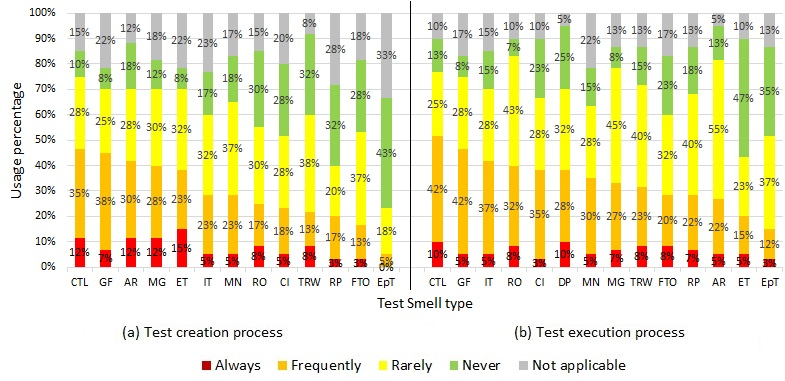
Figure 1: Test Smells frequencies on test creation and execution.
Professional Experience Correlation
Interestingly, the study did not find any significant correlation between professional experience and the tendency to introduce test smells. Whether participants were seasoned experts or novices, test smell introduction did not demonstrate a trend differencing by years of professional experience. This suggests that test smells, as an unintentional byproduct, might not be mitigated solely through experience but may require more systematic approaches or training.
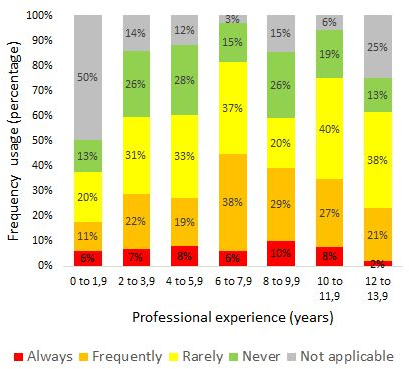
Figure 2: Test Smells frequencies on test creation according to professional experience.
Practices Leading to Test Smells
The study identified that the use of conditional logic and general fixture files were the predominant contributors to test smell occurrences, representing common pitfalls across practitioners’ daily activities. However, other contributors, such as reliance on magic numbers or indirect testing, although less frequent, still persistently impact test reliability and comprehensibility.
Implications and Future Directions
The results imply a need for improved awareness and strategies to mitigate the introduction of test smells in routine testing activities. Practitioners could benefit from training focused on recognizing and addressing test smells, enhancing the readability, maintainability, and reliability of test codes. Future research may aim to develop automated solutions or guidelines that proactively detect and alert developers to potential smells during code development.
Conclusion
This study provides crucial insights into the common practices that lead to test smell introduction among practitioners. It underscores the persistence of test smells across varying levels of professional experience and highlights specific areas where practitioners frequently falter. These findings pave the way for targeted interventions and research aimed at mitigating test smells in coding practices, thereby enhancing the overall efficacy of software testing endeavors.