- The paper introduces an adaptive WBAN that forms energy-efficient aggregation trees to monitor dynamic skin conditions.
- It employs boundary detection algorithms to transmit only essential data, significantly reducing communication overhead.
- Simulation results show enhanced network longevity and efficient tracking of varying wound dynamics.
Distributed Skin Health Monitoring via Wireless Body Area Networks: Algorithmic and System Perspectives
Introduction and Motivation
The presented work introduces a distributed skin health monitoring system utilizing a wireless body area network (WBAN) architectural paradigm, targeting the continuous assessment of skin health via lab-on-skin technology. Lab-on-skin sensors, which are stretchable and flexible devices integrated into skin tissues, establish direct diagnostic and monitoring interfaces with the body. This approach addresses unique challenges arising from the dynamic nature of skin conditions, notably the growth and contraction patterns observed in entities such as melanoma and wounds. The system proposes adaptive network topology and resource allocation in response to spatiotemporal changes in affected skin regions, offering reliable long-term data aggregation and battery-aware operation.
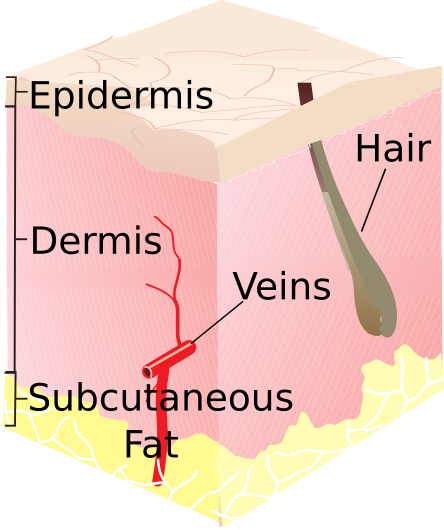
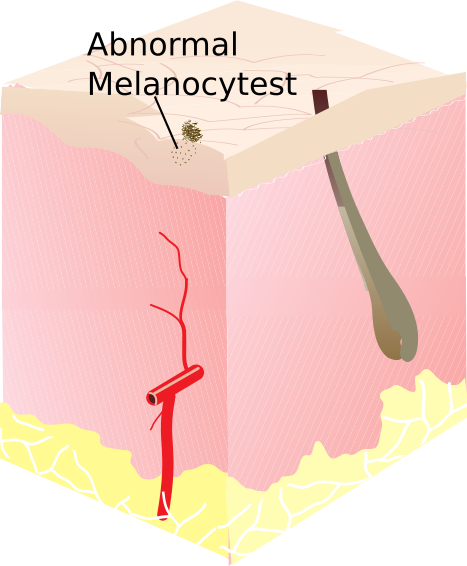
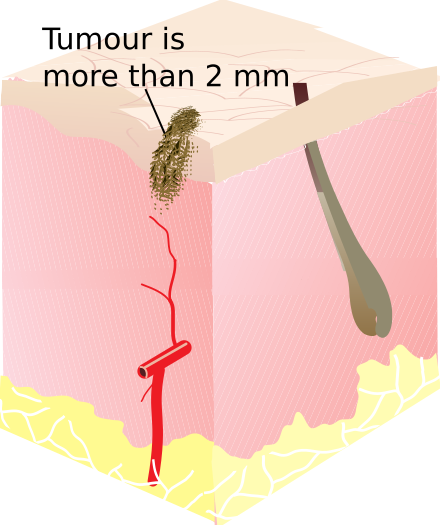
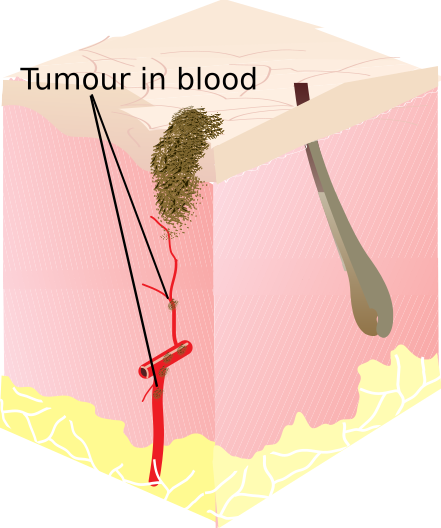
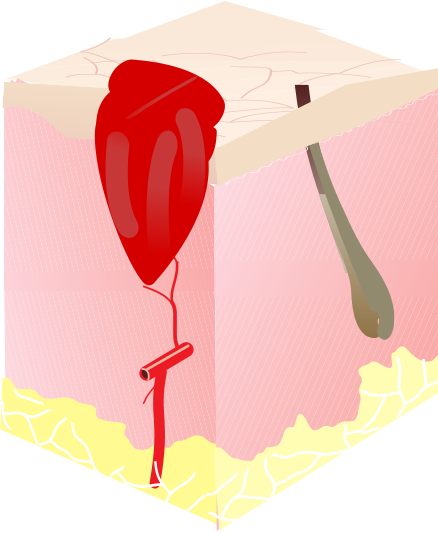
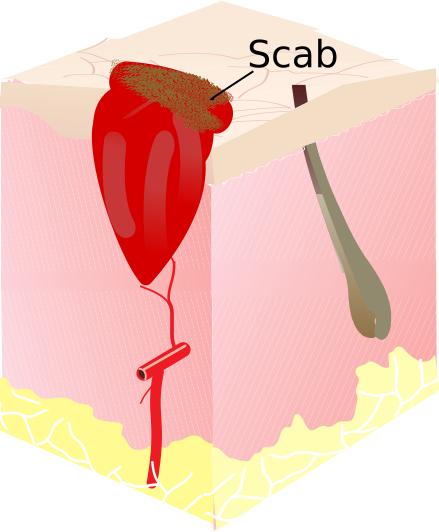
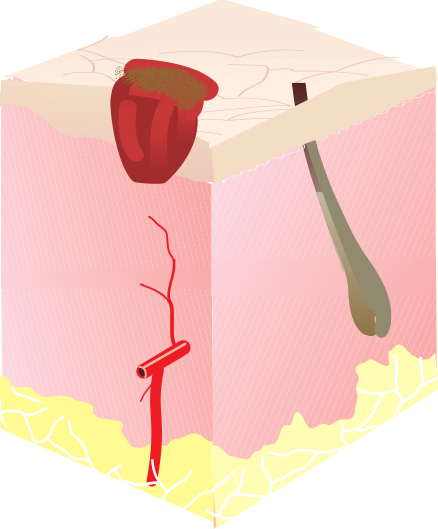
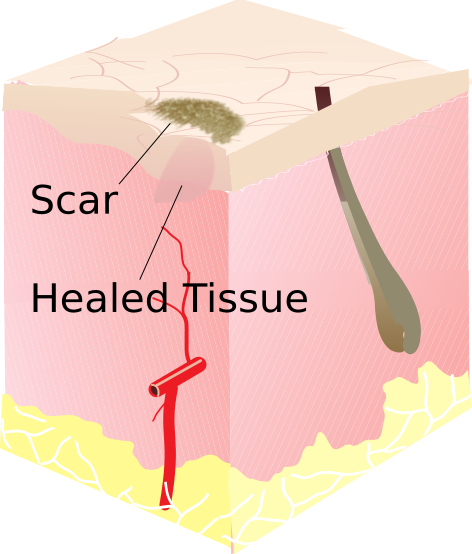
Figure 1: Time-lapse illustrations underscore the dynamic evolution of melanoma (spreading) and wound (shrinking), necessitating a monitoring system capable of dynamic reconfiguration.
System Architecture and Algorithmic Design
The core system infrastructure comprises distributed skin sensors networked via the WBAN protocol, supplemented by strategically placed relay nodes to optimize data transmission energy footprint. Each sensor node is autonomous, location-aware, and characterized by stringent resource constraints typical of miniaturized implantable devices.
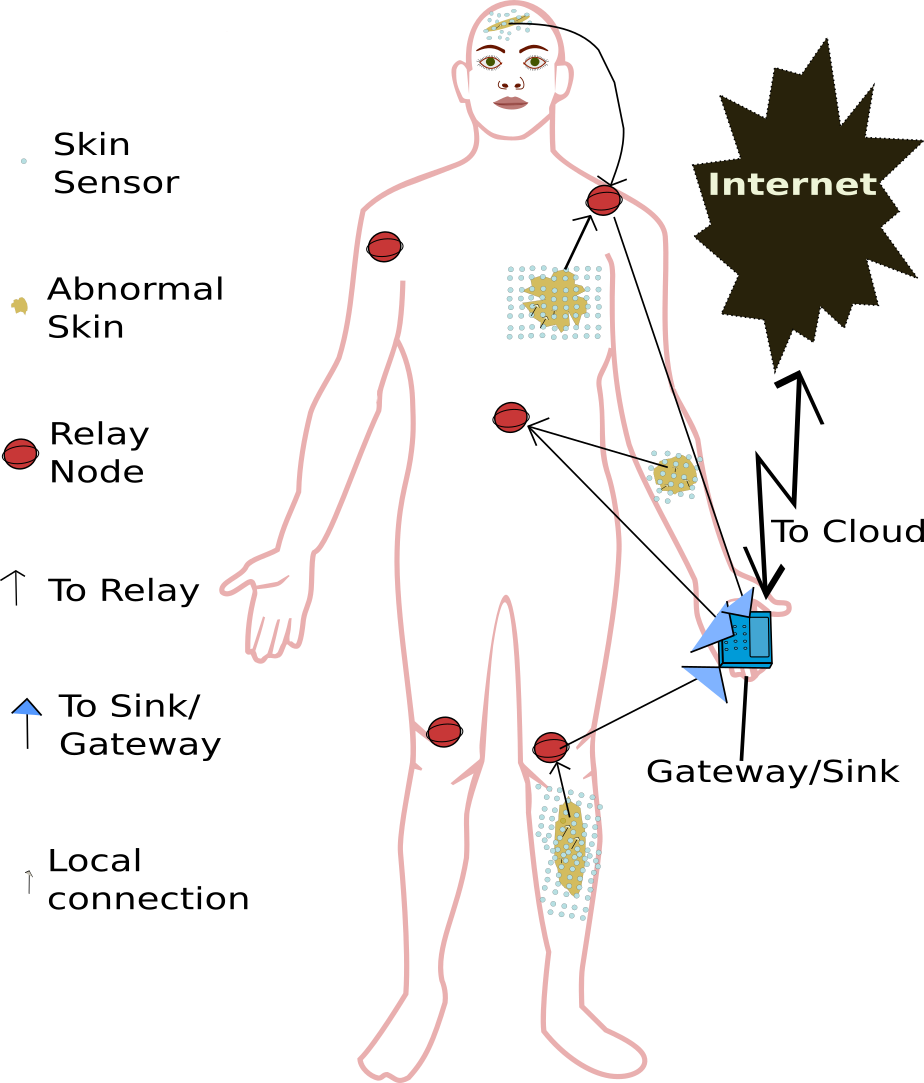
Figure 2: WBAN system architecture displaying local skin sensor networks, relays, and sink nodes for multi-hop, energy-efficient data delivery.
The proposed distributed algorithm orchestrates self-organization of sensor nodes into aggregation trees tailored to the affected skin areas. Energy efficiency is enforced by dynamic selection of the root node based on real-time energy availability, relegating non-impacted sensor nodes into sleep states. The protocol involves three principal message classes—STATUS, LOCATION, and CHANGE—to minimize unnecessary communication overhead. Tree construction leverages root node energy prioritization and parent/child assignment without explicit child tracking, reducing volatile memory requirements.
Adaptive monitoring is realized through boundary detection algorithms, wherein only boundary nodes with at least one inactive neighbor broadcast their location data. This spatially sparse reporting method significantly attenuates communication cost. The root nodes periodically collect boundary coordinates, compute directional growth/shrinkage with adjustable angular sampling granularity, and propagate boundary updates to upstream relay nodes.
Complexity Analysis
The time complexity of the core tree-forming protocol is O(Dhighest), where Dhighest denotes the maximum hop distance from the highest energy node to any node in the area of interest. Message complexity for tree formation scales as O(NDnetwork), where N is the number of distinct monitored subregions and Dnetwork is the composite diameter. Boundary reporting protocols display message complexity of O(Dp), with p representing the dynamic perimeter of abnormal regions.
The algorithm's efficacy is validated through Matlab simulations using wound models representative of gunshot, scratch-induced, and oval-shaped injuries. The system dynamically adapts its network topology—aggregation trees evolve as wounds shrink or expand, minimizing active nodes and transmission paths. Temporal snapshots illustrate sensor reconfiguration across various wound states, including localized, composite, and smoothly healing wounds.
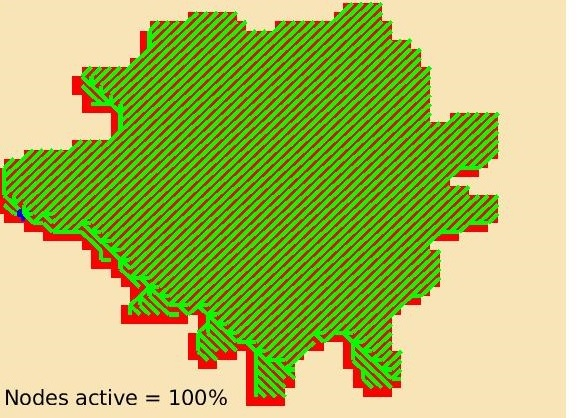
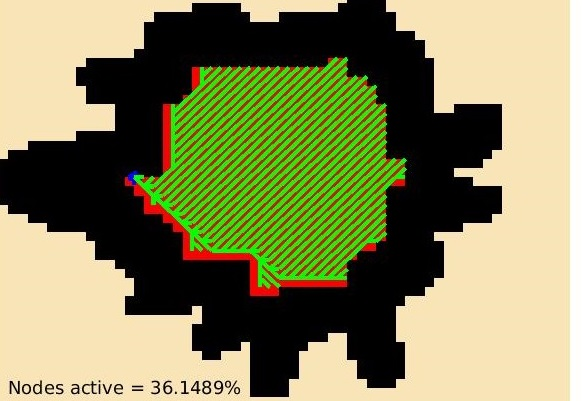
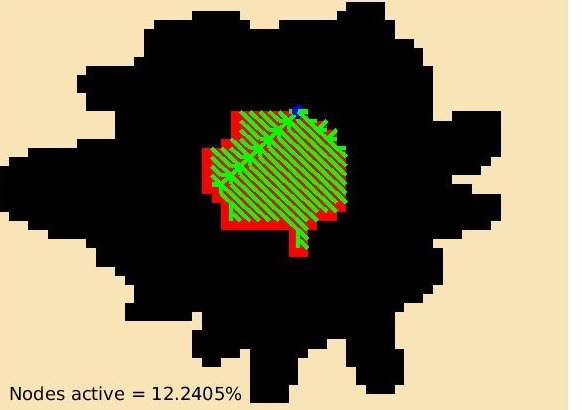
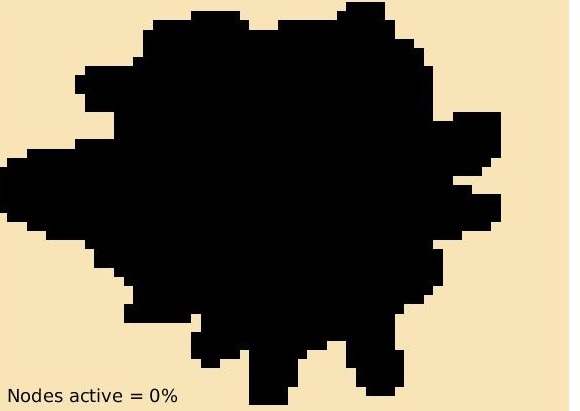
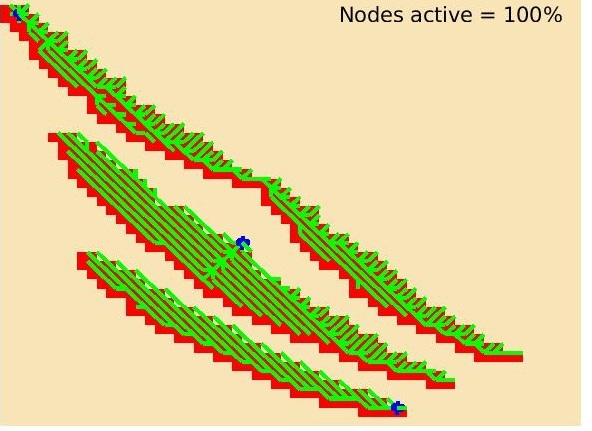
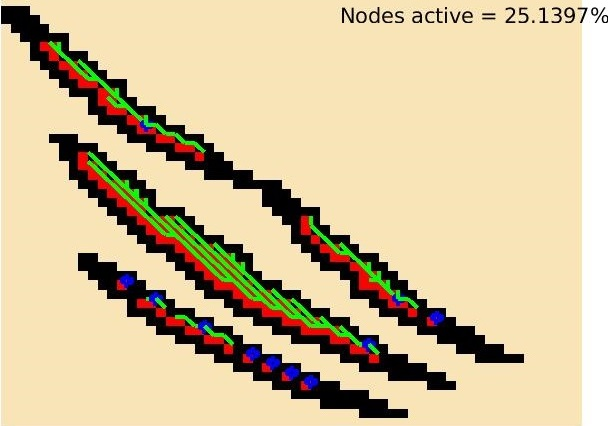
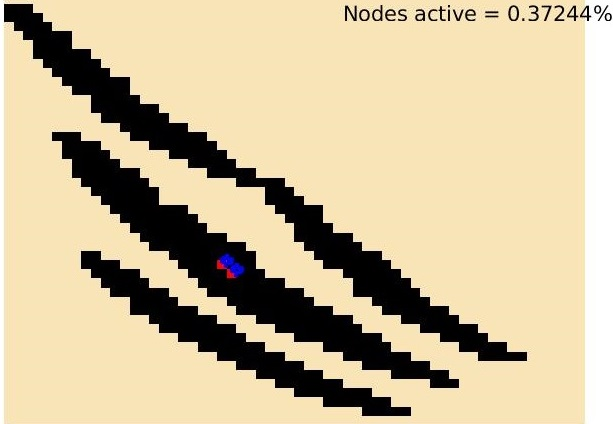
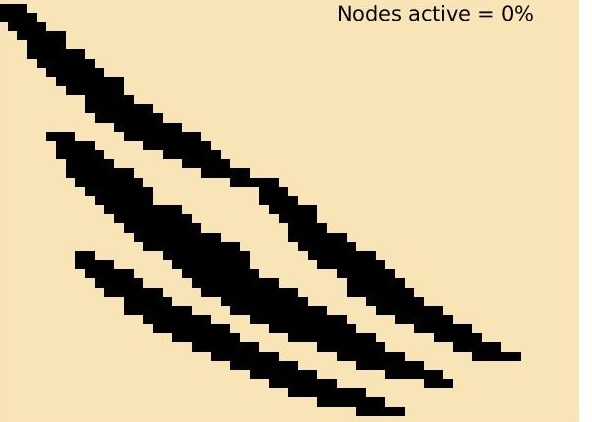
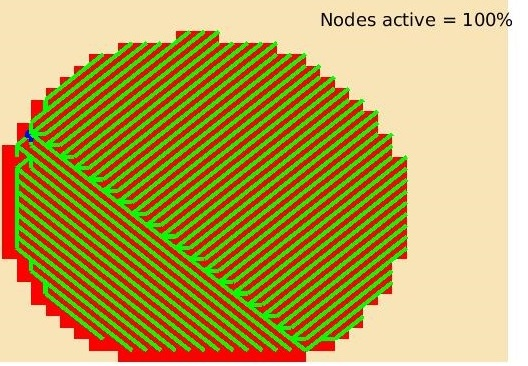
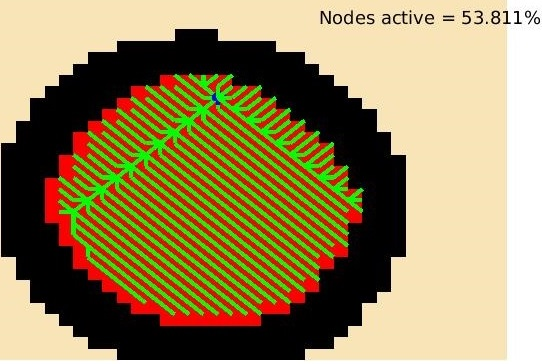
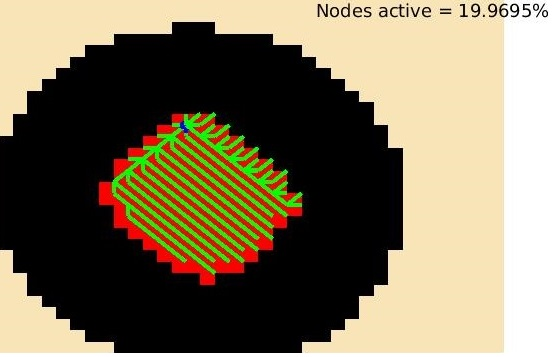
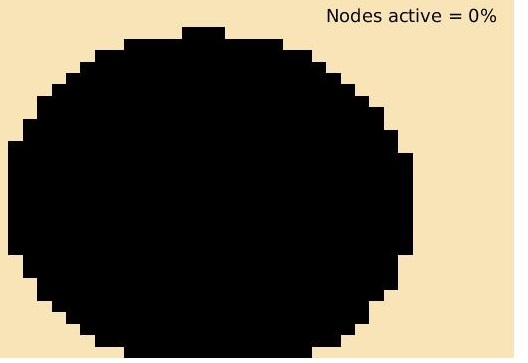
Figure 3: Successive time snapshots display the active sensor tree adapting to wound contraction, with healing shown in black and active wound in red; parent and root nodes are prominently highlighted.
Quantitative evaluation contrasts three operational regimes: all nodes active, nodes restricted to abnormal regions, and the proposed adaptive tree-based approach. The adaptive protocol exhibits superior energy conservation and reduced dead node prevalence over time. The network achieves extended operational lifetime, directly attributable to dynamic node activation and intelligent energy-aware root selection.
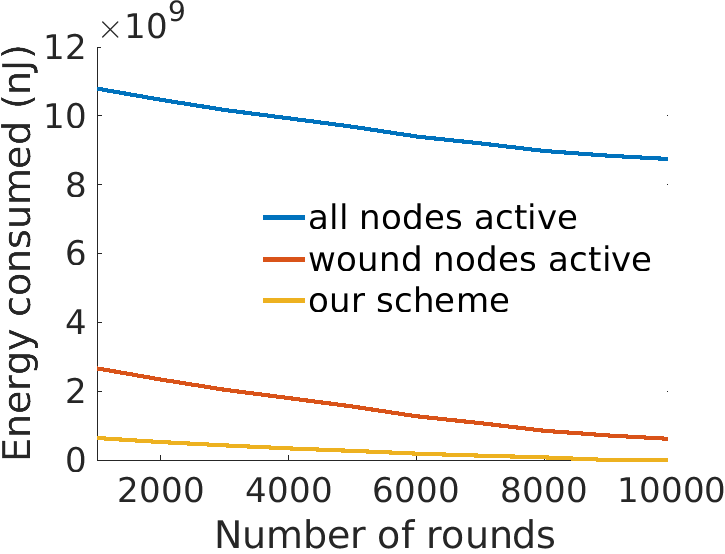
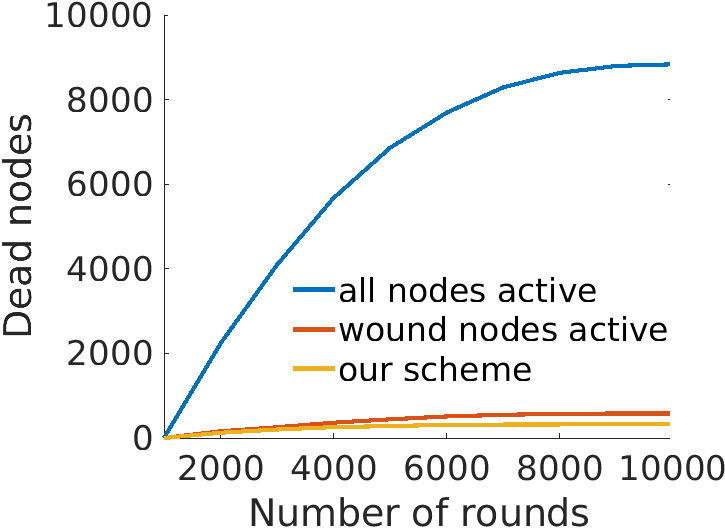
Figure 4: Aggregated energy consumption and cumulative dead node count per round, revealing significant improvements in network longevity for the adaptive monitoring strategy.
Implications and Future Directions
The research demonstrates the feasibility and utility of distributed, adaptive WBAN architectures for skin health monitoring. Practical implications include robust support for teledermatology and at-home chronic wound/cancer surveillance, with the potential to further enable data-driven healthcare decision-making. From a theoretical perspective, the work aligns with foundational principles in graph-based sensor networks and distributed resource optimization under energy constraints.
Prospective developments may include:
- Scalability Studies: Extension to heterogeneous sensor populations and diverse skin pathologies, encompassing variable sensor densities and propagation environments.
- Integration of Drug Delivery Platforms: Fusion of monitoring and automated intervention capabilities, representing a closed-loop theranostic architecture.
- Energy Harvesting: Investigation of environmental energy scavenging and its effect on sustained network operation.
- Robustness in Lossy Wireless Environments: Evaluation and augmentation to counteract increased transmission failures and device dropouts.
Conclusion
This study presents a distributed WBAN algorithm optimized for adaptive skin health monitoring in lab-on-skin deployments. By aligning sensor activity and aggregation topology with the evolving spatial characteristics of abnormal skin regions, the system achieves substantial improvements in network lifetime and monitoring accuracy. Future research will address multi-pathology generalizability, direct therapeutic integration, and resilience in challenging wireless contexts.