- The paper introduces novel integer programming formulations and cutting-plane methods to integrate capacity planning with stable matching.
- The paper demonstrates the effectiveness of both quadratic and linearization approaches in optimizing student assignments under variable capacities.
- The paper validates its methodologies through empirical evaluation on Chilean school choice data, highlighting improved allocation outcomes and policy implications.
Capacity Planning in Stable Matching
This essay explores the intricate dynamics of capacity planning within the stable matching framework, particularly in contexts such as school choice systems. The paper advances the understanding of this area by proposing novel integer programming formulations and heuristics to tackle the complexities introduced by capacity variations.
Introduction to Capacity Planning in Stable Matching
The problem of stable matching, traditionally explored under static capacity conditions, assumes predetermined capacities for participants on one side of the market. This paper extends the model by introducing capacity planning as a decision variable, reflecting real-world scenarios where entities such as schools can adjust their capacities. This adjustment aims to optimize allocations, improving either the number of matched participants or the satisfaction of participants' preferences.
The authors introduce two primary formulations for this extended problem:
- Quadratic Constraint Formulation: This approach considers the optimization problem as an integer quadratically-constrained program, where the objective is to minimize the total dissatisfaction (or cost) of the matching considering students' ranked preferences.
- Linearizations: To address the computational challenges posed by quadratic constraints, the paper discusses two linearization strategies, referred to as Aggregated and Non-Aggregated Linearizations. These linearizations facilitate more efficient solution approaches by transforming the original problem into a mixed-integer linear program, making it feasible for large-scale applications with commercial solvers.
Cutting-Plane Approach and Heuristics
The paper further enhances its methodological arsenal with a cutting-plane method applied to a non-compact formulation. This approach is particularly useful in handling the exponential number of constraints inherent in defining stability when capacity is flexible. By iteratively refining the constraint set, the cutting-plane method effectively computes stable matchings under the new capacity conditions.
For larger-scale problems, the paper proposes two heuristics:
- Greedy Heuristic: Sequentially allocates additional capacity to the schools with the most immediate improvement in objective value.
- LPH (Linear Programming Heuristic): This heuristic first solves a linear relaxation of the problem to suggest capacity expansions, then refines the resulting allocation with a deferred acceptance algorithm to ensure stability.
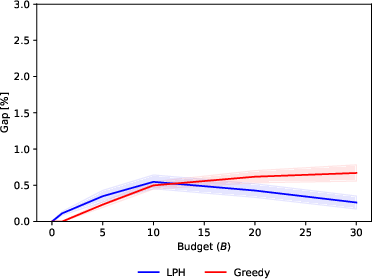
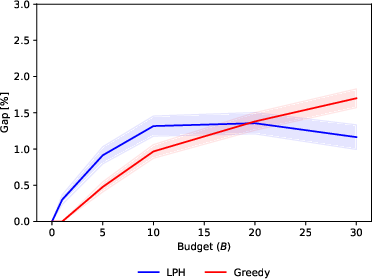
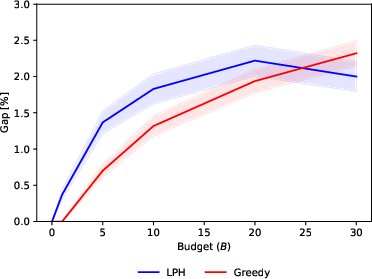
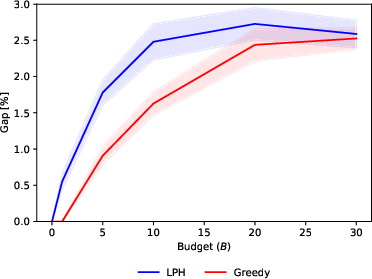
Figure 1: Effect of Bounds on Expansion.
Empirical Evaluation and Results
The paper provides an extensive evaluation of these methods on random instances, illustrating that the cutting-plane method outperforms traditional models, especially as the number of schools increases. Heuristics such as LPH, while not guaranteeing optimality, quickly produce high-quality solutions, demonstrating their practical relevance in real-world settings.
When applied to the Chilean school choice data, the proposed model effectively highlights how capacity adjustments can enhance student assignments, either by increasing the number of assigned students (access) or by leveraging improvement chains. The study further examines the societal impacts, suggesting practical decision rules for policymakers facing capacity allocation scenarios.
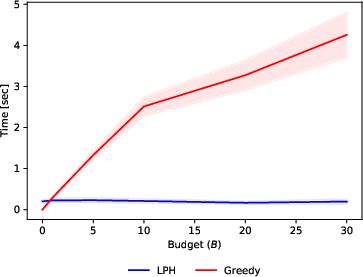
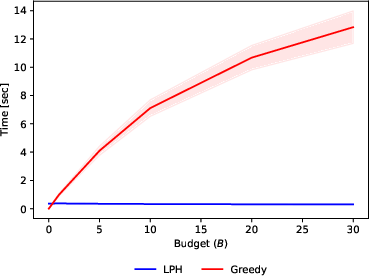
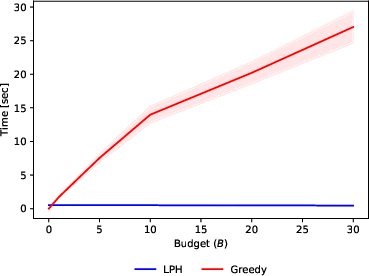
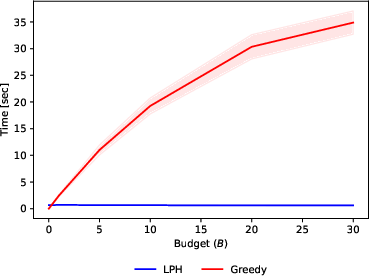
Figure 2: Heuristics: Optimality Gap.
Implications and Future Directions
This research offers valuable insights into operationalizing capacity planning within stable matching frameworks, presenting strategies adaptable to various contexts such as college admissions and general allocation issues. Beyond the theoretical contributions, the practical methodologies proposed establish groundwork for adaptive systems capable of responding to demand fluctuations in real time.
Future research could extend this model by incorporating stochastic elements to handle uncertainty in preferences or by exploring multi-round matching processes where capacities change dynamically over time. Such extensions would provide more robust tools for decision-makers in complex, variable environments.
Conclusion
The paper significantly advances the literature on stable matching by integrating capacity planning, offering both theoretical models and practical methods to enhance allocation outcomes. These insights are crucial for policy applications in education, healthcare, and beyond, highlighting the importance of adaptable, data-driven approaches in optimizing resource-constrained environments.