- The paper presents Solana, a 12-TB Computational Storage Drive prototype that integrates in-storage processing to optimize I/O intensive NLP applications.
- It details an architecture combining a Flash Controller Unit and a quad-core ARM Cortex A-53 based ISP running a full Linux OS for efficient data handling.
- Experimental results show 3.1x, 2.6x, and 2.2x speedups for speech-to-text, movie recommendation, and sentiment analysis respectively, while reducing energy consumption.
In-storage Processing of I/O Intensive Applications on Computational Storage Drives
The paper "In-storage Processing of I/O Intensive Applications on Computational Storage Drives" examines the architecture, implementation, and evaluation of Computational Storage Drives (CSDs) integrated for enhancing data processing efficiency in I/O intensive applications. The focus is primarily on the prototype Solana, a 12-TB CSD optimized for NLP tasks.
Introduction to Computational Storage Drives
Computational Storage Drives offer a significant shift in data-centric computing paradigms by moving computational power closer to the data storage. By integrating processing capabilities within storage devices, CSDs aim to minimize data transfer overheads, reducing energy consumption, improving privacy, and enhancing processing speed for big-data analytics tasks. Solana is introduced in this context as a high-capacity SSD in the E1.S form factor, equipped with an embedded processing engine, realization of the CSD concept, specifically designed for intensive NLP applications.
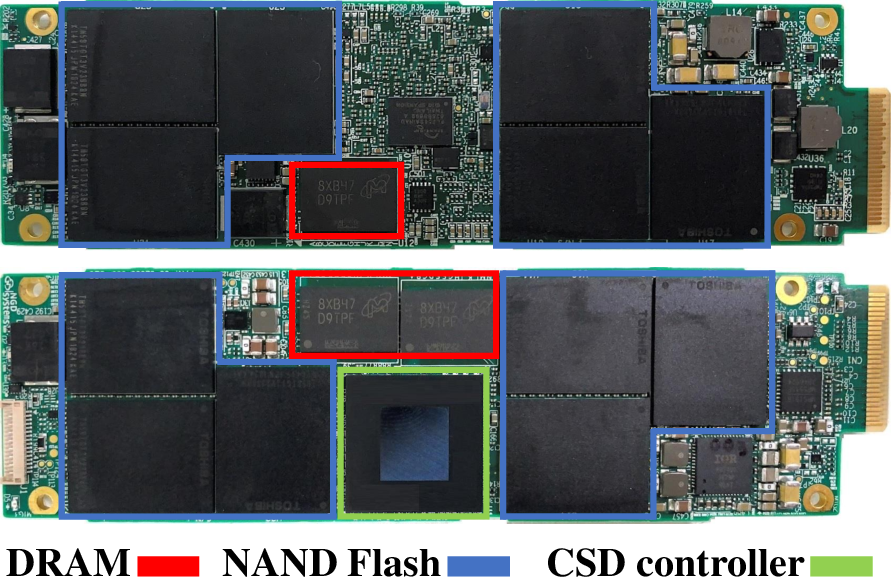
Figure 1: Solana: CSD prototype in E1.S form factor.
Architecture and Software Stack
CSD Architecture
Solana's architecture is characterized by two primary subsystems: the Flash Controller Unit (FCU) and the In-Storage Processing (ISP) engine. The FCU handles typical SSD controller functions, while the ISP subsystem comprises a quad-core ARM Cortex A-53 processor capable of executing general-purpose Linux-based applications.
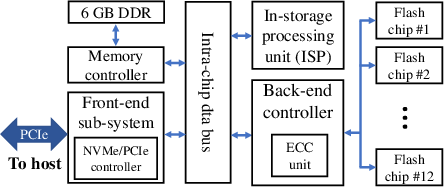
Figure 2: Hardware architecture of Solana CSD.
The FCU and ISP subsystems are interconnected via a high-speed intra-chip data bus, enabling efficient data flow and processing. The interconnection is crucial for achieving the ISP's low latency and high throughput in processing tasks directly at the data storage level.
Software Stack
To leverage the CSD's capabilities, a full-fledged Linux OS runs on the ISP subsystem, facilitating a wide range of application compatibility. Solana’s software stack includes a Customized Block Device Driver (CBDD) and a TCP/IP-based tunneling system for seamless data communication and processing.
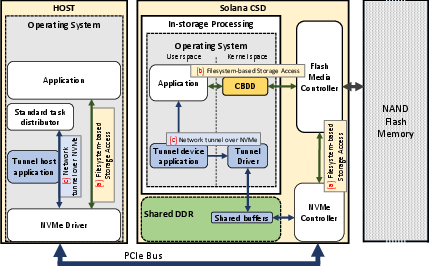
Figure 3: Solana's software stack providing communication paths for efficient data processing.
The software architecture supports multiple data paths, including conventional data transfers between flash and host, enhanced on-chip data access pathways, and cleverly implemented TCP/IP tunneling to streamline networking needs.
Experimental Evaluation
Solana's performance was benchmarked using NLP applications: Speech-to-text, Movie Recommender, and Sentiment Analysis. Each application demonstrated significant speedups when processed using Solana CSDs compared to conventional storage setups:
- Speech-to-Text: Achieved a 3.1x increase in processing speed while reducing I/O overheads significantly.
- Movie Recommender: Demonstrated a 2.6x improvement in processing query rates.
- Sentiment Analysis: Recorded a 2.2x speedup with substantial energy savings.
All evaluations highlight Solana's capability to manage and process large NLP workloads directly within storage, dramatically cutting down on data movements across systems.
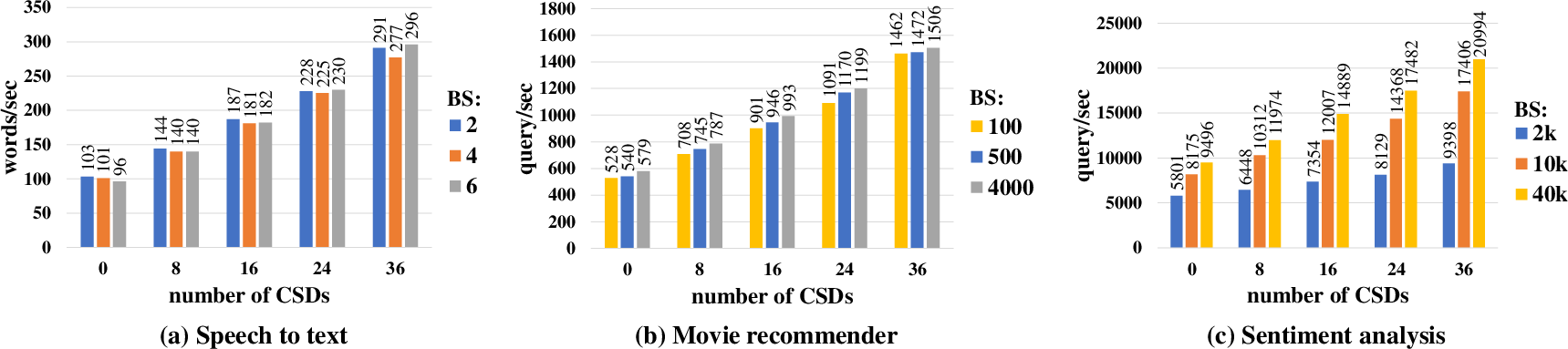
Figure 4: Experimental results for three NLP benchmarks and different batch sizes.
Energy Efficiency and Implications
Solana showed a notable reduction in energy consumption, attributed to its minimized data movement and efficient in-storage processing:
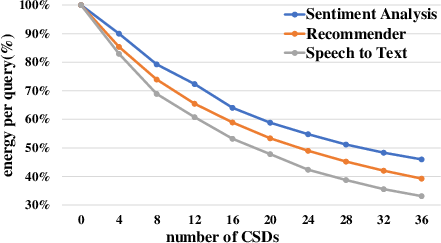
Figure 5: Energy per query, normalized to host-only setup.
The CSD not only attained computational speedups but also showcased reduced energy demand—key for sustainable scaling in data-intensive environments like data centers.
Conclusion
The integration of processing capabilities within storage devices, as exemplified by Solana, represents a pivotal advancement in handling I/O-intensive applications. Solana efficiently demonstrates the potential of CSDs to process large-scale NLP tasks with enhanced speed and reduced energy consumption, paving the way for future expansion in this domain. Future developments may explore more sophisticated scheduling algorithms to further exploit data locality for even greater efficiency.