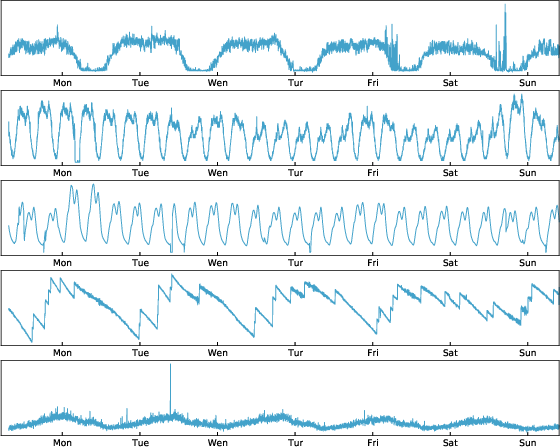
- The paper introduces three public datasets that address the scale, realism, and diversity limitations in AIOps research.
- It details KPI anomaly detection, multi-dimensional root cause localization, and failure diagnosis across varied IT operational scenarios.
- The datasets, developed in collaboration with industry, enable robust benchmarking and foster innovation in automated IT operations.
Constructing Large-Scale Real-World Benchmark Datasets for AIOps
Introduction
The paper "Constructing Large-Scale Real-World Benchmark Datasets for AIOps" explores the significant challenge in AIOps (Artificial Intelligence for IT Operations) posed by the lack of public, large-scale, real-world datasets. AIOps aims to leverage ML and big data functionalities to automate and enhance IT operations, including anomaly detection, root cause analysis (RCA), and incident management, among others. This research introduces three publicly available datasets to address this gap, facilitating the benchmarking of various AIOps methodologies.
Existing Limitations in AIOps Research
Current AIOps research heavily relies on private datasets, leading to challenges in evaluating and generalizing models to different scenarios. The paper identifies three primary limitations:
- Scenario Specificity: Existing datasets often cover narrow AIOps scenarios, inadequately representing the diverse operational environments encountered in real-world systems.
- Dataset Scale: The datasets used in many studies are not sufficiently large, given the scope and scale of real-world IT infrastructures.
- Realism: Many datasets are synthetic, lacking the fidelity required for real-world applications.
These limitations highlight the necessity for comprehensive datasets that encompass diverse AIOps scenarios and adequately reflect real-world system behaviors.
Contributions and Published Datasets
The researchers address these issues by introducing three distinct datasets focused on different aspects of AIOps:
These datasets are constructed from collaborations with industry partners, ensuring realism and variety reflective of actual IT environments. They have fostered significant academic and industry involvement through the structured competitions held annually, promoting advancements in AIOps methodologies.
Practical Implications and Theoretical Insights
From a practical standpoint, these datasets facilitate robust benchmarking and model evaluation, enabling researchers to validate their approaches under realistic constraints. The introduction of public datasets aligns with the vision of bringing AIOps to the maturity level achieved by fields like computer vision with ImageNet.
Theoretically, this work underlines the necessity of interdisciplinary collaboration between academia and industry to produce resources central to advancing technology deployment and integration in operational domains. It also encourages future research to further explore cross-domain applications of the datasets provided, leveraging data-driven insights to inform resource management and fault tolerance strategies within complex IT systems.
Conclusion
The paper marks a significant step towards overcoming barriers in AIOps research by supplying essential data resources to the community. The datasets and associated competitions not only enhance model evaluability and comparability but also drive innovation in automated IT operations through collaborative efforts. The authors plan to continue expanding these datasets and fostering an environment ripe for AIOps research and application growth, underpinning the crucial nature of intelligently managed IT services in contemporary digital infrastructures.