- The paper identifies a gap in intermediate-level co-design knowledge, emphasizing actionable designerly judgment for constructing effective co-design environments.
- It employs co/auto-ethnography and Research-through-Design across two case studies to document iterative design decisions and practical outcomes.
- The study outlines four facets—rhythm, material, ludic, and conceptual—that together form a versatile schema for guiding co-design practices.
Framing the Knowledge Gap in Co-Design Practice
The paper "What Do I Need to Design for Co-Design? Supporting Co-design as a Designerly Practice" (2210.02986) identifies a critical knowledge gap in the current co-design literature. While substantial work exists describing both theoretical commitments and case-specific artifacts or experiences, there is limited articulation of the forms of knowledge that guide the actual design of co-design experiences themselves. Specifically, the authors note the deficiency of intermediate-level knowledge—an abstraction situated between theory and instance—which is essential for supporting designerly judgment and practical action when constructing co-design environments.
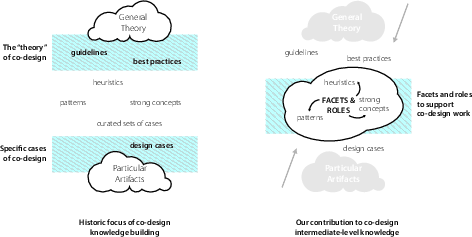
Figure 1: Visualization of prior focus on theory/artifact extremes versus the desired intermediate-level knowledge contribution for co-design.
Methodological Approach: Co/Auto-Ethnography and Research-Through-Design
The authors adopt a co/auto-ethnographic methodology embedded in Research-through-Design (RtD) frameworks. Through eighteen months of reflexive practice while designing two virtual co-design workshops, the authors deeply analyze and document their design decision processes, failures, and iterative refinements. This combined methodological stance allows them to foreground tacit design cognition and to move beyond merely reporting research outputs or participant artifacts towards producing actionable knowledge about the very act of designing for co-design itself.
Four Multi-Dimensional Facets of Designing Co-Design
Central to the paper's contributions is the identification and instantiation of four multi-dimensional facets critical to the construction of co-design experiences:
- Rhythm of Engagement: Orchestration of temporal, spatial, and conceptual participant trajectories, considering interaction, facilitation, narrative arcs, anticipatory flexibility, and behind-the-scenes coordination.
- Material Engagement: Tangibly managing the design and logistics of both digital and physical artifacts, emphasizing visual metaphors, material portability and progression, and logistical scaffolding.
- Ludic Engagement: Deliberate design for aesthetic, playful, and social dimensions of the workshop, focusing on first impressions, sensory cues (including soundscapes), opportunities for visibility, and sociality.
- Conceptual Achievement: Structuring participants’ sense of knowledge production, aligning performative intentions, supporting recognition of lived expertise, constructing congruent mental models, and creating persistent artifacts ("souvenirs") and experiential residues.
The interaction of these facets is tightly coupled with the intentional roles ("hats") the design team assumes: designer, researcher, and facilitator.
Empirical Instantiation: Two Case Studies
Detailed case analyses demonstrate the operationalization of the four facets in two distinct co-design scenarios.
- Case A: A one-on-one digital workshop with design/technology practitioners for ethical reflection. Activities included mapping ecological complexity, filtering ethical dilemmas, and method-based heuristics evaluation—which foregrounded intensive, facilitator-driven rhythm and customized material scaffolding.
- Case B: A group-based workshop for cross-disciplinary practitioners to generate actionable ethics plans for professional practice, employing a spatial metaphor ("house" with floors/rooms) to scaffold narrative and material progression, layered opportunities for visibility and feedback, and explicit orchestration of facilitator coordination through digital means (e.g., Slack backchannels).
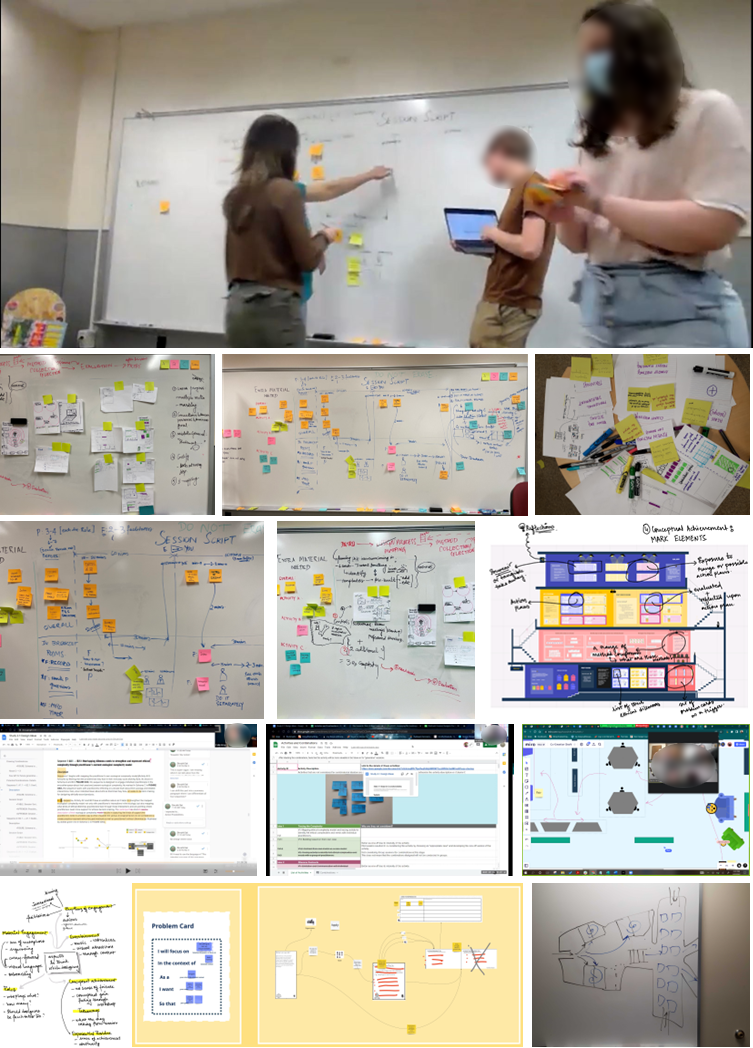
Figure 2: Prototypes and artifacts produced during collaborative design and execution of co-design workshops.
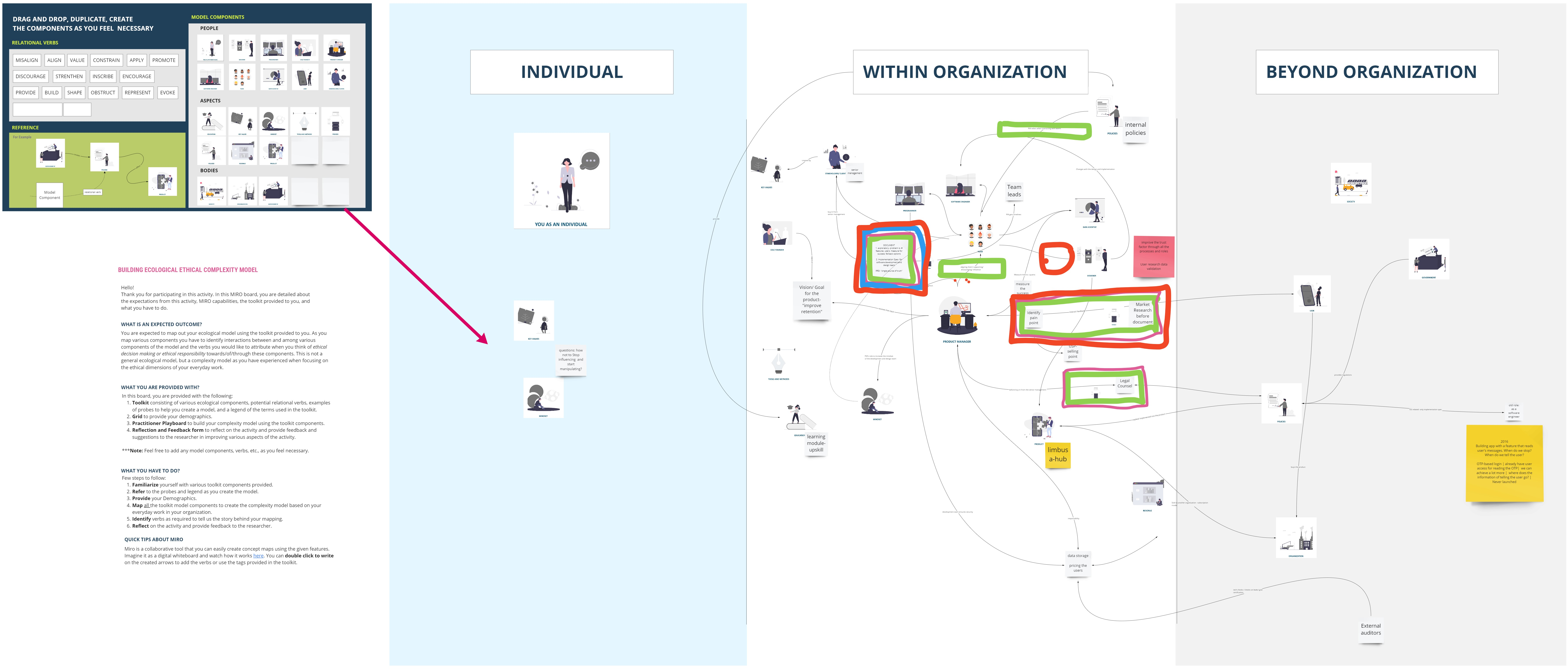
Figure 3: Illustrations of the scaffolded activities in Case A—complexity mapping, ethical dilemma filtering, method heuristic evaluation.
These empirical vignettes illustrate both the explicit and emergent challenges of rhythm management, material transitions across activities, ludic and affective dimensions, as well as the negotiation of mental models and tangible outputs for participants.
The articulation of these four facets, along with their respective sub-facets and interactive roles, offers a schema for generating, evaluating, and transferring intermediate-level knowledge in co-design. In particular:
- Designerly Judgment: The schema supports design judgments that are sensitive to workshop goals, participant demographics, anticipated contingencies, and experiential targets, operating beyond rote adoption of theory or direct emulation of precedent artifacts.
- Patterns, Heuristics, and Strong Concepts: The facets form an extensible backbone for developing reusable design patterns, evaluative heuristics, and potentially "strong concepts" à la Hӧӧk & Lӧwgren, suitable for inter-project learning and reflective practice.
- Practical and Theoretical Developments: For practitioners, these insights enable explicit structuring and assessment of co-design processes. For design theory, they fuel further meta-level abstraction and contribute to debates around the nature and evaluation of design knowledge (cf. annotated portfolios, scholarships of precedent).
Future Directions in AI and Participatory Design
The detailed, role-structured breakdown of co-design knowledge has direct implications for the development of AI-enabled design facilitation tools. In digital and hybrid workshop contexts, AI systems tasked with supporting or even leading co-design must internalize and operationalize facets such as rhythm (e.g., adaptive session orchestration), material engagement (e.g., dynamic artifact progression and archiving), and ludic/affective feedback loops. Furthermore, the explicit focus on intermediate-level knowledge advocates for AI systems that can support not just outcome metrics, but also process reasoning, facilitator improvisation, and context-sensitive knowledge transfer.
Conclusion
This paper provides an actionable framework for understanding and constructing designerly knowledge within the specific but widely relevant context of co-design. By elevating and detailing intermediate-level knowledge forms—rooted in lived designer experience and supported by analytical reflexivity—it advances both scholarly discourse and practical capability in participatory design. The delineated facets and roles are positioned as a generative vocabulary, scaffolding both immediate workshop design and future systematic knowledge production in the field.
Figure 1: Comparison of traditional knowledge boundaries and the paper’s focus on intermediate-level domains bridging theory and case artifacts.