- The paper presents an overview of state-of-the-art ML and DL techniques for automated, non-destructive fruit ripeness classification.
- It details the use of diverse feature representations, such as color imaging, spectroscopy, and electronic noses, highlighting practical advantages and limitations.
- It explores challenges in handling diverse fruit types and suggests future directions with Transformer models and real-time implementation.
Fruit Ripeness Classification: A Survey
Introduction
Fruit ripeness classification is a critical aspect of agricultural production and quality control. This task traditionally involves manual inspection, a labor-intensive and error-prone process. Hence, the automation of fruit ripeness classification has become a significant area of research. Machine Learning (ML) and Deep Learning (DL) methodologies have emerged as leading techniques, leveraging diverse feature descriptors to assess fruit ripeness. This survey provides an overview of the current state of fruit ripeness classification methodologies, highlighting the predominant features and techniques used within the domain.
Challenges and Opportunities
Fruit ripeness classification faces several challenges due to the inherent diversity in fruit types, characterized by variations in shape, color, and texture. This diversity complicates the development of generalized classification techniques applicable across all fruit types. Additionally, each fruit type may exhibit variabilities in features—for instance, the color differences between Fuji and Granny Smith apples. These variabilities necessitate bespoke classifications tailored to specific fruit types. Machine learning offers significant potential for automation in the fruit supply chain, ensuring both quality and efficiency to meet global food demands.
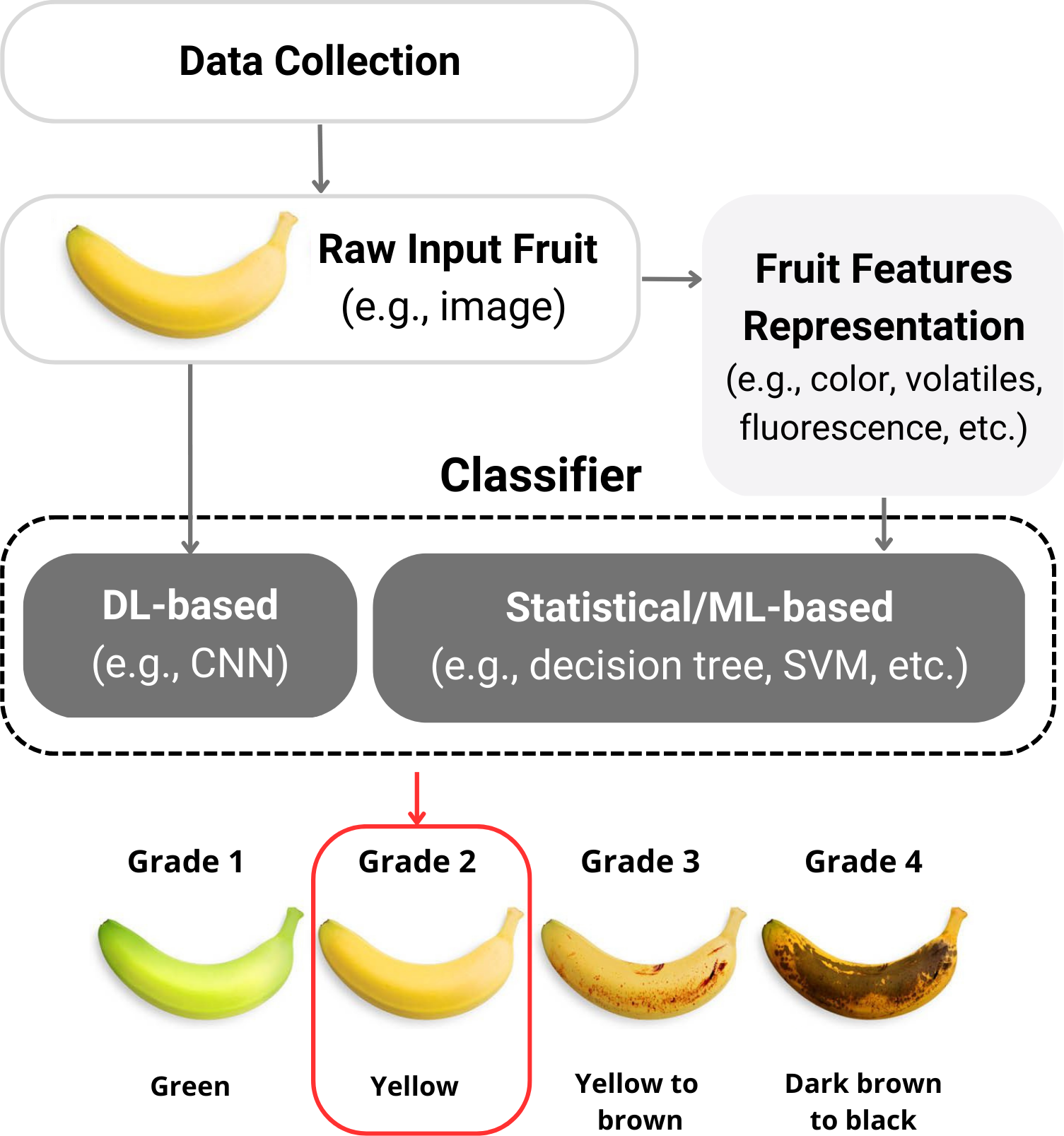
Figure 1: Example workflow for fruit ripeness classifiers.
Ripeness Standards
Fruit ripening is an irreversible process entailing physiological, biochemical, and organoleptic changes. These changes are genetically programmed and lead to the desirable attributes of ripe fruit. The ripening process affects both the economic value and the sensory appeal of fruit, impacting producers' storage strategies and consumers' purchasing decisions. Despite advances, optimal harvest dates remain largely subjective, emphasizing the need for objective assessment techniques to ensure high product yield and quality.
Predicting Fruit Ripeness
Various computational methodologies facilitate fruit ripeness prediction, exploiting both engineered and raw data features. These approaches differ in their requirements for sensors and yield non-destructive or destructive assessment outcomes. Non-destructive methodologies, such as Visible and Near InfraRed (VNIR) spectroscopy, imaging techniques, and electronic noses, offer promising avenues for efficient ripeness classification. The phenotypic changes during fruit ripening are intricate, allowing comprehensive feature capture using advanced sensors and imaging modalities.
Figure 2: Example of workflow from the collection of raw data to the classification of ripeness grade for bananas.
Feature Representations for Ripeness Classification
Color
Color is a primary indicator of fruit ripeness, linked to chlorophyll degradation and pigment concentration changes. Colorimeters and color imagers are extensively employed, albeit with limitations in sampling area and device dependency. Bi-dimensional color imaging, including RGB and HSV, provides broader coverage but requires homogeneous field illumination—a challenging criterion in natural environments.
Volatiles and Aromatic Compounds
The aroma of fruit, affected by volatile organic composition, is a key determinants of ripeness. Electronic noses, equipped with sensor arrays, effectively classify fruits based on aromatic profiles, offering an improvement over traditional human judgment.
Spectral and Fluorescence Techniques
Spectroscopy and fluorescence methods, including VNIR and hyperspectral imaging, exploit light reflectance properties to assess ripeness. These methods enable non-destructive and spatial assessments and are pivotal in indoor and controlled environment applications.
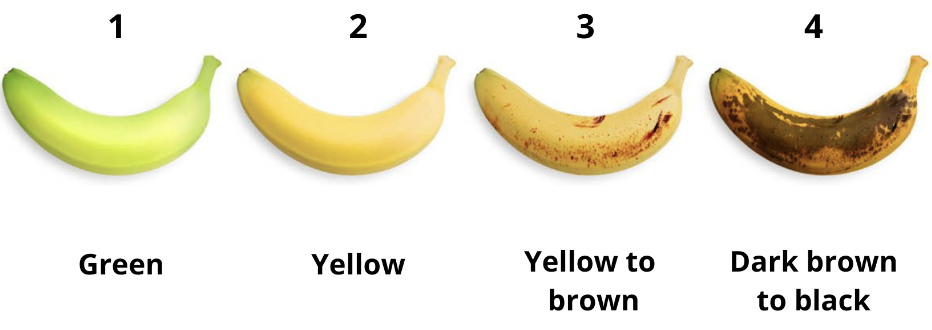
Figure 3: Example stages of ripeness of bananas.
Approaches to Classification
Statistical and ML-Based Methods
Initially, statistical techniques such as regression analysis, and ML algorithms like SVM, KNN, and decision trees, were employed for feature-engineered data classification. These approaches utilize diverse color spaces and digital imaging attributes to classify ripeness effectively.
DL-Based Methods
Recent advances have introduced DL models, particularly CNNs and pretrained networks, for raw data and image processing. DL techniques, including transfer learning and attention mechanisms, significantly enhance classification accuracy and facilitate real-time applications. DL models such as Mask R-CNN and RESNET architectures have demonstrated efficacy in complex environments, providing robust classification tools.
Future Perspectives
DL models continue to evolve, offering promising pathways for improved accuracy and interpretability. Transformer architectures, initially successful in NLP, are being adapted for visual tasks, potentially enhancing fruit classification models. Moreover, attention mechanisms within Transformers could lead to more explainable AI systems. To realize real-time applications, inquiries into inference time and model efficiency remain pertinent.
Conclusion
The survey underscores the importance of advanced methodologies for automated fruit ripeness classification, particularly leveraging DL techniques. While DL models offer high accuracy, challenges related to interpretability and real-time performance endure. Further research into novel architectures, alongside public dataset expansion, can drive innovation in this field, enhancing both theoretical frameworks and practical applications in agriculture.