- The paper reveals that TikTok interruptions impair prospective memory, evidenced by increased errors and a drift rate of μ=0.000.
- The experiment compared TikTok with Twitter, YouTube, and a rest condition to isolate the unique detrimental impact on PM tasks.
- The study underscores the need for media designs that safeguard cognitive wellbeing by mitigating rapid context switching effects.
Introduction
The paper investigates the cognitive impact of short-form video consumption through platforms like TikTok on Prospective Memory (PM), a critical aspect of human cognition that involves the ability to remember to execute planned actions. With the growing prevalence of social media platforms utilizing short, rapidly changing videos, understanding their effect on memory tasks is vital both for theoretical cognitive models and practical media design guidelines.
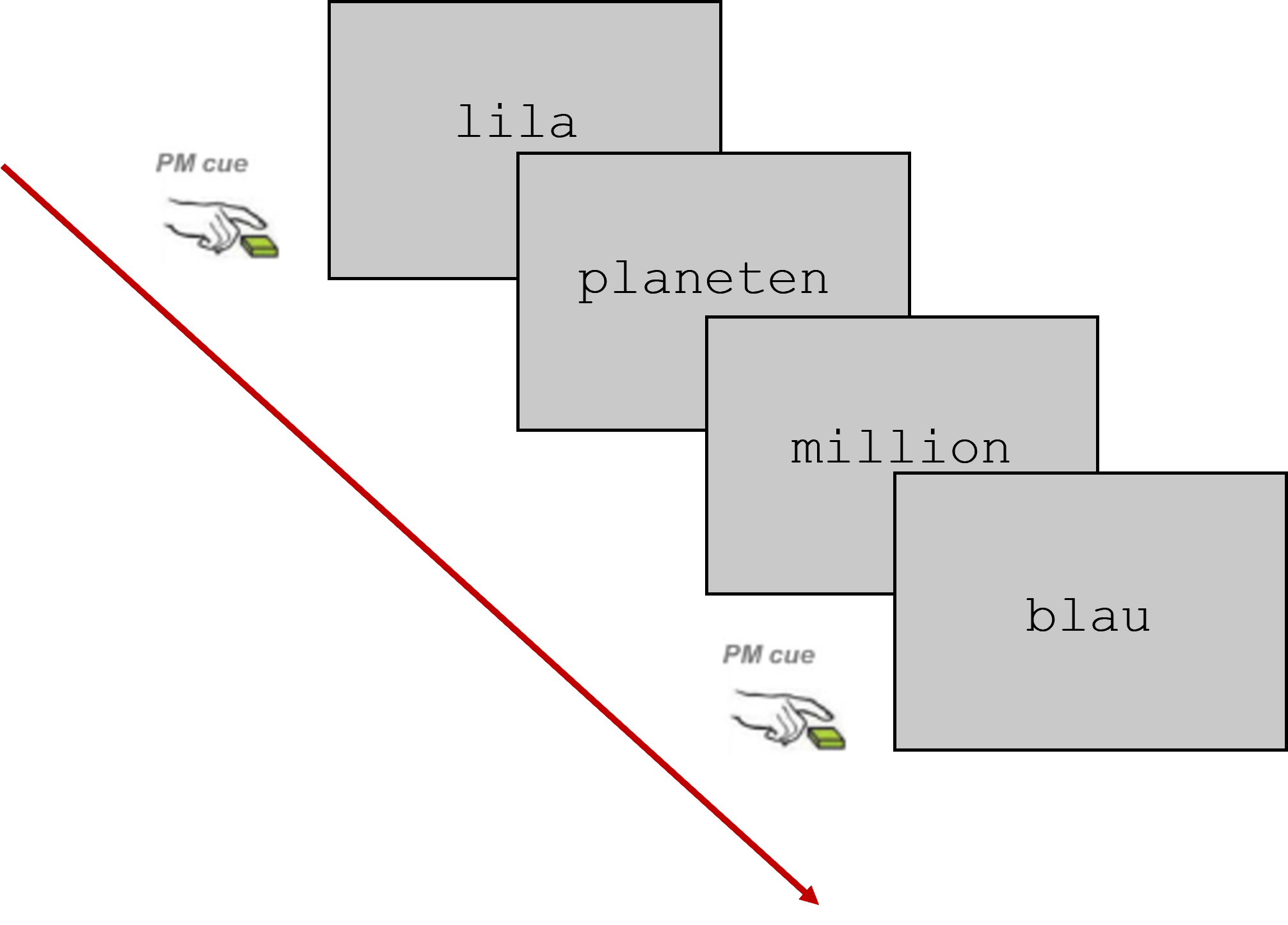
Figure 1: PM paradigm. Participants performed a lexical decision task and a PM task, pressing a specific button when a PM cue word appeared.
Methodology
The authors employed a between-subjects experimental design involving 60 participants subjected to four conditions: watching TikTok videos, browsing Twitter, viewing YouTube content, or taking a Rest. The experiment assessed both Lexical Decision (LD) tasks and PM tasks before and after a 10-minute interruption involving these varied social media feeds.
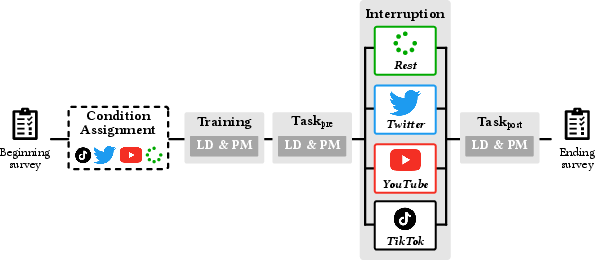
Figure 2: Overview of the experiment timeline detailing the sequence of tasks and interruptions according to participant grouping.
Participants used their mobile devices to interact with media during the interruption phase, after which performance in LD and PM tasks was measured. The tasks executed included decisions on word validity and the pressing of specific keys when PM cue words appeared.
Key Findings
Significant degradation in PM task accuracy was observed post TikTok interruption, characterized by a marked increase in error rates and drift towards random guess-like behavior (drift rate μ=0.000). Conversely, Twitter and YouTube did not display significant impacts on PM, pointing towards TikTok's specific format as the detrimental factor.
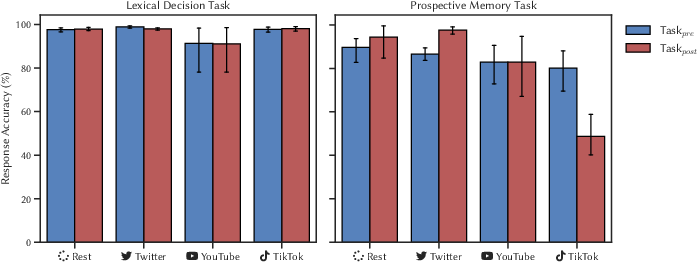
Figure 3: Comparison regarding response accuracy, showing minimal changes in LD tasks but dramatic drops in PM tasks post TikTok interruption.
Effect on Prospective Memory
The PM task’s drift rate and decision bound altered post-interruption indicate increased decision uncertainty and a decline in processing efficiency due to rapid social media context switches. Notably, while LD task parameters remained unaffected, PM task parameters such as drift rate, variance, and decision bound saw substantial shifts, suggesting a unique vulnerability of PM processes to TikTok's video format.
The paper provides evidence that short-form video consumption hinders PM performance, warranting attention from media technology designers. They bear a responsibility to create engaging digital experiences without compromising cognitive wellbeing. Dark patterns, as conceptualized in UX design, might include formats that impair cognitive tasks critical to daily life.
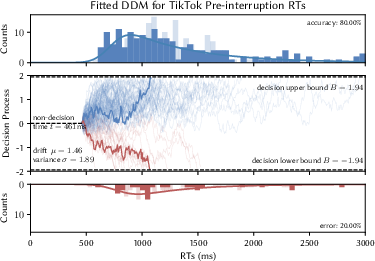
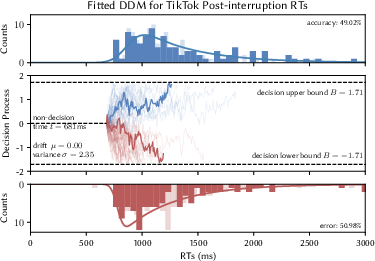
Figure 4: DDM visualizations depicting the drastic shift in correct vs. erroneous response distribution in PM tasks post TikTok interruption.
Future Directions
Further research is needed to disentangle whether the rapid pacing of context switches or media modality—unique to TikTok's short-form video—induces PM degradation. Investigating cognitive recovery aids via digital reminders post-interruption could offer paths to mitigate these impacts.
Conclusion
This study contributes to understanding the cognitive deficits induced through social media interruptions, emphasizing TikTok's impact on PM. The results invite consideration from social media designers in both leveraging this effect for enhancing user experience strategically and mitigating adverse cognitive impacts.
References
The bulk of references to foundational studies, theoretical frameworks, and methodological details can be found in journals covering cognitive psychology, human-computer interaction, and applied behavioral analysis, reinforcing this study's integrative examination of the issue.