- The paper demonstrates that combining EM shielding with magnetic trapping significantly reduces the required spatial superposition size for observing gravitational entanglement.
- It employs a setup that minimizes decoherence by canceling dipole-dipole and Casimir-Polder interactions, enabling robust experiments with microgram-scale diamond spheres.
- Using the Positive Partial Transpose witness, the study quantifies gravitational entanglement, paving the way for feasible quantum tests of gravity.
Micron-Size Spatial Superpositions for the QGEM-Protocol via Screening and Trapping
Introduction
The paper presents advancements to the QGEM protocol, which proposes the use of quantum superpositions to test the quantum nature of gravity. Specifically, it addresses techniques for mitigating electromagnetic (EM) interactions between test masses using a combination of screening and trapping.
Experimental Setup
The core idea is to leverage a parallel configuration of spatial superpositions of massive objects, isolated from EM interactions by a conducting plate and held stable with magnetic trapping. The setup's goal is to enhance the gravitational entanglement signal while minimizing unwanted EM-induced decoherence.
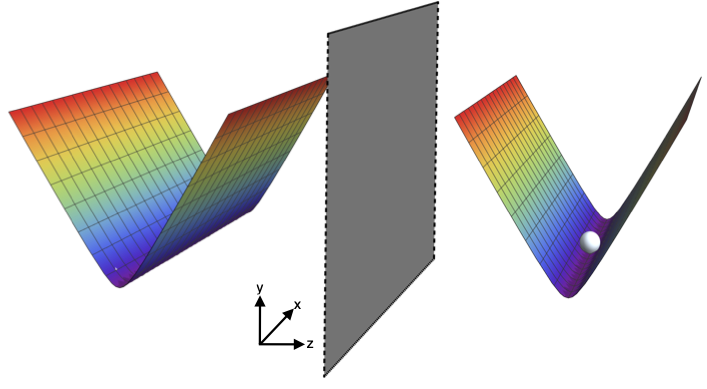
Figure 1: A schematic representation of the proposed setup demonstrating the integration of trapping potentials and electromagnetic screening.
Electromagnetic Shielding
EM shielding is achieved by placing a conducting plate between the test masses, effectively canceling out dipole-dipole and Casimir-Polder interactions. This improvement allows for reduced minimum distances between test masses, thereby increasing the gravitational interaction, a novel approach for optimizing entanglement measurement.
Magnetic Trapping
The paper proposes diamagnetic trapping using a combination of magnetic field gradients, which prevent excess movement towards the conducting plate due to residual EM interactions. Calculations show that for diamond spheres in the microgram range, achievable fields and gradients are sufficient to restrain the masses with acceptable safety margins.
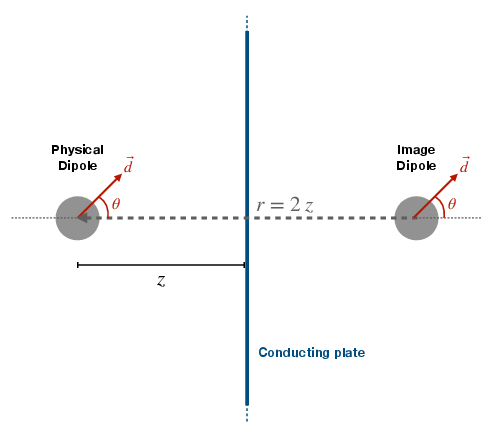
Figure 2: Illustration of the dipole moment interaction between the sphere and the conducting plate.
Results and Discussion
The results demonstrate that the required superposition size decreases significantly—by orders of magnitude—when both EM shielding and magnetic trapping are employed, particularly for larger masses, which traditionally pose challenges in generating detectable quantum superpositions.
Entanglement Witnessing
To quantify entanglement, the paper discusses the Positive Partial Transpose (PPT) witness, which allows for the detection of gravitational entanglement against a backdrop of decoherence, providing critical insights into experimental constraints relevant to superposition size and decoherence rate.
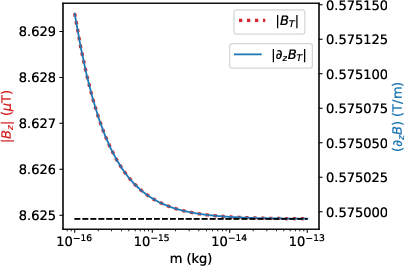
Figure 3: Plot demonstrating the required magnetic field strengths and gradients relative to mass.
Impact and Future Work
This research reduces the experimental challenges in executing the QGEM protocol significantly, offering feasible paths to achieve the quantum superpositions required to witness gravitational entanglement with reduced experimental constraints. Further exploration involves addressing common mode fluctuations and refining decoherence control strategies.
Conclusion
The combination of EM shielding and magnetic trapping represents a substantial advancement for the QGEM experimental setup by reducing the required spatial superposition size. The paper's findings enhance the feasibility of detecting quantum gravitational effects, paving the way for new investigations into the quantum nature of gravity.
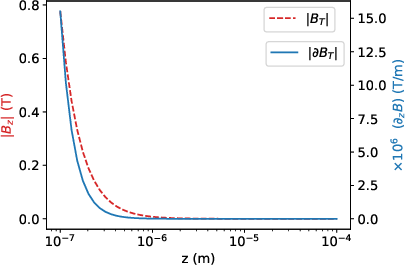
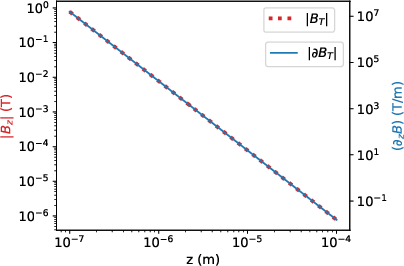
Figure 4: Required superposition width as a function of decoherence rate, showing experimental feasibility improvements with the proposed setup.