- The paper introduces a novel methodology where curved tiles add elastic energy for controlled, shape-specific origami design.
- It applies Lagrangian methods and group orbit procedures for in-depth computational modeling and precise energy calculations.
- The study demonstrates applications in deployable structures and buckling analysis, enhancing traditional origami design techniques.
Design of Origami Structures with Curved Tiles Between the Creases
The paper "Design of origami structures with curved tiles between the creases" (2308.01387) discusses a novel approach to origami design that involves integrating elastic energy by allowing tiles between creases to bend. This methodology significantly influences the origami's ability to achieve specific shapes while enabling additional functionalities of the tiles themselves, including varying thickness and allowing isometric mappings. Theoretical frameworks and systematic design methods are detailed for creating complex origami structures from flat sheets, emphasizing the group's orbit procedure on curved tile origami compatible with various practical methods for design.
Here is a breakdown of the paper's contents:
Introduction
The introduction highlights the problems associated with linear origami designs—specifically, how a single crease pattern can lead to many fold configurations, which complicates goal-oriented design. By allowing the tiles to bend, the paper proposes adding elastic energy that guides the origami structure toward desired shapes, offering significant stiffness or softness flexibility. The paper lays the foundation for integrating depth into origami landscapes through h3 scaling—adapting thickness for individual tiles. Through incorporating differential geometry concepts into origami, the paper advances current origami theories from a Lagrangian perspective, fundamentally reforming traditional Eulerian approaches.
Theoretical Developments
Curved Origami Principles
The theory posits that incorporating curved tile origami can yield more efficient energy storage and design flexibility. The paper applies Lagrangian methods, focusing on providing formulas for deformation on flat reference configurations—typically planar sheets with crease patterns—before folding. Through elaborate mathematical constructs, the paper ensures architectural elegance and design possibilities in creating curved tile origami.
Group Orbit Method for Origami Design
A central focus lies on the group orbit procedure, viable for executing advancements in discrete and globally compatible origami designs. Here, isometry groups assist in engineering representations of microstructures within origami folding based on algebraic transformations. Particularly, conformal groups provide advanced scaling methods, balancing nonlinear elasticity and structural transformations.
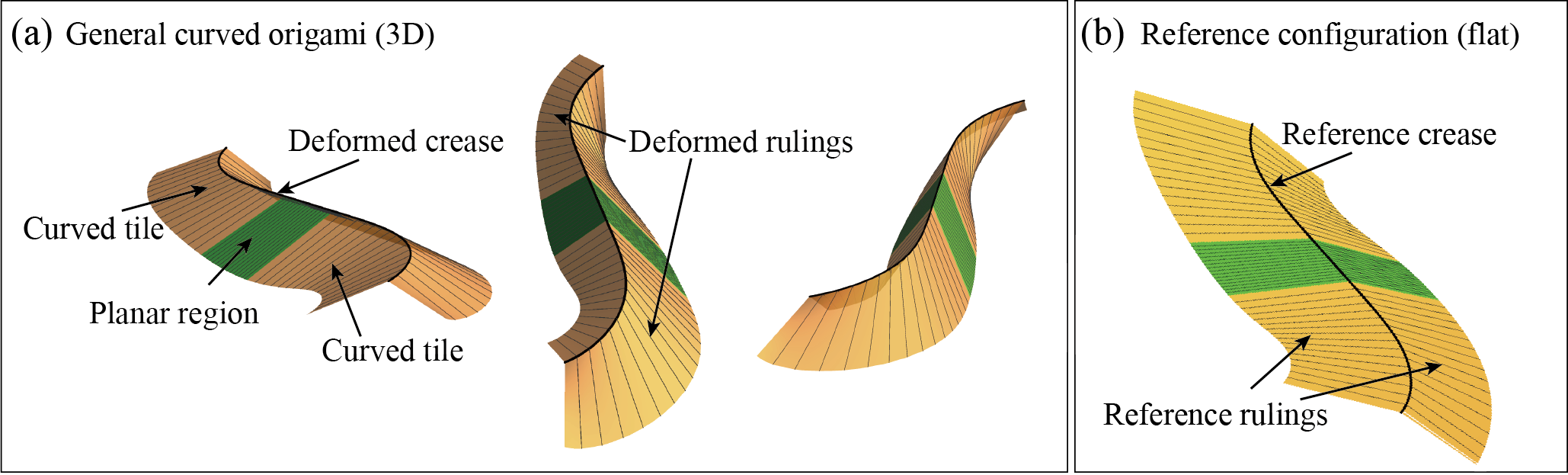
Figure 1: General curved origami given by utilizing theoretical frameworks from Theorem 2.
Implementation Strategy
Computational Methods and Examples
The implementation of curved tile origami enhances applications for deployable structures. Specifying unit cells entwined with discrete Abelian groups yields evaluative means for implementing helical and conformal origami structures. The paper demonstrates faithful representations of these examples through visual aids, showcasing the folding mechanics and derived conformations substantially more adept than direct linear fold counterparts.
Energy Calculations
The paper elaborates on unraveling elastic energy within origami designs governed by Kirchhoff's nonlinear plate theory. Specific energy metrics are derived through integrations across domains, employing precise computational modeling to predict effective energy landscapes and creased configurations.

Figure 2: Examples of curved tile origami given by structural theorem applications.
Discussion on Lotus Origami Folding Motions
The research insinuates practical frameworks for origami to progress from a flat sheet to structured designs smoothly. By analyzing the curvature and torsion throughout crease motion, the paper presents clear methodologies for enabling dynamic origami transitions portraying sophisticated folding mechanics.

Figure 3: Snapshots conveying the progression of folding process within origami structures.
Application in Buckling Studies
The paper concludes by examining the origami configurations' potential application to structural buckling. Through planar integration within curved tile origami designs, the paper illustrates compatibility across surface textures in cylindrical and conical shell designs known for engaging in buckling transitions. This novel approach reveals possible practical implementations within architectural constructs and robotic machinery components.
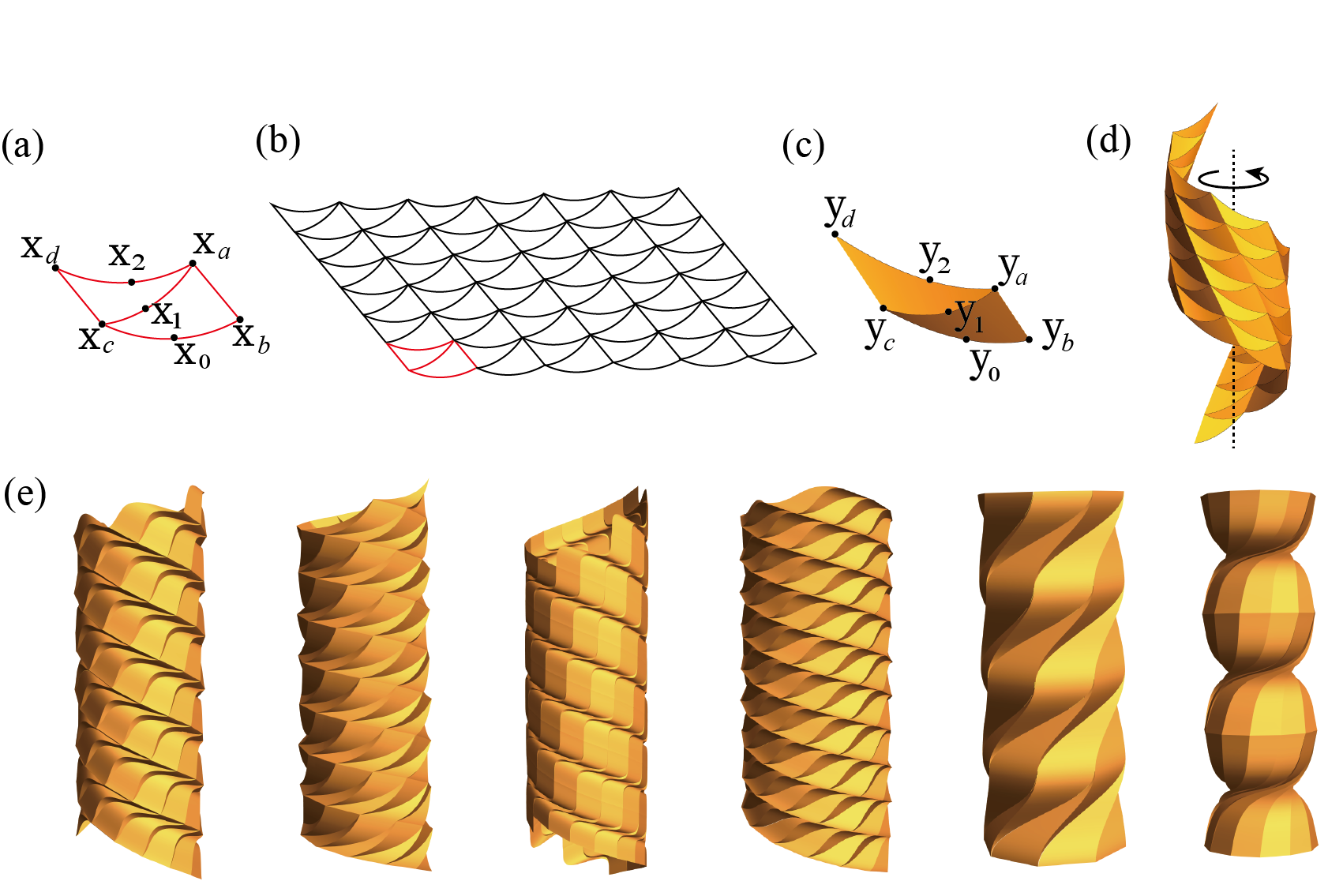
Figure 4: Conceptualized buckling patterns revealing potential enhancements over traditional structural methods.
Conclusion
The methodology introduced paves pathways to innovative applications in deployable engineering, further unrivaled by traditional origami, fostering advances in capturing the intrinsic qualities of architecture, robotics, and adaptable structures. The energy modeling and theoretical enhancements propose robust opportunities to address origami's flexibility complexities through refined mathematical characterizations.
This paper thoroughly integrates theoretical insights with pragmatic applications, advancing the field of origami design significantly by accommodating curved geometries and structured forms in tangible real-world implementations.