- The paper introduces a novel model that employs ZXYFormer to simultaneously segment teeth and root canals from CBCT images.
- It uses a coarse-to-fine strategy with uncertainty estimation and weight transfer to refine segmentation of complex dental structures.
- Results from 157 clinical datasets show superior Dice scores and sensitivity, validating the method's enhanced segmentation performance.
Introduction
The paper "Teeth and Root Canals Segmentation Using ZXYFormer With Uncertainty Guidance And Weight Transfer" presents a novel approach for the simultaneous segmentation of teeth and root canals from CBCT images. It addresses the challenges of large image data size and morphological differences between teeth and root canals. The proposed method employs a coarse-to-fine segmentation strategy utilizing an inverse feature fusion transformer, uncertainty estimation, and weight transfer mechanisms to enhance segmentation performance relative to existing methods.
Coarse-to-Fine Segmentation Method
The model implements a two-phase segmentation process. Initially, coarse segmentation is performed using down-sampled CBCT images. This phase enables handling of large data by identifying areas of interest in teeth and root canals. Subsequently, fine segmentation maps these coarse results onto the original resolution images, creating detailed segmentation outcomes. The ability to preserve macro information from coarse segmentation improves the fine segmentation network's effectiveness in identifying complex structures.
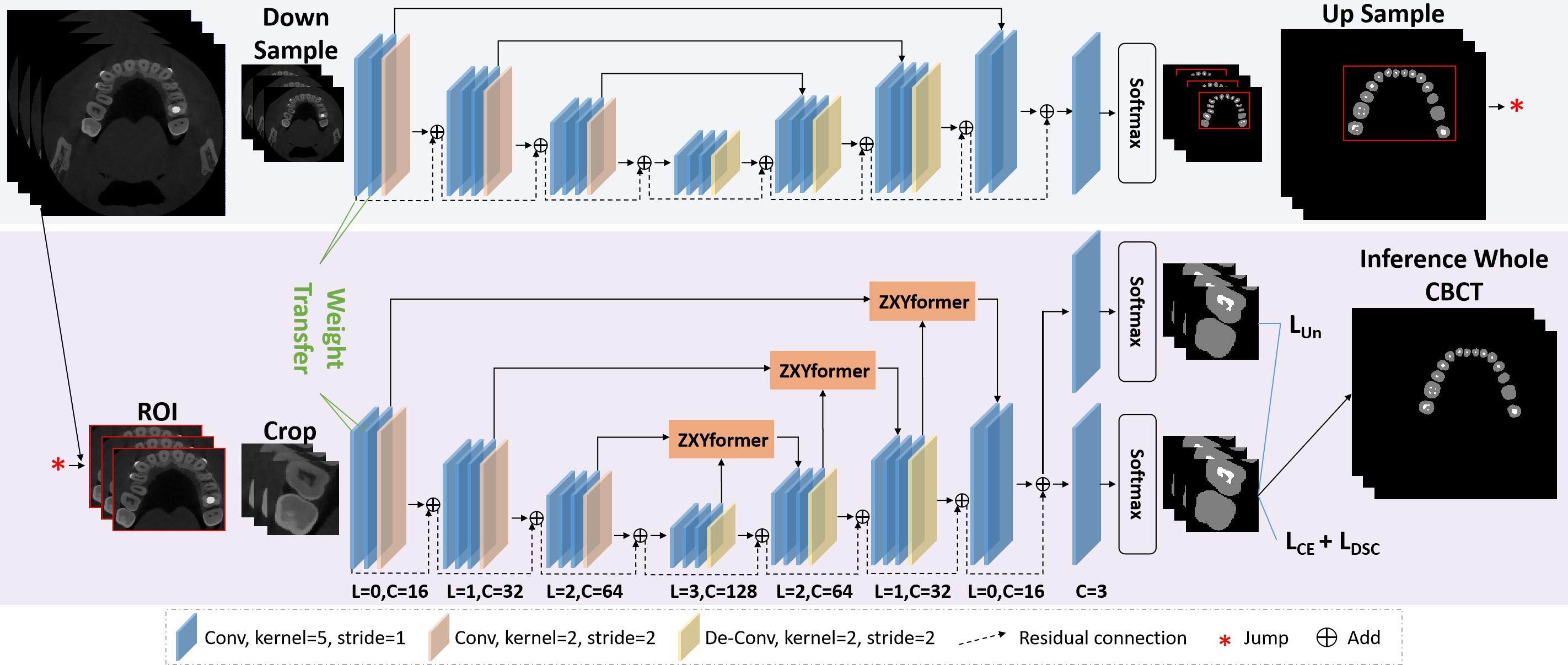
Figure 1: Network structure of tooth and root canal segmentation.
A key component of the solution is the ZXYformer, an innovative transformer model designed with reverse feature fusion. The architecture enables transferring deeper morphological features to the shallow layers, aiding detail segmentation for morphologically diverse objects like teeth and root canals. As outlined in the paper, ZXYformer consists of interconnected Z, X, and Y processes:
- Z Process: Responsible for channel dimension expansion and high-level feature upsampling.
- X Process: Implements a Deformable Reverse Cross Transformer (DRCT) for precise shape perception essential in capturing root canal structures.
- Y Process: Completes feature embedding with FFN and restores channel dimensions.
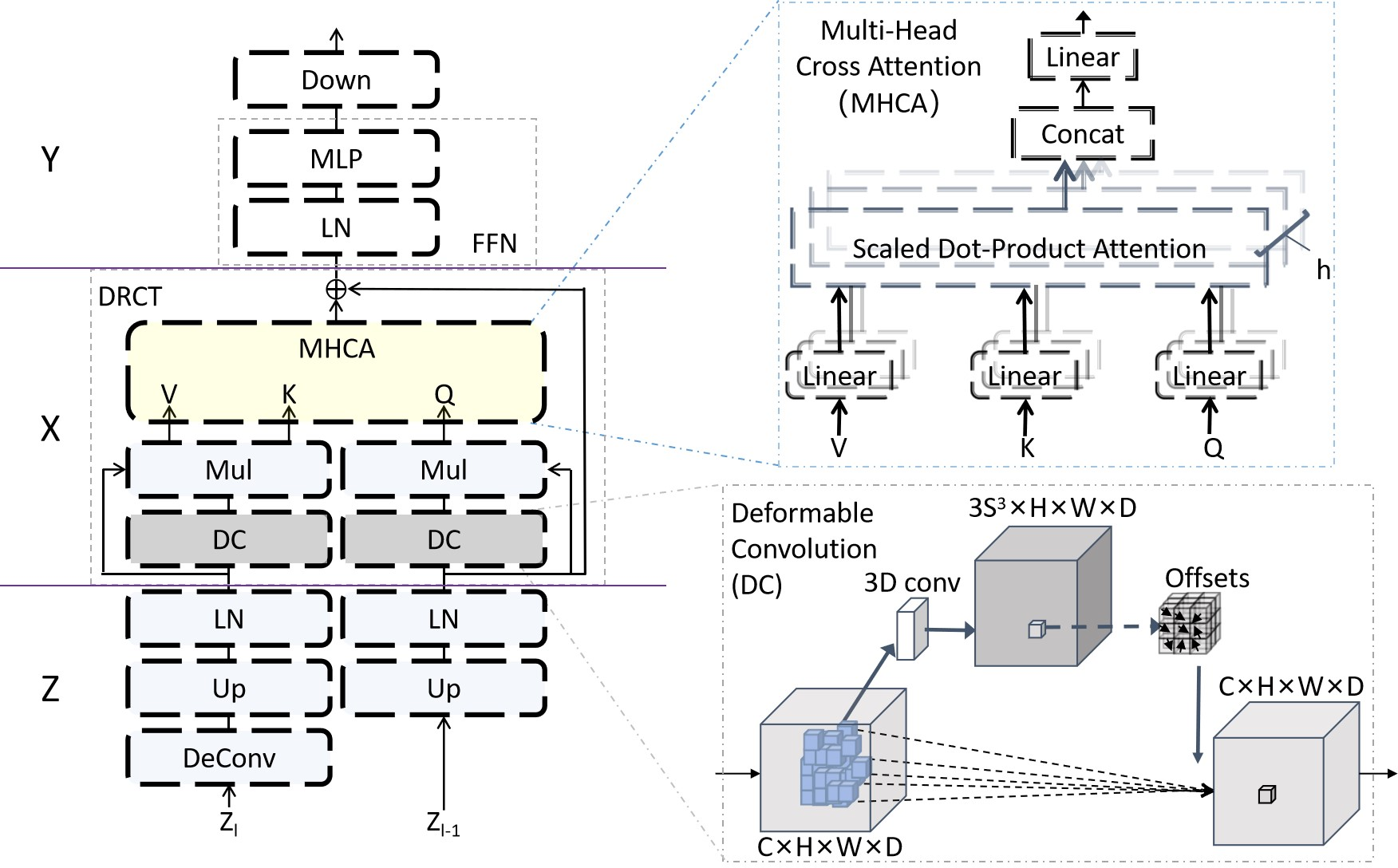
Figure 2: Structure of ZXYformer. DeConv is deconvolution, Up and Down use 1×1×1 convolution to separately increase and decrease the dimension of the channel, LN represents layer normalization, Mul represents matrix dot multiplication, MLP is multilayer perceptron.
Uncertainty Estimation and Auxiliary Branch
Considering the inherent difficulty in segmenting regions with low contrast or calcified root canals, the authors introduce an uncertainty estimation mechanism. This auxiliary branch calculates prediction uncertainties using Kullback-Leibler divergence, offering refined segmentation in difficult areas. The uncertainty loss is integrated into the overall loss function to enhance model predictions without additional computation overhead.
Implementation and Results
The implementation uses a dual GPU setup and an adaptive learning framework to optimize the segmentation network. Parameters were initally set via truncated normal distribution methods. Results from 157 clinical CBCT datasets revealed significant improvements over comparators, with the proposed model demonstrating superior Dice scores and sensitivity.
The segmentation performance comparison between various existing methods and the proposed model showcases its efficacy in accurately delineating teeth and root canals. The ablation study confirms the contributions of weight transfer, ZXYformer embedding, and uncertainty estimation in achieving optimal results.
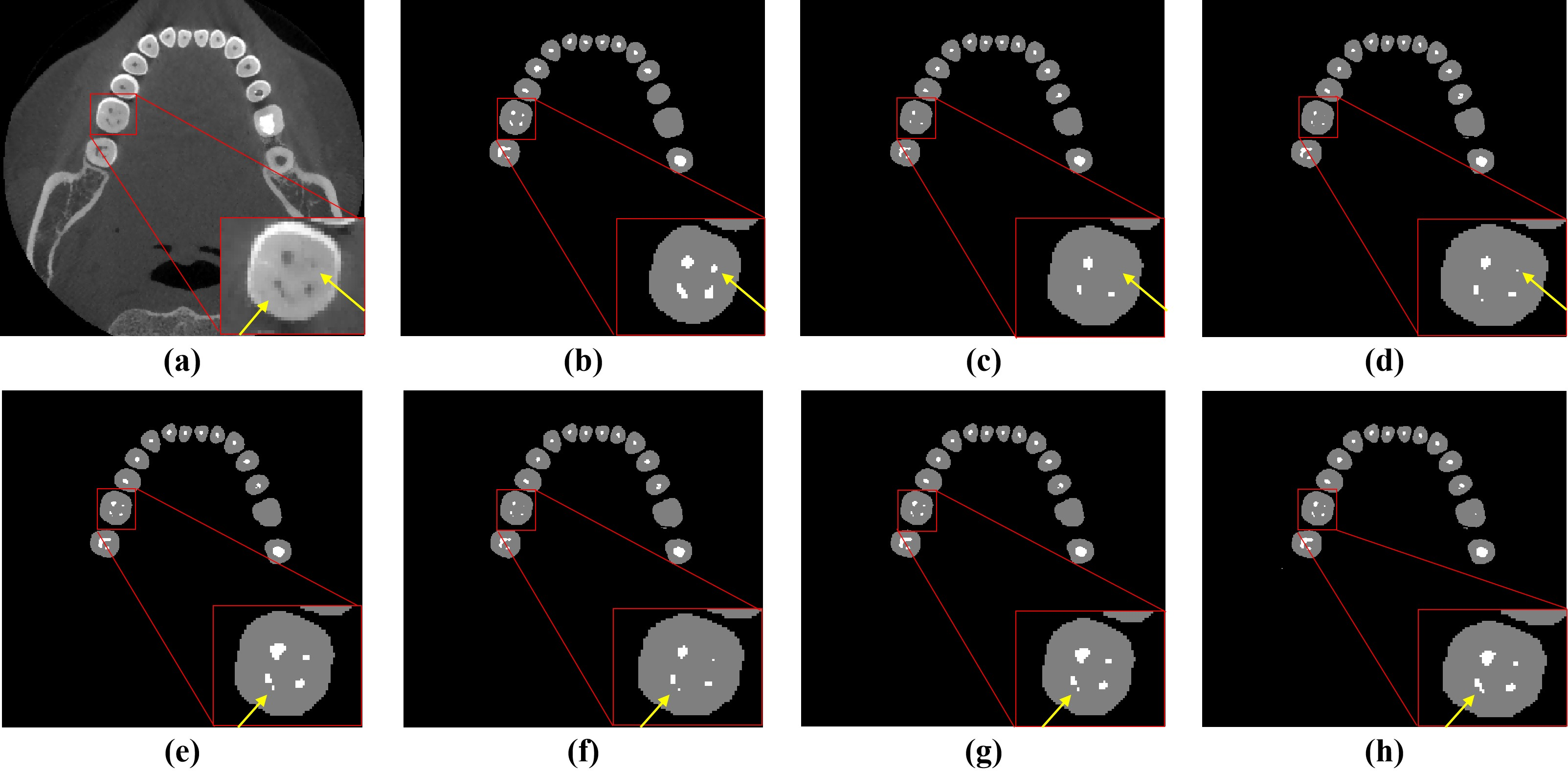
Figure 3: Visualization of results. (a) Original drawing, (b)Grond truth, (c) Ref [9098542], (d) Ref [9629727], (e) Method [10.1007/978-3-030-78191-0_12], (f) Weight Transfer is used in the proposed model (g) Weight transfer and ZXYformer is used in the proposed model (h) The proposed whole model.
Conclusion
This research introduces an advanced method utilizing transformer networks with uncertainty estimation for enhanced high-resolution CBCT teeth and root canal segmentation. By leveraging weight transfer and global feature attention, the ZXYformer improves performance in complex image analysis scenarios. Future work may expand this approach to other domains in medical imaging segmentation requiring precise object delineation.