- The paper introduces DeltaLCA, an automated tool that simplifies comparative environmental assessments by leveraging heuristic matching and user intervention.
- The paper details a novel methodology that automates LCI generation from PCB designs and integrates external data to infer specifications like die sizes.
- The paper demonstrates high matching coverage in case studies, reducing user input while closely aligning with traditional full LCAs for carbon footprint estimation.
DeltaLCA: Comparative Life-Cycle Assessment for Electronics Design
Introduction
The "DeltaLCA: Comparative Life-Cycle Assessment for Electronics Design" paper introduces DeltaLCA, an open-source tool designed to streamline life-cycle assessments (LCAs) for electronics, particularly at the design phase. This tool aims to enhance sustainability in electronics by allowing designers to perform comparative analyses that require less expertise and time than traditional LCA methods. The paper outlines a novel approach focusing on relative comparisons of environmental impact (EI) between designs, leveraging domain-specific heuristics to address the absence of absolute metrics due to data limitations.
The tool addresses specific challenges in LCA for electronics, including the difficulty in generating complete life cycle inventories (LCIs) due to proprietary fabrication processes and the complexity of devices with numerous components. DeltaLCA automates LCI generation and facilitates comparisons by using partial inventory data and heuristic reasoning.
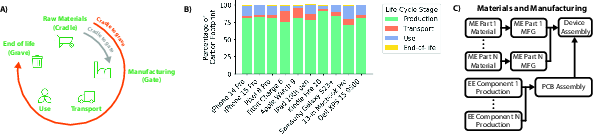
Figure 1: A) LCA stages and boundaries. B) Contribution of each stage to total carbon footprint for commercial devices. C) LCA methodology used by Amazon Devices Sustainability.
System Overview
DeltaLCA proposes a new methodology contrasting traditional LCA workflows. Traditional LCA involves detailed manual inventory creation and expertise-driven assessments. DeltaLCA automates initial inventory generation and employs a user-in-the-loop system for comparative evaluation. The workflow is illustrated in Figure 2, depicting automated inventory generation and user intervention for resolving unmatched parts via rule specification.
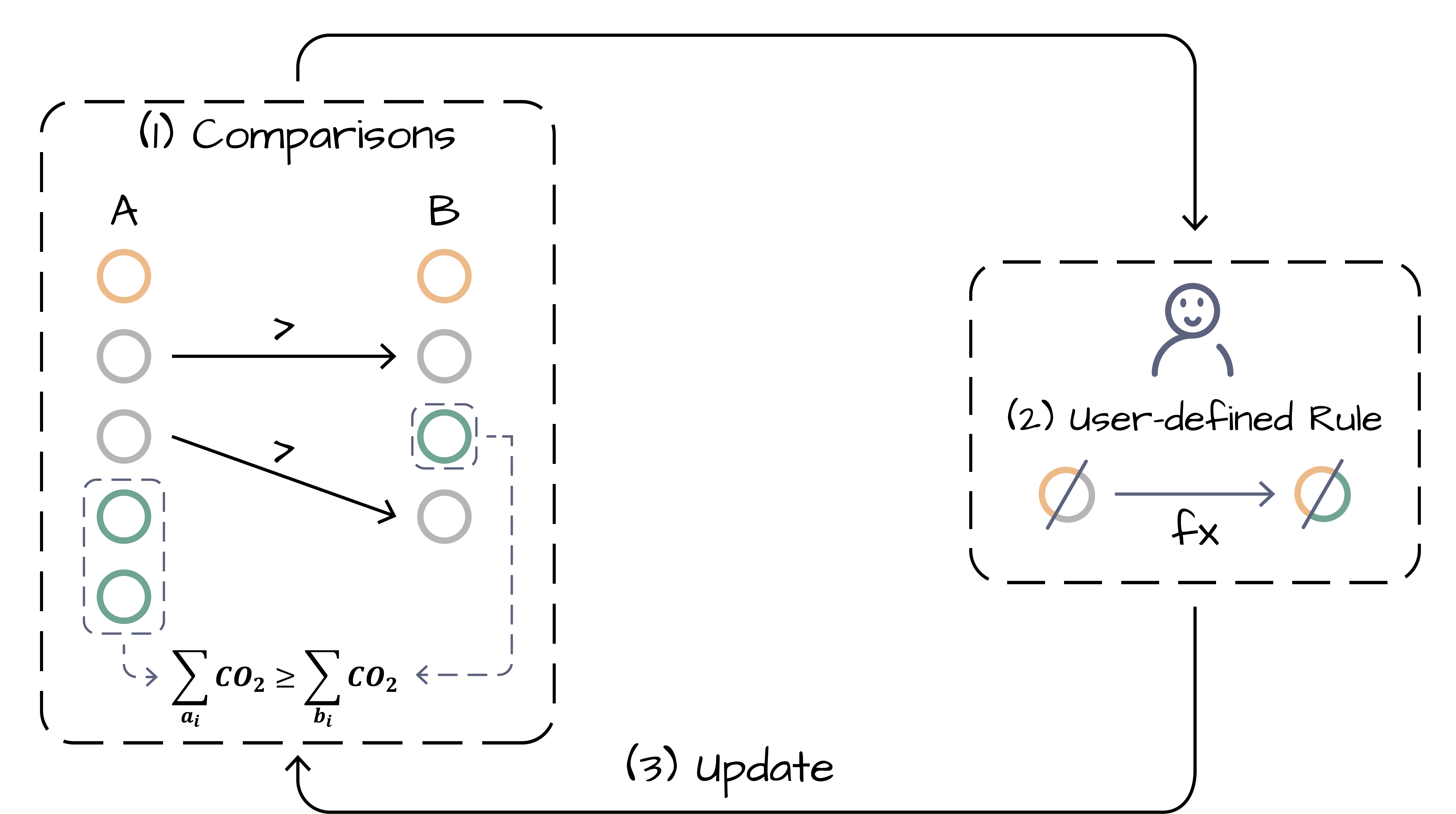
Figure 2: Our comparison algorithm uses parts either for pairwise comparisons (grey nodes) via heuristics (edges) or for carbon footprint comparison (green nodes).
The system uses domain-specific knowledge to parse PCB design files, creating detailed parts lists augmented by data from external databases. It infers crucial specifications like die sizes to facilitate EI estimation and uses standardized EI values for components with complete data.
Automated Life Cycle Inventory
DeltaLCA's LCI generation leverages a structured pipeline (Figure 3) to parse PCB design files, interface with databases for detailed attributes, and infer specifications critical for environmental assessments. The parts list categorization employs heuristics based on element naming conventions, footprint topology, and component correlations. The process estimates die areas and technology nodes, providing a partial inventory ready for carbon footprint comparisons.
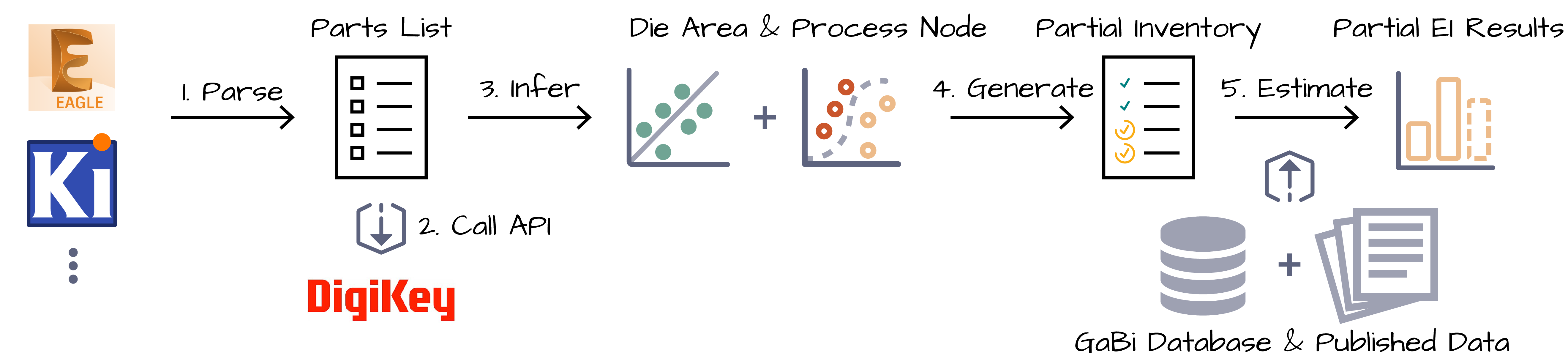
Figure 3: Our automatic LCI pipeline. We start by parsing the PCB design files from common design software into a parts list, then infer core specifications like die sizes leveraging online resources.
Standardized EI estimates for components like resistors, capacitors, and inductors are derived from existing literature, providing a simplified baseline for comparison.
Comparative Impact Assessment
The comparative LCA is executed through an integer programming model, efficiently managing component comparisons between two designs using heuristic rules and carbon footprint evaluations. The system can demonstrate one design's greater EI over another by leveraging part information from both direct EI comparisons and pairwise heuristic assessments.
The comparison algorithm prioritizes optimal matching to maximize covered components, thereby reducing the need for user-defined rules (Figure 4). The user interface (Figure 5) facilitates this process, presenting matched/unmatched components and accepting user refinement to improve comparison outcomes.
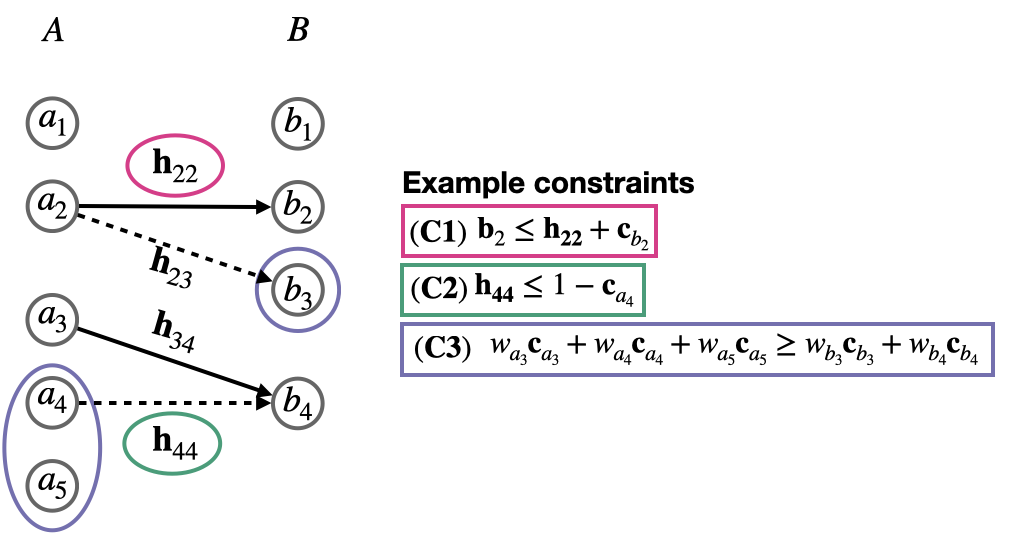
Figure 4: Input to this example problem is the bipartite graph, including the heuristic edges and the carbon footprint weights.
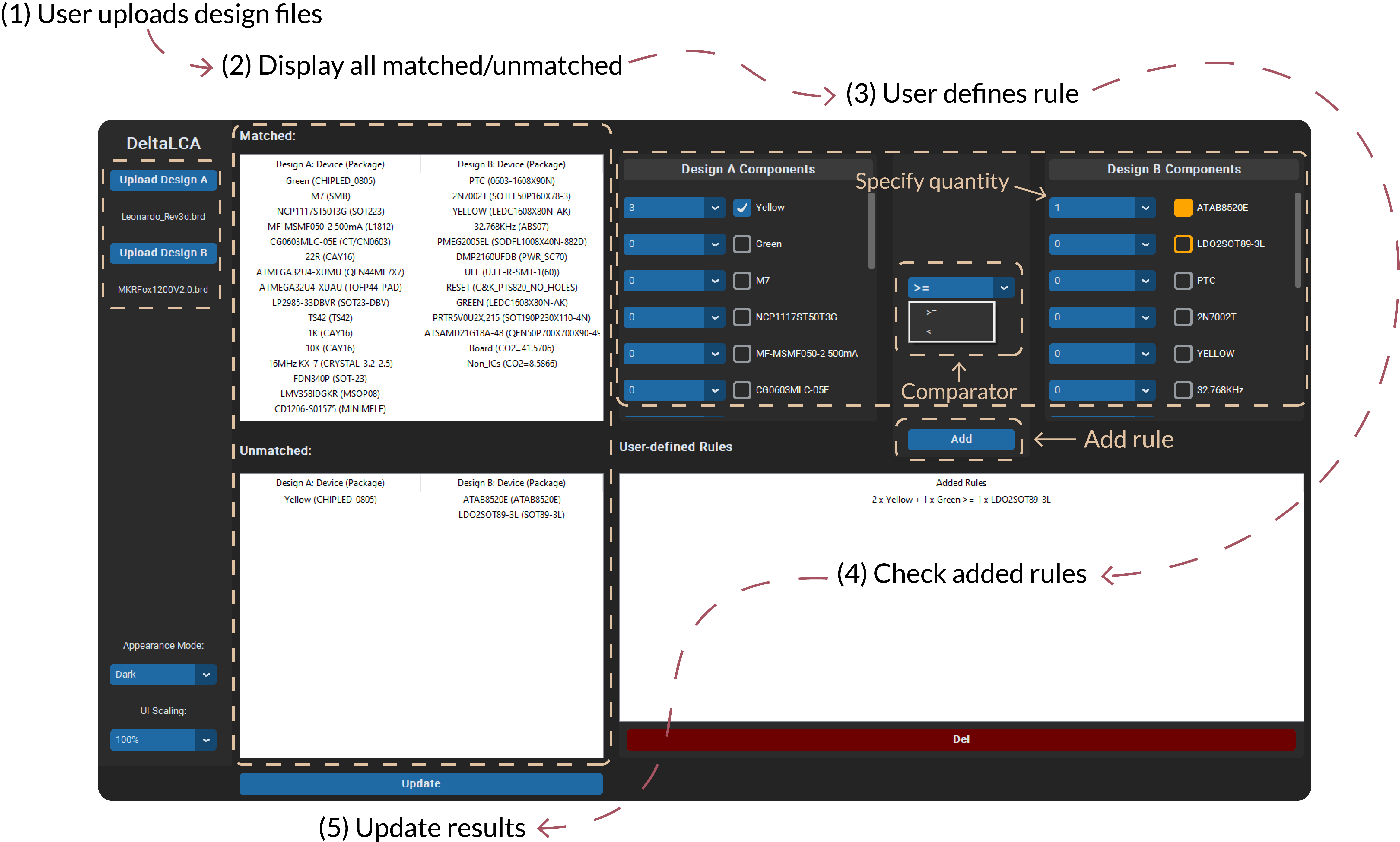
Figure 5: System Screenshot of DeltaLCA user interface.
Evaluation and Case Studies
DeltaLCA was evaluated through case studies comparing the EI of simple and complex electronics designs. In simpler designs with complete inventories, DeltaLCA's estimates closely matched traditional full LCA results, demonstrating accuracy (Figure 6). For more complex designs, DeltaLCA achieved high matching coverage automatically, requiring minimal user intervention to establish comparative EI rankings.
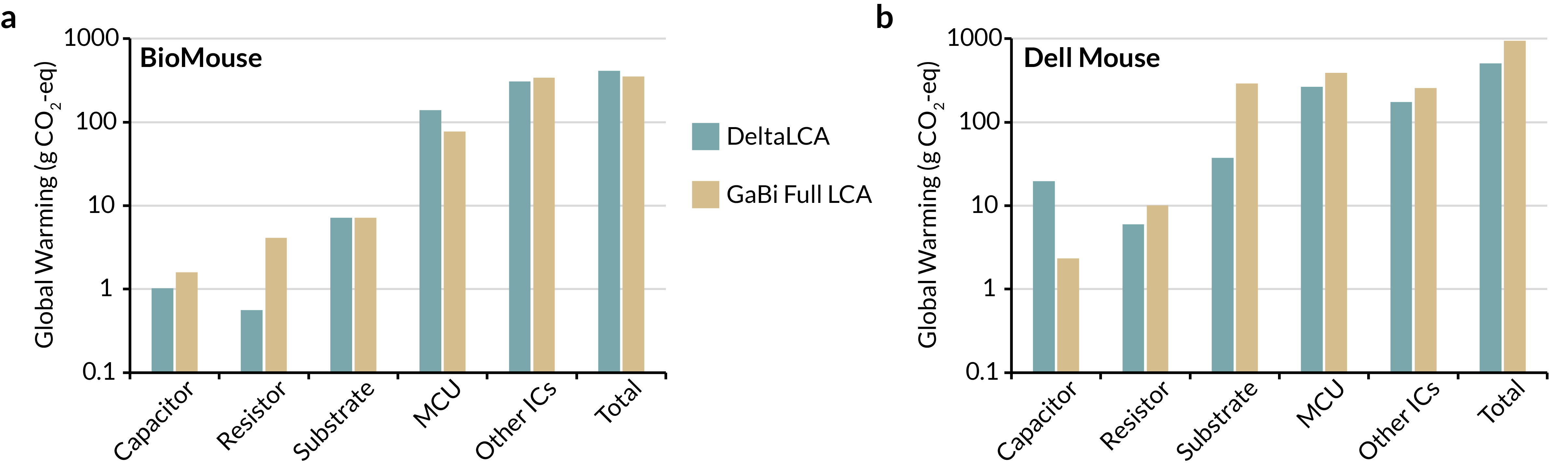
Figure 6: Comparing global warming emissions in carbon dioxide equivalent between DetlaLCA and traditional full LCA using GaBi for a BioMouse and a Dell optical mouse.
User surveys indicate a positive reception to integrating DeltaLCA into current workflows, highlighting the perceived importance of tool integration with existing EDA software to streamline design processes (Figure 7).
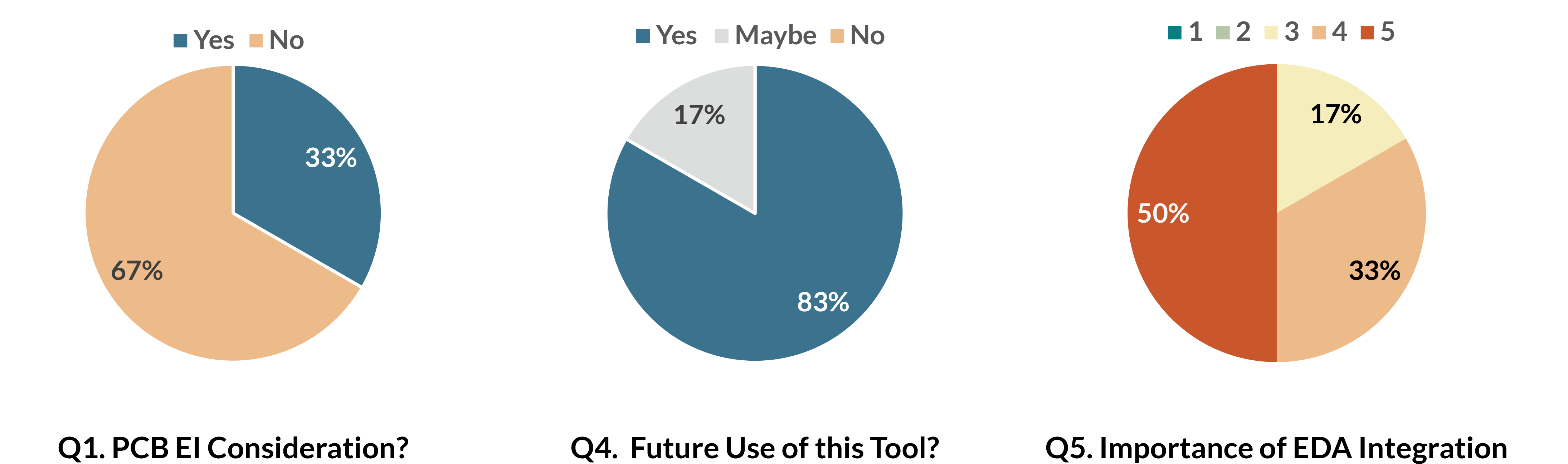
Figure 7: User perceptions regarding incorporating DeltaLCA into design workflows.
Conclusion
DeltaLCA introduces a pragmatic approach to sustainable electronics design by enabling efficient comparative assessments of environmental impacts. By automating inventory creation and leveraging domain heuristics, it significantly reduces the complexities and expertise barriers associated with traditional LCAs. The tool holds the potential to transform electronic design processes by integrating sustainability metrics directly into design decisions, fostering broader adoption in industries focused on sustainable development. Future work could expand its applicability to other domains and refine system components for enhanced interaction and accuracy.