- The paper introduces GEO, a framework that redefines content visibility in generative engines with novel optimization metrics.
- It details a methodology that integrates citation tracking, tone adjustments, and statistical augmentations validated through the GEO-bench platform.
- Results indicate up to a 40% improvement in visibility, highlighting significant implications for digital marketing and content strategy.
GEO: Generative Engine Optimization
Introduction to Generative Engines
The increasing integration of LLMs in search technologies has catalyzed the evolution of conventional search engines, giving rise to what is known as Generative Engines (GEs). These engines leverage the capabilities of LLMs to not only retrieve relevant documents but also to synthesize information and produce well-crafted responses grounded in the retrieved data.
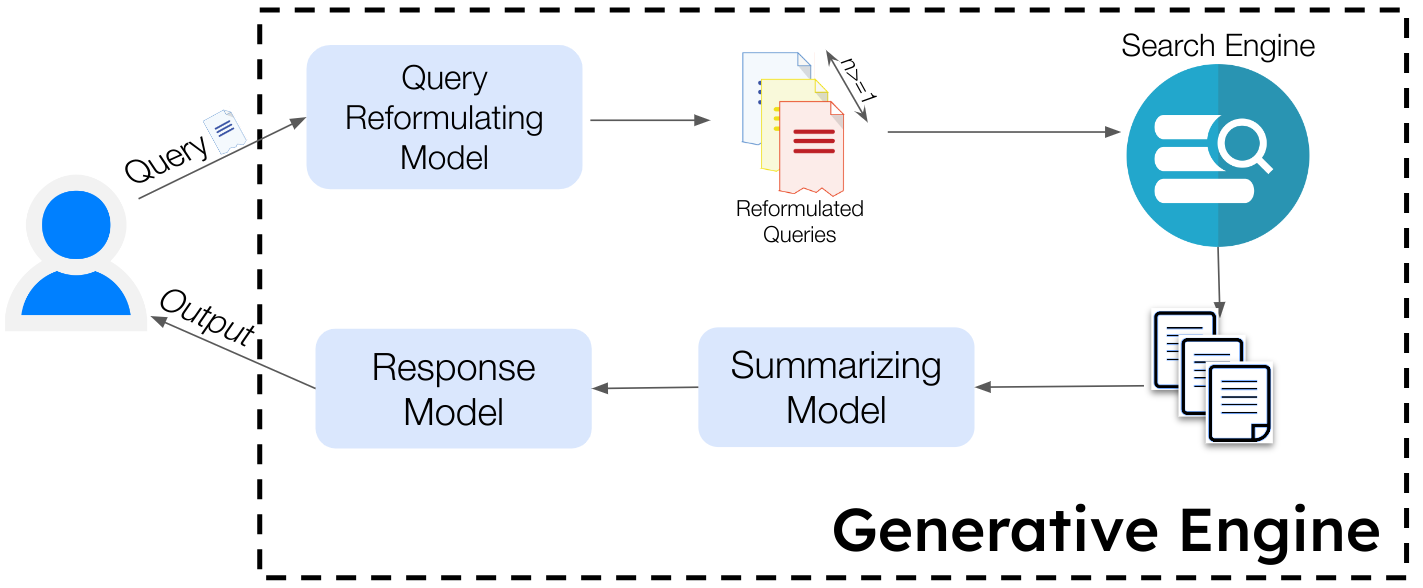
Figure 1: Overview of Generative Engines. Generative Engines primarily consists of a set of generative models and a search engine to retrieve relevant documents.
The shift towards GEs presents a dual advantage: enhanced user experience due to faster and more accurate information retrieval, and increased engagement through more personalized responses. Nonetheless, the transition is not without drawbacks, especially for content creators. The encapsulated nature of GEs—their ability to generate responses without direct interaction with the source websites—can significantly decrease direct website traffic, posing a challenge to maintaining visibility.
Introduction to Language Engine Optimization (GEO)
To address these issues, the paper introduces a framework named Language Engine Optimization (GEO). This framework aims to empower content creators by allowing them to enhance their visibility within GE responses. GEO operates as a black-box optimization framework, capitalizing on specialized visibility metrics to optimize content presentation.
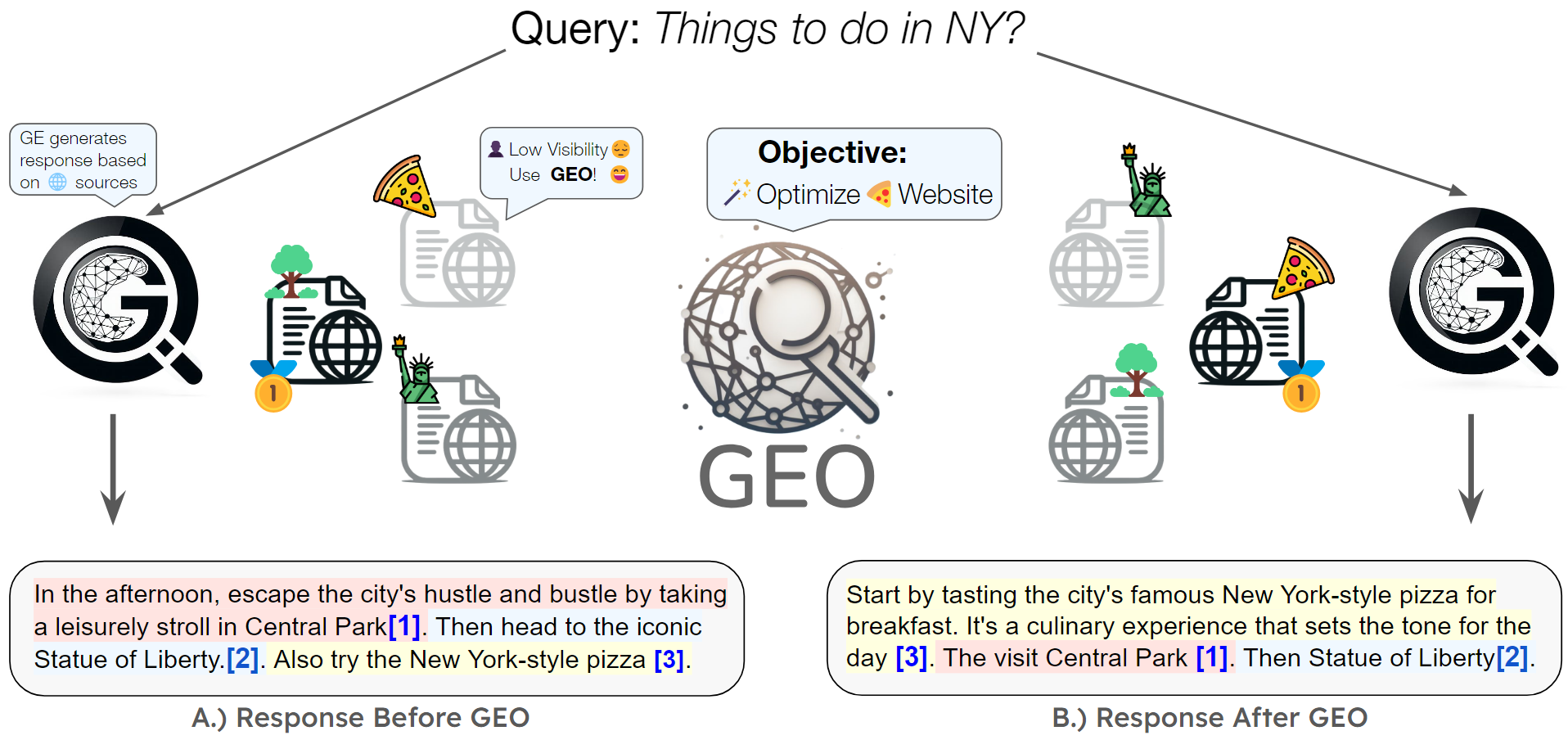
Figure 2: Language Engine Optimization (GEO) method optimizes websites to boost their visibility in Generative Engine responses.
The GEO paradigm shifts the focus from traditional ranking metrics towards more nuanced visibility measures that suit the structured and integrated responses typical of GEs. This transition necessitates the definition of new metrics that extend beyond mere ranking to include the influence and relevance of citations within the generated content. GEO facilitates this with a comprehensive suite of impression metrics, allowing content creators to tailor their strategies to this emergent form of digital visibility.
Implementation and Evaluation
Central to the development and validation of GEO is GEO-bench, a benchmarking platform purpose-built for evaluating visibility optimization in GEs. GEO-bench includes a robust dataset comprising 10,000 queries across varied domains, coupled with required sources, to enable comprehensive evaluation. Through GEO-bench, the authors illustrate that effective implementation of GEO can enhance content visibility by up to 40%.
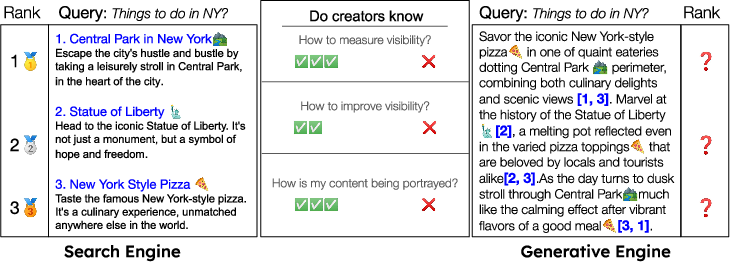
Figure 3: Ranking and Visibility Metrics are nuanced in Generative Engines compared to traditional search engines, necessitating new visibility measures.
The paper demonstrates a variety of optimization strategies for content, ranging from the inclusion of citations and authoritative tone adjustments to the specificity of online content through quotations and statistical augmentations. Each strategy is validated against the benchmark, highlighting significant improvements in visibility, especially in domains where data, direct citations, and authoritative content are pivotal.
Practical Implications and Future Directions
The implications of GEO are substantial for the future landscape of digital search and content visibility. By providing a structured approach to enhance visibility under the emerging paradigm of generative search engines, GEO empowers content creators to maintain competitive relevance in light of the technological shifts in digital information retrieval.
Moving forward, the research underscores the potential for domain-specific optimizations and the refinement of visibility metrics to better align with user engagement and content creator goals. Moreover, the framework paves the way for advancements in digital marketing strategies and their adaptation to the intricacies of generative engines.
Conclusion
The development of Generative Engine Optimization marks a significant step towards addressing the challenges posed by the modern evolution of search technologies. Through meticulous framework formulation and the provision of concrete optimization methods, content creators are offered a viable pathway to preserving and enhancing the visibility of their content within this new search ecosystem. As generative engines continue to evolve, the frameworks and methodologies encapsulated in GEO provide a foundational toolkit for sustaining digital visibility and influence.