YOLO algorithm with hybrid attention feature pyramid network for solder joint defect detection
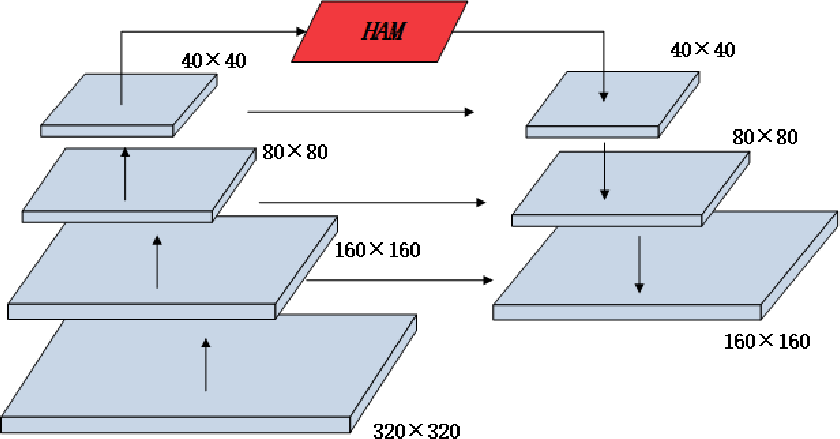
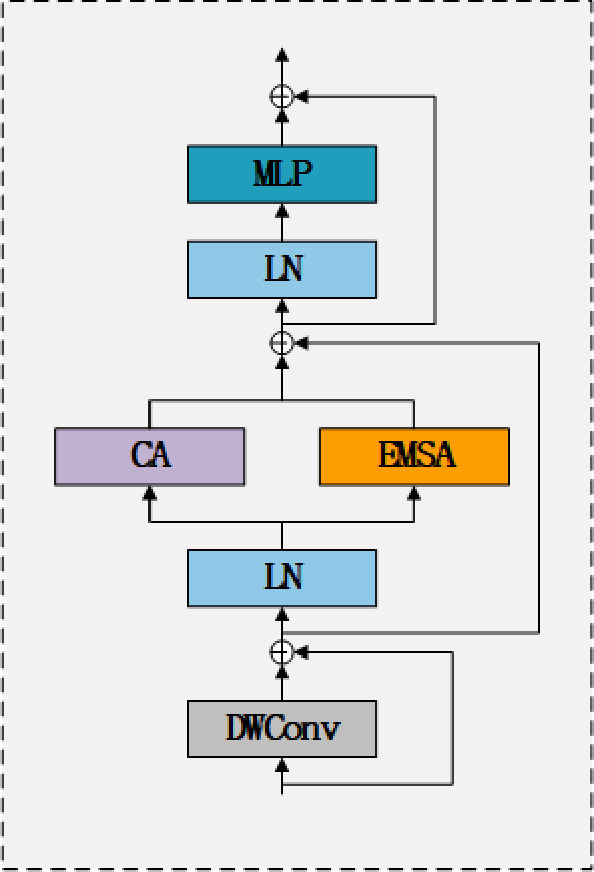
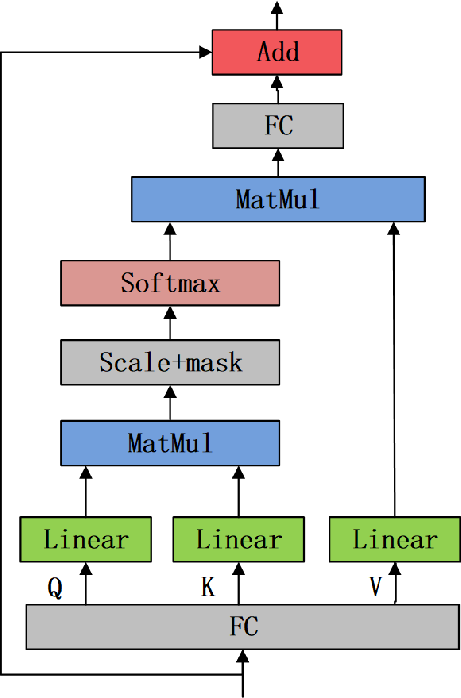
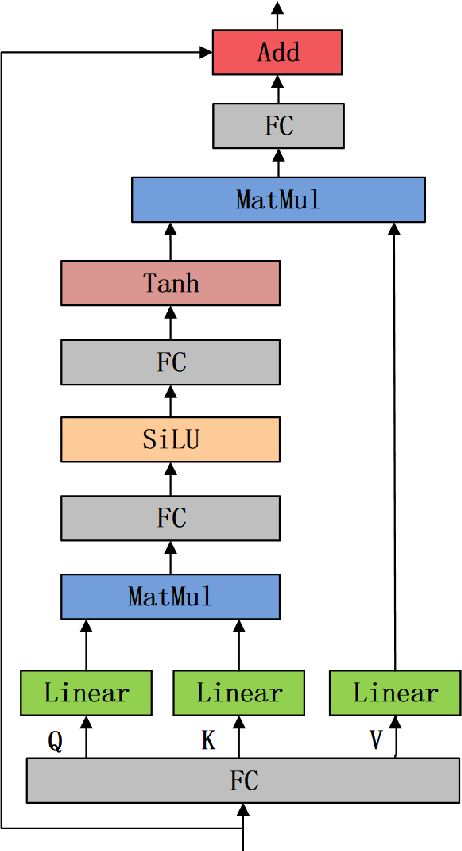
Abstract: Traditional manual detection for solder joint defect is no longer applied during industrial production due to low efficiency, inconsistent evaluation, high cost and lack of real-time data. A new approach has been proposed to address the issues of low accuracy, high false detection rates and computational cost of solder joint defect detection in surface mount technology of industrial scenarios. The proposed solution is a hybrid attention mechanism designed specifically for the solder joint defect detection algorithm to improve quality control in the manufacturing process by increasing the accuracy while reducing the computational cost. The hybrid attention mechanism comprises a proposed enhanced multi-head self-attention and coordinate attention mechanisms increase the ability of attention networks to perceive contextual information and enhances the utilization range of network features. The coordinate attention mechanism enhances the connection between different channels and reduces location information loss. The hybrid attention mechanism enhances the capability of the network to perceive long-distance position information and learn local features. The improved algorithm model has good detection ability for solder joint defect detection, with mAP reaching 91.5%, 4.3% higher than the You Only Look Once version 5 algorithm and better than other comparative algorithms. Compared to other versions, mean Average Precision, Precision, Recall, and Frame per Seconds indicators have also improved. The improvement of detection accuracy can be achieved while meeting real-time detection requirements.
- Smt solder joint inspection via a novel cascaded convolutional neural network. IEEE Transactions on Components, Packaging and Manufacturing Technology, 8(4):670–677, 2018. doi: 10.1109/TCPMT.2018.2789453.
- Ic solder joints inspection via an optimized statistical modeling method. IEEE Transactions on Components, Packaging and Manufacturing Technology, 12(2):341–348, 2021. doi: 10.1109/TCPMT.2021.3136720.
- Smd led chips defect detection using a yolov3-dense model. Advanced engineering informatics, 47:101255, 2021. doi: 10.1016/j.aei.2021.101255.
- An image is worth 16x16 words: Transformers for image recognition at scale. Proceedings of the IEEE conference on computer vision and pattern recognition, 2021. doi: 10.48550/arXiv.2010.11929.
- Yolo v4 for advanced traffic sign recognition with synthetic training data generated by various gan. IEEE Access, 9:97228–97242, 2021. doi: 10.1109/ACCESS.2021.3094201.
- Towards automatic optical inspection of soldering defects. In 2018 International Conference on Cyberworlds (CW), pages 375–382. IEEE, 2018. doi: 10.1109/CW.2018.00074.
- Yolo-mbbi: Pcb surface defect detection method based on enhanced yolov5. Electronics, 12(13):2821, 2023. doi: 10.3390/electronics12132821.
- Jocher G. Yolov5. 2022. doi: 10.5281/zenodo.7347926 .
- Jocher G. Yolov8. 2023. doi: https://github.com/ultralytics/ultralytics .
- An improved yolov5 algorithm for wood defect detection based on attention. IEEE Access, 2023. doi: 10.1109/ACCESS.2023.3293864.
- Squeeze-and-excitation networks. In Proceedings of the IEEE conference on computer vision and pattern recognition, pages 7132–7141, 2018. doi: 10.48550/arXiv.1709.01507.
- Coordinate attention for efficient mobile network design. In Proceedings of the IEEE/CVF conference on computer vision and pattern recognition, pages 13713–13722, 2021. doi: 10.48550/arXiv.2103.02907.
- Feature pyramid networks for object detection. In Proceedings of the IEEE conference on computer vision and pattern recognition, pages 2117–2125, 2017. doi: 10.48550/arXiv.1612.03144.
- Solder joint defect inspection method based on convnext-yolox. IEEE Transactions on Components, Packaging and Manufacturing Technology, 12(11):1890–1898, 2022. doi: 10.1109/TCPMT.2022.3224997.
- Learning spatial fusion for single-shot object detection. 2019 IEEE/CVF Conference on Computer Vision and Pattern Recognition (CVPR), 2019. doi: 10.48550/arXiv.1911.09516.
- Swin transformer: Hierarchical vision transformer using shifted windows. In Proceedings of the IEEE/CVF international conference on computer vision, pages 10012–10022, 2021. doi: 10.48550/arXiv.2103.14030.
- Path aggregation network for instance segmentation. In Proceedings of the IEEE conference on computer vision and pattern recognition, pages 8759–8768, 2018. doi: 10.1109/CVPR.2018.00913.
- Solar cell surface defect detection based on optimized yolov5. IEEE Access, 2023. doi: 10.1109/ACCESS.2023.3294344.
- Lff-yolo: A yolo algorithm with lightweight feature fusion network for multi-scale defect detection. IEEE Access, 10:130339–130349, 2022. doi: 10.1109/ACCESS.2022.3227205.
- Centralized feature pyramid for object detection. IEEE Transactions on Image Processing, 2023. doi: 10.1109/TIP.2023.3297408.
- Faster r-cnn: Towards real-time object detection with region proposal networks. Advances in neural information processing systems, 28, 2015. doi: 10.1109/TPAMI.2016.2577031.
- Efficientdet: Scalable and efficient object detection. In Proceedings of the IEEE/CVF conference on computer vision and pattern recognition, pages 10781–10790, 2020. doi: 10.1109/CVPR42600.2020.01079.
- Yolov7: Trainable bag-of-freebies sets new state-of-the-art for real-time object detectors. In Proceedings of the IEEE/CVF Conference on Computer Vision and Pattern Recognition, pages 7464–7475, 2023. doi: 0.48550/arXiv.2207.02696.
- Cbam: Convolutional block attention module. In Proceedings of the European conference on computer vision (ECCV), pages 3–19, 2018. doi: 10.48550/arXiv.1807.06521.
- Eca-net: Efficient channel attention for deep convolutional neural networks. In Proceedings of the IEEE/CVF conference on computer vision and pattern recognition, pages 11534–11542, 2020. doi: 10.48550/arXiv.1910.03151.
- Solder joint inspection using eigensolder features. Soldering & Surface Mount Technology, 30(4):227–232, 2018. doi: 10.1108/SSMT-12-2017-0042.
- Surface defects detection and identification of lithium battery pole piece based on multi-feature fusion and pso-svm. Ieee Access, 9:85232–85239, 2021. doi: 10.1109/ACCESS.2021.3067641.
- Ic solder joint inspection based on an adaptive-template method. IEEE Transactions on Components, Packaging and Manufacturing Technology, 8(6):1121–1127, 2018. doi: 10.1109/TCPMT.2018.2812815.
- Application of improved yolov5 model for strip surface defect detection. In 2022 Global Reliability and Prognostics and Health Management (PHM-Yantai), pages 1–5. IEEE, 2022. doi: 10.1109/PHM-Yantai55411.2022.9942194.
- Tph-yolov5: Improved yolov5 based on transformer prediction head for object detection on drone-captured scenarios. In Proceedings of the IEEE/CVF international conference on computer vision, pages 2778–2788, 2021. doi: 10.48550/arXiv.2108.11539.
- Solder joint defect detection in the connectors using improved faster-rcnn algorithm. Applied Sciences, 11(2):576, 2021. doi: 10.3390/app11020576.
Paper Prompts
Sign up for free to create and run prompts on this paper using GPT-5.
Top Community Prompts
Collections
Sign up for free to add this paper to one or more collections.