- The paper derives scaling relations that predict dark matter halo mass using generalized analytical profiles and a refined dimensionless parameter.
- It employs the Jeans equation integrated over aperture radii to compute velocity dispersions, significantly reducing model-dependent uncertainties.
- Results underscore the impact of aperture radius and velocity anisotropy on precision mass estimates, offering improved constraints over traditional methods.
An Analytical Framework for Predicting Dark Matter Halo-Observable Scaling Relations
Abstract
The paper "Predicting the Scaling Relations between the Dark Matter Halo Mass and Observables from Generalised Profiles I: Kinematic Tracers" focuses on modeling the relationship between dark matter halo mass and aperture velocity dispersion. By utilizing a generalized halo model with specific parameters like the inner slope α, concentration c, and anisotropy β, the authors derive scaling relations that predict halo mass while accounting for potential observational uncertainties.
Introduction
The characterization of dark matter halos is fundamental in understanding structure formation theories, although these halos are not directly observable. Their gravitational influence on luminous tracers like stars and galaxies provides indirect evidence of their presence. Typically, constraints on the Halo Mass Function (HMF) involve deducing halo masses from kinematic data, X-ray emissions, or gravitational lensing effects, which often bring inherent uncertainties due to limited group statistics. This study aims to establish a robust theoretical toolkit that models these halos using general profiles to reduce mass estimation uncertainties.
Methodology
The authors employ the Navarro-Frenk-White (NFW) profile as a benchmark to develop generalized halo profiles, referred to as 'ideal physical halos'. These halos are characterized by their logarithmic density slopes and scale-independent analytical profiles. The approach involves solving the Jeans equation for radial and line of sight velocity dispersions, then integrating these quantities over defined aperture radii to compute aperture velocity dispersions. The scaling relations between halo mass and velocity dispersion are derived via dimensional analysis, focusing on refining the dimensionless parameter ξ under varying halo configurations.
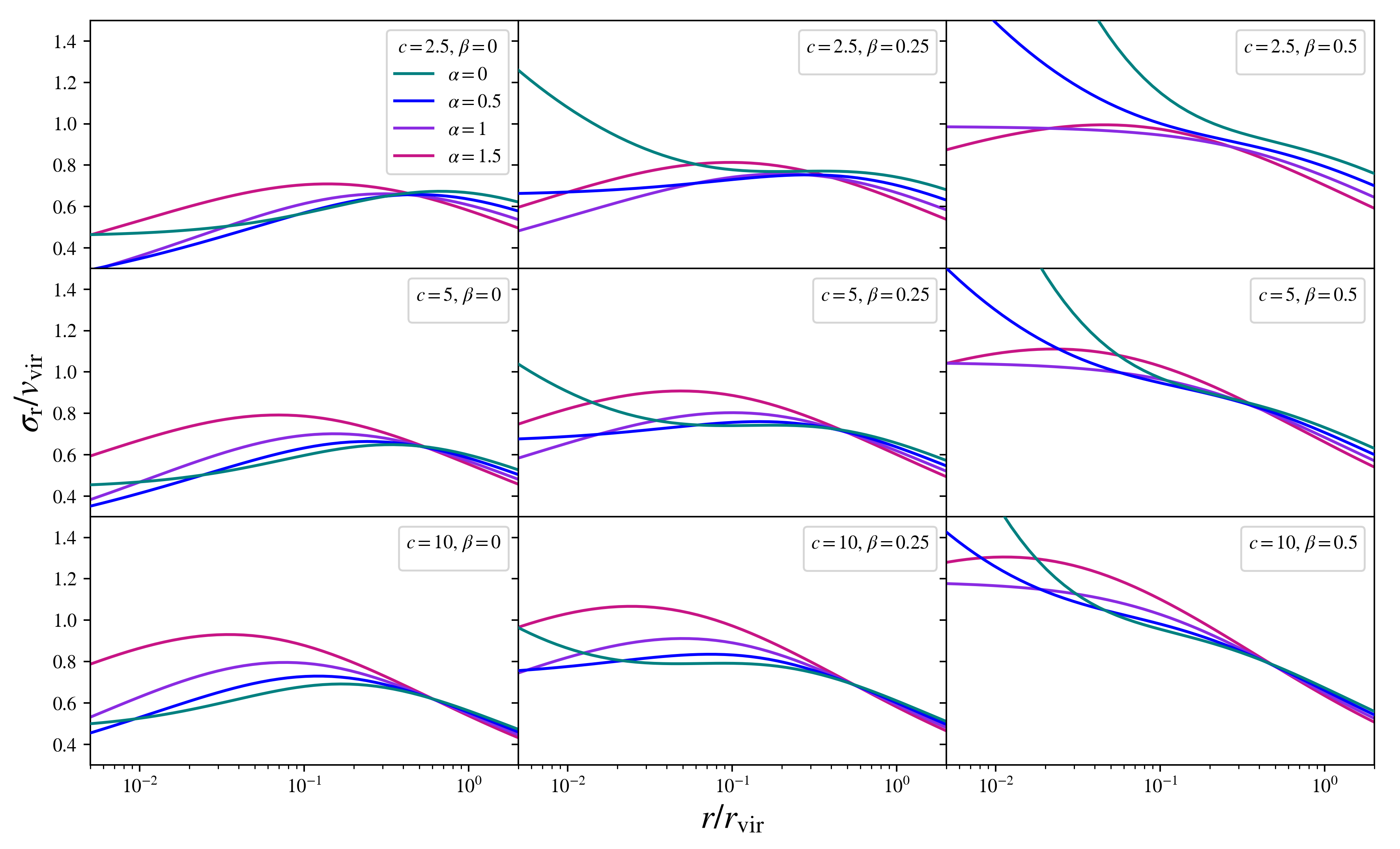
Figure 1: The radial velocity dispersion profiles for the ideal physical halos, in scale-free form σr.
Analytical Predictions
The study predicts scaling relations for M200−σap and M500−σap with uncertainties of 60.5% and 56.2%, respectively. The primary result suggests minimal sensitivity to halo concentration and mass scale, but significant impact from the aperture radius, the maximum inner slope, and the extent of velocity anisotropy. These factors combined yield predictions with reduced model-dependent uncertainty compared to current spectroscopic survey estimations.
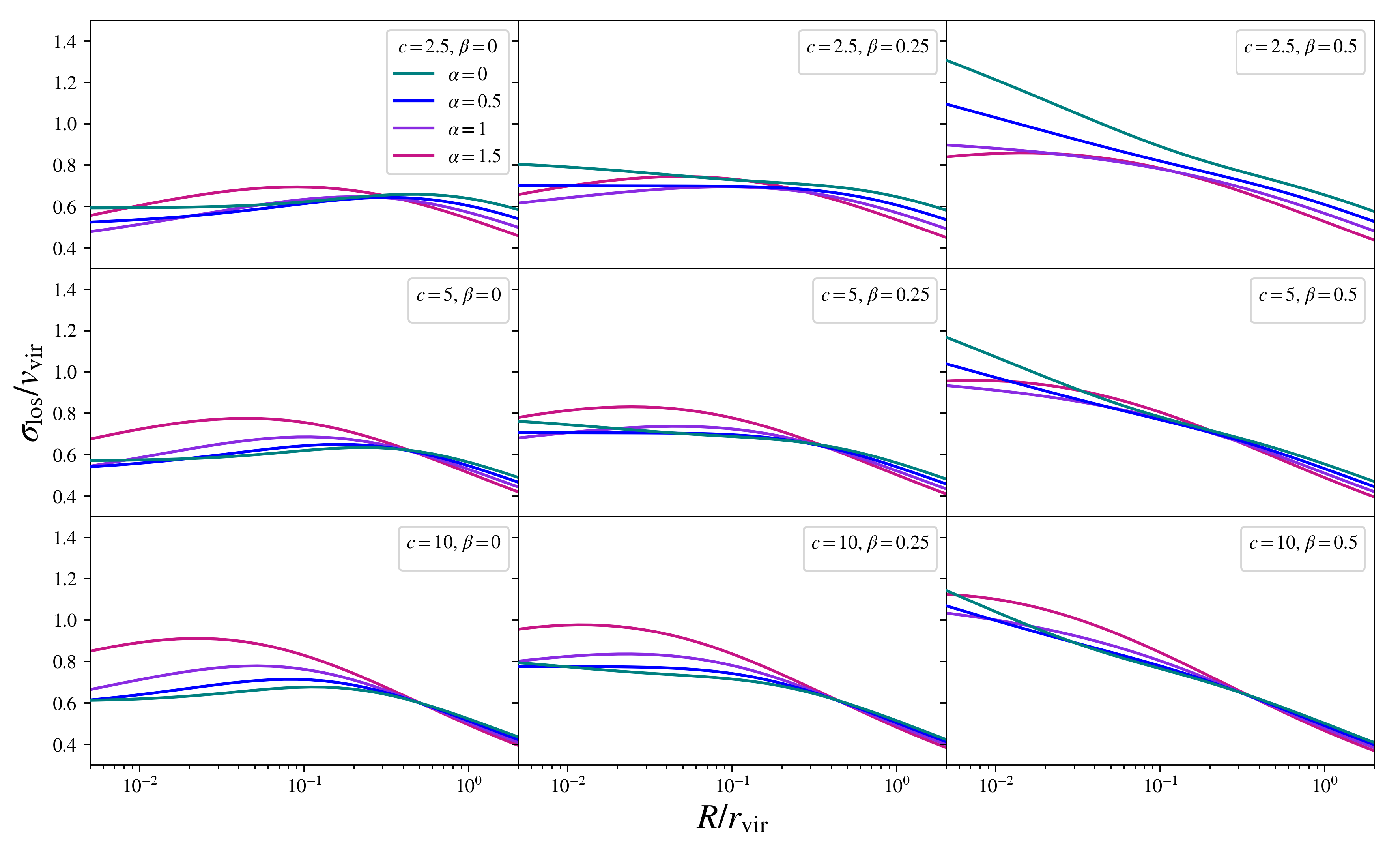
Figure 2: The line of sight velocity dispersion profiles for the ideal physical halos, in scale-free form σlos.
Results and Discussion
The results emphasize the statistical power of a theoretical framework in constraining halo mass estimates, independent of simulation calibrations. For practical applications, the modeling of more complex dynamical states or deviations such as triaxiality and mergers should be considered. Moreover, the study underscores the significance of aperture radius variability and anisotropy ranges in influencing scaling relation uncertainties, proposing that observational strategies could prioritize these parameters for precision mass estimations.
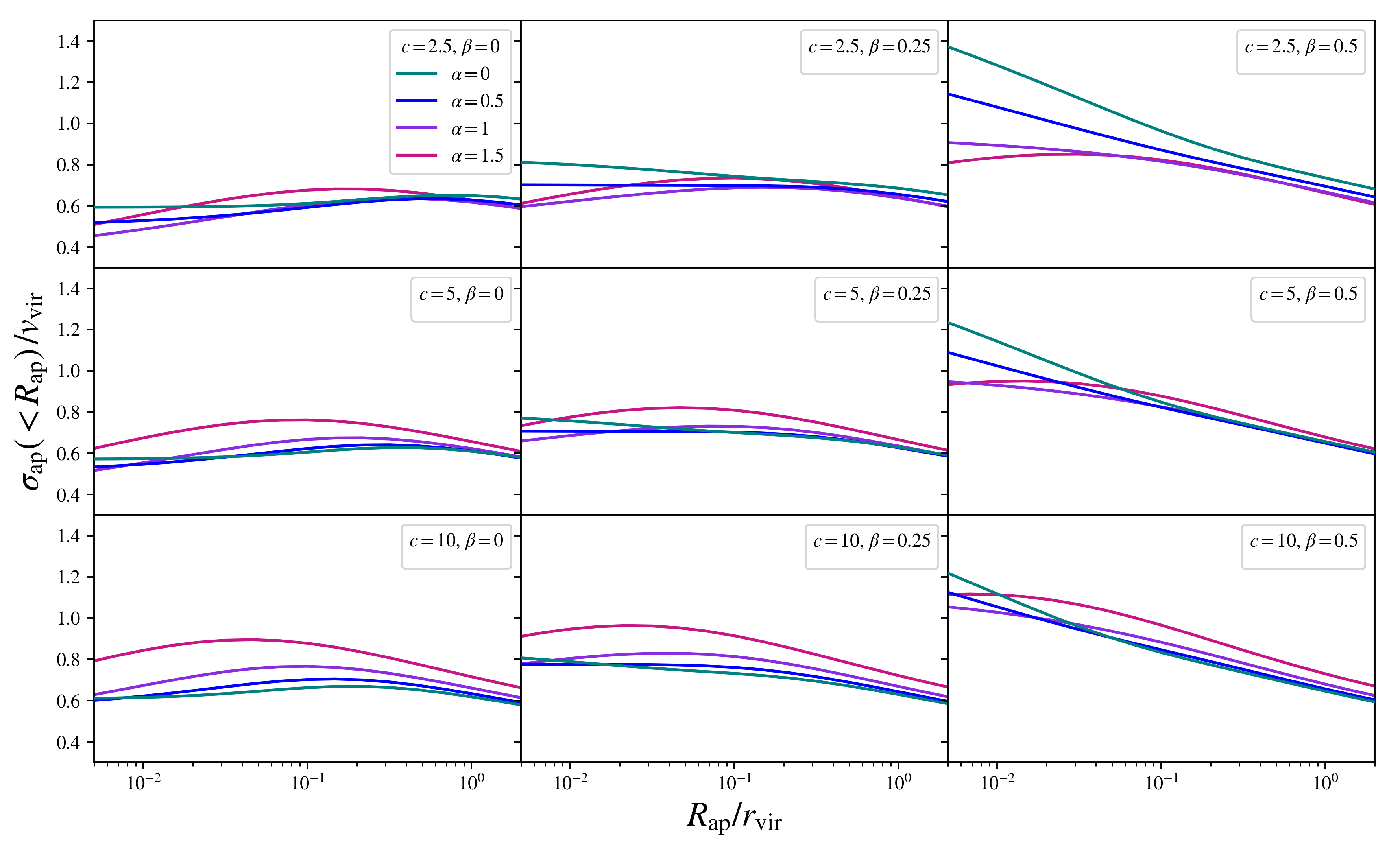
Figure 3: The aperture velocity dispersion profiles for the ideal physical halos, in scale-free form ξ≡σap.
Implications and Future Work
This analytical framework serves as a stepping stone towards refining halo mass-observable scaling relations, providing a benchmark for comparison with simulation-based methods. The implications extend to enhancing spectroscopic survey techniques and aiding in the precise characterization of the HMF. The authors indicate a further exploration involving intracluster gas properties will be conducted, with potential simulations to validate the model's applicability in more astrophysically complex scenarios.
Conclusion
The paper offers a systematic approach to deriving halo mass-scaling relations using analytically generalized halo models. The study's framework mitigates traditional uncertainties associated with simulation dependencies, focusing on key physical parameters governing halo dynamics. This advancement potentially aids in more robust halo mass estimators, crucial for future observational campaigns aimed at unraveling the nature of dark matter.
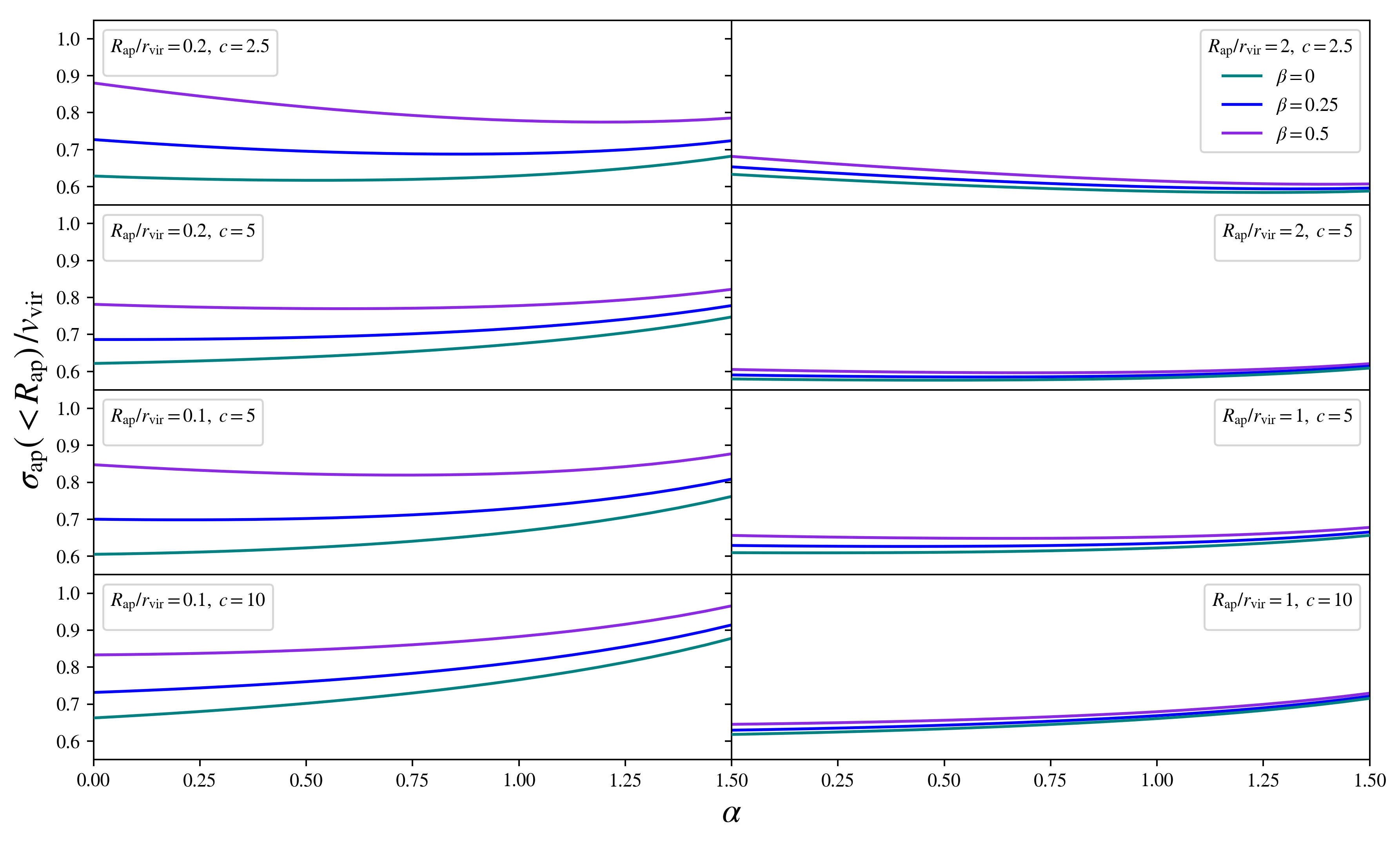
Figure 4: Our predictions for the halo mass - aperture velocity dispersion scaling relations, M200−σap and M500−σap.