- The paper introduces a stochastic model that integrates demand response incentives with solar, battery, EV, and controllable loads to optimize VPP operations.
- It employs a multi-objective optimization framework with utopia-tracking to manage conflicting stakeholder goals and reduce operational costs.
- Simulation on a 33-node system shows cost reductions over 34% for EV charging and improved energy efficiency, validating the model's real-world applicability.
A Stochastic Incentive-based Demand Response Program for Virtual Power Plant with Solar, Battery, Electric Vehicles, and Controllable Loads
Abstract
The paper proposes a stochastic model to optimize the scheduling operations of a Virtual Power Plant (VPP) encompassing solar generation, battery swapping stations, electric vehicle (EV) charging stations, and controllable loads. The approach introduces a multi-objective optimization framework, normalized through utopia-tracking to manage conflicting stakeholder objectives. The model capitalizes on stochastic formulation to account for uncertainties in energy demand, particularly those associated with EVs and controllable loads. The integration of demand response (DR) strategies offers substantial benefits in terms of efficiency and cost-effectiveness, fostering proactive engagement from distributed energy resources (DERs).
Introduction
The transition towards a cleaner energy grid poses challenges due to increased integration of distributed energy resources such as solar and wind. VPPs aggregate these resources to provide enhanced control and reliability across the power grid. However, this aggregation requires sophisticated scheduling mechanisms that account for uncertain demand and supply patterns. The paper introduces a stochastic incentive-based demand response model to address these challenges within VPPs, leveraging technologies such as EVs and solar power, alongside consumer-controlled loads.
Methodology
The methodology rests on constructing a model comprising several interconnected components: solar power generation, EV charging dynamics, battery swapping stations, and controllable loads. The emphasis is on optimizing the operation of these elements to achieve multiple objectives, including minimizing costs and maximizing resource utilization.
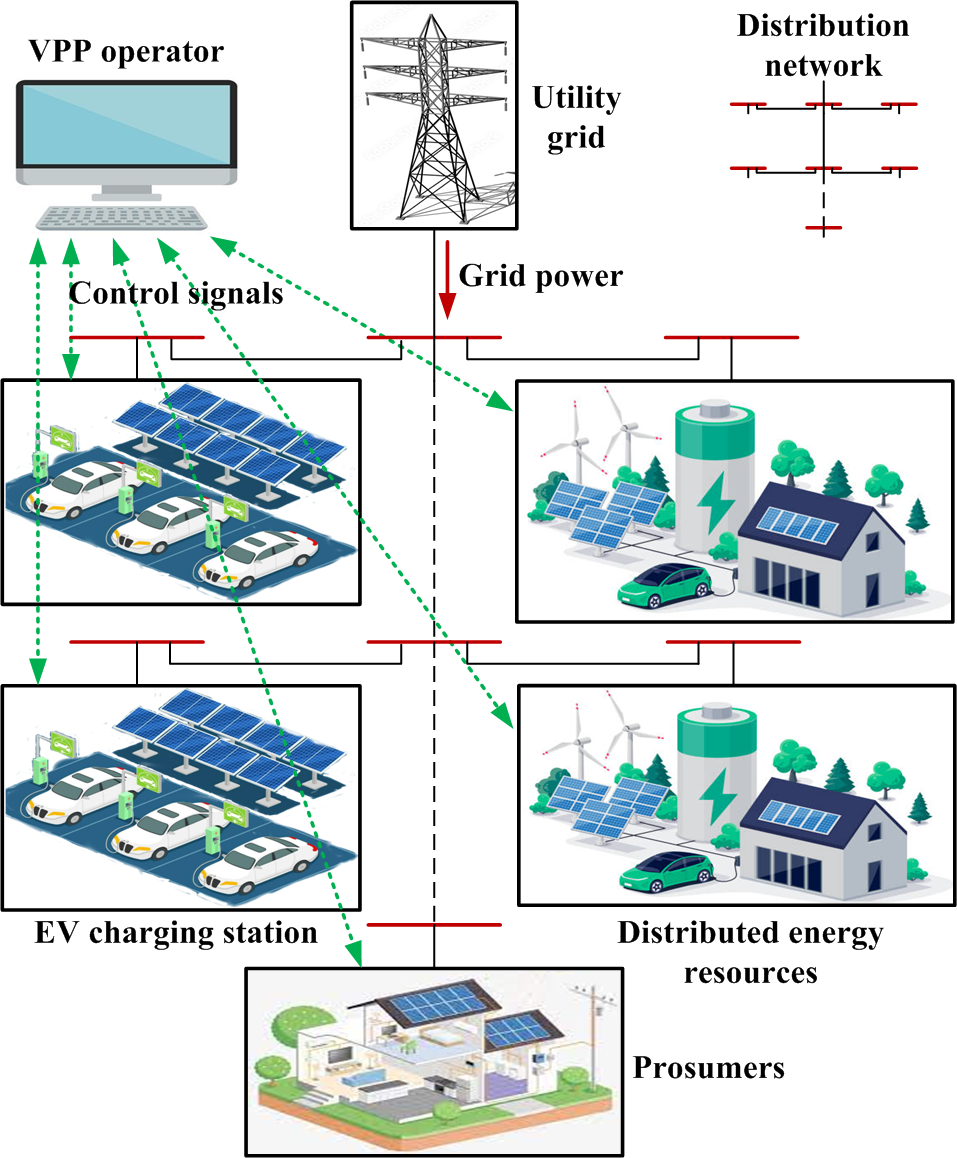
Figure 1: Direct-controlled virtual power plant.
Solar Power Generation Model
Electricity output is dependent on local irradiance and ambient temperature, with mathematical expressions linking these parameters to energy production, ensuring efficient integration with other VPP components.
EV Charging Station Dynamics
EVs act as storage units within the VPP while connected to charging stations. The charging process is governed by a state-of-charge (SoC) formula accounting for grid-to-vehicle (G2V) and vehicle-to-grid (V2G) operations, considering consumers' priorities for energy charge during scheduled stays.
Battery Swapping Station Algorithm
Operational focus is placed on optimizing the use of battery reserves to complement the solar power supply, storing excess energy for later use, especially during peak demand periods. A distinct balancing strategy between G2B (grid-to-battery) and B2G (battery-to-grid) operations is utilized, paralleling the EV approach.
Controllable Loads and Incentivization
The model introduces a pricing incentive mechanism for controllable loads, proposing a cost-effective participation pathway in the DR program. Consumers benefit from reduced electricity expenses, strategically selecting consumption periods aligned with low-cost intervals.
The VPP scheduling is cast as a multi-objective problem, incorporating stakeholder goals and potential trade-offs between objectives such as minimizing operational costs while ensuring efficient dispatch of stored energy. The stochastic framework, leveraging Hong's Point Estimation Method, tackles uncertainties with probabilistic distributions, enhancing the robustness of the energy market engagement.
Results and Validation
Simulation results, implemented on a 33-node distribution system, demonstrate significant reductions in grid dependency, improved energy efficiency, and cost minima for DR participants. The incentives offered notably decreased EV charging expenses by over 34% and consumer electricity costs by over 3%.
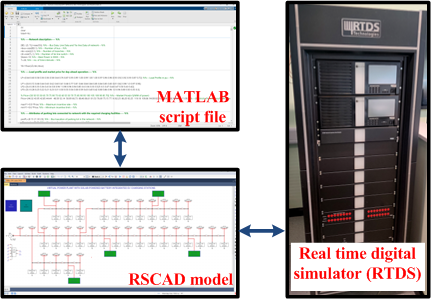
Figure 2: Software-in-loop setup with MATLAB, RSCAD and RTDS.
A software-in-loop setup using MATLAB, RSCAD, and RTDS ensures comprehensive validation of operational stability and efficiency, confirming the proposed model's real-world applicability without compromising grid integrity.
Conclusion
The proposed model effectively orchestrates VPP operations, addressing stakeholder-specific goals under uncertain conditions. The stochastic DR approach not only fosters reliability and stability in integrated energy systems but also reduces consumer costs and enhances energy resource utilization. The validation process confirms the model's capacity to maintain operational limits and grid stability. Future efforts will focus on improving resilience against uncertain environmental factors, further refining the energy scheduling strategy.
Further exploration into adaptive DR strategies and enhanced stochastic models, alongside sensor integration within VPP components, could drive future advancements in energy resource aggregation technologies.