- The paper presents OpenResearcher, a novel platform harnessing RAG and LLMs to improve scientific literature retrieval and summarization.
- It employs advanced query enhancement, diversified retrieval systems, and data routing strategies to boost retrieval efficiency and accuracy.
- Experimental evaluations demonstrate significant improvements in answer relevance and information richness compared to industry models like Perplexity AI.
OpenResearcher: Unleashing AI for Accelerated Scientific Research
OpenResearcher is an innovative platform designed to assist researchers in navigating the burgeoning landscape of scientific literature through AI-driven solutions. This platform effectively integrates Retrieval-Augmented Generation (RAG) techniques with LLMs to deliver accurate, domain-specific knowledge, thus mitigating the challenges posed by the exponential growth of academic publications.
Introduction
The proliferation of scientific publications demands innovative solutions to maintain researcher autonomy over burgeoning fields. OpenResearcher's primary mission is to streamline the research process by leveraging AI to provide comprehensive answers across various queries. Unlike typical task-specific academic applications, OpenResearcher offers a unified approach that addresses a full spectrum of inquiries, including Scientific Question Answering, Text Summarization, and Paper Recommendations.
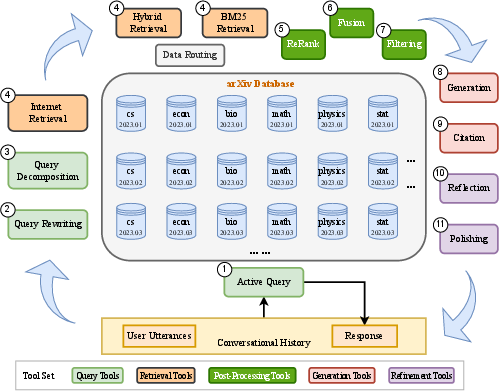
Figure 1: Main Workflow of OpenResearcher.
Technological Framework
OpenResearcher operates on a sophisticated architecture that integrates multiple AI technologies, which are instrumental in ensuring effective and efficient information retrieval and processing.
Query Enhancement
A pivotal aspect of OpenResearcher's functionality is its query enhancement capabilities. Initial user queries often lack precision necessary for efficient retrieval. OpenResearcher employs Active Query tools to enrich user queries with context-specific content, query rewriting for refining vagueness, and decomposition for segmenting complex enquiries into manageable segments.
Advanced Retrieval Systems
The platform utilizes a combination of advanced retrieval methods:
- Internet and Hybrid Retrieval: This feature deploys the internet and arXiv databases using both sparse and dense vector retrieval strategies.
- BM25 Retrieval: It prioritizes documents based on term frequency, enhancing precision via ranking algorithms.
Data Routing Strategy
The Data Routing strategy optimizes retrieval by organizing information temporally and contextually. It minimizes retrieval latency by selectively targeting relevant datasets, hence enhancing both speed and accuracy.
Post-Processing and Generation Tools
Post-processing tools play an integral role in refining retrieved information by reranking, fusing, and filtering to remove redundancy and noise, thereby enabling coherent content generation. OpenResearcher utilizes state-of-the-art LLMs to synthesize responses from retrieved data, affording researchers with nuanced, accurate answers grounded in verified sources.
Interactive and Adaptive Features
OpenResearcher is designed for dynamic interaction with users, allowing for conversational questioning and personalized workflow adjustments. As illustrated in
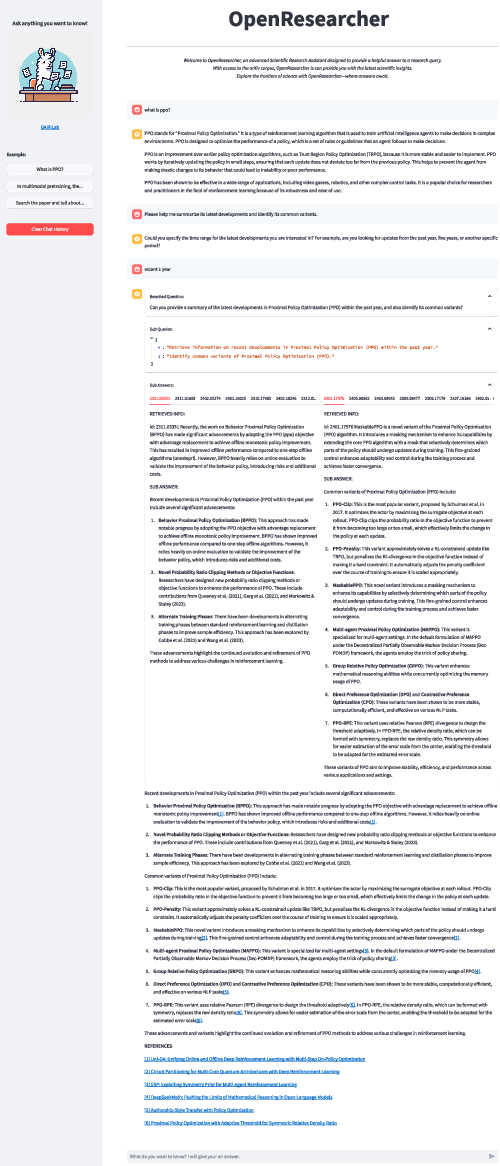
Figure 2: Case between user and OpenResearcher.
the adaptability of OpenResearcher is showcased, accommodating both simple and complex queries efficiently.
Conversational Mechanics
The platform goes beyond static information retrieval by engaging users in dialogue, clarification, and iterative question refinement to ensure clarity and specificity in research outputs.
Experimental Evaluation
OpenResearcher demonstrated superior performance in human and LLM evaluations. The platform showed significant improvements over industry-leading applications like Perplexity AI with regard to information correctness, richness, and relevance.
Human and LLM Preference
Evaluations were conducted with graduate students and GPT-4 to ascertain the system's effectiveness. OpenResearcher consistently surpassed competitive models in delivering comprehensive and relevant scientific insights.
Conclusion
OpenResearcher emerges as a powerful tool for researchers seeking to enhance the efficiency of their academic endeavors. By seamlessly integrating robust AI technologies and providing comprehensive, contextually enriched answers, OpenResearcher stands as a transformative platform in scientific research facilitation.
Figure 3: Screenshot showing the completed case in Figure 2.