- The paper's main contribution shows that generative AI democratizes data analysis by converting high-level user inputs into actionable tasks.
- It details how LLMs and multimodal models streamline analysis workflows, reducing reliance on expert analysts.
- The study highlights human-centered design principles and evaluation challenges, paving the way for more intuitive data analysis interfaces.
Data Analysis in the Era of Generative AI
Introduction
The paper "Data Analysis in the Era of Generative AI" explores how advancements in AI, particularly the rise of LLMs and multimodal models, can fundamentally transform data analysis workflows. It emphasizes the democratization of data analysis, allowing both experts and novices to derive actionable insights without the steep learning curve traditionally associated with complex data analysis tasks.
Democratizing Data Analysis
The paper highlights the potential of AI-powered tools to democratize data analysis, thus enabling users across various expertise levels to engage with data effectively. By leveraging AI models capable of converting high-level user specifications into actionable insights, individuals, from small business owners to healthcare professionals, can independently perform analyses, enhancing the decision-making processes across domains. This democratization reduces dependency on expert analysts, making data analysis more accessible to the wider population.
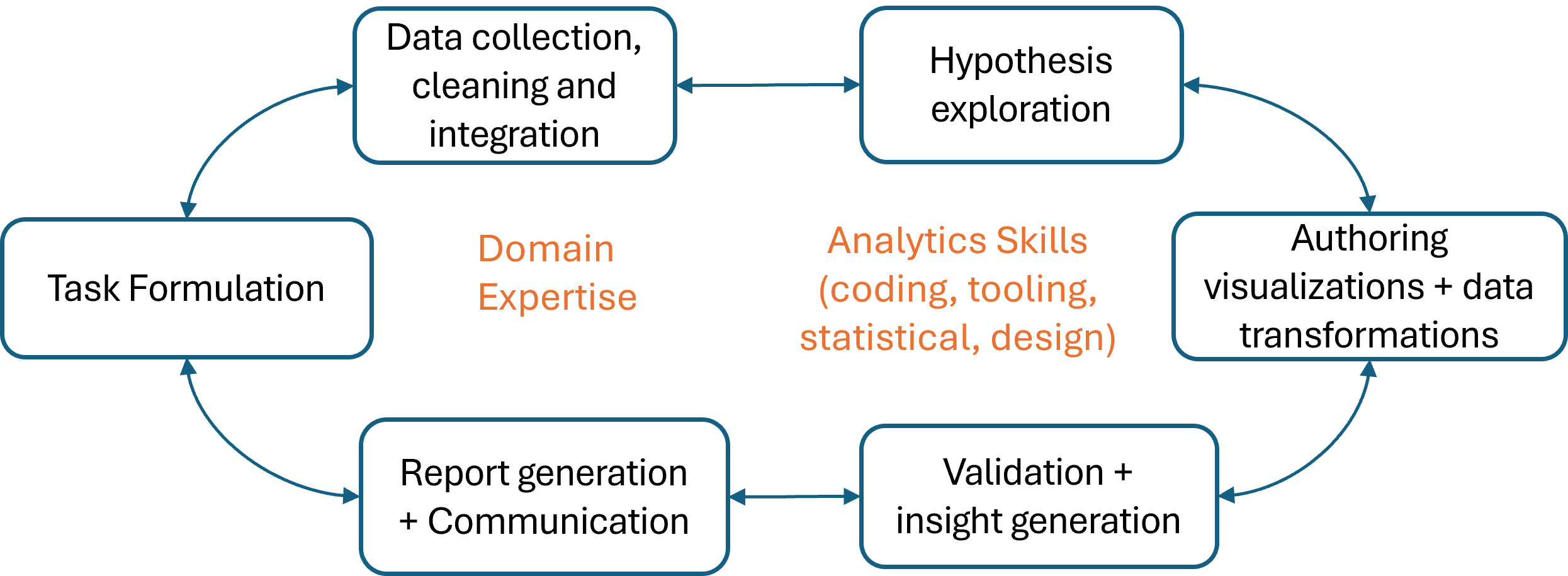
Figure 1: Overview of steps involved in deriving insights from data, highlighting the diverse skills required for these steps. We explicitly exclude any steps related to building/using models in this paper.
Generative AI Opportunities
Generative AI (GenAI) introduces new tools that blend expressiveness and usability, transforming complex analysis tasks into more intuitive processes. LLMs like GPT-4 and Claude, together with multimodal models integrating language and vision like GPT-4o, offer capabilities such as reasoning and conversion of high-level user intentions into executable tasks. These models can facilitate stages of data analysis spanning from task formulation to report dissemination, reducing the barrier of entry for non-experts.
Human-Driven Design Principles
Design principles focusing on human-centered interactions are critical for maximizing the capabilities of AI systems. The paper discusses various strategies for reducing user specification efforts, enhancing understanding of AI outputs, and streamlining workflow iterations. It emphasizes the importance of interfaces that simplify user interactions, such as dynamic intent-based UIs that DynaVis provides, ensuring intuitive and effective communication between users and AI systems.
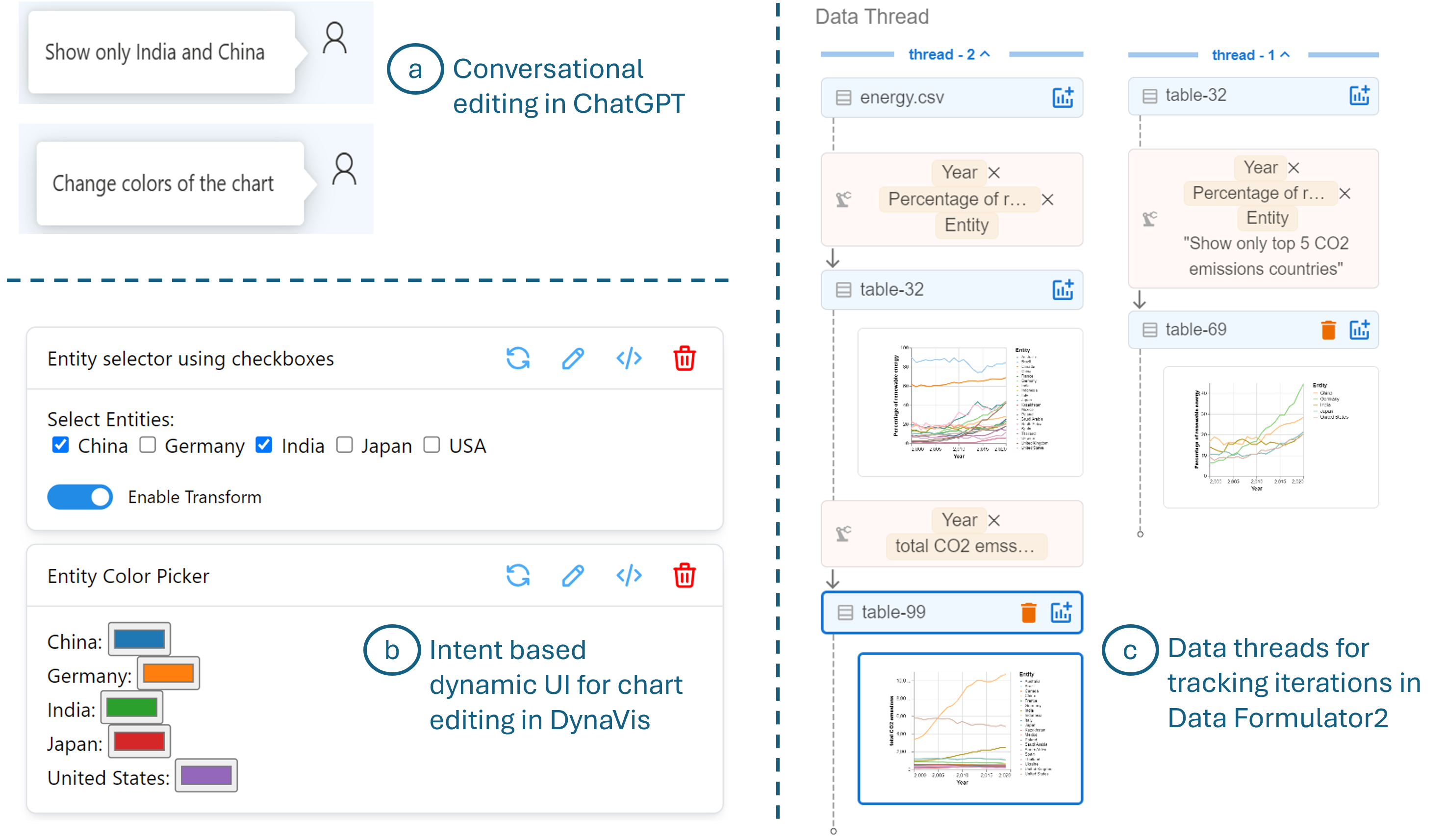
Figure 2: Constrasting conversational editing and iterations in (a) ChatGPT with (b) dynamic intent based UIs in DynaVis.
Research Challenges
The deployment of AI-based data analysis systems presents several challenges: enhancing model capabilities, ensuring reliable outputs, obtaining quality training datasets, and aligning system designs with end-user needs. Ensuring model reliability and developing comprehensive evaluation metrics remain significant hurdles. These challenges necessitate research innovations and collaboration among AI and human-computer interaction (HCI) practitioners to navigate the complexities of data analysis workflows effectively.
Implications and Future Developments
The implications of integrating AI in data analysis are profound, paving the way for smarter, streamlined workflows and interactive systems that enhance productivity. As AI models continue to evolve, further integration into data analysis tasks will transform traditional processes, offering real-time insights and fostering data-driven cultures across industries. Future developments may involve enhancing collaborative AI systems, creating robust evaluation frameworks, and advancing user interface design to accommodate diverse user needs.
Conclusion
The paper underscores the transformative potential of generative AI in revolutionizing data analysis, making it more accessible, efficient, and productive. By addressing the challenges and leveraging AI's capabilities, data analysis can become an intuitive and widely accessible skill, enabling informed decision-making across various domains.