- The paper introduces a novel Tri-Spectral PPG method that fuses green, red, and infrared signals to enhance cardiac monitoring accuracy.
- It employs a U-Net architecture trained on synthesized reference PPG signals, achieving a 0.831 correlation with ECG-derived data.
- The method reduces mean heart rate error by 23% in real-world conditions, though broader skin tone diversity is needed for validation.
Tri-Spectral PPG: Robust Reflective Photoplethysmography by Fusing Multiple Wavelengths for Cardiac Monitoring
Introduction
The paper presents Tri-Spectral PPG as an advancement in the fusion of multi-channel photoplethysmographic (PPG) signals to enhance the accuracy and robustness of cardiac monitoring. The study addresses the inherent challenges of PPG signal acquisition, which is susceptible to artifacts from motion and ambient light. The proposed learning-based method optimizes the recovery of a single comprehensive PPG signal by fusing signals at different optical wavelengths.
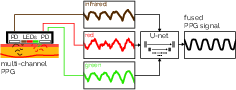
Figure 1: Our learning-based method recovers a single PPG signal from multi-wavelength input signals, restoring signal morphology for cardiac dynamics assessment.
Methodology
Data Collection
The dataset was pivotal, comprising multi-channel PPG and ECG data collected over 13 hours involving real-world activities. Participants wore a custom-built device capable of recording PPG at green, red, and infrared wavelengths.
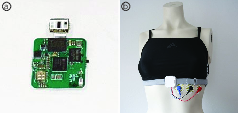
Figure 2: Experimental setup with wearable multi-channel PPG and Lead I ECG, capturing data across varied activities.
Tri-Spectral PPG Recovery
Employing a U-Net architecture, the Tri-Spectral PPG method processes multi-channel inputs to infer a noise-reduced single output signal. Training involves synthesizing a reference PPG based on R-R intervals derived from ECG, allowing the model to adapt through cross-validated evaluation.
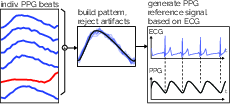
Figure 3: Synthesis of PPG reference signals correlated with ECG R-peaks for optimizing training.
Results
Signal Morphology Comparison
The fused PPG signals showed a correlation of 0.831 with the synthesized reference, outperforming individual wavelength signals. This demonstrates the optimal amalgamation of varied spectral information for superior morphology retention.
Heart Rate Estimation Efficacy
The methodology achieved a 23% reduction in mean absolute heart rate error compared to the best single-channel PPG, substantiating the efficacy of signal fusion in real-world scenarios.
Discussion and Limitations
Tri-Spectral PPG offers a promising enhancement in signal fidelity, yet highlights a need for diversity in future datasets. The current sample lacks broader skin tone representation, crucial for generalizing the results in more challenging scenarios.
Conclusion
Tri-Spectral PPG substantially advances the capability of wearable cardiac monitoring devices by integrating signals from multiple wavelengths to generate a more reliable PPG output. The contribution of a comprehensive dataset further bolsters the validity and reliability of the method in real-world applications. Future studies should expand on this work by incorporating a wider demographic spectrum and exploring additional physiological metrics derivable from the fused signal.