- The paper introduces the ASAL framework that automates the discovery of artificial life simulations using vision-language foundation models.
- It employs three automated search mechanisms—Supervised Target, Open-Endedness, and Illumination—to systematically find target events, novel dynamics, and diverse behaviors.
- Quantitative evaluations confirm ASAL’s effectiveness in uncovering emergent phenomena across substrates such as Lenia, Boids, and various cellular automata.
Automating the Search for Artificial Life with Foundation Models
The paper "Automating the Search for Artificial Life with Foundation Models" introduces the Automated Search for Artificial Life (ASAL) framework, leveraging vision-language foundation models (FMs) to automate the discovery and analysis of Artificial Life (ALife) simulations. ASAL addresses three key challenges in ALife: finding simulations that produce target phenomena, discovering open-ended simulations, and illuminating the space of diverse simulations. Through the generality of FMs, ASAL effectively explores a wide range of ALife substrates, such as Boids, Particle Life, Game of Life, Lenia, and Neural Cellular Automata.
Introduction to ASAL
ASAL is designed to automate the discovery of ALife simulations by utilizing foundation models to analyze simulation-produced videos. This approach alleviates the historical reliance on manual design and trial-and-error in ALife research, offering a systematic method to explore possible configurations. ASAL employs three distinct mechanisms: Supervised Target, Open-Endedness, and Illumination, each corresponding to different search problems that FMs can address.
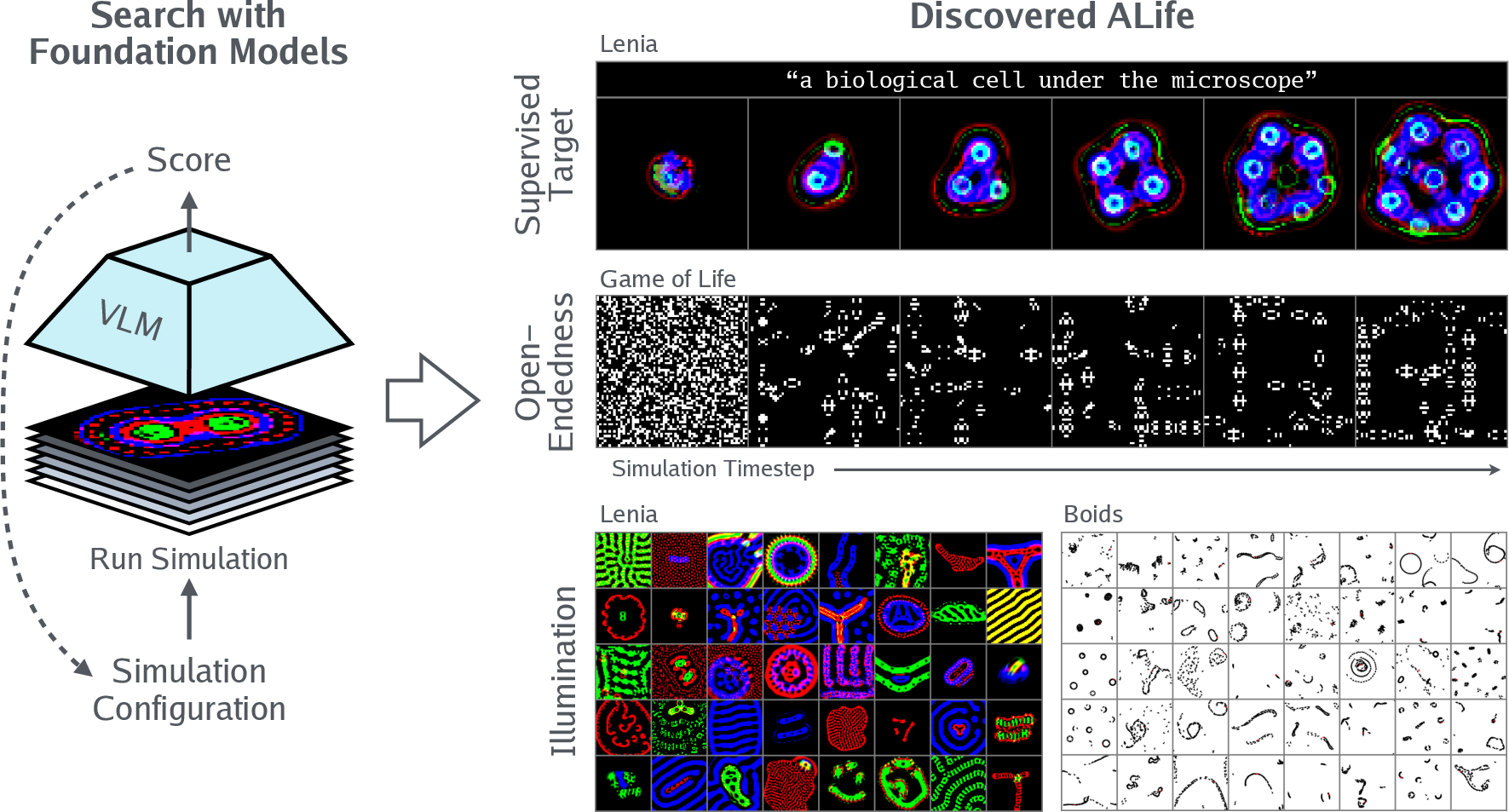
Figure 1: Overview: ASAL searches for interesting ALife simulations by using a vision-language foundation model to evaluate the simulation's produced videos through three mechanisms.
ASAL Framework
The ASAL framework offers three automated search algorithms enabled by FMs:
- Supervised Target: ASAL identifies simulations where specified target events occur, aligning the simulation outcomes with given prompts in the FM's representation space.
θ∗=θargmaxET[⟨VLMimg(RST(θ)),VLMtxt(promptT)⟩]
- Open-Endedness: ASAL discovers simulations that generate novel, temporally open-ended phenomena by maximizing historical novelty in the FM representation space.
θ∗=θargminET[T′<Tmax⟨VLMimg(RST(θ)),VLMimg(RST′(θ))⟩]
- Illumination: By searching for diverse simulations, ASAL facilitates the illumination of substrates, mapping out alien worlds through maximizing distance from nearest neighbors in the FM space.
{θ0∗,…,θn∗}=θ0,…,θnargminEθ,T[θ′=θmax⟨VLMimg(RST(θ)),VLMimg(RST(θ′))⟩]
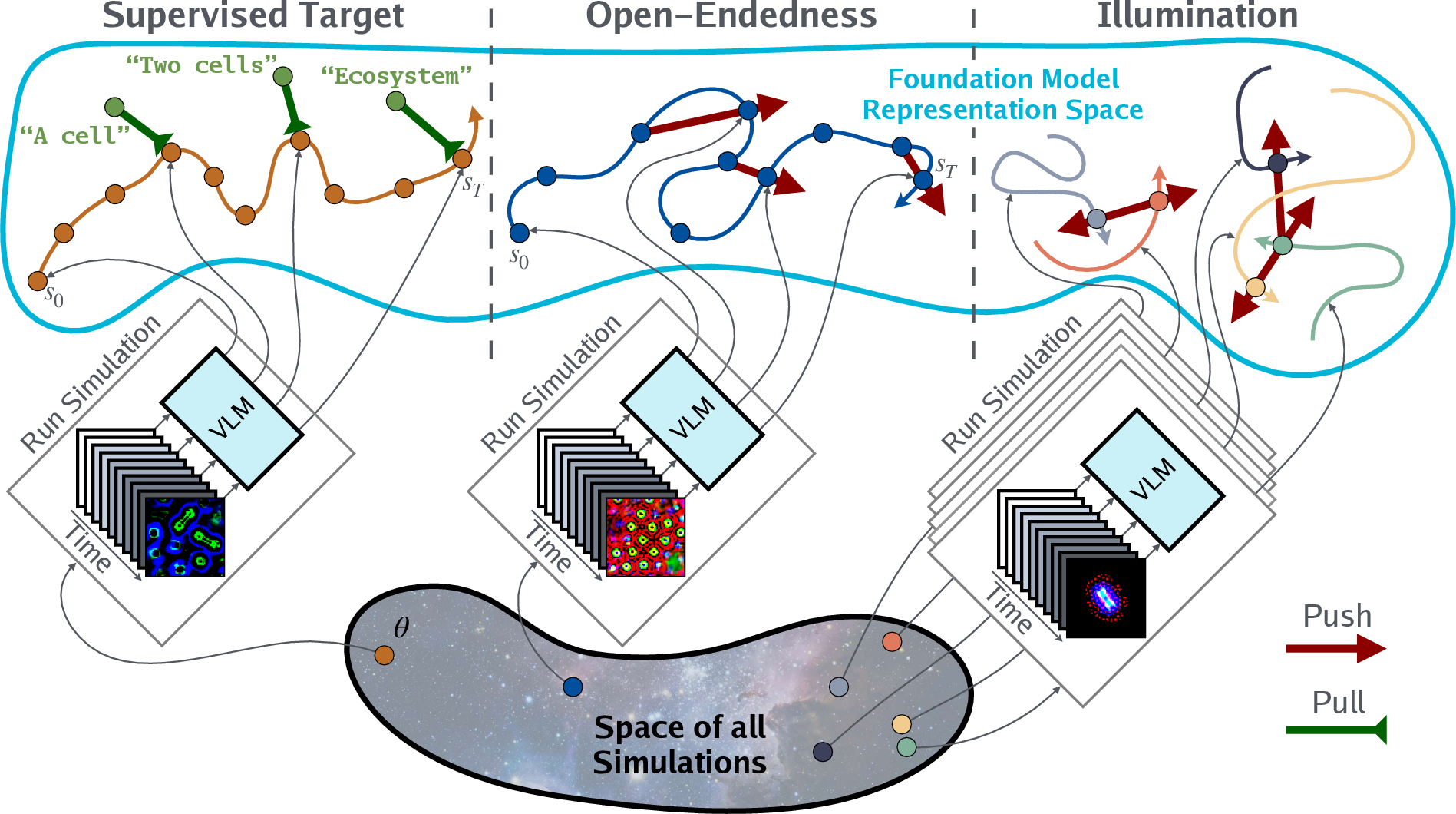
Figure 2: ASAL uses vision-language foundation models to discover ALife simulations by formulating the processes as three search problems.
Experiments and Results
Discovery of Target Simulations
ASAL effectively finds target simulations across various substrates such as Lenia, Boids, and Particle Life, utilizing CLIP for Foundation Models and Sep-CMA-ES and Adam for optimization.
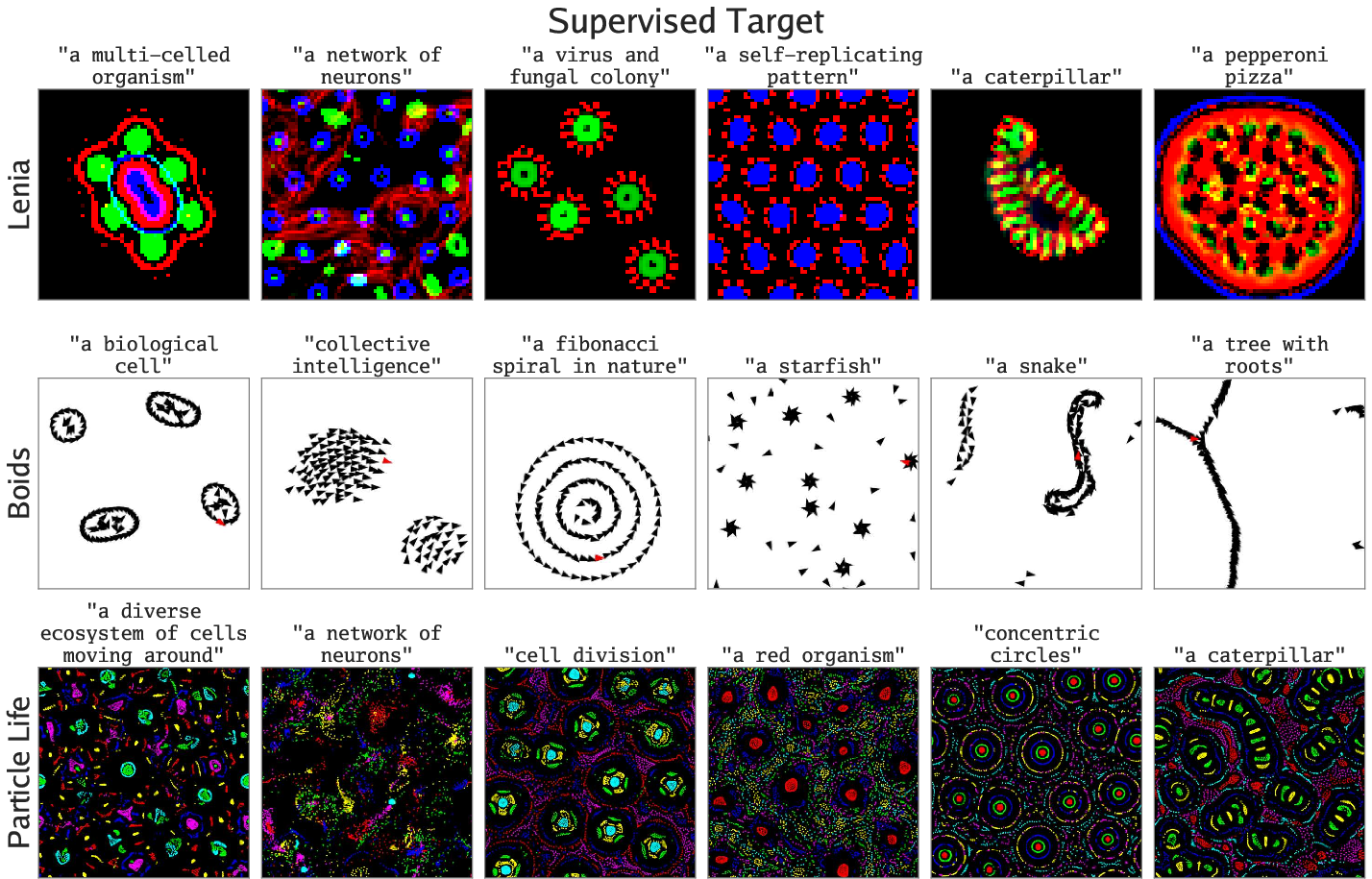
Figure 3: Discovered target simulations using Equation~\ref{eq:supervised} in various substrates.
Open-Endedness of Simulations
The method successfully discovers open-ended simulations in the Life-Like Cellular Automata (CA) substrate, where Conway’s Game of Life ranks among the top for open-ended novelty.
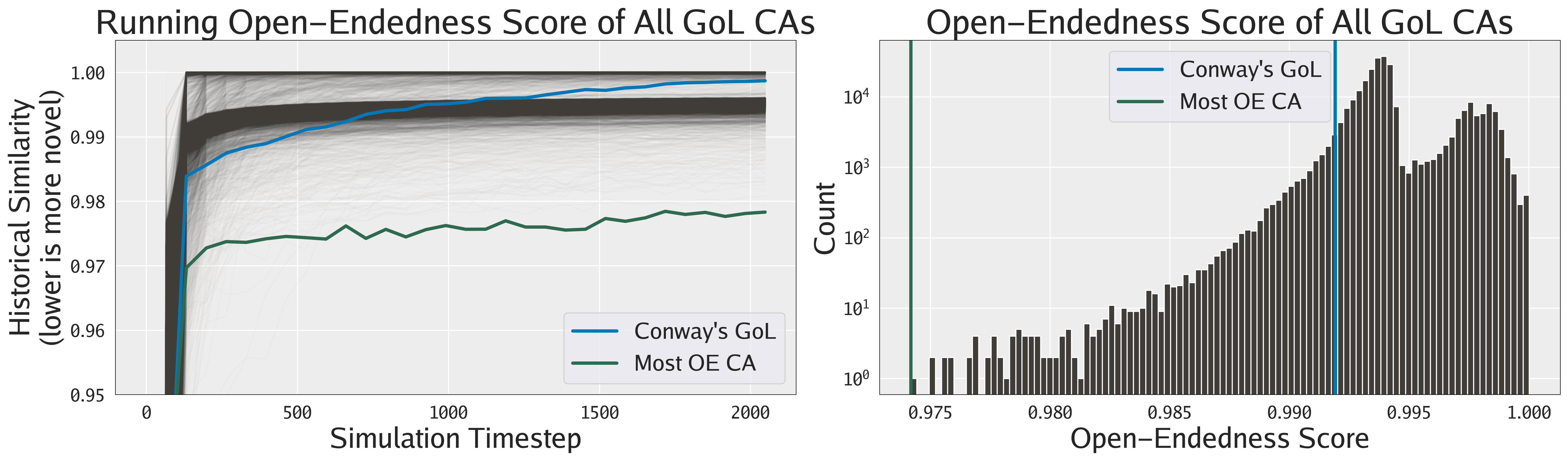
Figure 4: The open-endedness score from Equation~\ref{eq:oe} demonstrates Life-Like CAs' potential for open-ended simulations.
Illumination and Atlas Creation
Using a custom genetic algorithm, ASAL illuminates the diverse phenomena within Lenia and Boids substrates, resulting in organized simulation atlases that map the diversity of emergent behaviors.
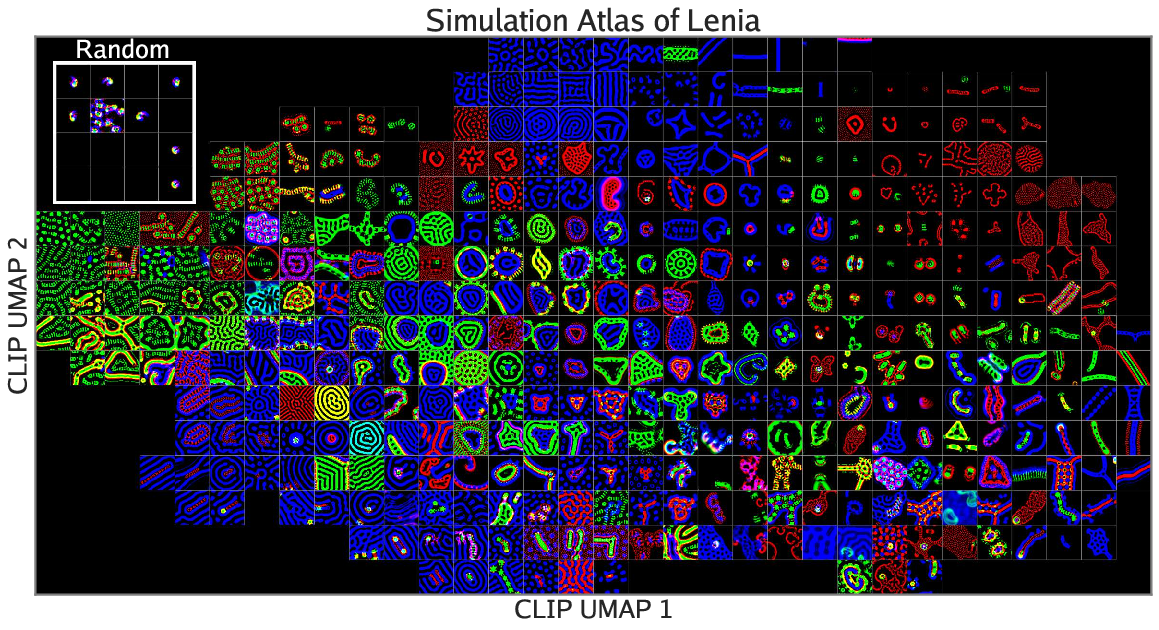
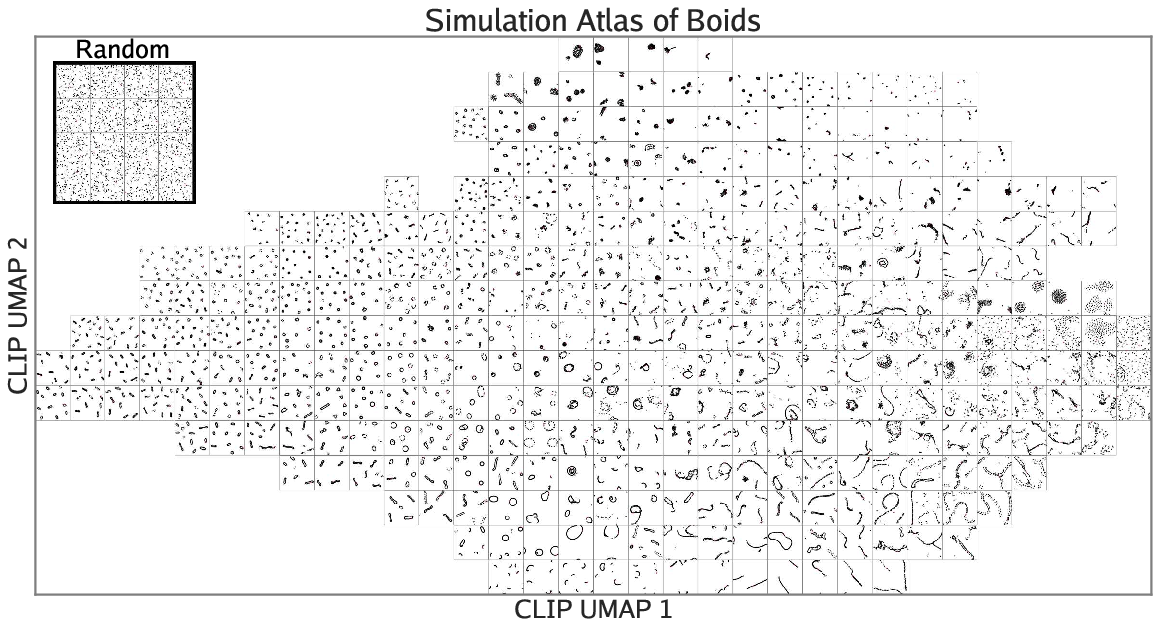
Figure 5: Simulation Atlas—ASAL discovered diverse simulations illuminating the substrates with high diversity.
Quantitative Analysis via Foundation Models
ASAL allows for quantitative analysis of emergent phenomena, utilizing FMs to measure diversity, open-endedness, and other qualitative events in ALife.
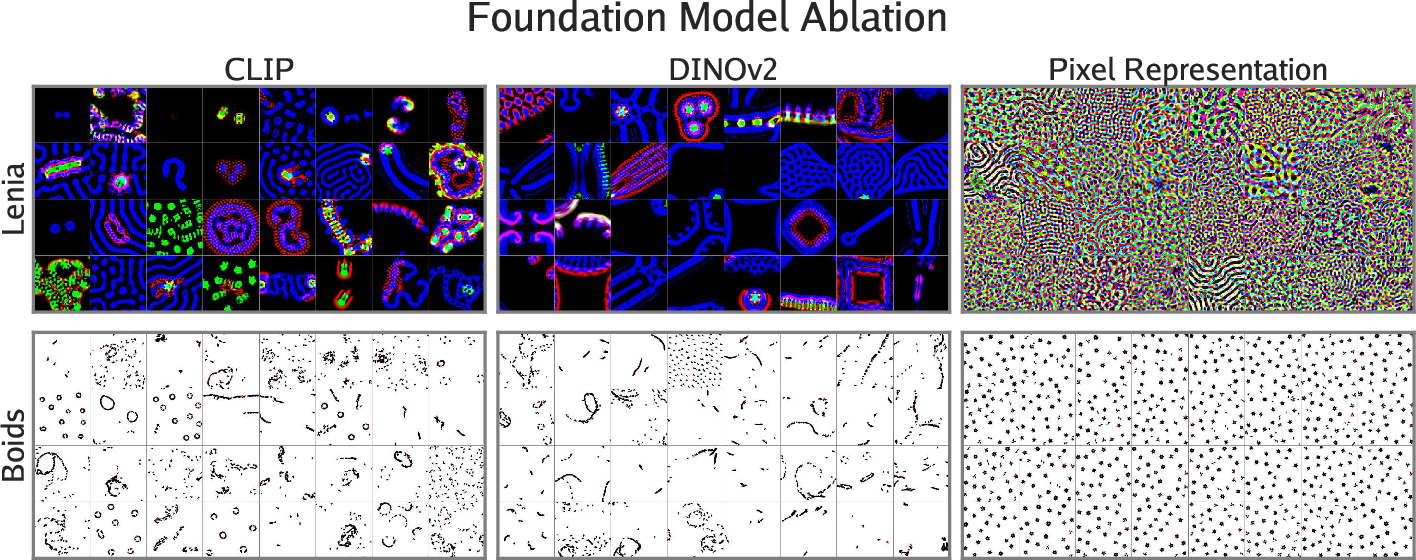
Figure 6: Importance of Foundation Models—FM ablation experiments show CLIP's superiority over pixel-based representation for human-aligned diversity.
Conclusion
ASAL represents a significant advancement in ALife research, effectively automating the discovery of diverse and interesting simulations leveraging the capabilities of visuolinguistic FMs. This paradigm offers new avenues for quantifying complexity in ALife and promises accelerated research by expanding the scope of exploration and analysis.
In summary, ASAL's framework enables systematic exploration and mapping of ALife phenomenology, paving the way for the discovery of novel configurations beyond human-designed simulations, and fostering deeper insights into the study of life as it could be in computational realms.

