- The paper demonstrates that virtual gifting on Twitch significantly increases future gifting behavior, with recipients 2.73 times more likely to pay it forward.
- It employs a mixed-effects logistic regression on 8,068 Twitch streams to compare the impact of individual versus group gifts, confirming a 1.72 times boost for personalized gifts.
- Findings indicate that while individual gifts promote generosity, frequent gifters discourage subsequent gifting, and anonymity shows no significant effect.
The Spread of Virtual Gifting in Live Streaming: The Case of Twitch
Introduction
The paper investigates the intricacies of virtual gifting in online live streaming environments, specifically focusing on Twitch, a leading platform for live streaming. Twitch users can send gift subscriptions to their peers, and these transactions serve as a backdrop for exploring the spread of prosocial behaviors. The study leverages the random nature of gift allocation on Twitch as a natural experiment to analyze whether recipients are motivated to pay it forward. Key findings reveal a heightened propensity for gifting among recipients, with individual gifts fostering more generosity than group gifts. Interestingly, frequent gifters diminish the likelihood of recipients paying it forward, whereas anonymous gifting holds no significant impact on future gifting behaviors within the Twitch community.
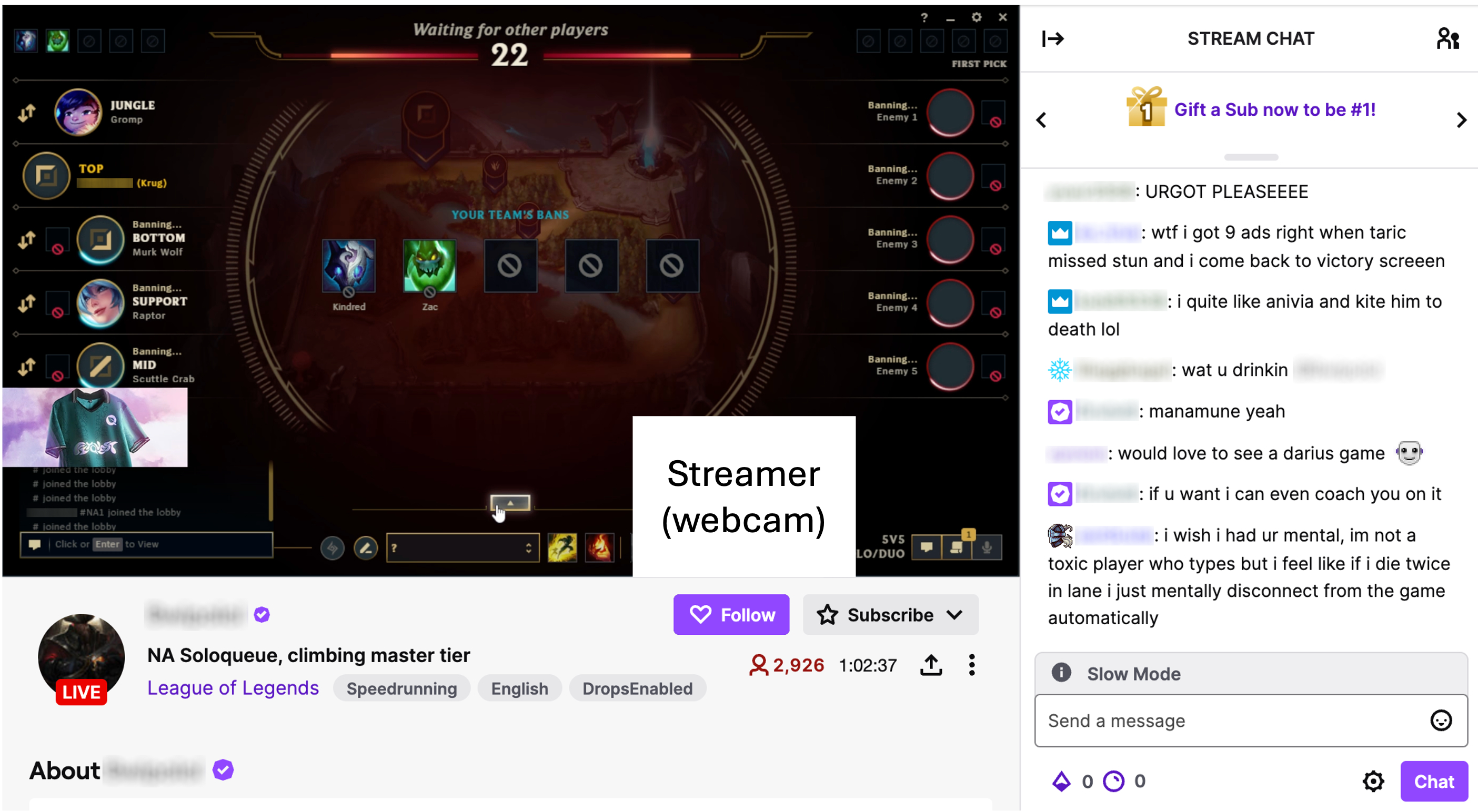
Figure 1: Example Twitch stream interface. The streamer broadcasts video game content to the audience in real time, while viewers interact with each other through a chat window attached to the live stream.
Methodology
The study utilized a dataset from 8,068 Twitch streams, examining interactions within chat logs to discern gifting patterns and their subsequent influence. A mixed-effects logistic regression model was employed to assess the impact of several factors, including gift anonymity, individual vs. group gifting, and the gifting history of the gifter, on the recipient's likelihood to pay it forward. The dataset excluded bots and used non-subscriber activity as a basis for comparison between control (non-recipient) and treatment (recipient) groups, thereby ensuring a robust natural experiment setting.
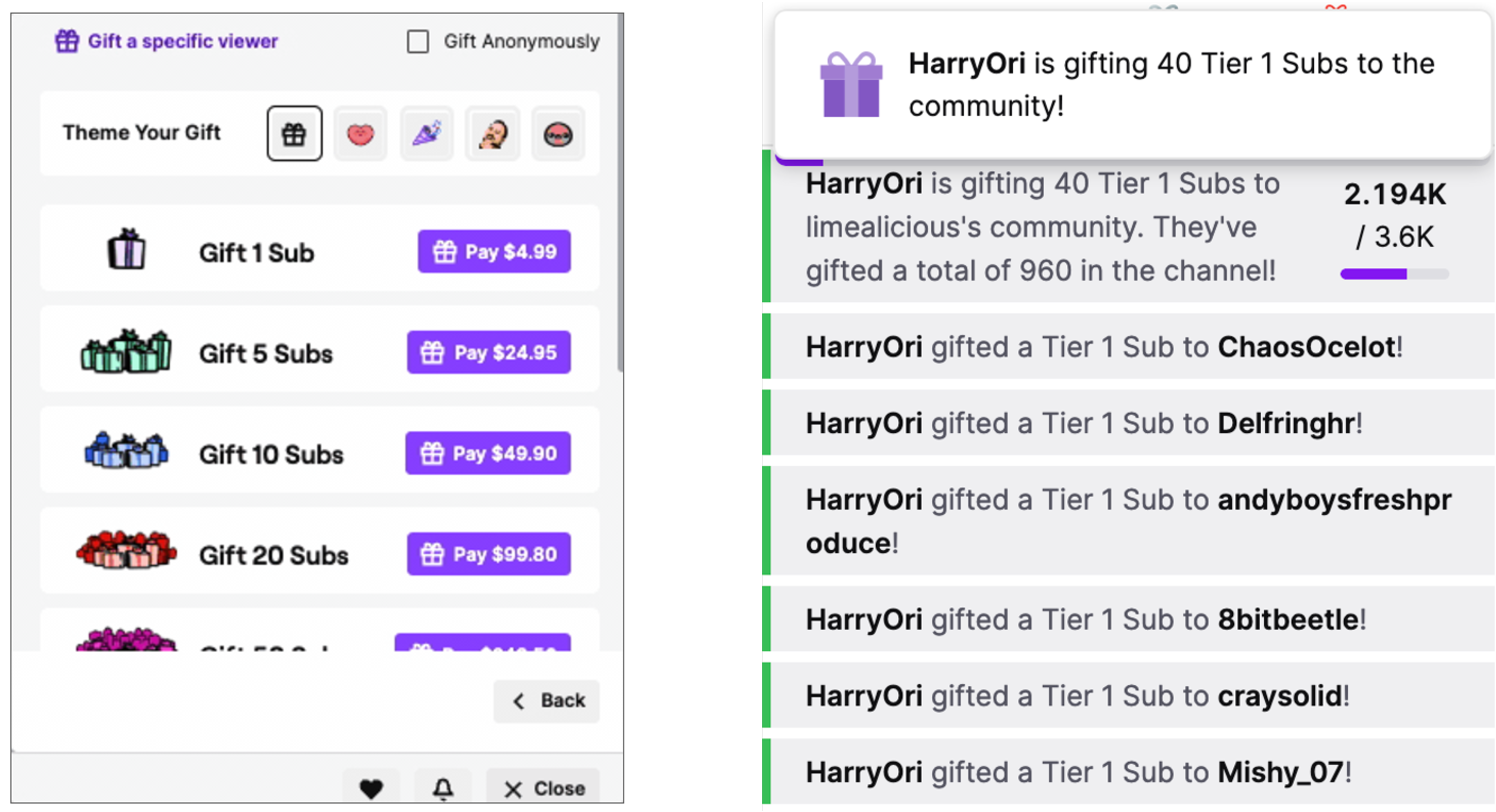
Figure 2: The Twitch gifting feature allows users to gift a subscription to a specific viewer or to randomly selected viewers in the stream.
Results
Gift Recipients and Paying it Forward
The analysis confirmed that gift recipients are significantly more likely to engage in future gifting, highlighting the contagious nature of prosocial behaviors within the Twitch ecosystem. The odds of a recipient paying it forward increase by approximately 2.73 times when compared to non-recipients. This effect underscores the intrinsic motivation that accompanies receiving gifts in a digital community setting.
Influence of Gift Anonymity
Contrary to expectations that anonymity might enhance the perceived value and subsequent reciprocation, gifts from anonymous gifters show no statistical significance in influencing the recipient's future gifting behavior. This suggests that transparency in the gifting process might play a critical role in motivating recipients.
Impact of Individual and Group Gifts
Individual gifts significantly enhance recipients' propensity to pay it forward, possibly due to perceived exclusivity and personal attention from the gifter. The study corroborates that recipients of individual gifts are 1.72 times more likely to reciprocate compared to those receiving group gifts, supporting theories of emotional engagement derived from personalized interactions.
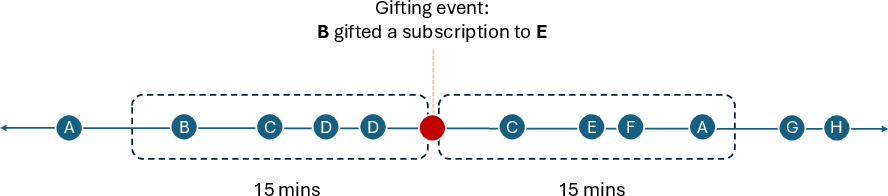
Figure 3: Identification of a treated user and selection of control users during gifting events.
Effect of Gifting History
Gifts from frequent gifters tend to discourage future gifting by recipients, revealing the complex dynamics of perceived social status and financial hierarchy in digital communities. This negative correlation may result from recipients feeling overshadowed by the frequent gifter's established status, thus opting out of competition in a visibly tiered engagement environment.
Discussion
The research delineates several factors governing the spread and inhibition of gifting behaviors on Twitch. Stream visibility, the nature of gifting transactions, and social reputation play pivotal roles in prosocial engagements. These findings elucidate strategies for platforms seeking to foster community generosity and suggest alterations to visibility and recognition mechanisms to enhance future gifting probabilities. Furthermore, insights into behavioral contagion offer broader applications for understanding digital economies and crafting incentive structures for online communities.
Conclusion
In analyzing Twitch's virtual gifting ecosystem, the study provides valuable insights into the mechanics of online prosocial behavior and its contagion among peers. The inclination for recipients to pay it forward is robustly influenced by the form and visibility of the gift received, with individual gifts particularly potent in encouraging further altruism. Conversely, frequent gifters, while enhancing the channel's financial ethos, paradoxically deter subsequent gifting by recipients. As online platforms continue to evolve, these findings offer substantial basis for fostering sustainable and engaged digital environments.