- The paper introduces a novel perspective by applying nonlinear optics and complex band structures to simulate travelling-wave Mach-Zehnder modulators, achieving bandwidths exceeding 500 GHz.
- The paper employs finite-element and Bloch’s theorem methods to generate complex band structures for RF photonic crystals, significantly accelerating simulation speeds.
- The paper validates the design through experimental CMOS-based Si fabrication and optoelectronic co-simulation, demonstrating high extinction ratios and quality factors.
Perspective of High-Speed Mach-Zehnder Modulators Based on Nonlinear Optics and Complex Band Structures
Abstract and Introduction
The paper "Perspective of high-speed Mach-Zehnder modulators based on nonlinear optics and complex band structures" (2502.14386) introduces a novel perspective to analyze travelling-wave Mach-Zehnder modulators (TW-MZMs) by leveraging nonlinear optics and complex band structures of RF photonic crystals. This approach diverges from traditional electrical-circuit-based methods, enabling simpler and more accurate simulations applicable to various integrated material platforms. TW-MZMs are crucial for optical communication, quantum information processing, and photonic computing. The discussed methodology potentially facilitates future developments in high-speed, millimeter-wave, and terahertz photonics systems.
Theoretical Framework and Design Process
The research reconceptualizes TW-MZMs from an electromagnetic perspective, regarding RF electrodes as periodic sub-wavelength grating waveguides, naturally addressing RF waveguide dispersion and eliminating complex convolution calculations. The nonlinear interaction between RF and optical waves is modeled with temporal coupled-mode equations (TCME), incorporating self-phase modulation (SPM) and cross-phase modulation (XPM). The paper showcases a unified design and simulation process for TW-MZMs using silicon (Si) and lithium niobate (LiNbO3).
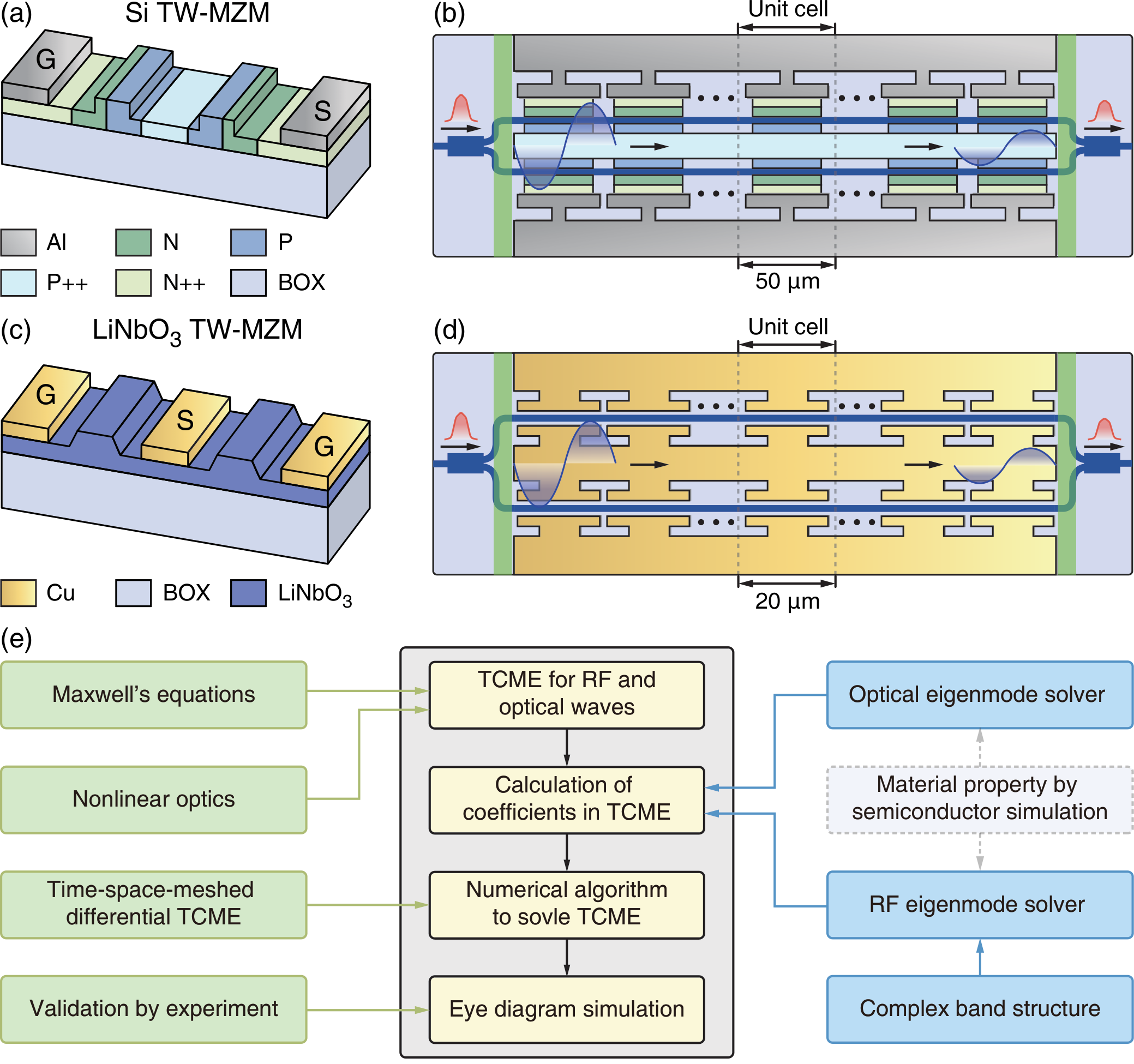
Figure 1: Schematics, layouts, and design process of Si and LiNbO3 TW-MZMs.
Simulation Method and Complex Band Structures
The paper presents a simulation method based on complex band structures (CBS) of RF photonic crystals. Utilizing finite-element methods and Bloch’s theorem, the RF vector wave equation is solved in the weak-form, generating CBS for periodic T-shaped RF electrodes. This process significantly accelerates simulation speeds for LiNbO3 TW-MZMs, achieving up to 500 GHz bandwidth.
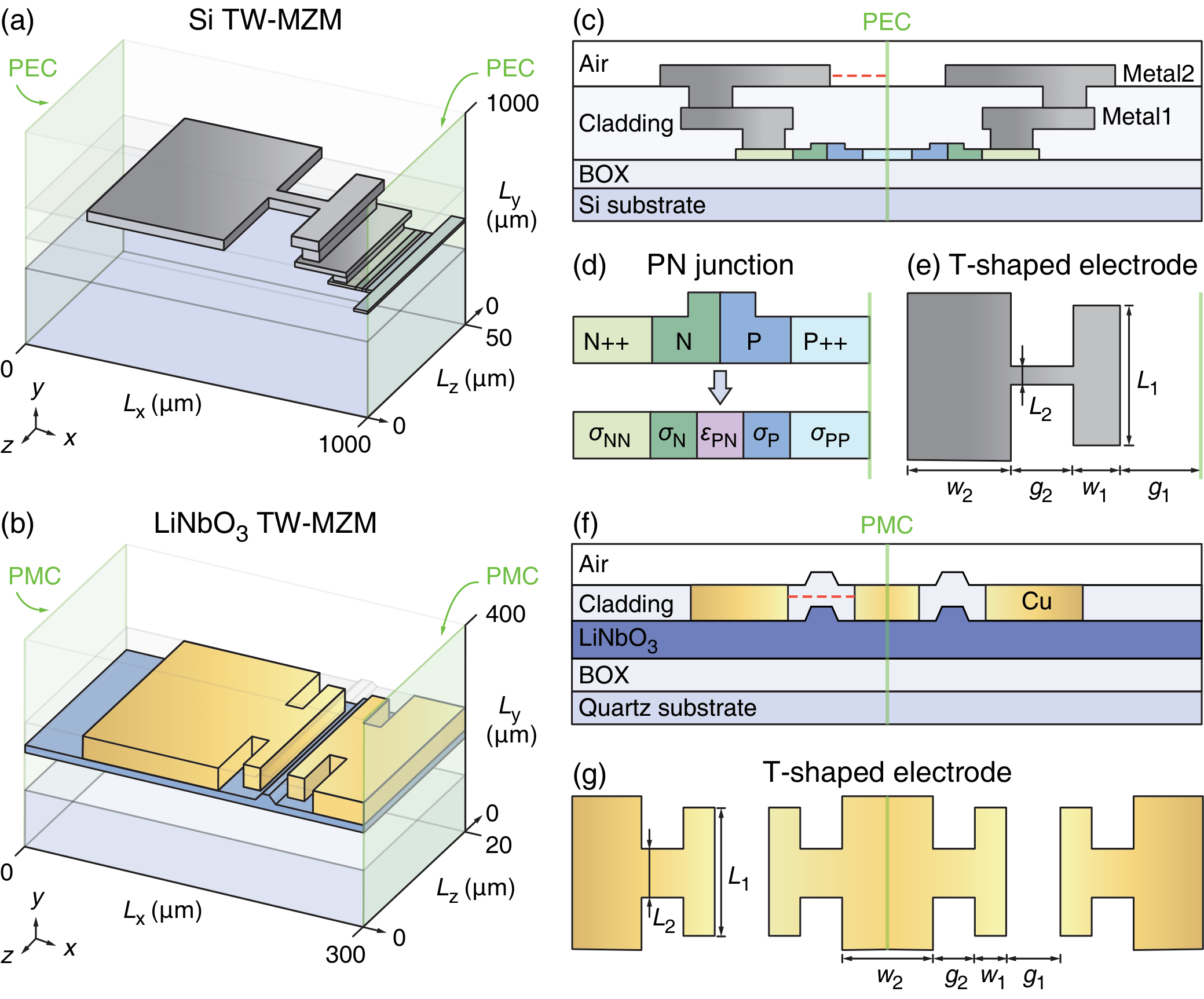
Figure 2: Simulation models of periodic T-shaped RF electrodes for Si and LiNbO3 TW-MZMs.
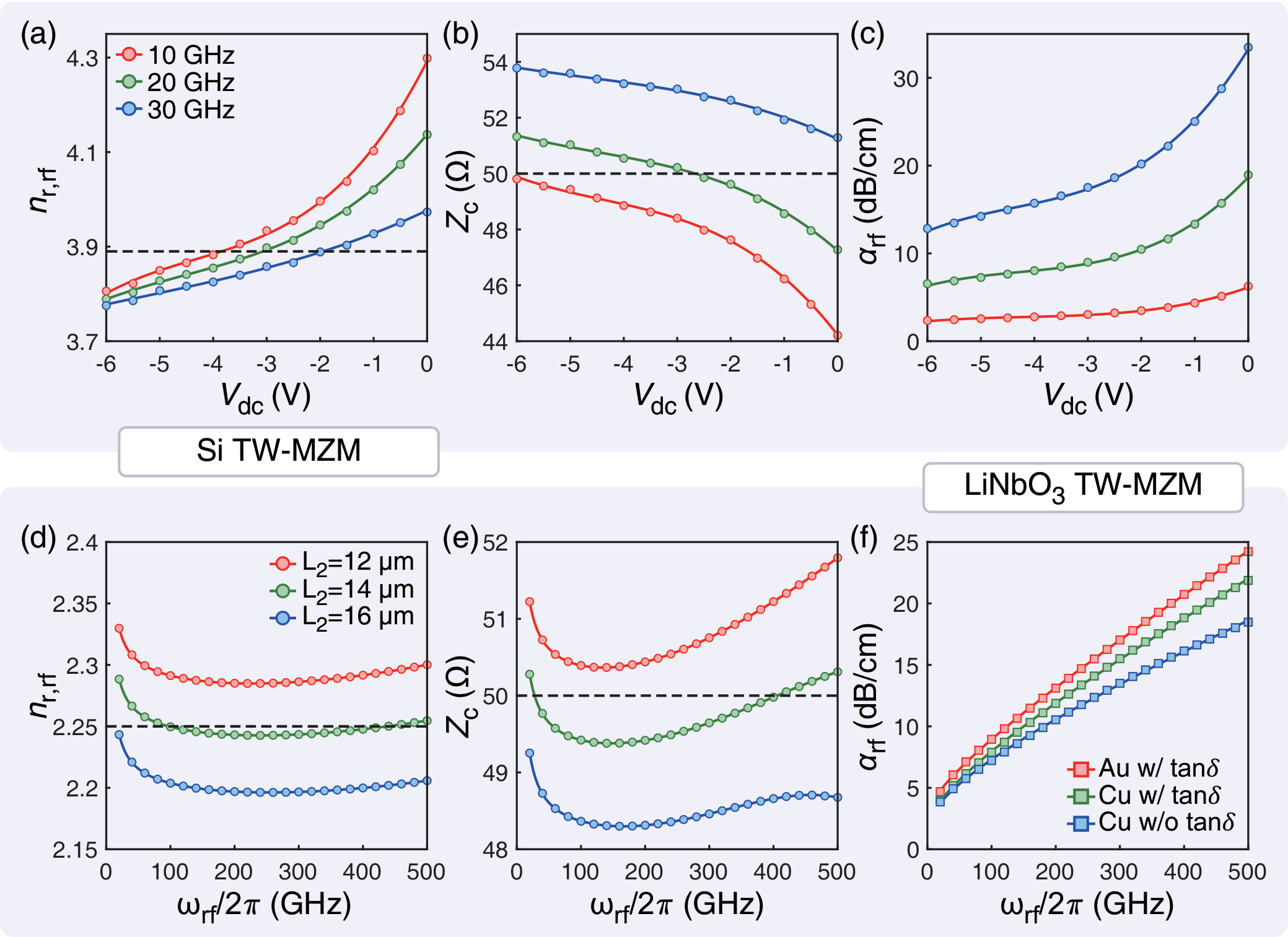
Figure 3: Simulation results indicating RF wave parameters across different frequencies and voltages.
Optoelectronic Co-Simulation
The research further describes an optoelectronic co-simulation framework for calculating TCME, streamlining complexity by obviating computationally heavy PN junction I-V equations. This approach reliably predicts the performance of TW-MZMs by modeling RF and optical wave interactions.
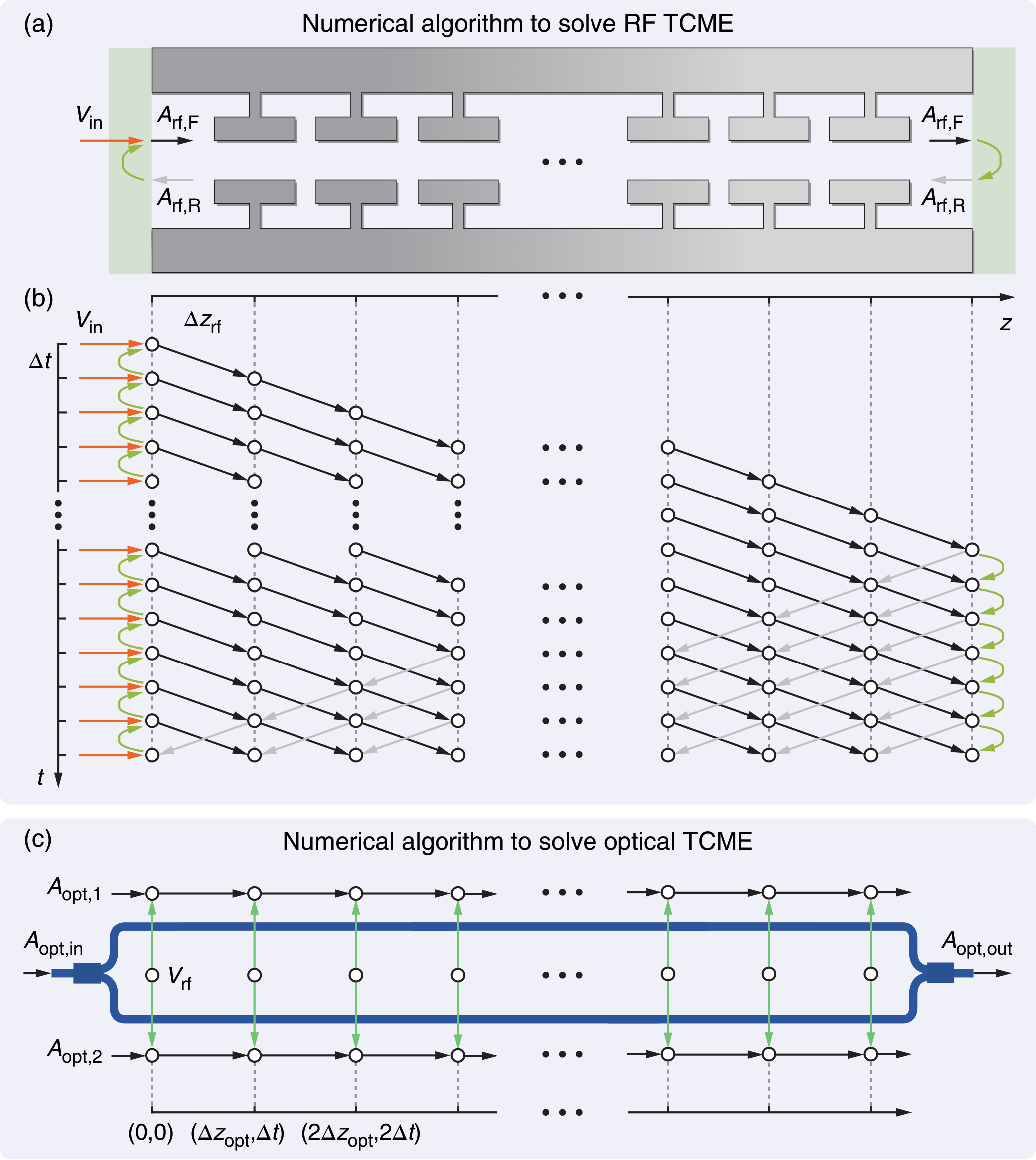
Figure 4: Optoelectronic co-simulation approach to solve TCME.
Experimental Validation and Results
The study provides experimental validation through Si TW-MZM fabrication using CMOS technology, including eye-diagram measurements under varying propagation configurations. Both simulated and experimental results demonstrate concordance in extinction ratio (ER) and quality factor (Q) metrics, confirming the method's accuracy.
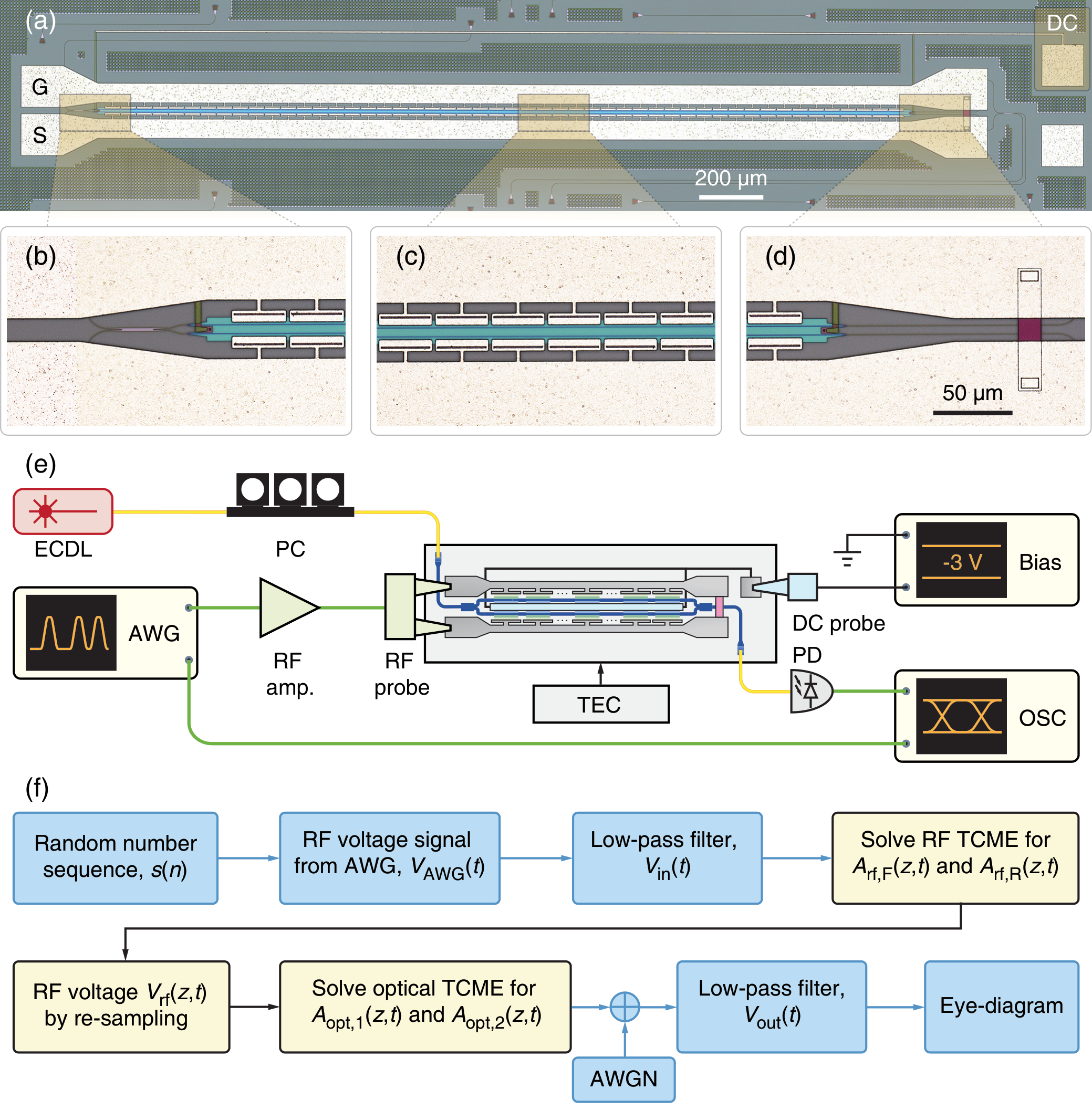
Figure 5: Experimental setup and simulation flowchart for generating eye diagrams of Si TW-MZM.
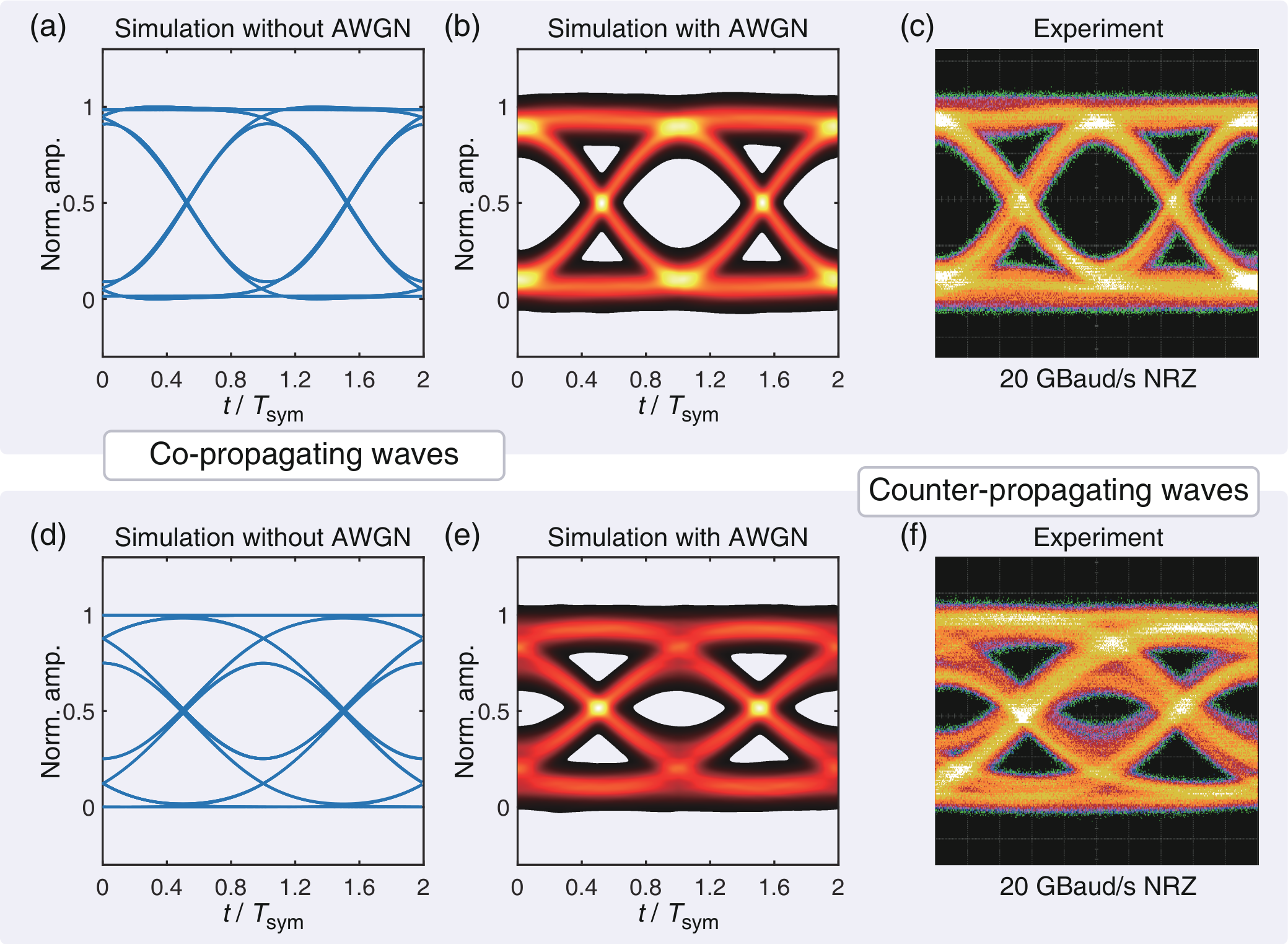
Figure 6: Comparison between simulated and experimental eye diagrams under different configurations.
Conclusion
This innovative perspective on TW-MZM design and simulation offers substantial improvements in efficiency, accuracy, and simplicity over traditional approaches. By applying nonlinear optics and CBS, the method accommodates diverse integrated platforms and supports frequencies exceeding 500 GHz. This provides a clear pathway towards the construction of future high-speed photonics systems capable of millimeter-wave and terahertz operations, promoting the synergy between electronics and photonics for advanced applications in AI acceleration and quantum systems.

