Papers
Topics
Authors
Recent
Search
2000 character limit reached

Knowledge Updating? No More Model Editing! Just Selective Contextual Reasoning

Published 7 Mar 2025 in cs.CL and cs.AI | (2503.05212v1)

Abstract: As real-world knowledge evolves, the information embedded within LLMs can become outdated, inadequate, or erroneous. Model editing has emerged as a prominent approach for updating LLMs' knowledge with minimal computational costs and parameter changes. This approach typically identifies and adjusts specific model parameters associated with newly acquired knowledge. However, existing methods often underestimate the adverse effects that parameter modifications can have on broadly distributed knowledge. More critically, post-edit LLMs frequently struggle with multi-hop reasoning and continuous knowledge updates. Although various studies have discussed these shortcomings, there is a lack of comprehensive evaluation. In this paper, we provide an evaluation of ten model editing methods along four dimensions: reliability, generalization, locality, and portability. Results confirm that all ten popular model editing methods show significant shortcomings across multiple dimensions, suggesting model editing is less promising. We then propose a straightforward method called Selective Contextual Reasoning (SCR), for knowledge updating. SCR does not modify model parameters but harnesses LLM's inherent contextual reasoning capabilities utilizing the updated knowledge pieces. Under SCR, an LLM first assesses whether an incoming query falls within the scope of an external knowledge base. If it does, the relevant external knowledge texts are contextualized to enhance reasoning; otherwise, the query is answered directly. We evaluate SCR against the ten model editing methods on two counterfactual datasets with three backbone LLMs. Empirical results confirm the effectiveness and efficiency of contextual reasoning for knowledge updating.
Summary

  • The paper demonstrates that SCR effectively updates LLM knowledge without altering internal parameters by leveraging external memory and semantic filtering.
  • It shows that SCR outperforms traditional editing methods in terms of reliability, generalization, and portability across sequential updates.
  • The approach offers scalability, efficiency, and robust contextual incorporation, paving the way for real-time knowledge updates in AI.

Knowledge Updating? No More Model Editing! Just Selective Contextual Reasoning

This essay provides an in-depth analysis of the paper titled "Knowledge Updating? No More Model Editing! Just Selective Contextual Reasoning" (2503.05212). The paper critiques existing model editing techniques and presents a novel alternative, Selective Contextual Reasoning (SCR), for knowledge updating in LLMs.

Background and Problem Statement

LLMs, though powerful, are prone to knowledge obsolescence due to the ever-changing landscape of real-world information. Traditional model editing methods attempt to address this by modifying the internal parameters of LLMs to update their knowledge. However, such methods can lead to several critical issues:

  • Performance Degradation: Each update can cause a drift in the model's parameters, potentially harming previously retained knowledge and reasoning capabilities.
  • Lack of Robustness: Most editing methods struggle with maintaining consistency, especially in a sequential editing scenario where the need for frequent updates arises.
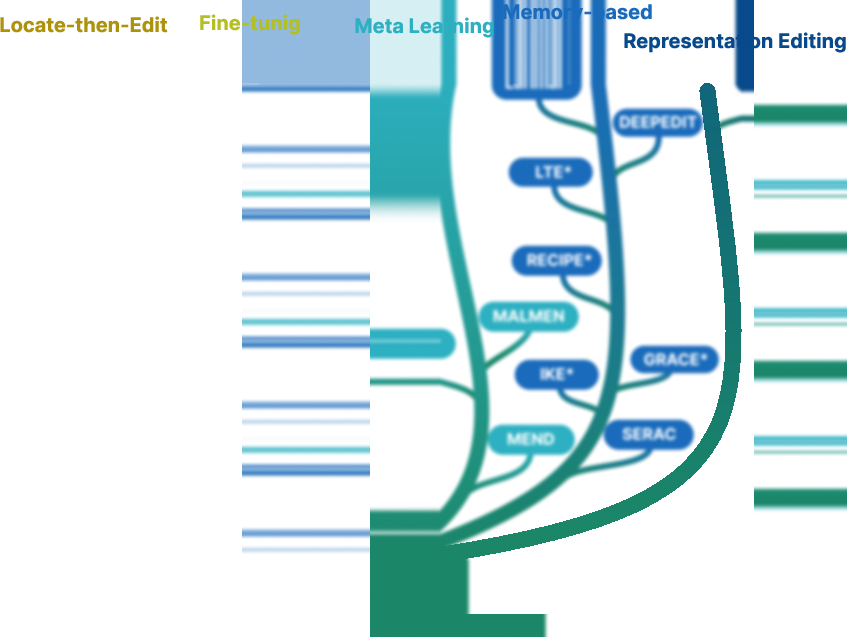
  • Generalization and Portability Failures: Existing methods often lack the ability to transfer updated knowledge across different contexts or to generalize to paraphrased questions. Figure 1

    Figure 1: The five types of Model Editing methods. Methods marked with an asterisk (

    ) are claimed to be suitable for sequential editing.*

Evaluation of Current Model Editing Methods

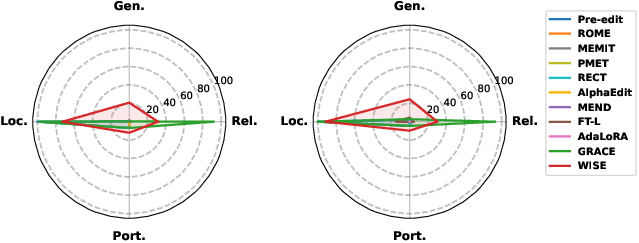
The paper evaluates ten popular model editing methods, including ROME, MEMIT, and GRACE, on four critical dimensions: reliability, generalization, locality, and portability. The evaluations reveal significant shortcomings:

  • Reliability: Most methods can't consistently ensure accurate knowledge updates without adversely affecting other model capabilities.
  • Generalization: Methods like GRACE and MEMIT show poor generalization across paraphrased prompts due to their reliance on rote memorization.
  • Locality: Techniques that involve direct parameter modifications often fail to localize updates, leading to a broad impact on the model’s overall performance.
  • Portability: Current methods are generally incapable of making the updated knowledge contextually portable, limiting their effectiveness in real-world applications. Figure 2

    Figure 2: Accuracy of the ten methods on four dimensions: Reliability, Generalization, Locality, and Portability.

Introducing Selective Contextual Reasoning (SCR)

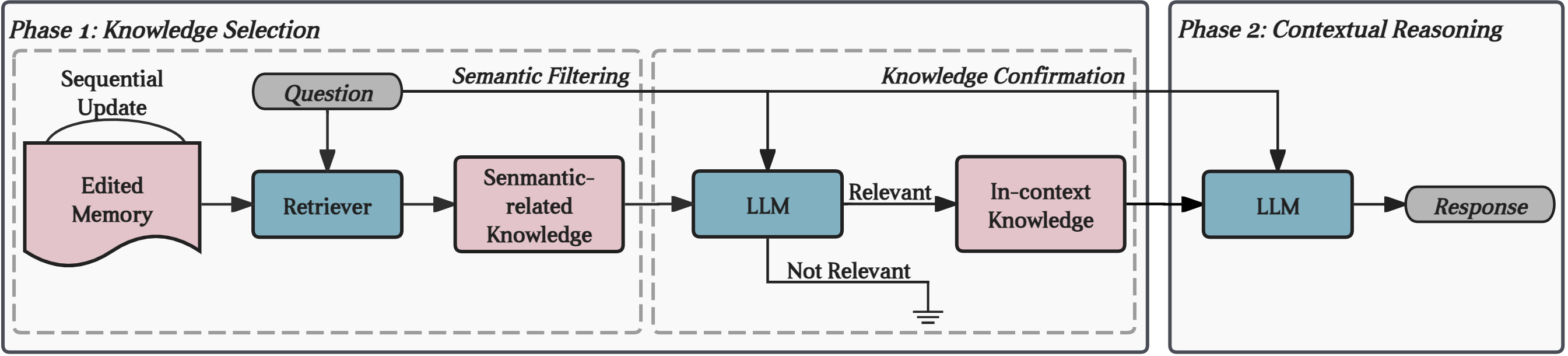
The proposed SCR framework addresses these issues by leveraging LLMs' inherent contextual reasoning capabilities without altering their internal parameters. Key features of SCR include:

  • External Knowledge Memory: SCR uses an external, expandable memory to store and retrieve updated knowledge, preserving the original model intact.
  • Two-Step Knowledge Selection: This involves a semantic filtering step to identify relevant knowledge from the memory, followed by a confirmation step using the LLM to ensure relevance and contextual fit.
  • Contextual Reasoning: The LLM dynamically incorporates selected knowledge into its reasoning process to generate contextually accurate outputs, thus maintaining high reliability and portability. Figure 3

    Figure 3: The Selective Contextual Reasoning (SCR) framework. The Edited Memory is a dynamic textual knowledge base.

Performance and Implications

SCR has shown to outperform traditional model editing techniques in comprehensive evaluations across different datasets and model architectures. Its key advantages include:

  • Improved Generalization and Portability: By utilizing external context, SCR effectively generalizes to varied prompts and ensures that knowledge updates are portable across different contexts.
  • Scalability and Efficiency: SCR's reliance on contextual reasoning rather than parameter modification makes it scalable and computationally efficient, suitable for continuous updates.
  • Enhanced Robustness: The method consistently demonstrates high robustness to multiple sequential updates, maintaining model stability and performance. Figure 4

Figure 4

Figure 4

Figure 4

Figure 4

Figure 4

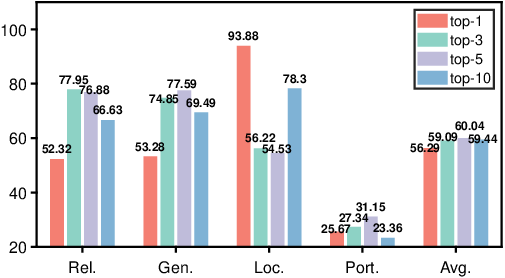
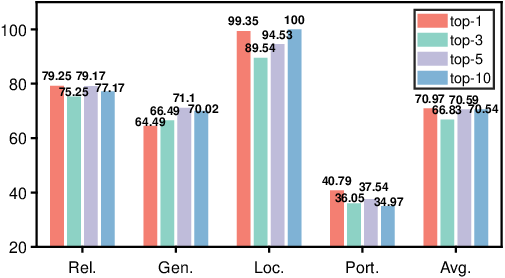
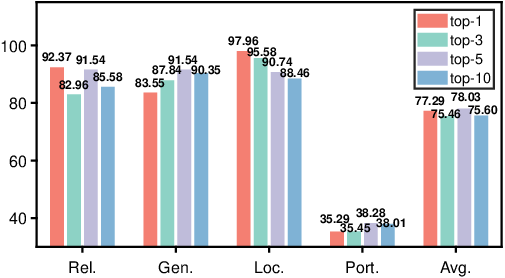
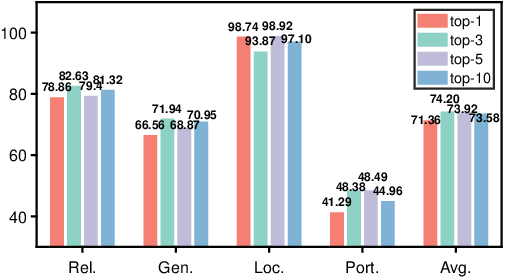
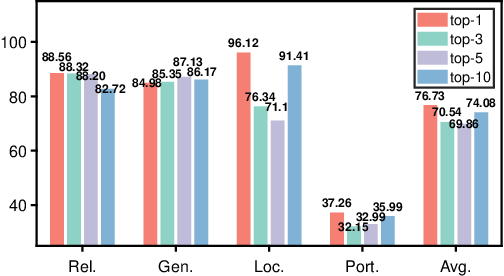
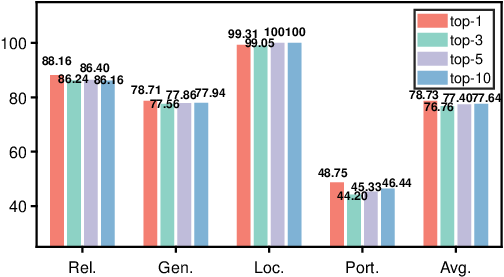
Figure 4: Effect of top-k selection in the semantic filtering step when updating knowledge in WikiData$_\text{counterfact$ dataset.

Conclusion

The paper provides a compelling argument against traditional model editing methods due to their inherent limitations in performance and scalability. It introduces SCR as an effective alternative, leveraging LLMs' contextual reasoning capabilities to provide accurate and robust knowledge updates. The paper's insights have significant implications for future research in AI, particularly in developing models that can adapt in real-time to evolving data without the drawbacks of parameter modification. Future directions may include further refinement of retrieval techniques and integration of advanced reasoning frameworks to enhance SCR's effectiveness in complex applications.

Paper to Video (Beta)

No one has generated a video about this paper yet.

Whiteboard

No one has generated a whiteboard explanation for this paper yet.

Open Problems

We haven't generated a list of open problems mentioned in this paper yet.

Authors (3)

Collections

Sign up for free to add this paper to one or more collections.

Tweets

Sign up for free to view the 2 tweets with 116 likes about this paper.