- The paper introduces a novel solver that integrates QED polarization effects into electromagnetic simulations to operate beyond the Schwinger limit.
- Its numerical implementation within PIC simulations accurately models vacuum birefringence and mode dispersion in super-strong magnetic fields.
- Results validate theoretical predictions and offer improved tools for modeling magnetar magnetospheres and high-intensity laser plasma experiments.
Electromagnetic Field Solver for QED Polarization in Super-Strong Magnetic Fields
Introduction
In this paper, an electromagnetic field solver is presented, which is adept at dealing with quantum electrodynamics (QED) polarization within plasmas subjected to super-strong magnetic fields, such as those found in the environments around magnetars and laboratory plasma experiments. The paper addresses the limitations of classical electromagnetism when confronted with magnetic field strengths exceeding the Schwinger limit (approximately 4.4×10¹³ G) and presents a new numerical algorithm capable of operating beyond this threshold. The solver provides significant insight into the behavior of plasma polarization modes surrounding magnetars and represents the first such solver applicable beyond this quantum limit.
Theoretical Background
The foundational concepts of super-strong magnetic fields are explored with a focus on how QED effects modify Maxwell's equations. The interaction of electromagnetic fields with virtual electron-positron pairs causes the vacuum to function as a polarized medium, introducing phenomena like vacuum birefringence. This paper leverages nonlinear modifications to Maxwell's equations to model these effects. It uses the Heisenberg–Euler Lagrangian to incorporate QED vacuum polarization, thus altering the existing classical electrodynamics equations by introducing nonlinear terms.
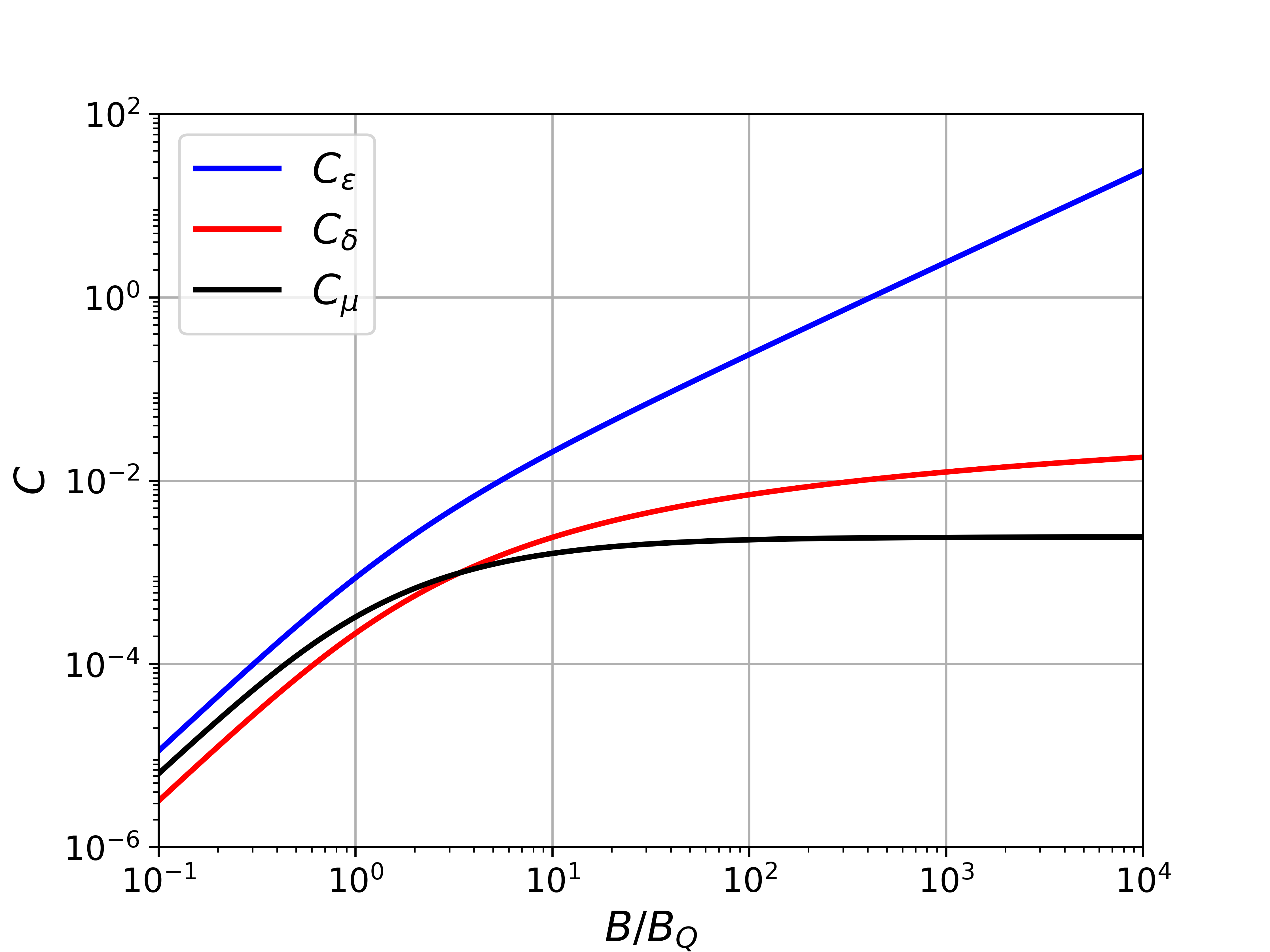
Figure 1: QED parameter Cϵ, Cδ, and Cμ as functions of the normalized magnetic field B/BQ.
By adopting nonlinear Maxwell equations, the paper captures essential wave phenomena such as birefringence between ordinary (O) and extraordinary (X) polarizations and differentiations of parallel wave polarizations, right (R) and left (L).
Numerical Implementation
The implementation of this numerical solver is distinctive in its application within Particle-in-Cell (PIC) simulations, integrating QED polarization corrections. This enhancement enables simulations to go beyond merely classical plasma models by including complex, nonlinear interactions. The modified solver can simulate wave interactions without resolving cyclotron motion, perfect for studying the high-energy environments of magnetars and powerful laser plasmas.
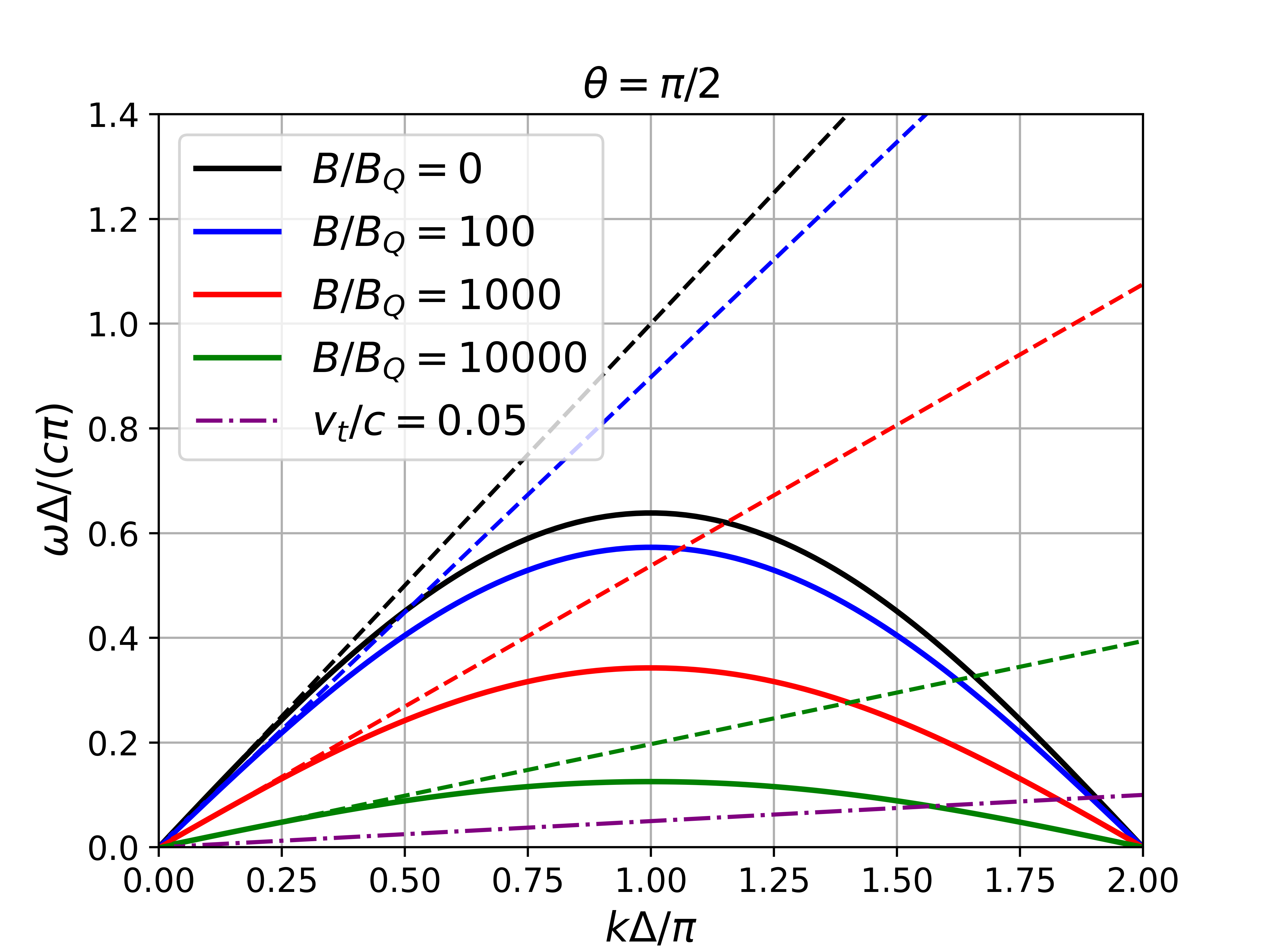
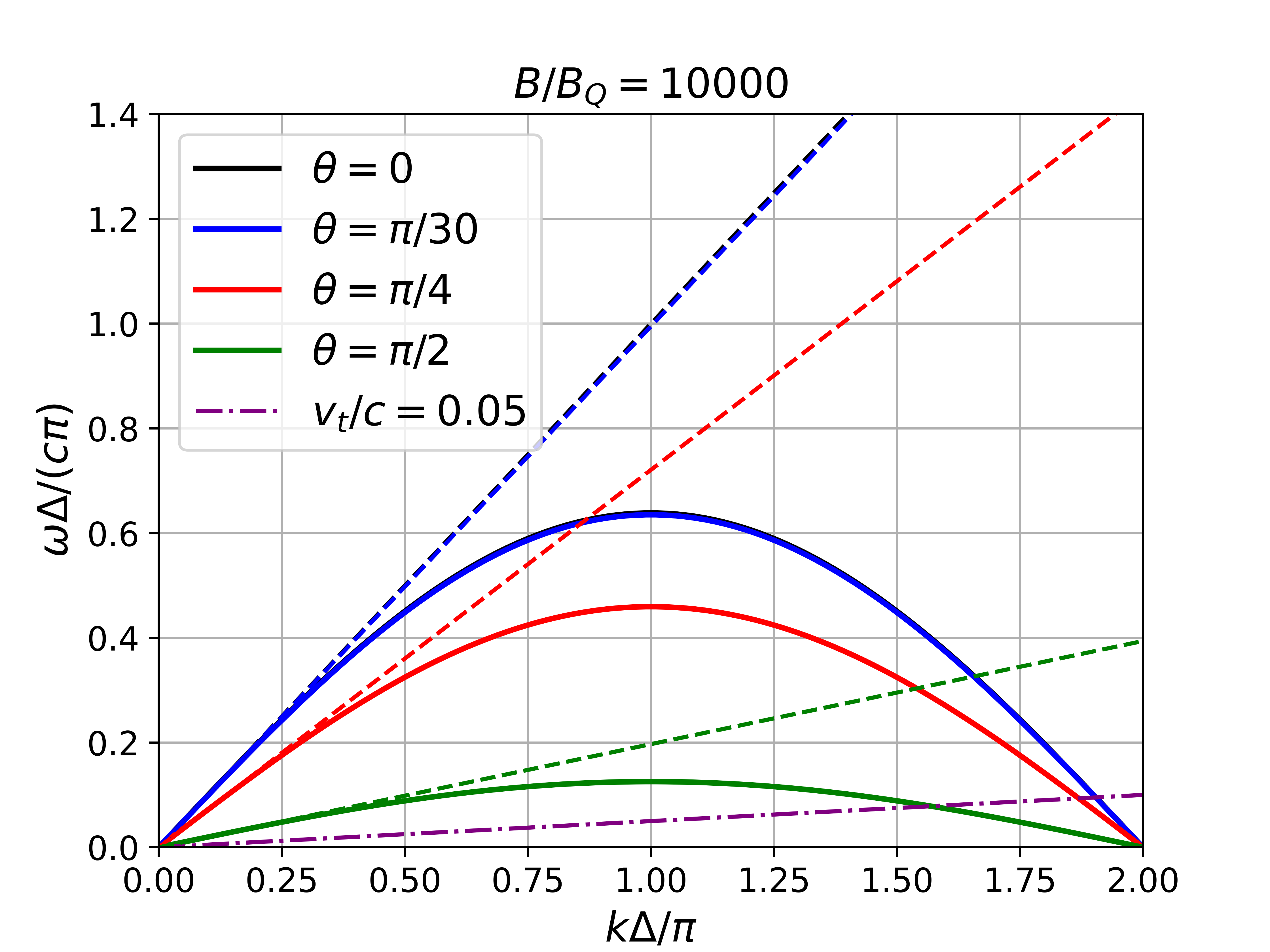
Figure 3: Dispersion relation of the O-mode waves including the QED modification.
Results and Analysis
This research demonstrates how electromagnetic waves within the simulations adhere closely to analytical solutions, showing the effects of QED on electromagnetic wave modes. Specifically, it highlights how these modes exhibit wave birefringence between the O and X polarizations. The solver proves versatile for applications ranging from gyro-kinetic simulations to ground-level Landau quantization while maintaining stable and accurate results even in multi-dimensional domains.
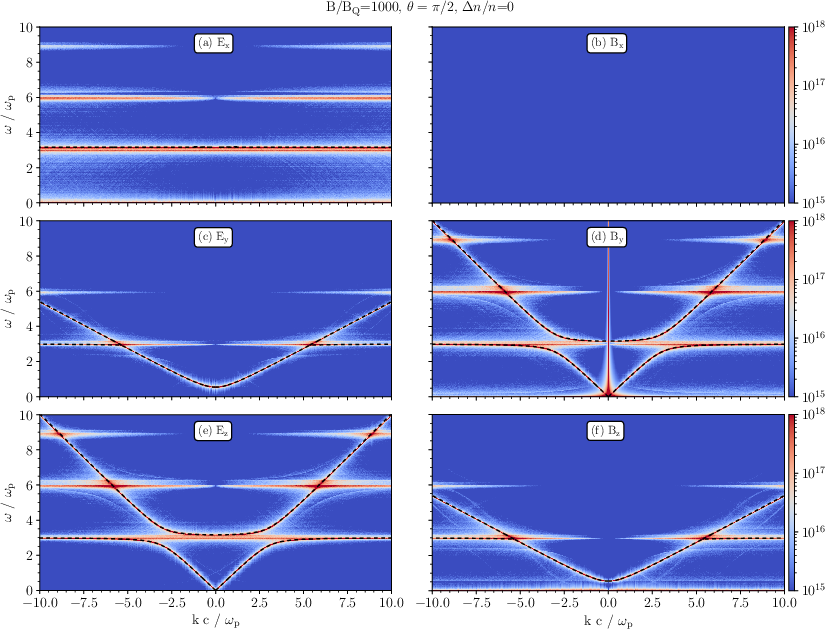
Figure 2: The dispersion diagrams of the electric and magnetic field components show the wave birefringence between the O-mode and X-mode waves.
The paper also provides a comprehensive examination of how wave dispersion relations are modified under these conditions. Results from the solver indicate an increase in phase speed modification and accurate replication of QED effects calculated analytically. Furthermore, the paper speculates on potential astrophysical applications, suggesting observations of magnetar environments could provide empirical verification of such QED effects.
Practical Implications
The solver's most profound contribution potentially lies in its implications for understanding the extreme physical conditions in magnetar magnetospheres and laser plasmas. By providing a more accurate simulation tool, researchers can better predict and interpret the signatures of QED effects. For instance, distinct polarization effects in X-ray radiation observed from magnetars might now be more accurately modeled.
Conclusion
The paper offers a significant advancement in modeling electromagnetic interactions in super-strong magnetic fields, effectively combining theoretical robustness and practical applicability. By incorporating QED polarization into the PIC framework, this solver enhances the capacity to explore environments previously limited by classical-field approximations. Future directions might involve integrating these insights into observational astrophysics and advancing laboratory plasma experiments for further empirical validation.
In summary, this research establishes a cornerstone for the computational exploration of quantum effects in strong magnetic fields, providing new insights into the realms of both theoretical physics and applied technological fields.