Existence of Bayesian Equilibria in Incomplete Information Games without Common Priors
Abstract: We consider incomplete information finite-player games where players may hold mutually inconsistent beliefs without a common prior. We introduce absolute continuity of beliefs, extending the classical notion of absolutely continuous information in Milgrom and Weber (1985), and prove that a Bayesian equilibrium exists under broad conditions. Applying these results to games with rich type spaces that accommodate infinite belief hierarchies, we show that when the analyst's game has a type space satisfying absolute continuity of beliefs, the actual game played according to the belief hierarchies induced by the type space has a Bayesian equilibrium for a wide class of games. We provide examples that illustrate practical applications of our findings.
Paper Prompts
Sign up for free to create and run prompts on this paper using GPT-5.
Top Community Prompts
Explain it Like I'm 14
Existence of Bayesian Equilibria in Incomplete Information Games without Common Priors — Explained Simply
Overview
This paper asks a basic question about strategic games where players don’t know everything: Can stable outcomes (called “equilibria”) exist even when players disagree about the world? Traditionally, researchers have assumed all players start from a shared “common prior” (a common view of probabilities). This paper drops that assumption and introduces a new condition—absolute continuity of beliefs—that’s flexible enough to allow disagreement yet strong enough to guarantee the existence of a Bayesian equilibrium in many games.
What questions does the paper try to answer?
- Can a Bayesian equilibrium exist when players hold different, possibly conflicting beliefs (i.e., no common prior)?
- What simple condition on players’ beliefs ensures equilibrium exists?
- How can we analyze such games using familiar tools (like Nash equilibria) despite belief disagreements?
- Do these results still work when players have very rich “type spaces” (including “beliefs about beliefs” potentially going on forever)?
- Can these ideas help in practical models (like firms competing in quantities with uncertain costs or prices)?
How did the authors study the problem?
Think of a game as people choosing actions based on what they know (their “types”) and what they believe about others. A Bayesian equilibrium means each player picks a strategy that depends on their type, and no one wants to change their strategy after factoring in their beliefs.
The authors’ main tools and ideas:
- Absolute continuity of beliefs:
- Imagine there’s a “reference probability picture” (a baseline way of measuring chances) that doesn’t favor any specific player. Absolute continuity means no player gives positive probability to events that the reference says are impossible. It’s like everyone agrees on what can never happen, even if they disagree on how likely possible things are.
- This condition is weaker than requiring a common prior (which forces full agreement on all probabilities). It only requires shared “no-go zones.”
- A surrogate game with complete information:
- In the original game, players have private information and different beliefs. That’s hard to analyze directly.
- The authors build a new game, a “surrogate,” where each player’s action is their entire strategy (a plan for every type), and payoffs average the original game’s outcomes using the reference probability picture.
- In this surrogate game, classical methods (like finding Nash equilibria) can be used.
- A bridge back to the original game:
- The authors prove that a Bayesian equilibrium in the original game exists if and only if a Nash equilibrium exists in at least one surrogate game built from an acceptable reference (one that “dominates” all players’ beliefs).
- They also show how to translate equilibria across different acceptable reference measures when those references are similar enough (technically, “mutually absolutely continuous”).
- Rich type spaces and belief hierarchies:
- Players can have beliefs about others’ beliefs, and so on (like “I think you think I think...” potentially infinitely).
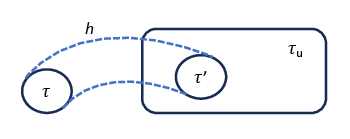
- The authors construct special “belief-closed” spaces where these infinite hierarchies are handled cleanly and still satisfy absolute continuity.
- They show that if the analyst’s chosen type space has absolute continuity of beliefs, then the real game played according to the induced belief hierarchies also has a Bayesian equilibrium.
Key terms explained with simple analogies
- Type: What a player privately knows or observes. Think of it like a personal profile: skills, preferences, or signals they received.
- Belief map: How a player assigns probabilities to what others’ types might be and what the unknown parts of the world might be.
- Common prior: A shared starting probability distribution everyone agrees on—like all players using the same weather forecast.
- Absolute continuity of beliefs: Players may use different forecasts but agree that certain events are impossible according to a common reference forecast. They can disagree about “how likely,” but not about “possible vs. impossible.”
- Bayesian equilibrium: A stable situation where each player’s strategy (depending on their type) is their best response to others’ strategies and beliefs. No one wants to switch after considering what they know and what they think others will do.
- Surrogate game: A re-framed version of the original game that uses a standard reference probability; makes analysis simpler.
What did the authors find, and why does it matter?
Here are the main results, in plain terms:
- Existence under absolute continuity:
- If players’ beliefs satisfy absolute continuity with respect to a product reference measure, a Bayesian equilibrium exists under broad conditions (e.g., reasonable action spaces and bounded payoffs).
- This works even when there is no common prior.
- Characterization via surrogate games:
- The set of Bayesian equilibria in the original game equals the intersection of Nash equilibria across all surrogate games built from acceptable references.
- Practically, to prove equilibrium exists in the original game, it’s enough to find a Nash equilibrium in one properly chosen surrogate game.
- Invariance across similar references:
- If you switch the reference probability to another one that is “similar enough,” the set of Nash equilibria in the surrogate game doesn’t change.
- This gives robustness: results aren’t overly sensitive to the exact choice of the reference.
- Extension to discontinuous payoffs (like “jump” changes when actions cross thresholds):
- Using modern existence theorems for discontinuous games, the authors show their method still ensures equilibrium under mild security and continuity conditions.
- Rich belief hierarchies:
- When you allow players to have beliefs about beliefs (and so on), the authors construct spaces where these infinite hierarchies still lead to equilibrium, provided absolute continuity holds.
- Importantly, predictions made in the analyst’s simplified model “set-identify” predictions in the more realistic belief hierarchy model. In simple terms, the analyst’s predicted set safely contains the true outcomes—so it’s valid for inference without solving the infinite-beliefs problem directly.
- Examples make it concrete:
- Inconsistent beliefs can still lead to equilibrium (e.g., versions of Battle of the Sexes or public-good provision where players’ belief variances differ).
- The condition fails if players perfectly share a common continuous signal that pins down outcomes exactly (a known “pathology” that breaks absolute continuity).
- Cournot competition with uncertain prices/costs: equilibrium exists even without a common prior, assuming mild conditions on price and cost functions.
Why is this important?
- More realistic modeling: People often disagree. Dropping the common prior matches real-world situations better (e.g., firms using different market forecasts, bidders trusting different sources).
- Tractability without forcing agreement: The surrogate-game approach lets analysts apply well-known equilibrium tools even when beliefs disagree.
- Safer predictions with rich beliefs: Analysts can use manageable type spaces to generate predictions that remain valid when players’ beliefs get very deep and complex.
- Applications across economics and beyond: Auctions, markets, negotiations, and public-good problems often involve incomplete information and belief differences; this framework helps ensure stable outcomes exist.
Final takeaway
You don’t have to force everyone to agree on the exact probabilities (common prior) to guarantee stable outcomes in strategic situations. It’s enough that everyone shares a basic agreement about what’s truly impossible (absolute continuity of beliefs). With that, you can reframe the problem into a familiar setting, find equilibria using standard methods, and trust that those equilibria translate back—even when players’ beliefs are complex and layered. This opens the door to more realistic and broadly applicable game-theoretic models.
Knowledge Gaps
Below is a concise list of concrete knowledge gaps, limitations, and open questions the paper leaves unresolved. Each point is phrased to be actionable for future research.
- Necessity of absolute continuity of beliefs (ACB): The paper establishes ACB as a sufficient condition for equilibrium existence, but does not characterize whether ACB is minimal or necessary. Identify weaker or alternative conditions (e.g., domination by non-product or σ-finite measures, “approximate” ACB, or structural restrictions on singular parts) that still guarantee existence.
- Product dominance restriction: The dominating measure ν must be a product measure. Assess whether existence results extend when beliefs are dominated by non-product measures that allow dependence across players’ types or payoff states, and quantify how dependence vs. independence interacts with existence.
- Public continuous signals exclusion: ACB rules out environments with commonly observed continuous signals (Example: failure of ACB). Develop equilibrium existence results for such information structures (e.g., using mixed/behavioral selections, non-atomic signal models, saturated probability spaces, or alternative measurability/absolute continuity notions).
- Algorithmic selection and computation of ν: The existence proofs assume ν ∈ M is available, but provide no constructive method to select or compute such ν. Design algorithms to find dominating ν given observable or estimated belief kernels η, and to compute Radon–Nikodym densities fν,i and equilibria efficiently.
- Uniqueness, refinement, and stability: The focus is on existence; there are no results on uniqueness of Bayesian equilibria, refinement (e.g., trembling-hand/perfection), stability/upper hemicontinuity, or comparative statics with respect to η, ν, or payoffs. Establish continuity and selection results for equilibria under small perturbations of beliefs and payoffs.
- Equilibrium equivalence with distributional strategies: Without a common prior, equivalence between behavioral and distributional strategy equilibria breaks down. Provide conditions under which equivalence (or purification) can be restored under ACB or variants, and identify when distributional equilibria exist and coincide with behavioral equilibria.
- Measurability assumptions: Results rely on universally complete σ-algebras and countably generated σ-algebras for certain propositions. Assess necessity and scope of these assumptions; extend results to standard Borel spaces or more general measurable spaces, and clarify what fails when these assumptions are relaxed.
- Boundedness and integrability constraints: Assumption 2 bounds payoffs by functions depending only on the player’s own type. Develop existence results for unbounded payoffs (e.g., growth conditions, integrability with respect to ν0 ⊗ ν−i), or bounds that depend on s or t−i.
- Discontinuous games beyond uniform payoff security: The corollary invokes “uniform payoff security.” Determine whether alternative conditions (e.g., better-reply security, payoff security à la Reny) can be adapted to inconsistent beliefs and ACB, and characterize broad classes of discontinuous games covered.
- Rich type spaces and belief hierarchies: While the paper claims explicit constructions of belief-closed subspaces satisfying ACB, it does not provide a general characterization of which hierarchies do or do not satisfy ACB. Formalize necessary/sufficient conditions on infinite belief hierarchies for ACB; quantify the restrictions ACB imposes on hierarchies and compare to universal type spaces.
- Type morphisms and set-identification: The “set-identification” result maps analyst’s types to belief-hierarchy equilibria via a morphism but offers no criteria for when the inclusion is tight, surjective, or unique. Study when and how the analyst’s equilibrium set equals the hierarchies’ equilibrium set (conditions for equality vs strict containment), and how to construct morphisms algorithmically.
- Dependence structure vs domination: Clarify the extent to which a product dominating ν can coexist with belief kernels that encode complex dependence across S and T−i via densities fν,i, and whether richer dependence requires non-product ν. Provide examples and impossibility results.
- Comparative statics on beliefs: Provide sensitivity analysis of equilibria with respect to perturbations of belief kernels η (e.g., continuity in L1/L∞ norms of densities, robustness to estimation error), and identify Lipschitz or continuity properties of equilibrium correspondences.
- Canonical choice of ν and invariance classes: Proposition 3 shows invariance under mutually absolutely continuous ν, but there is no canonical or minimal-choice ν. Develop selection criteria (e.g., maximal or minimal dominating ν, entropy-minimizing ν), and test whether equilibria computed under different ν within the class are numerically stable.
- Extensions to dynamic/sequential frameworks: The approach is static; it does not address sequential equilibria, perfect Bayesian equilibria, or repeated games without common priors. Investigate whether ACB (or variants) can ensure existence in dynamic settings and what additional measurability or consistency conditions are needed.
- Large/continuum-player games: The results cover finite players. Extend existence results under ACB to games with a continuum of players (e.g., nonatomic games), and reconcile with recent large-game asymptotics under heterogeneous beliefs.
- Practical verification of ACB: Provide testable conditions and data-driven procedures to verify ACB from observed actions/types or estimated belief kernels; develop statistical tests for ACB and guidance on when violations are economically meaningful vs benign.
- Empirical identification and inference: The paper’s econometric motivation (confidence sets and set-identification) is not formalized. Derive finite-sample and asymptotic inference procedures for predicted equilibrium sets under ACB, including uncertainty quantification when η is estimated and ν is selected from data.
- Broader applications: Beyond Cournot (example incomplete), systematically apply the framework to auctions, bargaining, matching/market design, and mechanism design without common priors. Specify model classes where ACB is natural and provide verification recipes for the required conditions.
- Public vs private information interplay: Example 2 indicates compatibility with private information; the framework does not characterize mixed settings where both public continuous signals and private types coexist. Develop hybrid conditions that accommodate public signals (possibly discrete/coarse) together with ACB on private components.
- Purification and mixed strategies under ACB: Assess whether pure-strategy equilibria exist under ACB for classes of games (beyond examples), and whether standard purification theorems can be adapted without a common prior.
- Topologies on strategy spaces and versions: The existence proofs hinge on version equivalence up to ν-null sets, but there is no topology or metric to compare equilibria across versions. Define appropriate topologies on behavioral strategies and establish continuity and convergence results that respect version equivalence.
- Characterization of failure modes: Provide a taxonomy of belief profiles and type spaces where Bayesian equilibria fail (e.g., universal type space à la Mertens–Zamir) and identify minimal modifications (coarsening, restricting hierarchies, relaxing public signals) that restore existence under ACB or alternative conditions.
- Demand/supply verification in Cournot: For the Cournot example, give explicit, checkable conditions on price and cost primitives that ensure uniform payoff security and the upper semicontinuity requirement under inconsistent beliefs, and provide computational examples demonstrating equilibrium existence.
Collections
Sign up for free to add this paper to one or more collections.