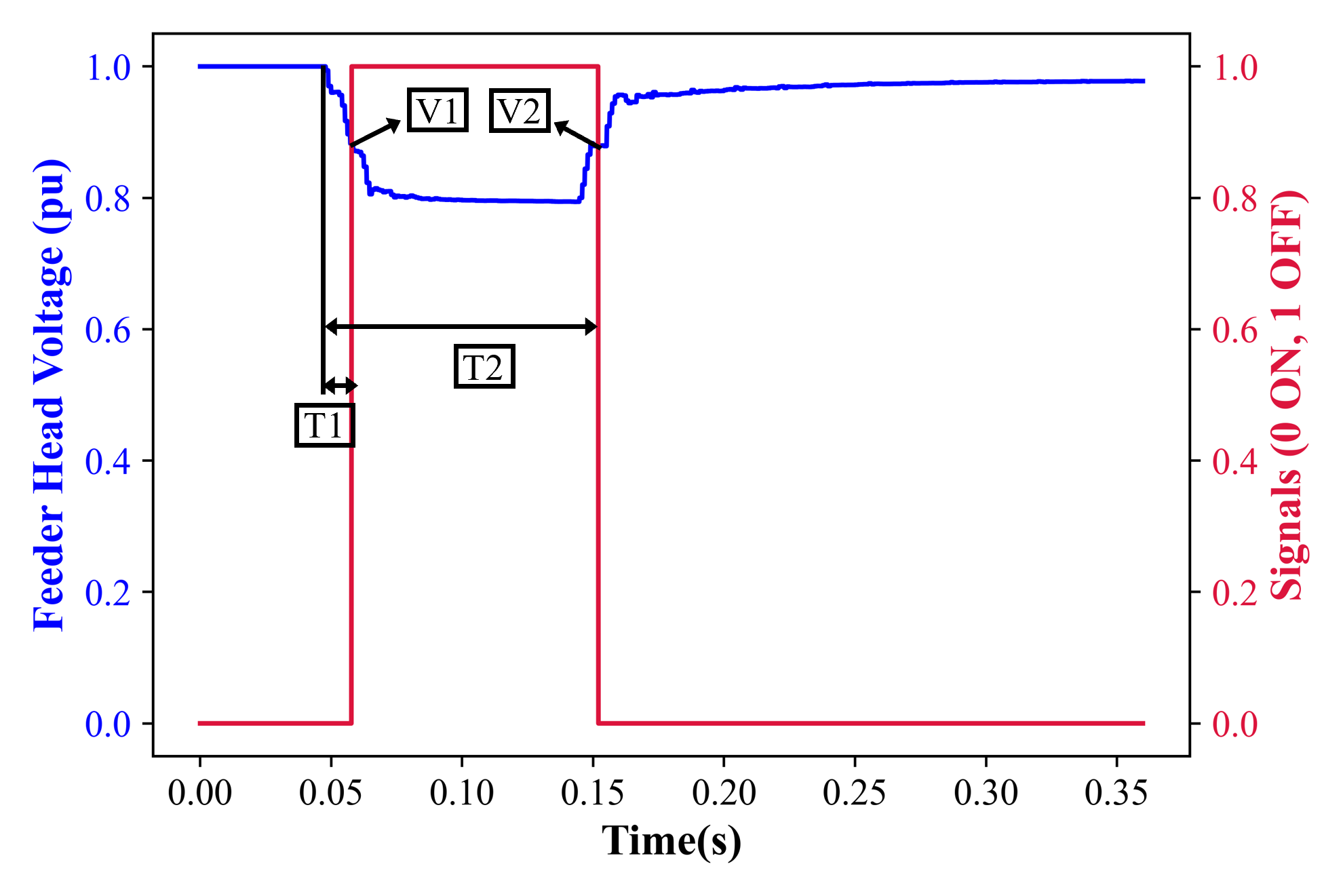
- The paper presents a novel three-segment reduced feeder model that accurately captures dynamic phenomena such as FIDVR and SPHIM stalling.
- The methodology leverages practical utility topological and loading data to optimize computational efficiency without sacrificing model fidelity.
- Simulation results demonstrate significant improvements over traditional models, particularly under moderate fault scenarios with contactor behaviors.
Development of Reduced Feeder and Load Models Using Practical Topological and Loading Data
The paper addresses the challenge of balancing computational efficiency and accuracy in power system modeling through the development and application of reduced-order models for distribution feeders. This is particularly crucial for dynamic simulations where modeling complexity can become a bottleneck.
Introduction and Motivation
In power systems, accurately representing the distribution system behavior is vital for stability and reliability assessments. Current composite load models simplify feeders into an aggregated load at a single bus, potentially omitting critical behaviors like partial motor stalling, especially during Fault Induced Delayed Voltage Recovery (FIDVR) events. Consequently, new models are required to capture dynamic behaviors such as partial motor stalling and contactor behaviors more accurately.
Recent literature suggests that models based on utility topological data can provide more realistic and field-validated approximations of the complex distribution network behaviors. This paper proposes a novel framework to create a reduced three-segment feeder and load model based on practical topological and loading data.
Methodology
The paper introduces an algorithm that leverages utility topological and loading data to develop a reduced-order feeder model. This model divides the feeder into three segments, optimizing computational resources while maintaining the fidelity required to capture critical dynamic phenomena.
Key Features of the Algorithm:
- Data Utilization: The model uses field data from a practical utility setting in the Southwestern U.S., ensuring relevance and real-world applicability.
- Model Structure: The proposed model accurately reflects the feeder's actual loading conditions, emphasizing regions where load concentrations suggest significant power flow-related behaviors, such as voltage drops.
Contactor and Load Modeling:
Contactor modeling emulates the behavior under various fault conditions. It defines parameters like tripping and reconnection characteristics, which are crucial during voltage sags.
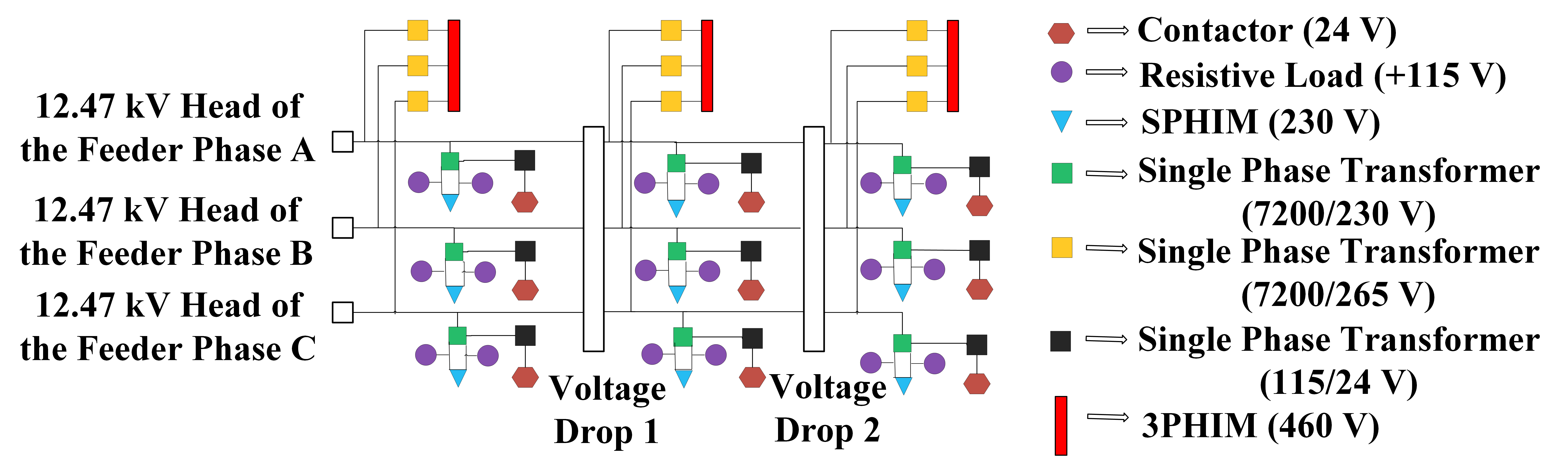
Figure 1: Three segment feeder and load model structure considered in this work.
Simulation and Results
The simulations, conducted using PSCAD, reveal that the proposed model can correctly replicate SPHIM (Single-Phase Hermetic Induction Motor) stalling behaviors under FIDVR conditions. The comparison between the proposed feeder model and traditional three-segment models demonstrates improved accuracy in predicting system responses to severe, moderate, and mild fault scenarios.
Key Findings:
Discussion
This work highlights the benefits of integrating utility-based topological data into load modeling practices. The reduced computational complexity achieved does not compromise dynamic accuracy, making it suitable for both large-scale simulations and practical planning studies. This enhanced modeling captures nuances in chain reactions during faults that simpler models might miss.
Implications for Future Research:
- Extending the methodology to encompass various operational conditions and broader geographical utility data will validate the model's universal applicability.
- Future work could explore integrating real-time data for adaptive model updates, enhancing dynamic performance tuning across seasonal load variations.
Conclusion
The paper presents a refined methodology for distribution system modeling that effectively balances precision and computational demands by using reduced-order models informed by practical utility data. This approach substantially improves the representation of dynamic phenomena in distribution networks, particularly in FIDVR scenarios, offering a robust tool for utilities and researchers alike. The advancements highlighted can drive better decision-making and strategy development for enhancing the reliability of power systems.
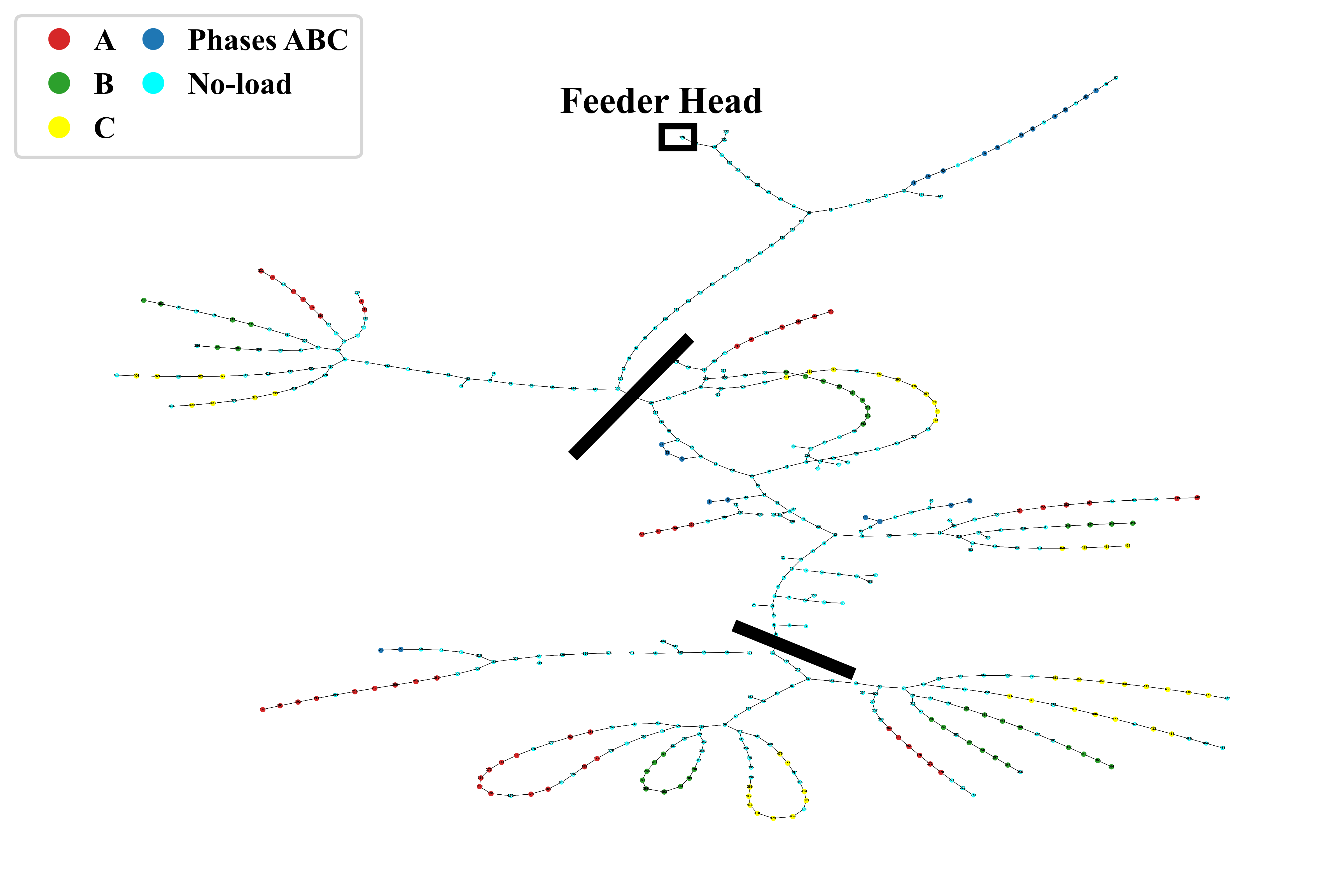
Figure 3: Evidence of SPHIM stalling in feeder M for Scenario 2.