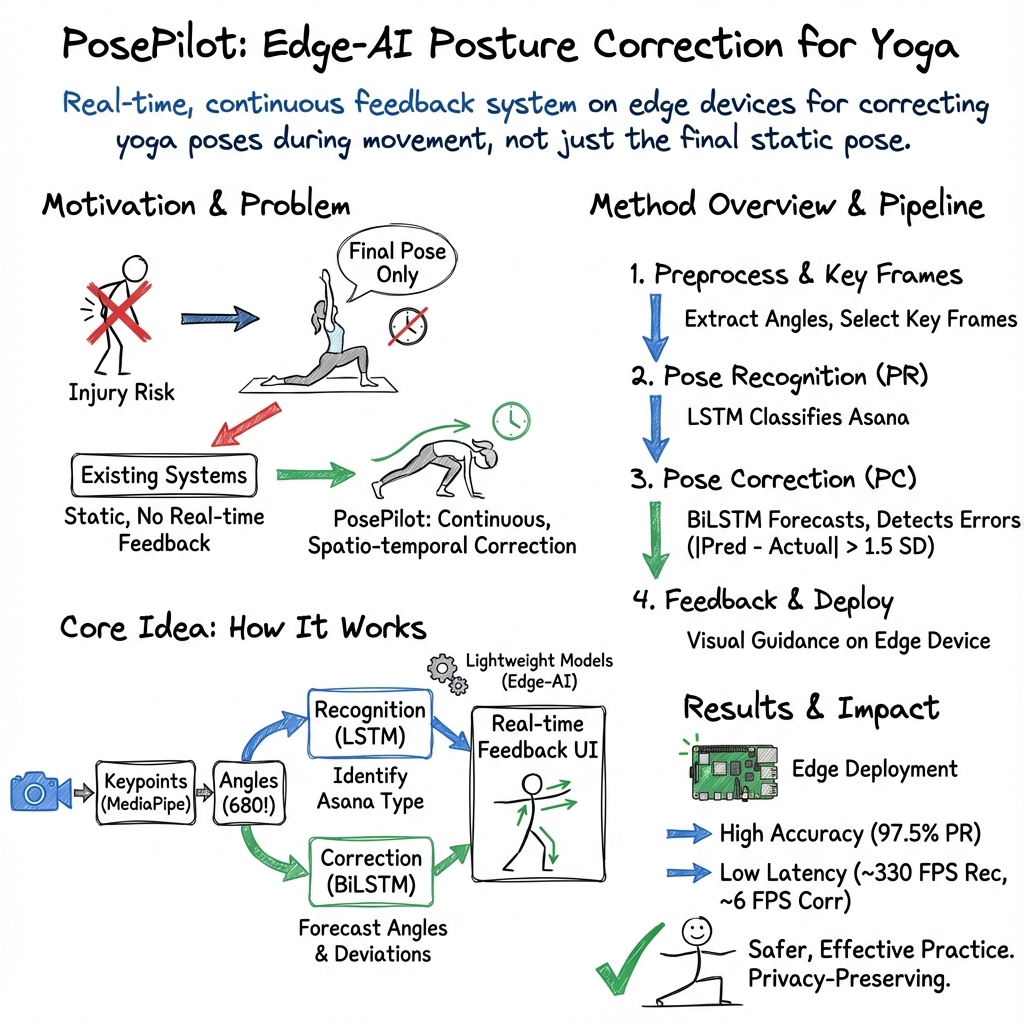
- The paper introduces a two-stage system that first recognizes Yoga poses using a Vanilla LSTM and then corrects errors with a BiLSTM augmented by multi-head attention.
- The methodology achieves 97.52% recognition accuracy and a mean square error of 0.00138, highlighting its precision in forecasting pose trajectories.
- The lightweight design enables real-time corrective feedback on edge devices, promising wider applications in physiotherapy and sports coaching.
PosePilot: An Edge-AI Solution for Posture Correction in Physical Exercises
Introduction
"PosePilot: An Edge-AI Solution for Posture Correction in Physical Exercises" (2505.19186) introduces a novel methodology combining pose recognition with real-time personalized corrective feedback, primarily focusing on Yoga postures. This approach aims to enhance the precision of physical exercise execution while being optimized for deployment on edge devices. The system integrates a Vanilla LSTM for capturing temporal dependencies in pose recognition and a BiLSTM with multi-head Attention for detailed error detection, maintaining computational efficiency and delivering instant corrective feedback.
Methodology Overview
The core of PosePilot is its computational architecture, designed to handle the spatio-temporal complexities of Yoga movements. It utilizes Long Short-Term Memory (LSTM) networks to leverage sequential data, which is crucial for capturing the nuances inherent to precision-focused exercises such as Yoga. By focusing on key joint angles and employing a lightweight computational model, PosePilot is well-suited for real-time application on resource-limited devices, thus offering practical solutions for individuals practicing at home or outdoors.
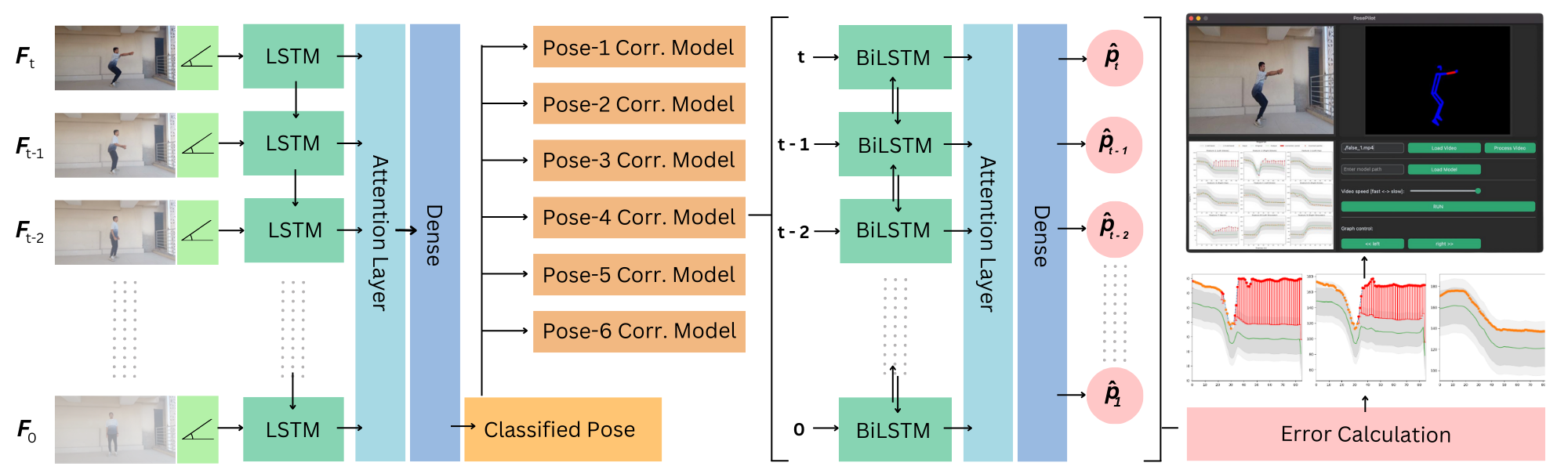
Figure 1: PosePilot Overview. Video frame's extracted joint angles from time [0,t] are first fed into an LSTM that captures motion and classifies the current yoga pose, selecting one of six trained correction models.
Pose Recognition and Correction
PosePilot's methodology involves a two-stage process: pose recognition followed by corrective feedback. The system first identifies the Yoga asana through a Vanilla LSTM that processes videos of poses, isolating key frames that reflect significant posture changes using angle deviation calculations. Upon recognizing the pose, a BiLSTM model analyzes temporal data across joints to predict the following joint-angle vector, flagging deviations that exceed predefined thresholds.
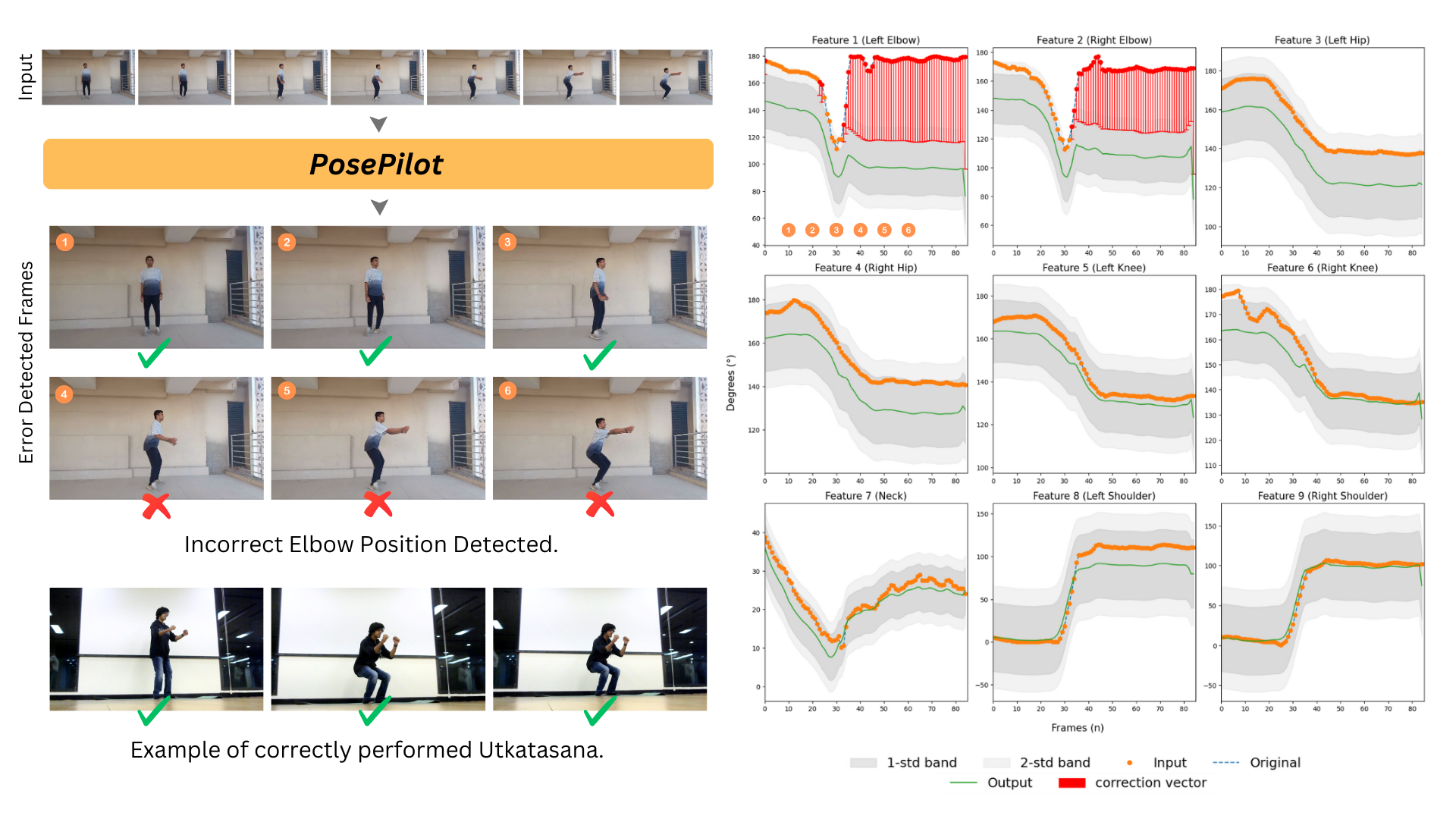
Figure 2: Correction graph for an incorrectly performed Utkatasana. Error corresponding frames are marked with red crosses. Any joint angle deviating more than 1.5 standard deviations from the ideal pose is flagged, and red vectors show the adjustment needed to bring each point back within the acceptable range.
Dataset and Evaluation
PosePilot was tested on an in-house dataset specifically curated for Yoga, featuring high-quality video sequences capturing poses from multiple angles. This dataset overcomes existing limitations such as poor lighting and participant diversity. The model achieved an average recognition accuracy of 97.52% across multiple asanas, and a mean square error (MSE) of 0.00138 for corrections, demonstrating exceptional ability to forecast pose trajectories and suggest accurate modifications.
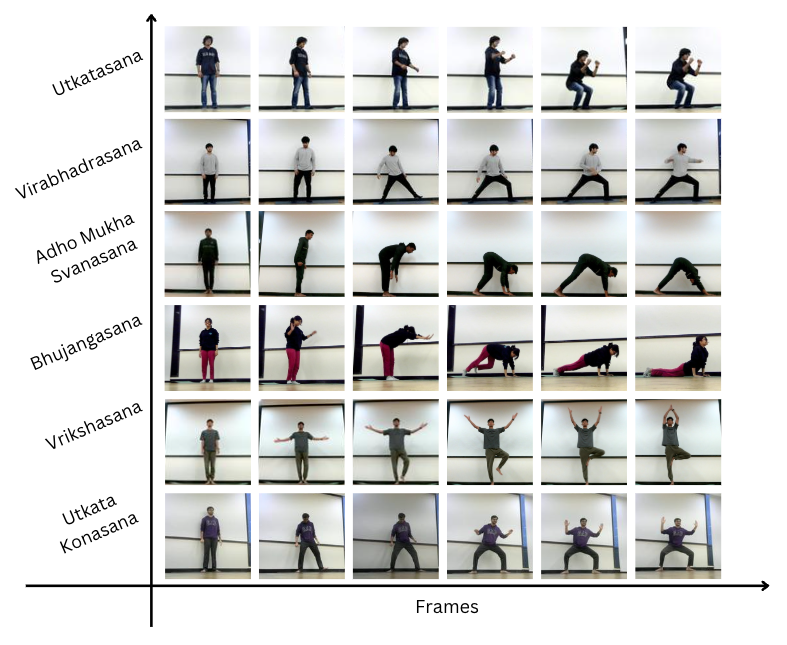
Figure 3: Sample of In-house Dataset.
Practical Implications and Future Directions
PosePilot presents significant implications for improving exercise routines by reducing injury risk through precise real-time guidance. Its real-world applicability is enhanced by edge deployment, which ensures privacy and independence from network constraints. The system's lightweight architecture further advocates for broader use in settings like physiotherapy and sports coaching.
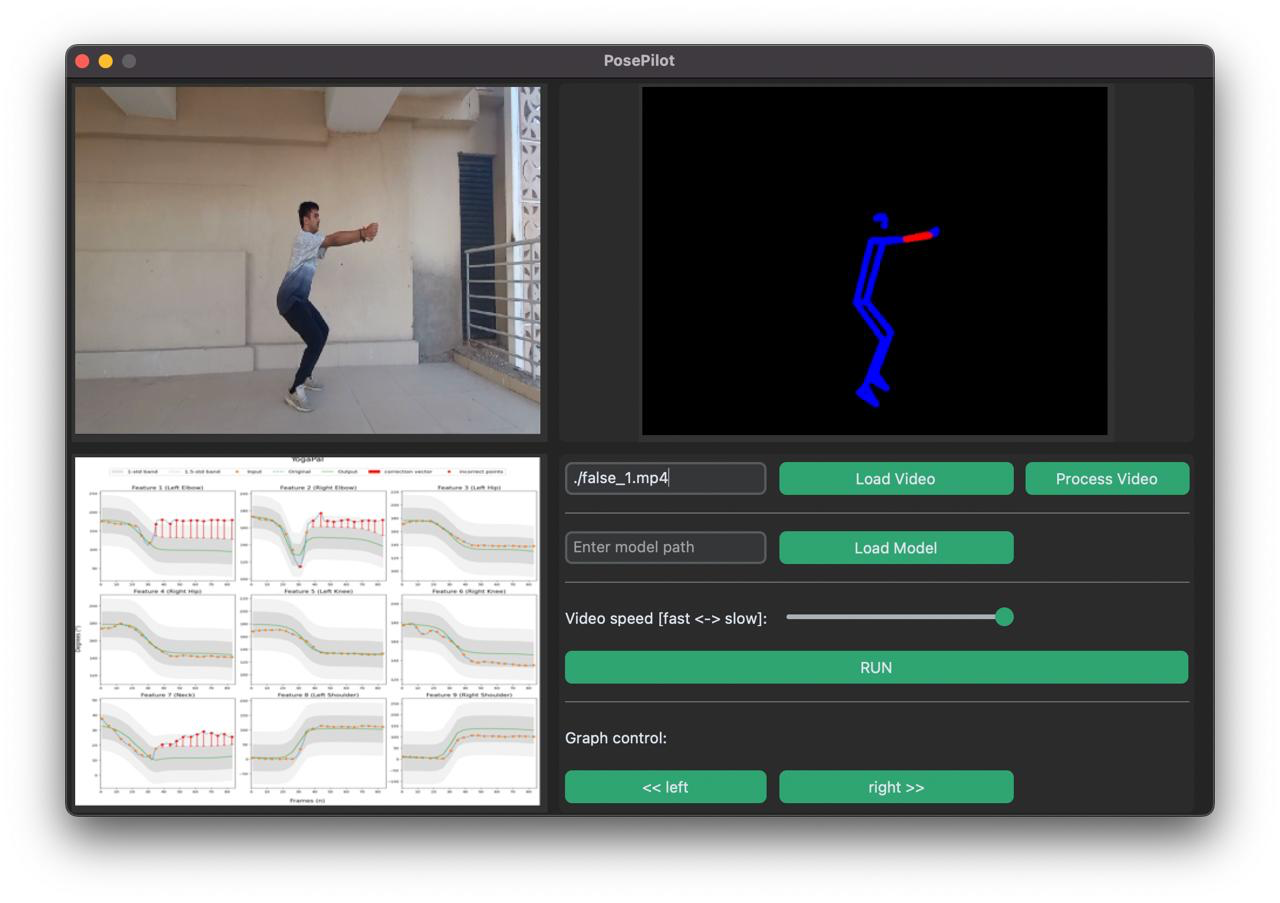
Figure 4: Pose Recognition and Personalized Corrective Feedback GUI.
Conclusion
The "PosePilot" paper outlines a sophisticated system that significantly advances pose recognition and correction capabilities within fitness applications. While currently optimized for Yoga, its foundational model can be readily adapted to other exercise forms. Future work will explore optimization of feature extraction latency and deeper real-time deployment across various physical activity domains.
PosePilot establishes a new benchmark for integrating AI into exercise routines, marking a step forward in personalized fitness training solutions on edge devices. The potential for extension into diverse fields, such as rehabilitation, indicates the promising trajectory for this line of research.