- The paper introduces a stepwise framework that integrates human expertise with multimodal diffusion models to produce realistic and compliant urban design layouts.
- It leverages ControlNet to translate textual prompts and spatial constraints into structured road networks, building footprints, and detailed renderings.
- Experiments in NYC and Chicago demonstrate improved visual fidelity, instruction compliance, and design diversity compared to baseline models.
Generative AI for Urban Design: A Stepwise Approach Integrating Human Expertise with Multimodal Diffusion Models
This essay provides an expert summary of the research paper titled "Generative AI for Urban Design: A Stepwise Approach Integrating Human Expertise with Multimodal Diffusion Models" which presents a novel framework for integrating human expertise in urban design processes using multimodal diffusion models.
Introduction
Urban design plays a critical role in structuring the spatial organization and physical form of urban areas. Given the intricacy of urban planning—characterized by a variety of stakeholders and site-specific constraints—generative artificial intelligence (GenAI) offers promising potential to enhance design efficiency and collaboration. Existing methodologies often follow end-to-end pipelines, limiting the iterative control necessary in practical urban design workflows. In response, this paper introduces a stepwise framework that thoughtfully integrates multimodal diffusion models with human expertise. The proposed approach breaks down the design process into three sequential stages: road network and land use planning, building layout planning, and detailed planning and rendering. Each stage utilizes multimodal diffusion models guided by human textual prompts and image-based constraints, allowing for iterative design refinements.
Proposed Framework
The study introduces a human-in-the-loop stepwise generative framework. This methodological departure from one-pass design generation allows human intervention at crucial stages, reflecting real-world urban planning's non-linear and iterative nature. Human expertise is integrated through textual prompts in a structured manner that guides the diffusion model in generating design diagrams. Review and refinement by human designers at each stage is integral to the process.
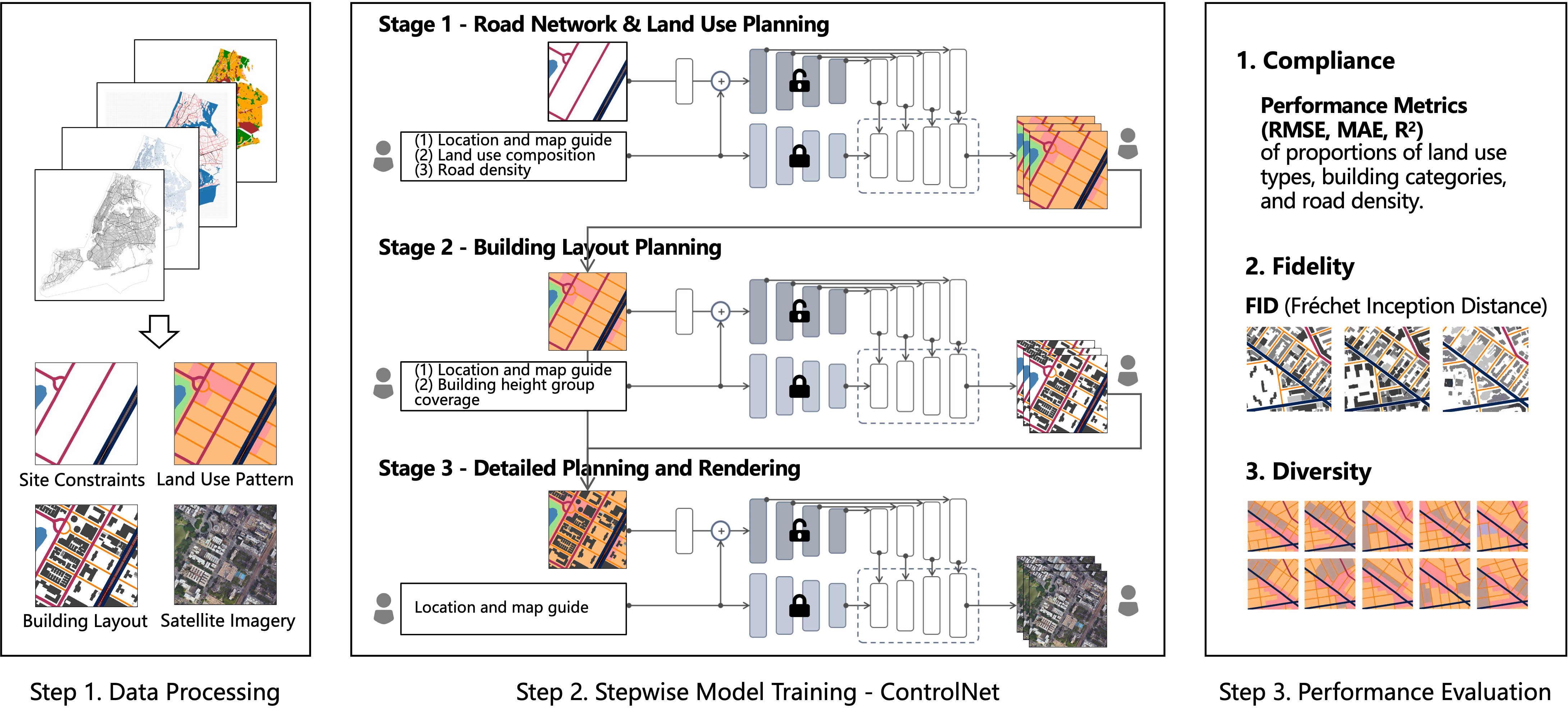
Figure 1: Framework Overview
Using ControlNet, an extension of Stable Diffusion designed for guided image synthesis, text outlines planning guidance, while images represent spatial constraints. The process of urban design is divided into three stages:
- Road Network and Land Use Planning: Combining site constraints (e.g., water bodies, railways) and human prompts to produce detailed network and land use layouts.
- Building Layout Planning: Generating building footprints and height distributions based on previous stage outputs, adapting methods to accommodate city-specific regulations or aesthetic preferences for design realism.
- Detailed Planning and Rendering: Producing a comprehensive satellite-style diagram showcasing an intuitive view of the complete urban schema.
The training involves multi-modal inputs leveraging advanced models like the ControlNet version of the diffusion model, providing highly structured designs that integrate both road networks and specific site constraints.
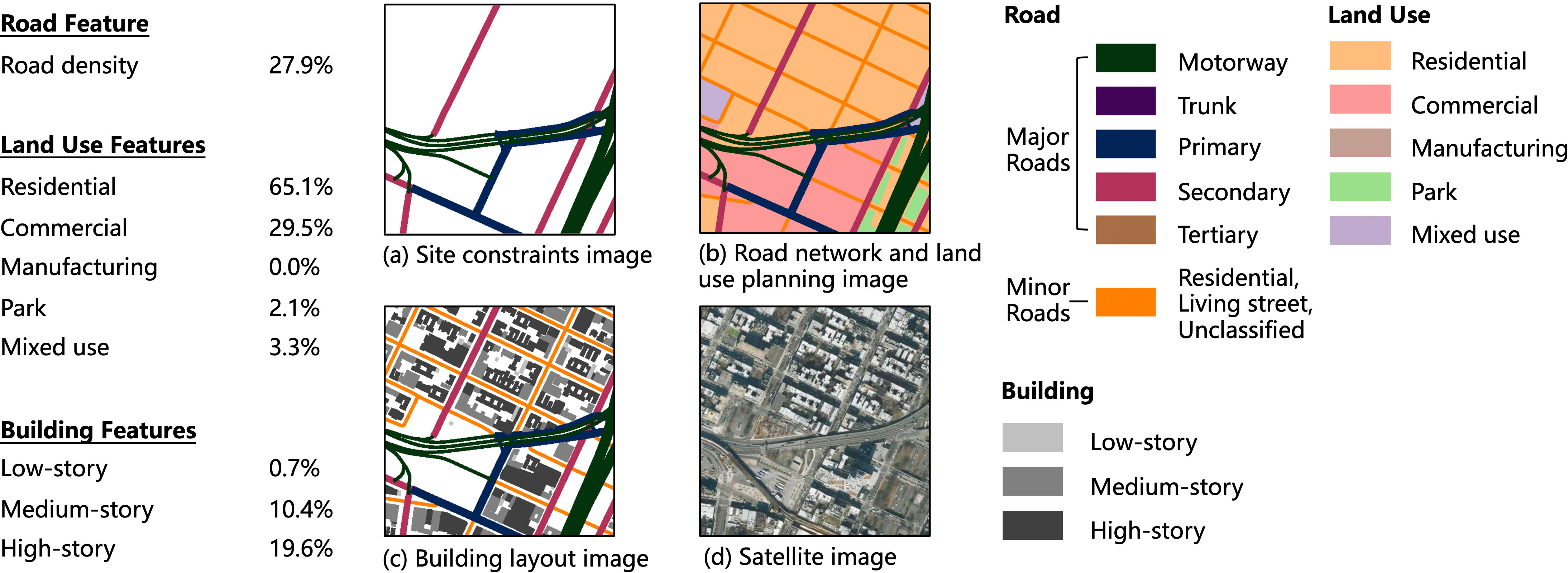
Figure 2: Image Construction and Metric Computation
Results and Quantitative Evaluation
In a series of experiments conducted using data from NYC and Chicago, the stepwise framework outperformed baseline models (such as Pix2Pix and its enhanced version) concerning visual fidelity, accuracy in instruction compliance, and diversity in design.
Visual Fidelity
Assessment utilizing Fréchet Inception Distance (FID) showed that ControlNet surpassed the GAN-based baselines in producing high-fidelity visual images with a significant margin, exhibiting sharp edges and well-structured layouts.
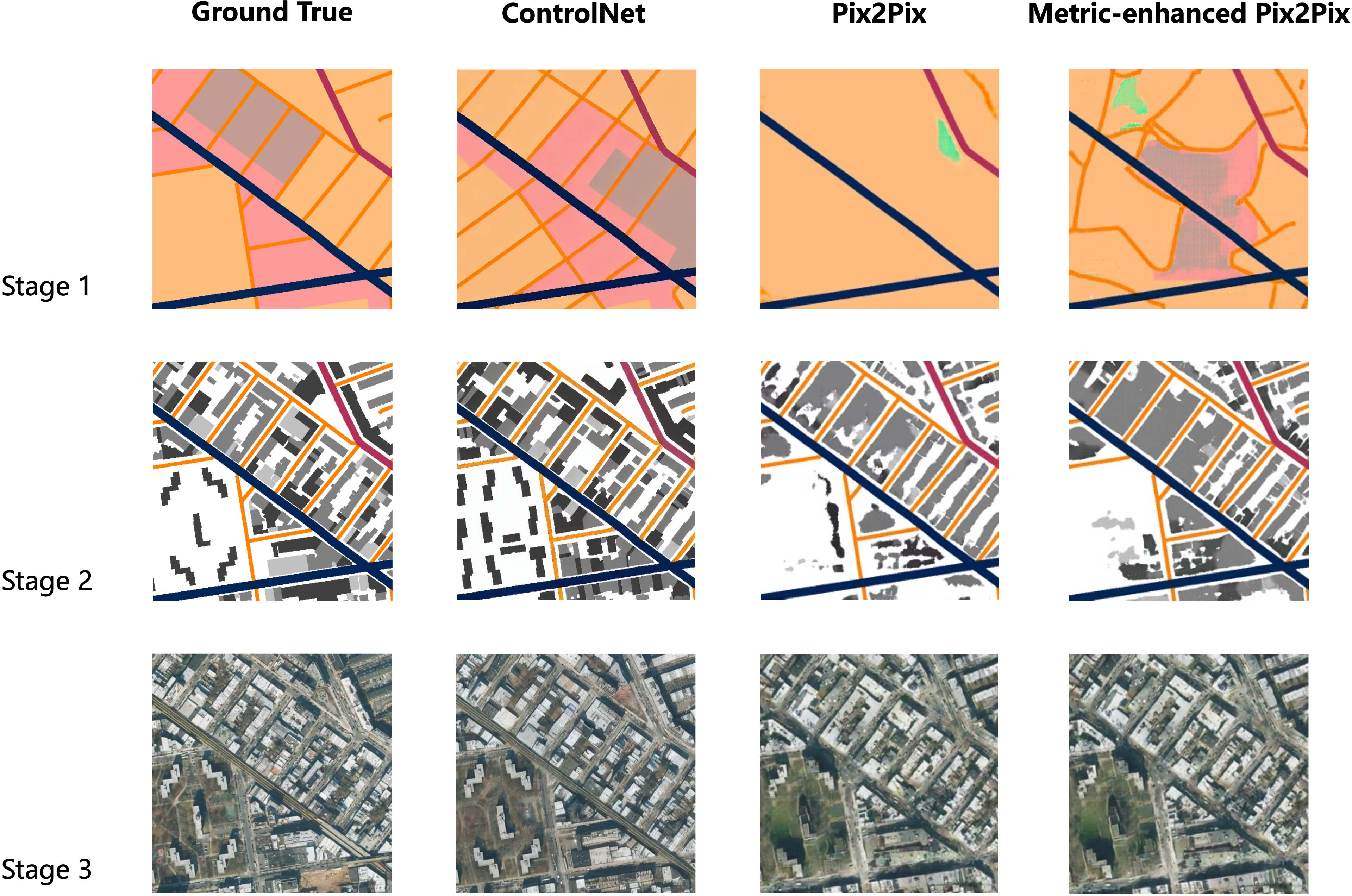
Figure 3: Fidelity comparison of generated images
Instruction Compliance
ControlNet demonstrated superior ability to adhere to human-specified urban planning directives, achieving high R2 scores for key metrics including road density, land use composition, and building height distribution.
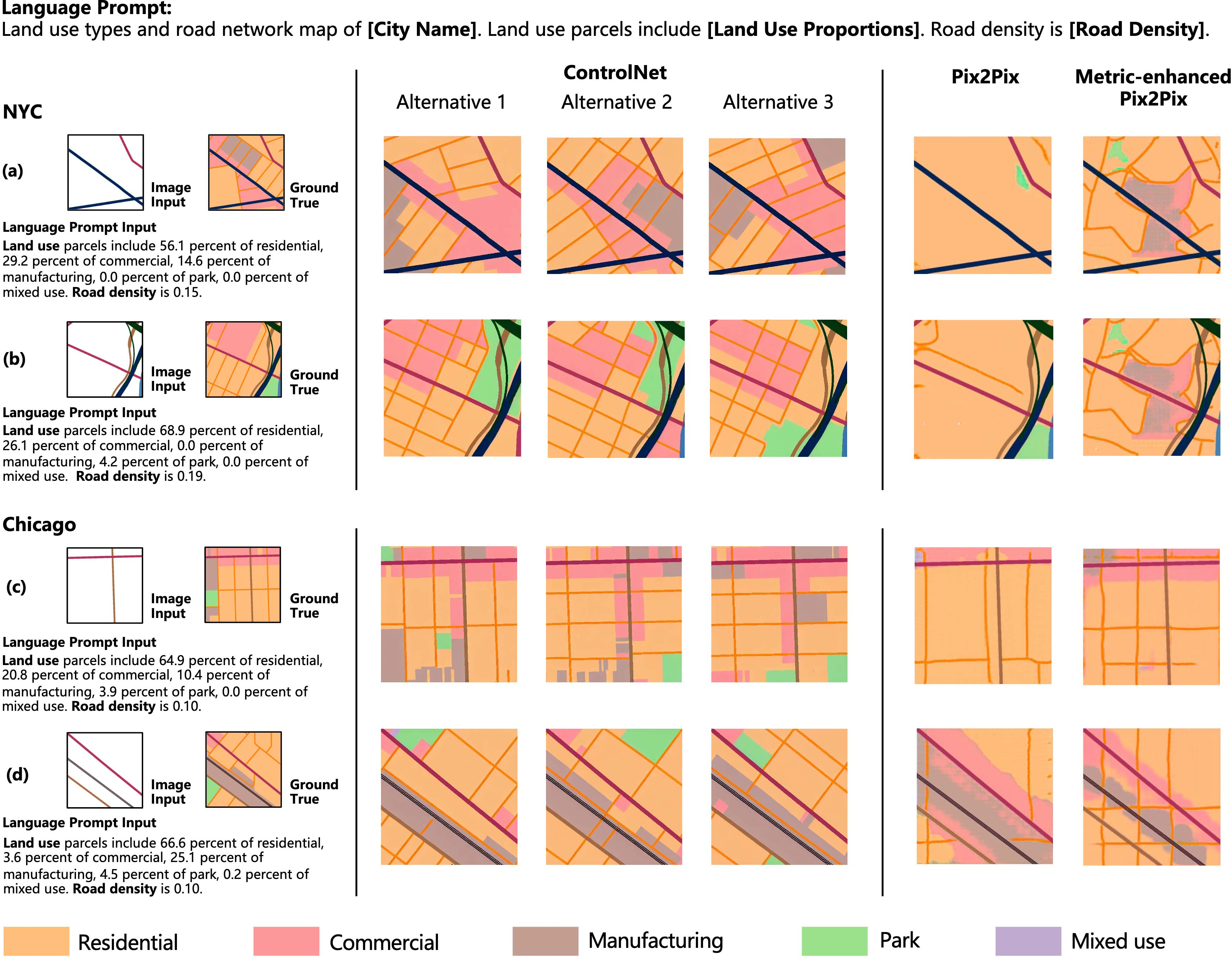
Figure 4: Results of Road Network and Land Use Planning Stage
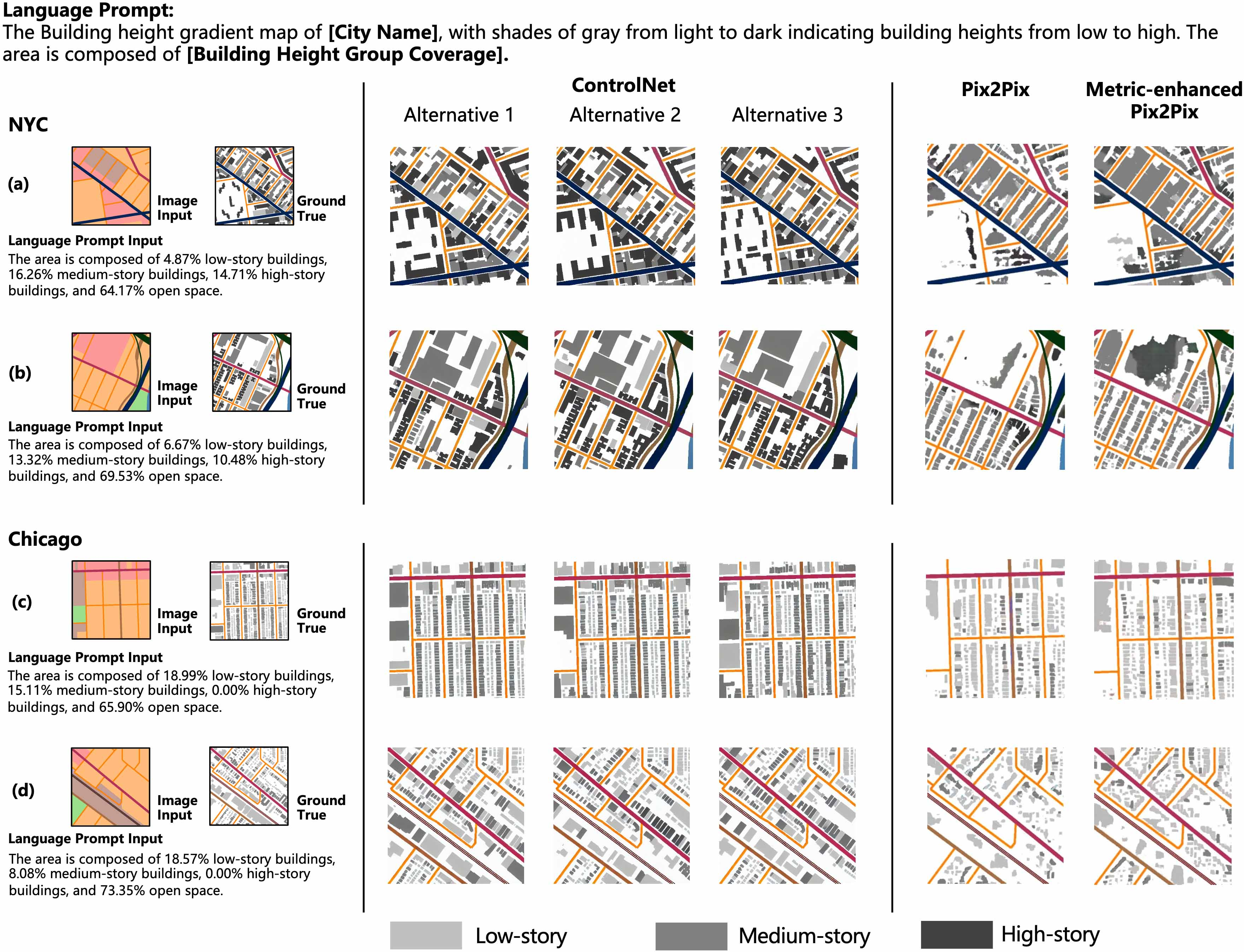
Figure 5: Results of Building Layout Planning Stage
Stepwise vs. End-to-End Approach
Comparisons with an end-to-end approach where urban design is generated from site constraints in a single step further validated our framework's effectiveness. The stepwise approach showed significantly better performance in image fidelity and compliance metrics due to intermediate evaluation points guiding the design process.
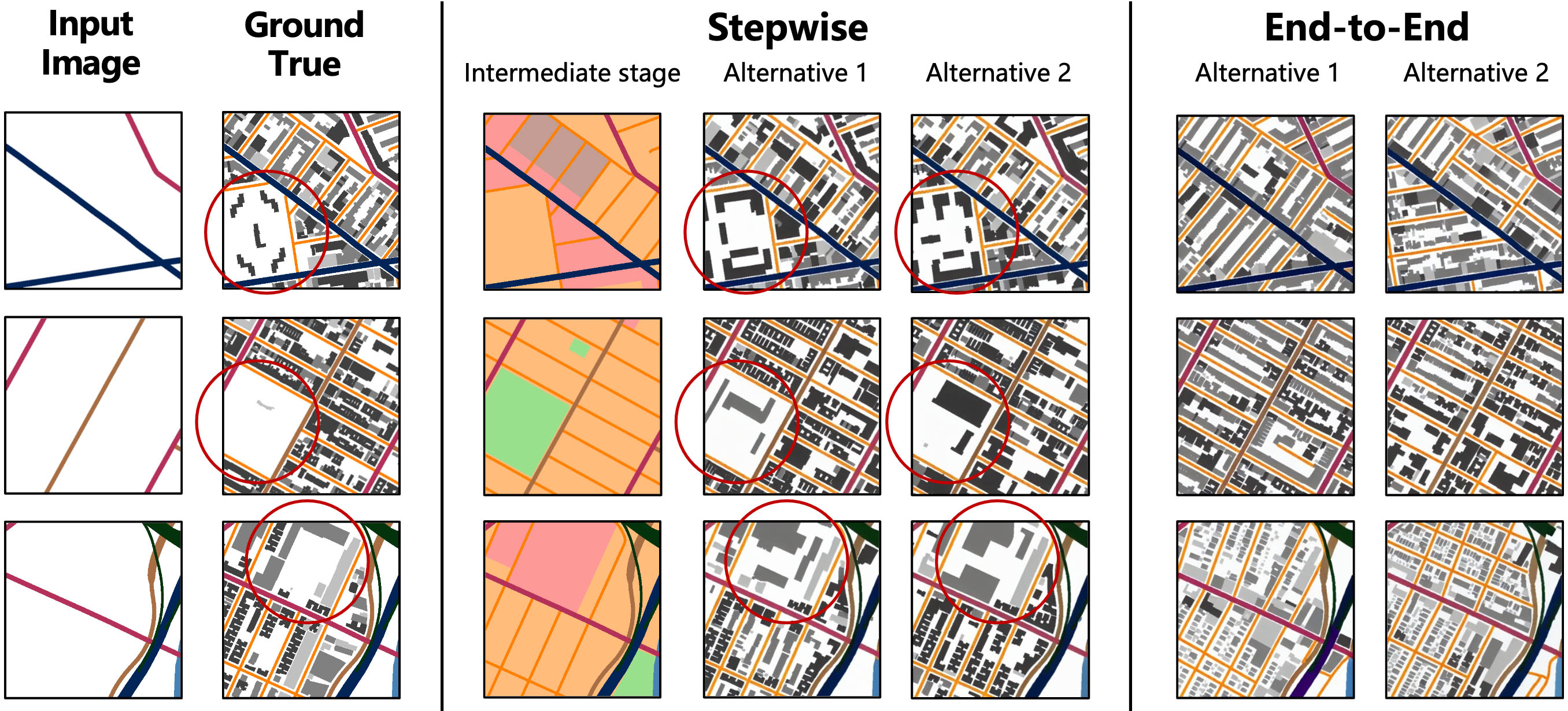
Figure 6: Comparison of generated images using stepwise and end-to-end frameworks
Design Diversity
ControlNet reliably produces a diverse array of realistic urban designs that adhere to specified constraints, thereby aiding urban planners in exploring multiple potential layouts. Its flexibility in generating alternative configurations is instrumental in real-world planning, which often demands adaptability to explore a wide range of scenarios.
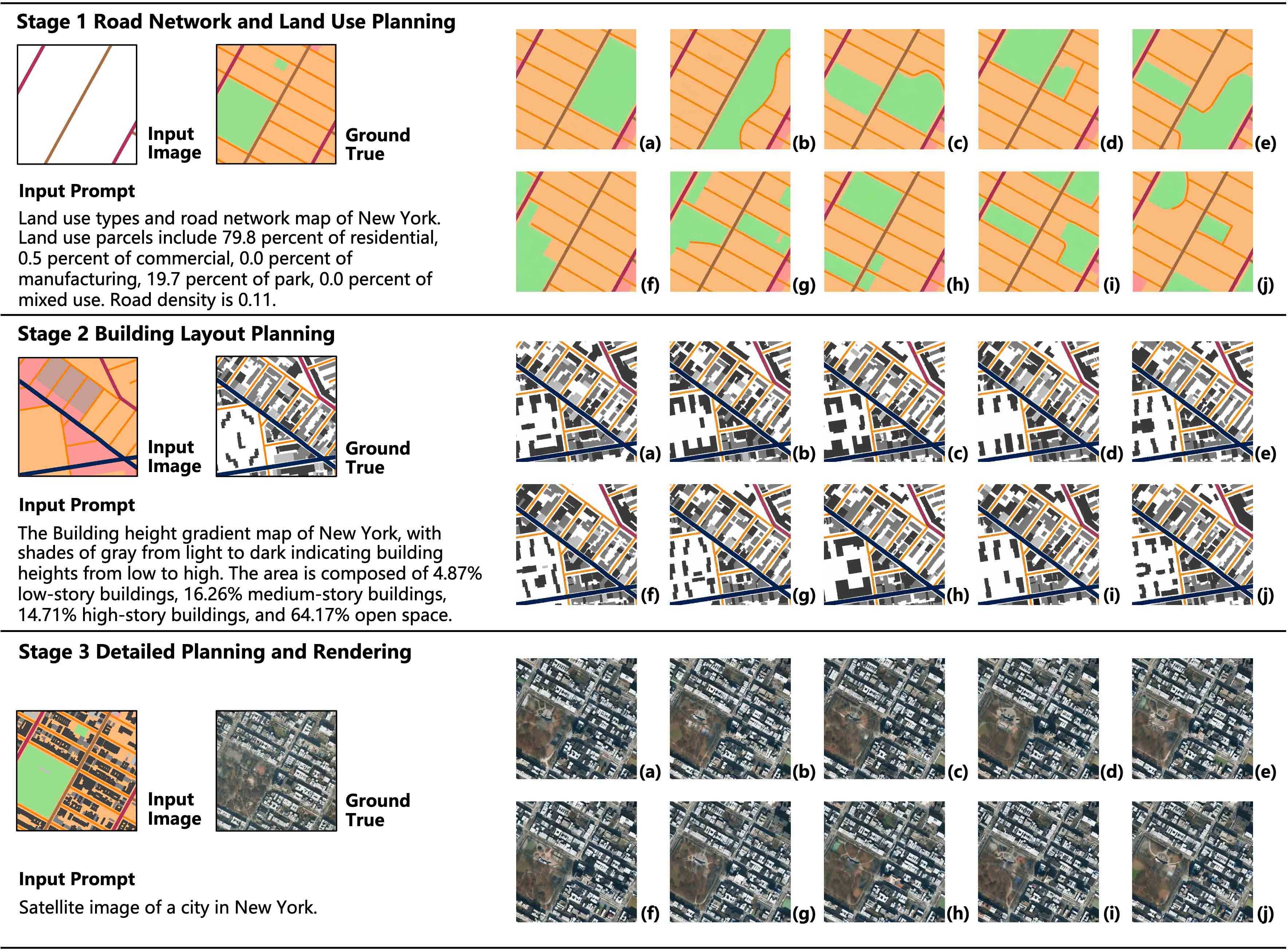
Figure 7: Diversity of Generated Images
Urban Transferability
Experiments transferring design styles across urban contexts, such as using a model trained on Chicago to generate plans for New York City, highlighted ControlNet’s potential to extend design applications across different cities while aligning with local urban design principles.
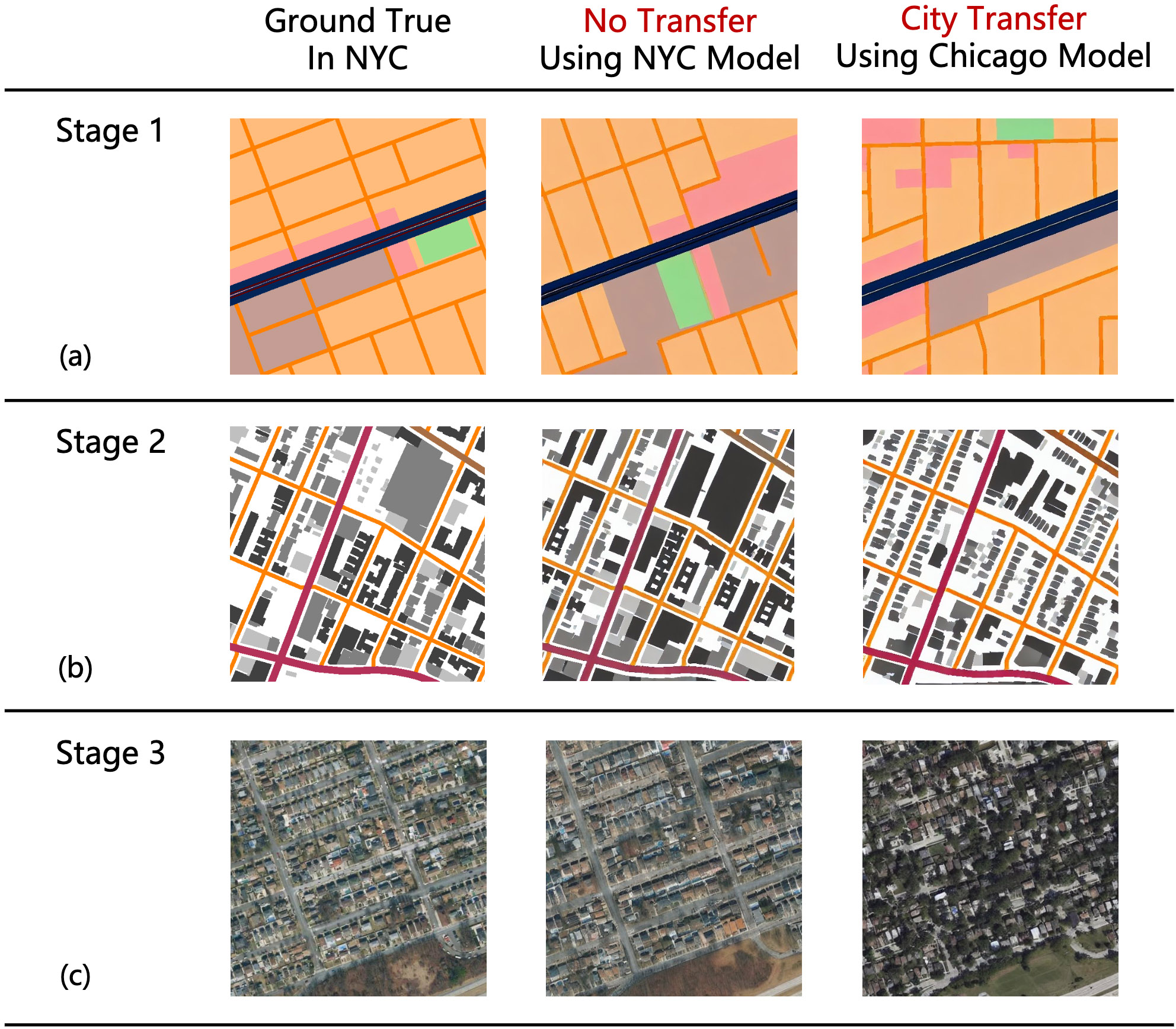
Figure 8: Urban Transferability Results
Conclusion
The study establishes the efficacy of a human-in-the-loop, stepwise generative framework for urban design. Integrating the capabilities of multimodal diffusion models and human expertise effectively addresses the shortcomings of existing GenAI frameworks by improving both the realism and compliance of generated urban designs, and by aligning more closely with urban planning processes. The framework's strong results across multiple metrics suggest its utility for real-world urban design applications, allowing for a more flexible, interactive, and context-sensitive approach while also bolstering public engagement through realistic and diverse visual outputs. Future work should aim to further explore cross-city applications and the incorporation of broader socio-economic and cultural design elements into the model. This advancement may serve as a foundation for leveraging GenAI technology in collaborative urban design tasks that demand both computational efficiency and human creativity. The potential inclusion of participatory stakeholder models and qualitative urban planning principles could greatly enhance the proposed framework's applicability to urban renewal contexts.

