- The paper demonstrates that a prompt-engineering approach can reduce proto-persona creation time from days to minutes while maintaining quality.
- The methodology leverages structured templates and contextual prompts to minimize LLM hallucinations and ensure reproducible, context-aware outputs.
- User studies reveal high acceptance due to reduced cognitive load, though emotional empathy requires further enhancement for richer user connection.
Generating Proto-Personas through Prompt Engineering: A Case Study on Efficiency, Effectiveness and Empathy
This essay explores the application and evaluation of a prompt-engineering approach for generating proto-personas using Generative AI (GenAI), focusing on efficiency, effectiveness, and empathy. Through a case study conducted in a real-world setting, this paper provides insights into utilizing AI for streamlining user-centered design processes within Product Discovery phases.
Introduction
Proto-personas are pivotal in early Product Discovery phases, facilitating stakeholder alignment and guiding product definition. Traditional methods of creating proto-personas are labor-intensive, time-consuming, and often susceptible to bias. This paper proposes a novel approach using prompt engineering to generate proto-personas, leveraging GenAI to enhance productivity, reduce bias, and maintain the quality of the personas generated.
Methodology
Prompt Engineering-Based Process
The proposed approach involves a refined prompt-engineering method based on the framework outlined by Leão et al. This involves directing an LLM using structured prompts to generate proto-personas by leveraging existing product vision and context-defining artifacts from Lean Inception (LI) processes.
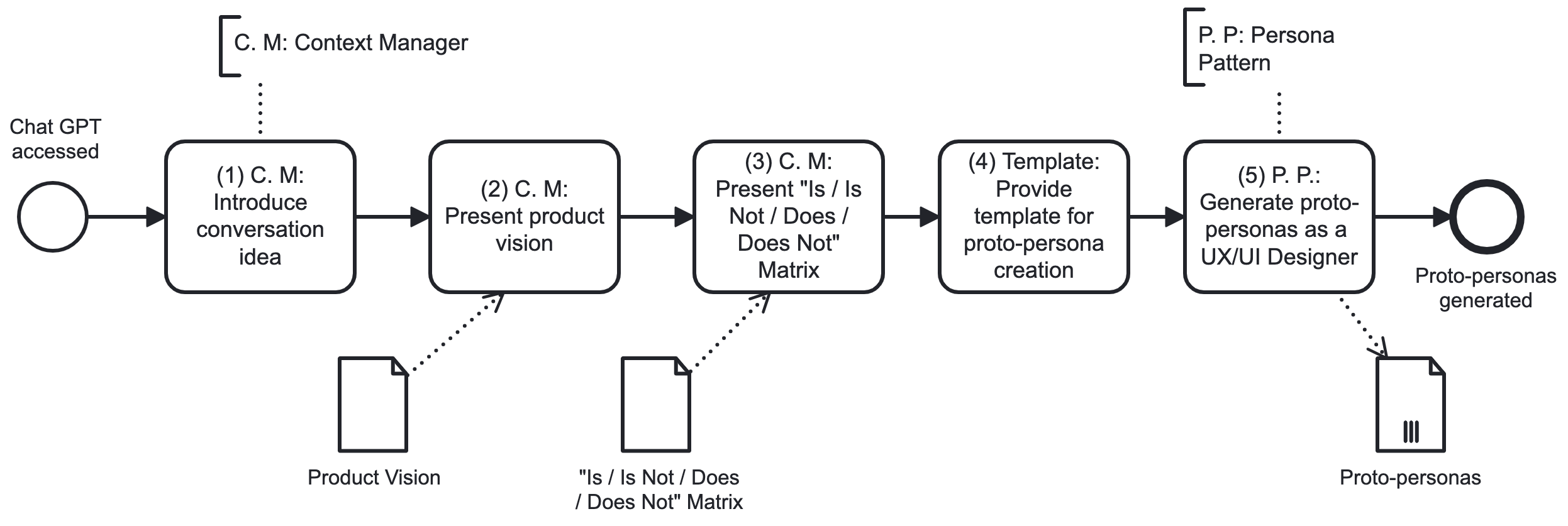
Figure 1: Refined approach based on Leão et al.
A key innovation of this approach is the use of structured templates and context management prompts to minimize LLM hallucination and ensure contextually appropriate persona generation.
Case Study Design
A case study involving 19 participants was conducted to evaluate the approach's application during an AI-driven web application project aimed at automating legal tasks. The team employed LI for fast-tracking proto-persona development within a four-hour structured session. Both qualitative and quantitative methods were employed to evaluate efficiency, effectiveness, user acceptance, and empathy levels.
Results
Efficiency and Effectiveness
Empirical results demonstrated significant efficiency gains, with time for proto-persona creation reduced from days to under six minutes. The approach enhanced the effectiveness by producing high-quality, reusable personas instrumental in MVP scoping and feature refinement.
Despite high perceived usefulness, challenges such as generalization and a lack of domain specificity were identified. This underscores the need for more careful prompt crafting and domain-specific contextualization.
User Acceptance and Empathy
User acceptance was high, attributed to perceived ease of use and usefulness of the approach. Participants appreciated the reduced cognitive load, allowing greater focus on strategic discussions.
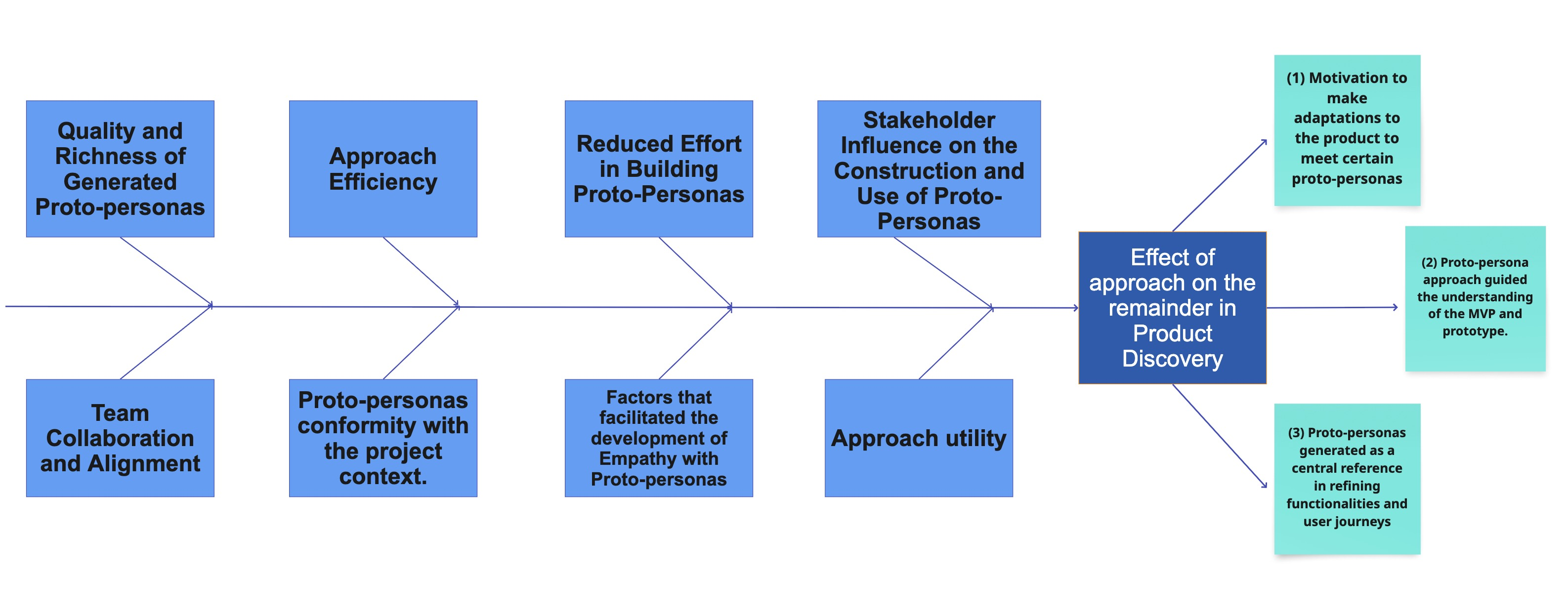
Figure 2: Summarized Ishikawa Diagram
However, while cognitive empathy was well supported, affective and behavioral empathy varied. Participants noted that while they could understand the proto-personas, they struggled with emotional connections, highlighting areas where improvements in narrative richness and personality depiction might be required.
Discussion
The research highlights the potential of GenAI in proto-persona generation, offering practical benefits such as reduced development time and improved stakeholder alignment. The study suggests that while GenAI can streamline creative processes, it must be carefully managed to ensure contextual appropriateness and user relevance.
The implications of these findings suggest a growing role for GenAI in augmenting human-centered design activities, provided they integrate effective domain knowledge and maintain an empathetic touch.
Conclusion
This paper illustrates that a prompt-engineering-based approach significantly enhances the efficiency and utility of proto-persona generation in software product discovery phases. While it facilitates productivity and role alignment, efforts should still be made to bolster affective engagement and domain specificity in AI-generated outputs.
Future research should explore the integration of dynamic narrative elements to bolster empathy and investigate this approach in diverse domain settings.