- The paper demonstrates that high-power MHDEV charging leads to significant voltage instabilities on remote nodes of a modified IEEE 33-bus system.
- The paper employs real-world HEVI-LOAD data and an M/M/c queue model to simulate realistic charging demands at megawatt-scale stations.
- The paper suggests that infrastructure upgrades and smart charge management are essential to mitigate grid imbalances caused by MHDEV electrification.
Impact of Medium and Heavy-Duty Electric Vehicle Electrification on Distribution System Stability
The electrification of medium and heavy-duty vehicles (MHDEVs) represents both a promising avenue for reducing greenhouse gas emissions and a significant challenge for the stability of electrical distribution systems. This study examines the integration of megawatt-scale charging stations for such vehicles and their effects on secondary distribution systems, specifically using a modified IEEE 33-bus distribution benchmark.
Introduction
Medium and heavy-duty commercial vehicles contribute significantly to global carbon emissions, and their electrification is a crucial target in various governmental decarbonization plans. The U.S. aims for complete electrification of these fleets within the next few decades, with considerable infrastructure being planned for accommodating high-power charging stations (HPCS). Unlike low-duty vehicle charging, which has been extensively studied, the impact of MHDEVs at this scale on the power distribution grid is less explored.
The study utilizes real-world data from the HEVI-LOAD tool by Lawrence Berkeley National Laboratory (LBNL) to assess potential voltage stability issues within a 33-bus test system.
Methodology
Real-world MHD Charging Data
The authors have leveraged the HEVI-LOAD tool, which forecasts the infrastructure needs for MHDEV charging. The data includes specifics such as vehicle IDs, charging power, and time, providing a granular view of peak demands. By utilizing the M/M/c queue model, the research accounts for limited charging port availability, ensuring realistic simulation conditions.
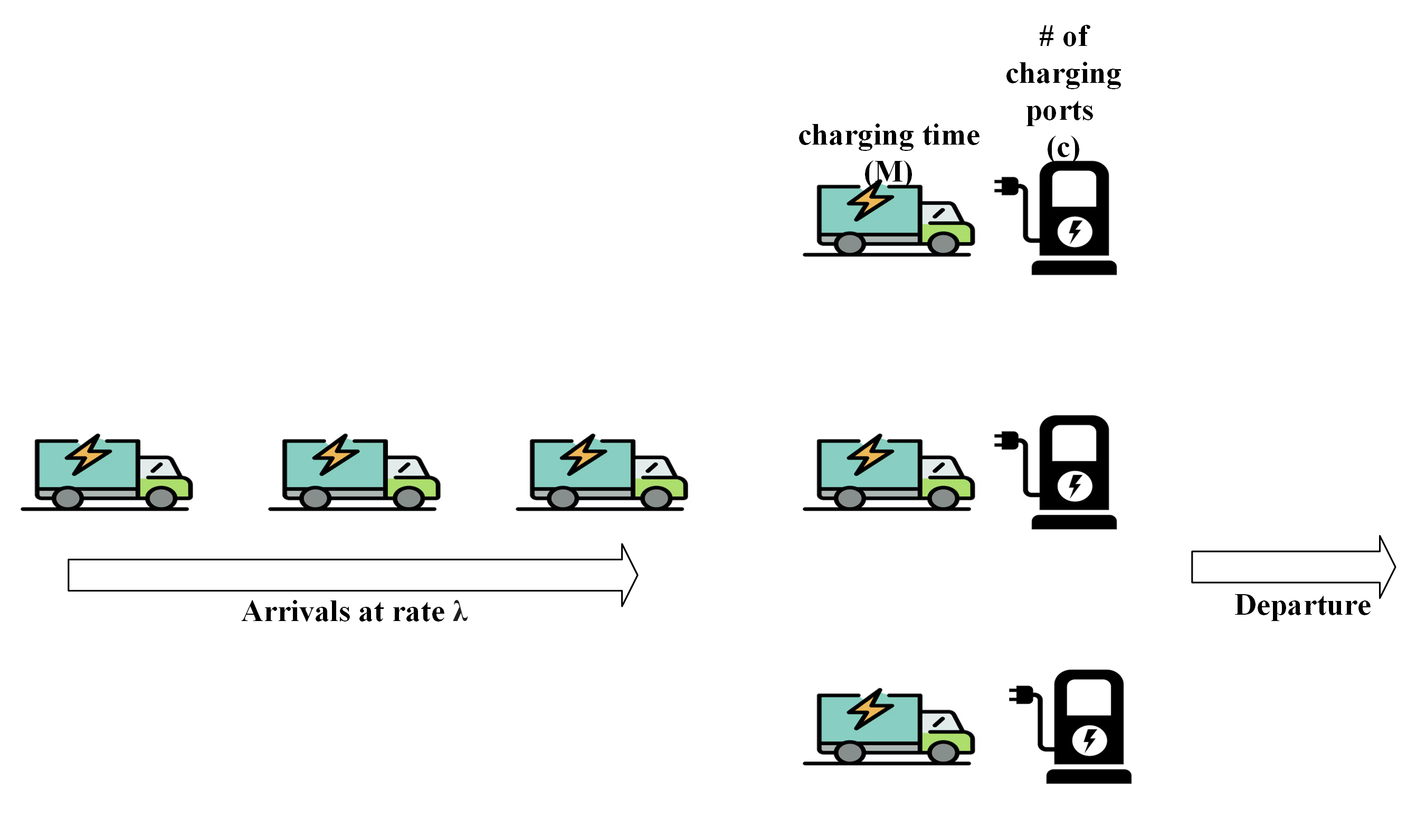
Figure 1: M/M/c queue model at HPC station.
The load profiles generated from this data indicate significant variations in charging demands across different locations, emphasizing the strain these can impose on the distribution systems.
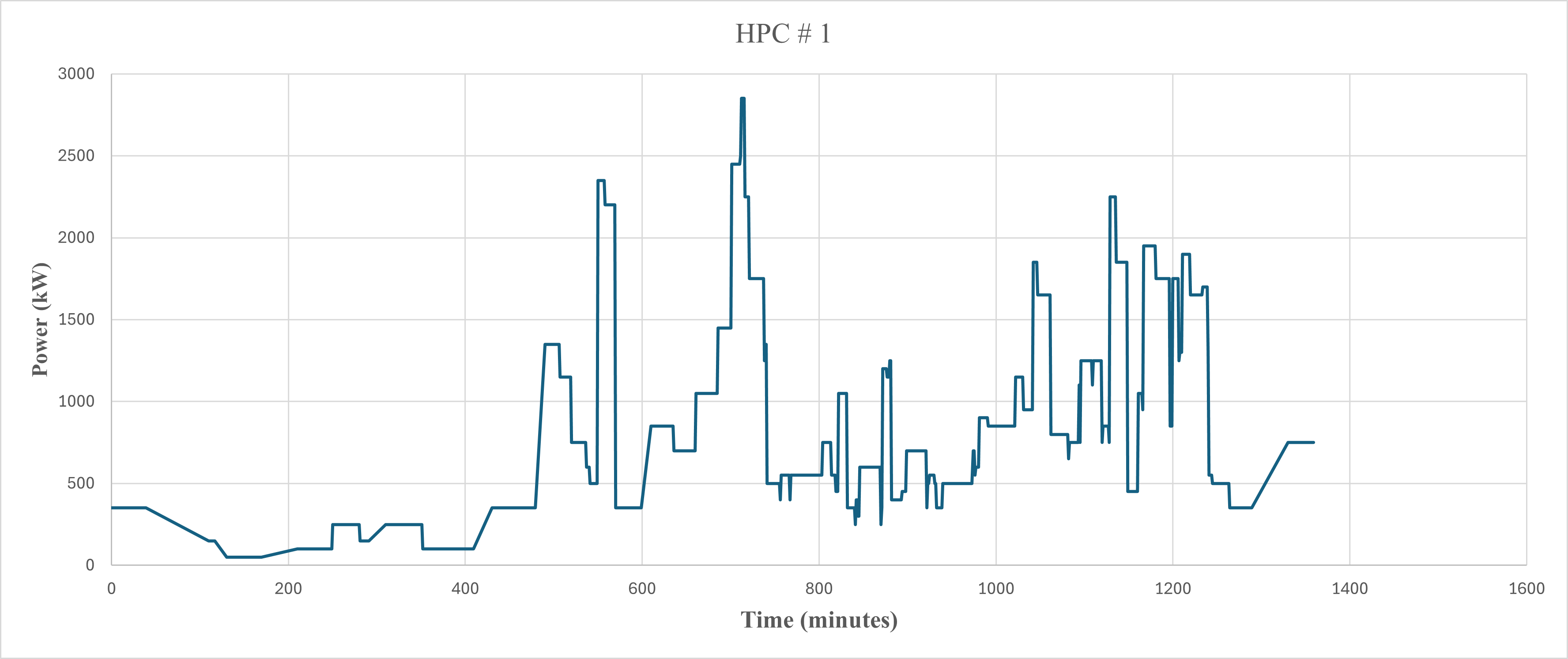
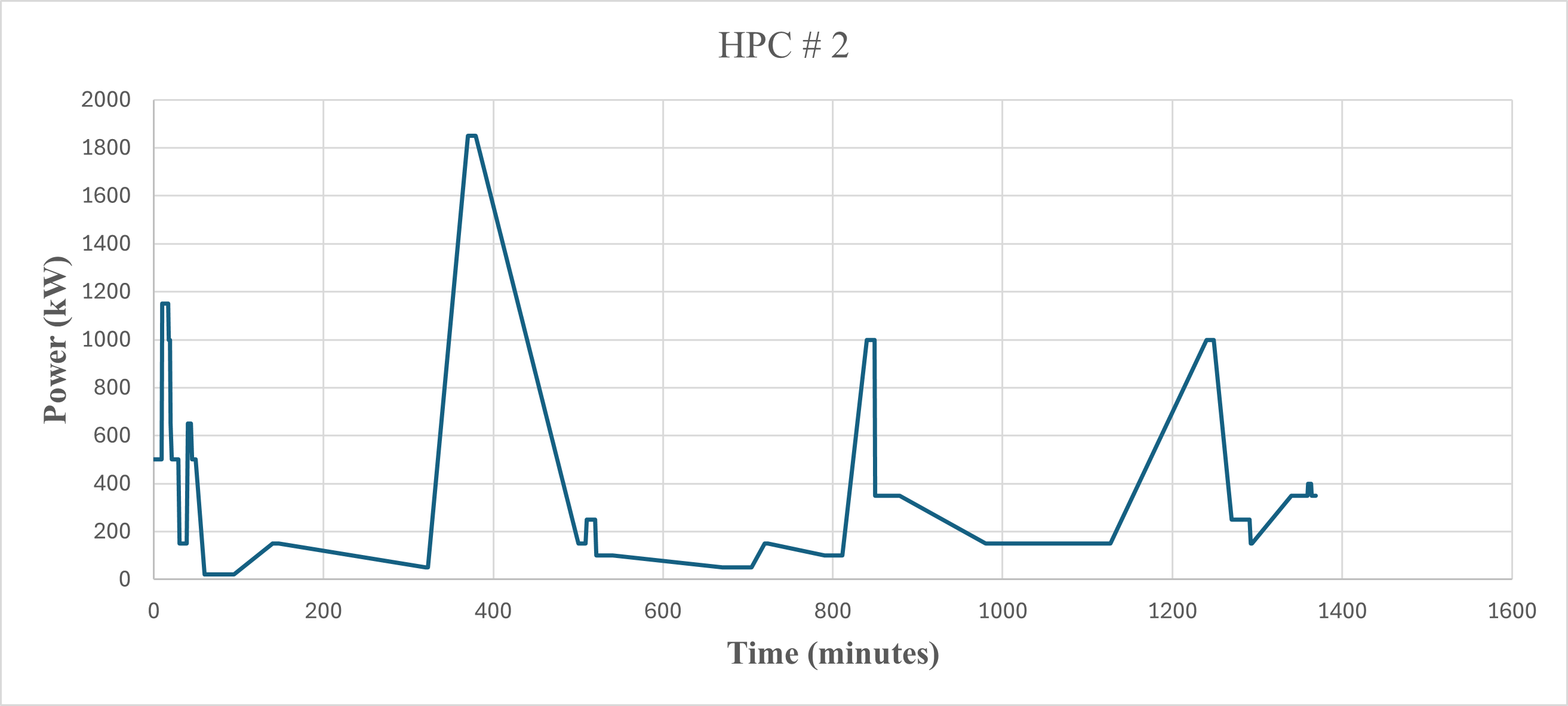
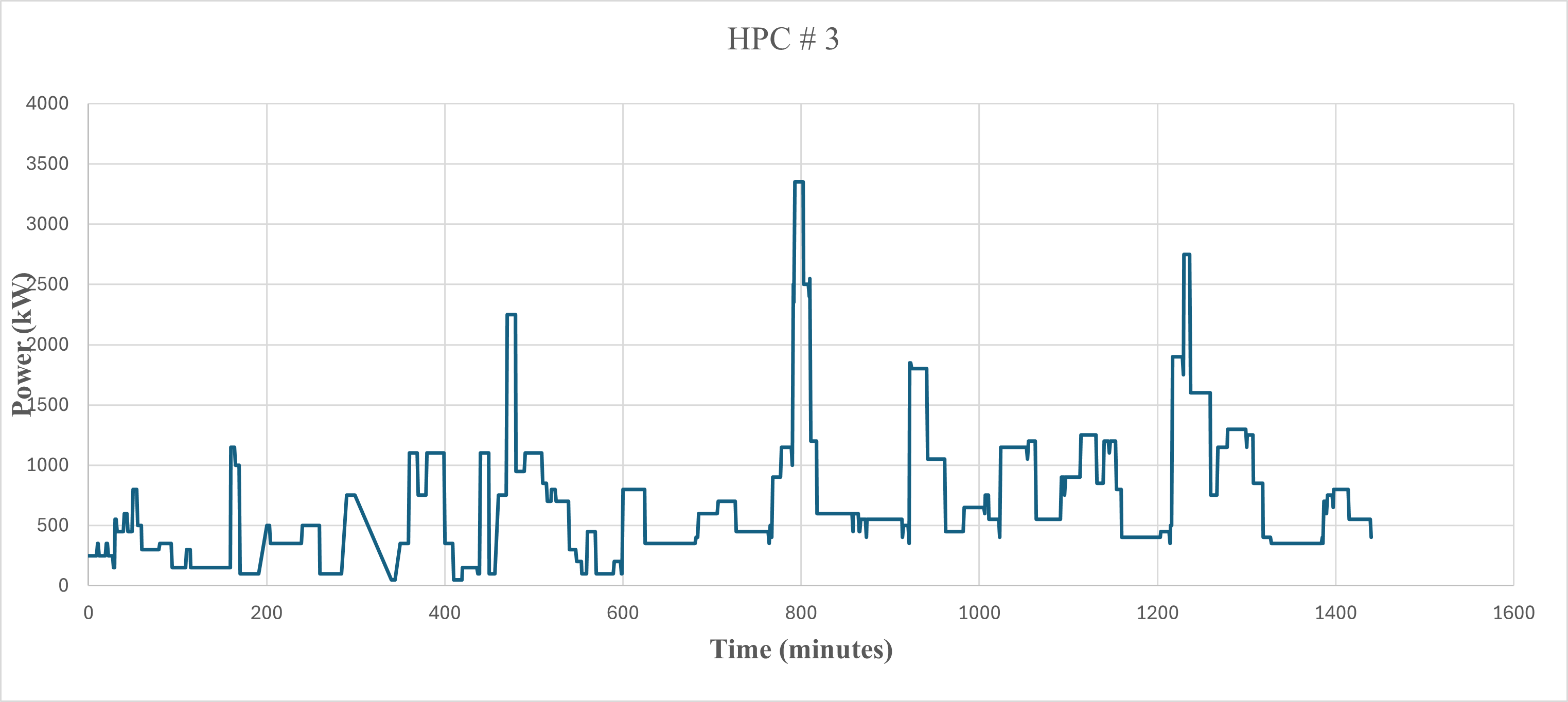
Figure 2: Load profile for HPCS 1.
IEEE 33-Bus Power Distribution System
The IEEE 33-bus distribution system, renowned for its use in stability and reliability assessments, forms the backbone of the study's simulations. Modifications to incorporate time-varying residential loads, based on interpolated data, help model real-world scenarios more accurately.
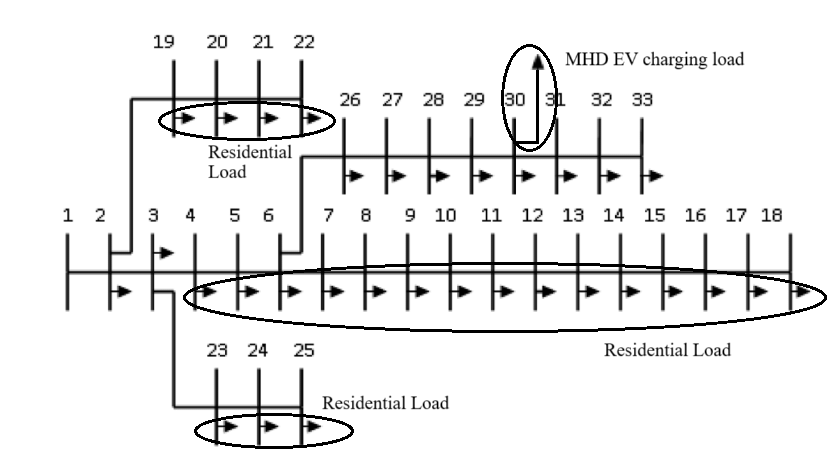
Figure 3: IEEE 33-bus distribution benchmark modified for case study.
Using the Panda Power Python library, the study executes AC power flow simulations to calculate real power, reactive power, and voltage magnitudes at discrete time intervals. This approach allows the researchers to pinpoint stability concerns caused by the integration of large-scale MHDEV charging stations.
Results and Discussion
The results underscore significant voltage instabilities in the distribution system when subjected to high loads from MHDEVs, particularly at nodes distant from the feeder. Voltage deviations often exceeded acceptable ranges, especially during peak demand periods. Node-specific simulations indicated that locations such as Bus 1 remained stable, contrasting with more remote nodes like Buses 15 and 30, which exhibited excessive voltage drops.
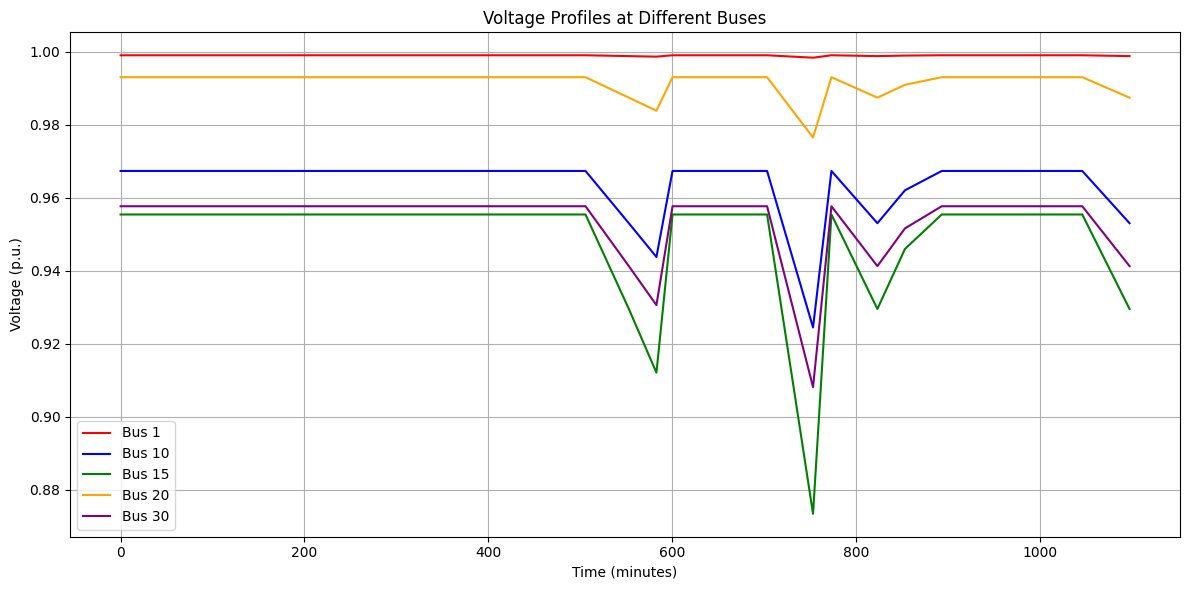
Figure 4: Voltage (p.u.) values at different buses where MHDEV charging load is connected.
Strategies such as significant infrastructure upgrades and the introduction of distributed energy resources (DERs) at HPCS locations are suggested to mitigate these impacts. Additionally, smart charge management systems could alleviate some pressure on the grid by optimizing charge timings and managing loads dynamically.
Conclusion
The findings reveal substantial infrastructural challenges linked with MHDEV fleet electrification, necessitating comprehensive distribution system upgrades. The research highlights the potential for grid instability without careful planning and integration of smart grid technologies. As electrification of transportation progresses, such studies are crucial for ensuring sustainable and resilient energy systems.
In conclusion, these results suggest that while MHDEV electrification is imperative for environmental goals, addressing the associated technical and infrastructural challenges will be equally critical for the successful transformation of power distribution networks.