- The paper presents the first demonstration of a narrow-linewidth (<100 Hz) continuous-wave VUV laser for controlling 229Th nuclear transitions.
- It employs resonance-enhanced four-wave mixing in cadmium vapor, achieving 100 nW output power and a verified linewidth of 0.08 Hz.
- The study significantly advances precision nuclear metrology, enabling coherent nuclear manipulation for nuclear clocks and quantum applications.
Continuous-Wave Vacuum Ultraviolet Laser for Nuclear Isomer Transition
This essay explores the establishment of a continuous-wave (CW) laser emitting at 148.4 nm, intended for precision control of the 229Th isomeric nuclear transition. This development overcomes prior limitations associated with pulsed VUV sources, presenting a significant advancement for quantum metrology, nuclear quantum optics, and the exploration of physics beyond the Standard Model.
Introduction to Nuclear Transition Laser Sources
The nuclear transition in 229Th presents a rare opportunity for coherent nuclear control due to its low energy transition at 148.4 nm. Historically, the lack of suitable laser sources has hindered advancements in precision nuclear spectroscopy. The paper introduces a narrow-linewidth continuous-wave laser at the target wavelength, using resonance-enhanced four-wave mixing (FWM) in cadmium vapor. This system delivers 100 nW of power with a linewidth significantly less than 100 Hz, which is instrumental in overcoming previous technical barriers to coherent nuclear manipulation.
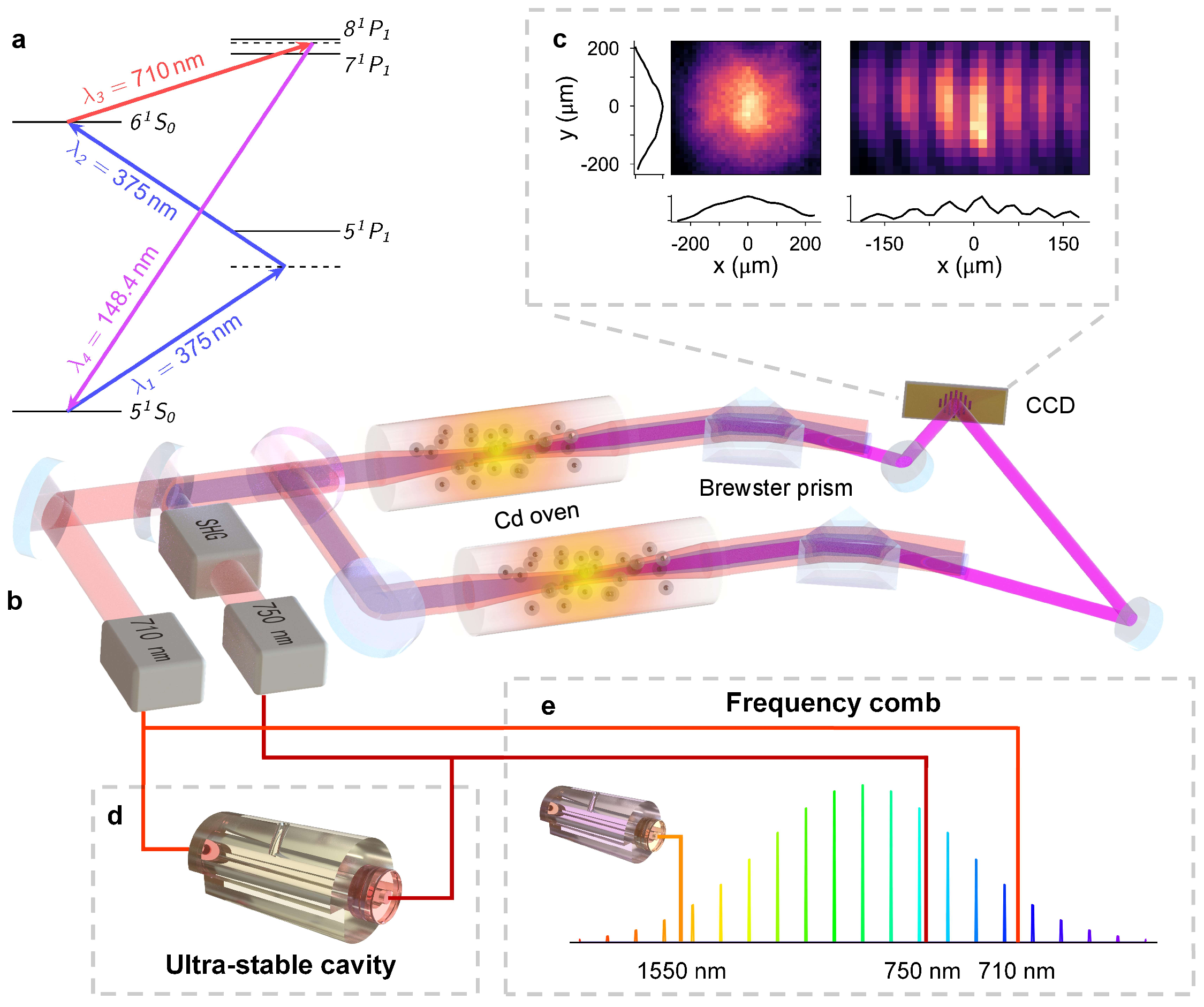
Figure 1: Generation of a CW VUV laser with narrow linewidth a schematic of the system utilizing cadmium vapor.
Experimental Setup and VUV Generation Process
In this study, the VUV laser radiation is achieved through a resonance-enhanced FWM process that combines two photons at 375 nm and one at 710 nm in cadmium vapor (Figure 1a). The experimental setup involves Ti:sapphire lasers focused into cadmium ovens, producing VUV beams which are subsequently isolated using Brewster-angle prisms (Figure 1b). With an ultrastable cavity reference, sub-hertz linewidths are attainable, marking a critical achievement for nuclear clock applications.
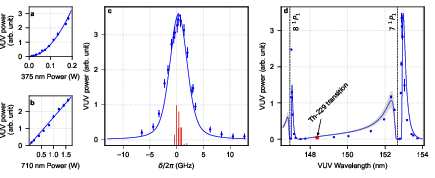
Figure 2: VUV yield characterization demonstrating power dependence on input wavelengths and resonance profiles.
VUV Yield and Spectral Characteristics
The VUV yield depends quadratically on the 375 nm laser power and linearly on the 710 nm laser power, as anticipated for the FWM process (Figure 2). Notably, the resonance profile, characterized by Doppler and pressure broadening, indicates coherence among all contributing cadmium isotopes, which aligns with theoretical predictions. This coherence is vital for maintaining the narrow linewidth necessary for nuclear spectroscopy.
Phase Coherence and Technical Noise Measures
The phase noise induced by the FWM process remains critically low, as evidenced by high-contrast fringes observed during interference pattern analysis. The resultant fractional frequency instability is notably low (Figure 3a). The measured visibility of interference fringes suggests a true linewidth of 0.08 Hz, confirming that the phase noise remains within acceptable limits for nuclear manipulation tasks.
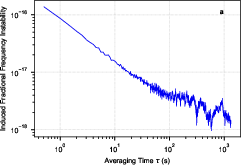

Figure 3: Evaluation of phase noise induced by the FWM process using interference patterns.
Implications and Future Directions
The demonstrated coherent VUV source is transformative for 229Th nuclear clock development, allowing coherent optical manipulation of nuclear states. Further improvements in generated power, potentially via optical enhancement cavities or alternative nonlinear media, could lead to higher intensity applications. This source's tunability and spectral purity hold promise for advancements in high-resolution spectroscopy and quantum computing applications, including direct Rydberg excitation in ion-trap systems.
Conclusion
The advancement of a CW laser source at 148.4 nm represents a pivotal step towards precise nuclear control, overcoming longstanding challenges in laser spectral density and linewidth. This development not only facilitates the realization of 229Th-based nuclear clocks but also opens numerous avenues in quantum information science, condensed matter physics, and beyond. Establishing a coherent phase link between VUV fields and other spectral domains promises impactful contributions across precision metrology and quantum optics.