- The paper introduces EngiBench as an open-source framework that standardizes engineering design problems with a unified API across multiple simulation domains.
- It employs a modular Python API supporting inverse design, surrogate-based optimization, and physics-informed neural networks to streamline complex design tasks.
- Experimental results highlight the framework’s effectiveness in reducing simulation failures and enabling rigorous cross-domain algorithm evaluations.
Summary of EngiBench: A Framework for Data-Driven Engineering Design Research
Introduction
The "EngiBench: A Framework for Data-Driven Engineering Design Research" paper presents EngiBench, an open-source library aimed at facilitating data-driven engineering design through standardized benchmarks and interfaces. Historically, engineering optimization tasks have required significant computational resources due to physics-based simulations, which are challenging to implement and execute. EngiBench addresses these issues by offering a comprehensive library of datasets and problems spanning diverse domains such as aeronautics, heat conduction, and photonics, thereby enabling reproducibility and fair comparison of optimization algorithms.
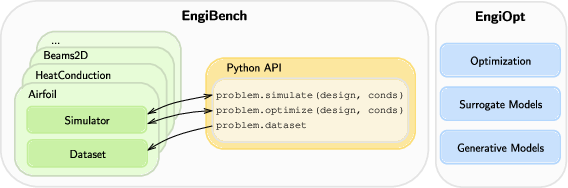
Figure 1: Overview of EngiBench and EngiOpt components.
EngiBench Architecture and Features
EngiBench standardizes the representation of various engineering design problems, integrating datasets, simulation engines, and visualization tools into a single framework. The library utilizes a modular Python API, allowing for the easy swapping of algorithms and problems. Its key features include:
- Unified API: The API supports inverse design, surrogate-based optimization, and physics-informed neural networks. A sample code usage showcases how interactions with the library are streamlined and intuitive.
1
2
3
4
5
|
from engibench.problems.airfoil.v0 import Airfoil
problem = Airfoil()
problem.reset(seed=42)
generated_design, _ = problem.random_design()
opt_design, history = problem.optimize(generated_design, {"mach": 0.3, "reynolds": 1e6}) |
Implemented Problems and Capabilities
EngiBench accommodates a diversity of real-world engineering design challenges, from aerodynamics in Airfoil tasks to electromagnetic design in Photonics. Each problem encompasses:
- Diverse Design Representations: Solutions range from vector-based to image-based configurations, catering to varying computational resources and expertise levels.
- Multiphysics Modeling: Includes implementations that consider both single-physics (fluid dynamics, thermal compliance) as well as complex multi-physics interactions (thermoelastic structures).
For example, in the Airfoil problem, the objective involves optimizing aerodynamic performance by minimizing drag while matching a lift coefficient constraint. On the other hand, the Photonics2D problem focuses on optimizing the routing of electromagnetic waves through different materials.
Experimental Results
Through proof-of-concept experiments, EngiBench demonstrates striking results in terms of algorithmic comparisons across tasks. Generative models like GANs and diffusion models show varying degrees of success depending on task complexity and physical constraints:
- Airfoil Task: Domain-specific models such as B
ezierGAN significantly reduce meshing failures, highlighting the importance of parameterization in complex geometrical designs.
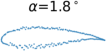
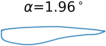

Figure 3: Example outputs of our generative models on the Airfoil problem.
- Surrogate Models: While successful on simpler tasks, surrogate models struggle with fidelity in highly nonlinear environments like PowerElectronics, underscoring the necessity for domain-informed enhancements.
Challenges and Future Directions
While offering valuable capabilities, EngiBench does not yet address unstructured mesh or dynamic simulation scenarios. Additionally, biases inherent in simulation assumptions remain a critical area for further research. Future iterations might include extensions to tackle these limitations, broaden practical applications, and enhance cross-task generalization capabilities.
Conclusion
EngiBench provides a versatile and reproducible platform for advancing engineering design research through its standardized datasets and open-source libraries. By streamlining complex simulation integration and offering diverse benchmarking environments, it opens new avenues for research in engineering optimization and machine learning.
References
The framework and its components reference various works in the field, notably in aerodynamics, topology optimization, and machine learning methodologies. Further information can be found at the project's documentation website and associated code repositories. This research has been supported by ETH Zurich and the University of Maryland.
