- The paper introduces a neural network-enhanced CCG method that uses a surrogate MLP to approximate recourse decisions and reduce computational expense.
- Simulation on the IEEE 118-bus system shows a speedup of up to 130.1× with an optimality gap below 0.096% compared to classical methods.
- Integrating machine learning with optimization paves the way for scalable solutions in handling uncertainties from renewable energy sources.
A Neural Column-and-Constraint Generation Method for Solving Two-Stage Stochastic Unit Commitment
Introduction
The integration of intermittent renewable energy sources (RES) into power systems introduces significant operational uncertainties, necessitating robust optimization techniques for effective management. This paper addresses the computational challenges in solving the two-stage stochastic unit commitment (2S-SUC) problem, which is critical for managing such uncertainties. The 2S-SUC model, despite its benefits in scenario representation, is complex and computationally expensive, especially when addressing a large number of scenarios. Decomposition-based algorithms such as Column-and-Constraint Generation (CCG) have been employed to tackle this complexity. However, the traditional CCG methods remain limited by their computational expense, which is particularly burdensome at the recourse stage.
The paper models the unit commitment (UC) problem with transmission constraints using a Power Transfer Distribution Factor (PTDF) formulation. The UC model minimizes overall generation costs while meeting power balance and transmission constraints, with additional challenges imposed by capacity and ramping limits. The stochastic variant, 2S-SUC, further incorporates uncertainties in net load, represented through a scenario-based extensive-form model. This adds layers of computational complexity as it requires the optimization of both deterministic and uncertain aspects of the power system.
Neural Column-and-Constraint Generation Method
Classical CCG Overview
In classical CCG, iterative solutions to the master problem and subproblem are required until convergence, often consuming substantial computational resources, particularly for the solving of recourse problems in large scenario sets. The repeated solution of these subproblems is the primary performance bottleneck. Classical CCG methods improve over direct approaches by narrowing scenario consideration efficiently but fail to ameliorate the scalability challenge.
Proposed Neural CCG
Motivated by the limitations of the classical CCG, the Neural CCG approach introduced here integrates a neural network to approximate the second-stage recourse problem. The critical innovation is the use of a neural network as a surrogate model to rapidly evaluate recourse decisions, capturing high-level scenario features and commitment decisions to approximate cost outcomes efficiently. By substituting neural evaluations for many of the traditional computationally intensive subproblem solves, the Neural CCG promises substantial reductions in solution time.
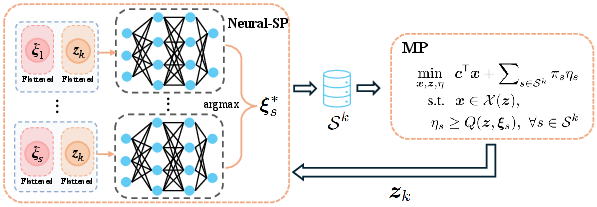
Figure 1: The overall neural CCG framework.
The architecture leverages a multilayer perceptron (MLP) to map from uncertainty features and commitments to estimated recourse costs. This approach allows for a reduction in the time complexity associated with each CCG iteration, displaying significant computational speedups as demonstrated by the simulation results.
Simulation Results
The performance of the Neural CCG method is assessed using the IEEE 118-bus system. Crucially, it provides up to 130.1× speedup compared to traditional methods, with only a marginal increase in the optimality gap (remaining below 0.096%). These results are particularly notable given the inherent complexity and scale of the 2S-SUC problem considered.
Conclusion
The integration of machine learning with conventional optimization methods as demonstrated here provides a powerful tool for managing the growing complexity of power systems with high RES penetration. The proposed Neural CCG method exemplifies how machine learning models can enhance traditional optimization approaches, achieving both computational efficiency and high solution quality.
This approach offers a robust framework for future enhancements in stochastic optimization, paving the way for more scalable and efficient unit commitment solutions in the face of increasing renewable integration and uncertainty in power systems. Further research may explore extensions to other neural architectures such as GNNs to potentially enhance the feature extraction capabilities for even finer optimization and greater scale.