- The paper proposes a comprehensive framework detailing AI's evolution into autonomous agents for scientific discovery, highlighting distinct levels of autonomy.
- It outlines a dynamic four-stage cycle—from observation and hypothesis generation to validation—that enables iterative experimentation and learning.
- The study emphasizes core capabilities such as planning, tool integration, and memory while addressing challenges like reproducibility and ethical governance.
From AI for Science to Agentic Science: A Survey on Autonomous Scientific Discovery
The paper, "From AI for Science to Agentic Science: A Survey on Autonomous Scientific Discovery," delineates a comprehensive framework for understanding the evolution of AI in scientific research. It positions Agentic Science—a paradigm where AI emerges as autonomous research partners—as pivotal in this evolution. The framework integrates foundational capabilities, core processes, and domain-specific applications, showcasing the transition from AI as computational tools to autonomous agents in life sciences, chemistry, materials, and physics.
Introduction
Agentic Science represents an evolutionary leap within the broader AI for Science paradigm—one where AI systems evolve from computational aids to fully autonomous agents capable of formulating hypotheses, designing and executing experiments, interpreting results, and iteratively refining theories with reduced human intervention. The paper synthesizes progress made in this area across various scientific fields, unifying disparate perspectives into a cohesive framework that highlights autonomy-oriented scientific agents.
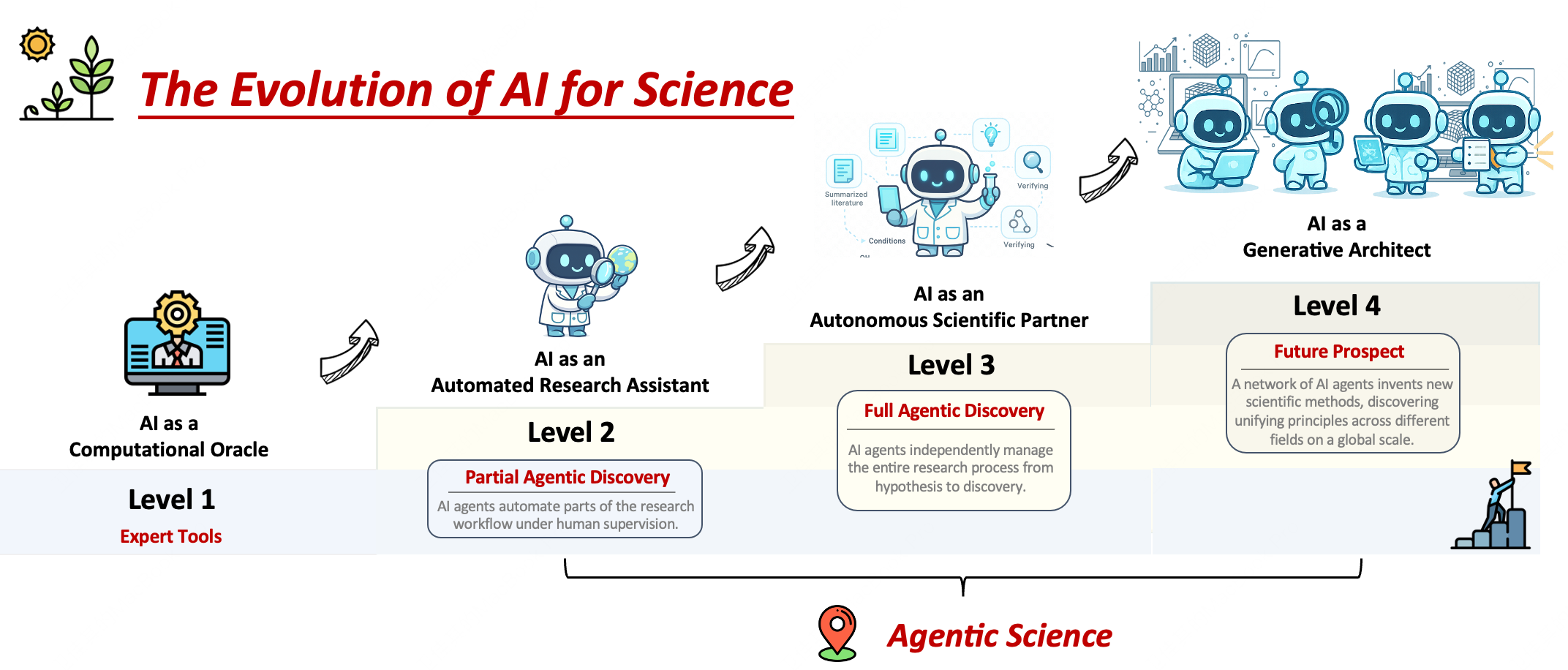
Figure 1: The Evolution of AI for Science. From computational tools to creative collaborators: the four-stage journey of AI in science. Agentic Science is a stage within AI for Science, aligning primarily with Level~3 (Full Agentic Discovery) and building on Level~2 (Partial Agentic Discovery).
The Evolution of AI in Scientific Discovery
Levels of Autonomy
The paper categorizes AI's progression through distinct levels:
- Level 1: AI as computational oracles, serving predefined tasks without autonomy.
- Level 2: AI as automated research assistants with partial autonomy in specific task execution.
- Level 3: AI as autonomous scientific partners, capable of independently conducting full scientific cycles.
- Level 4: Prospective AI as generative architects, inventing new scientific paradigms and methodologies.
These stages culminate in the notion of Agentic Science, where AI transitions from passive tools to dynamic collaborators in scientific inquiry.
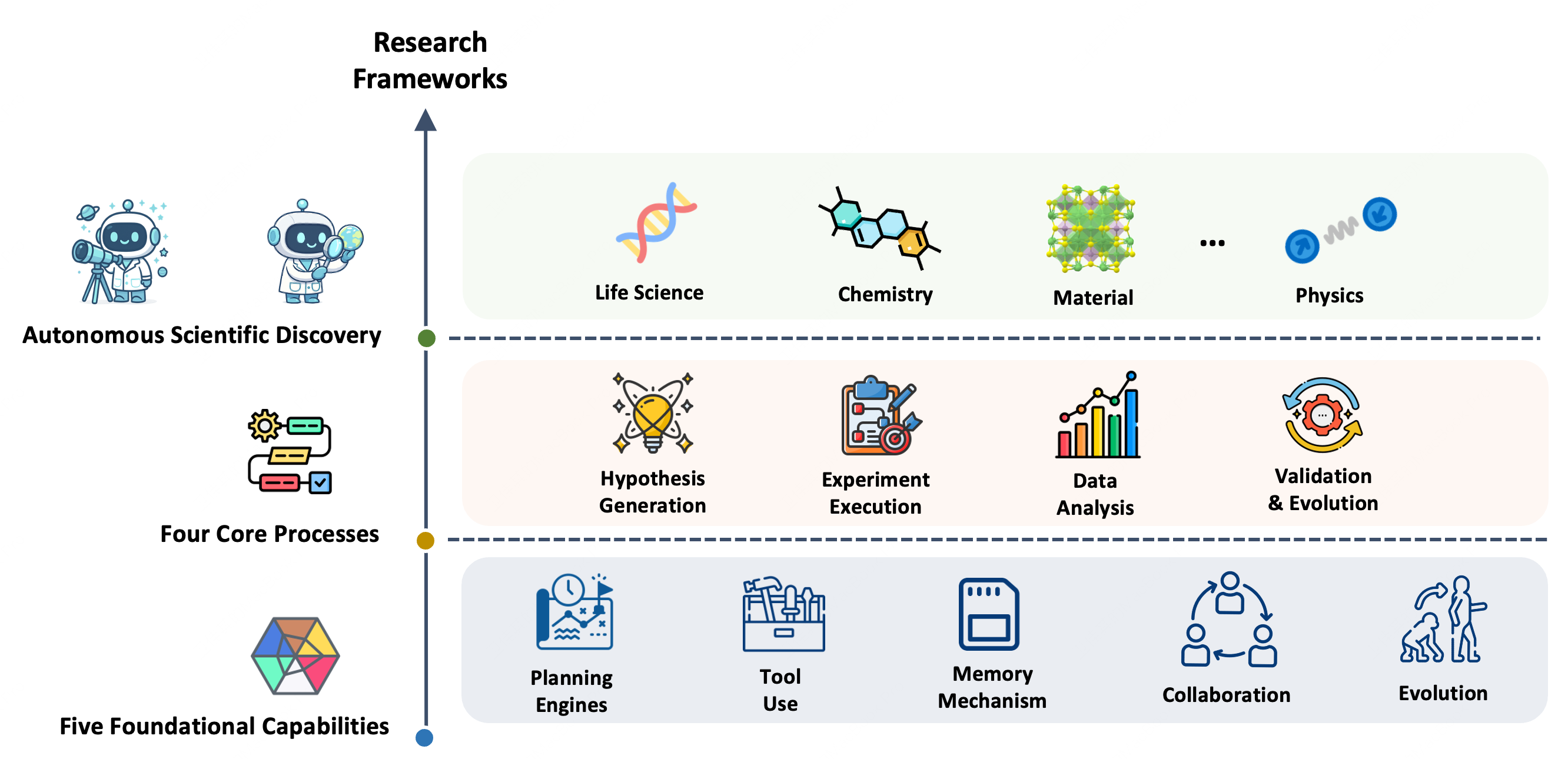
Figure 2: Research frameworks for Autonomous Scientific Discovery: Integrating Foundational Capabilities, Core Processes, and Research Levels across Life Sciences, Chemistry, Materials Science, and Physics.
Scientific Agents: Core Abilities
Scientific agents are endowed with:
- Planning and Reasoning Engines: Enabling dynamic experimentation and progressive learning.
- Tool Use and Integration: Facilitating interaction with specialized scientific instruments and computational models.
- Memory Mechanisms: Providing long-term storage and retrieval, critical for iterative hypothesis refinement.
- Collaboration: Allowing for multi-agent systems that enhance discovery through structured and innovative dialogue.
Each capability addresses unique scientific challenges such as reproducibility, validation, and effective integration across domains.
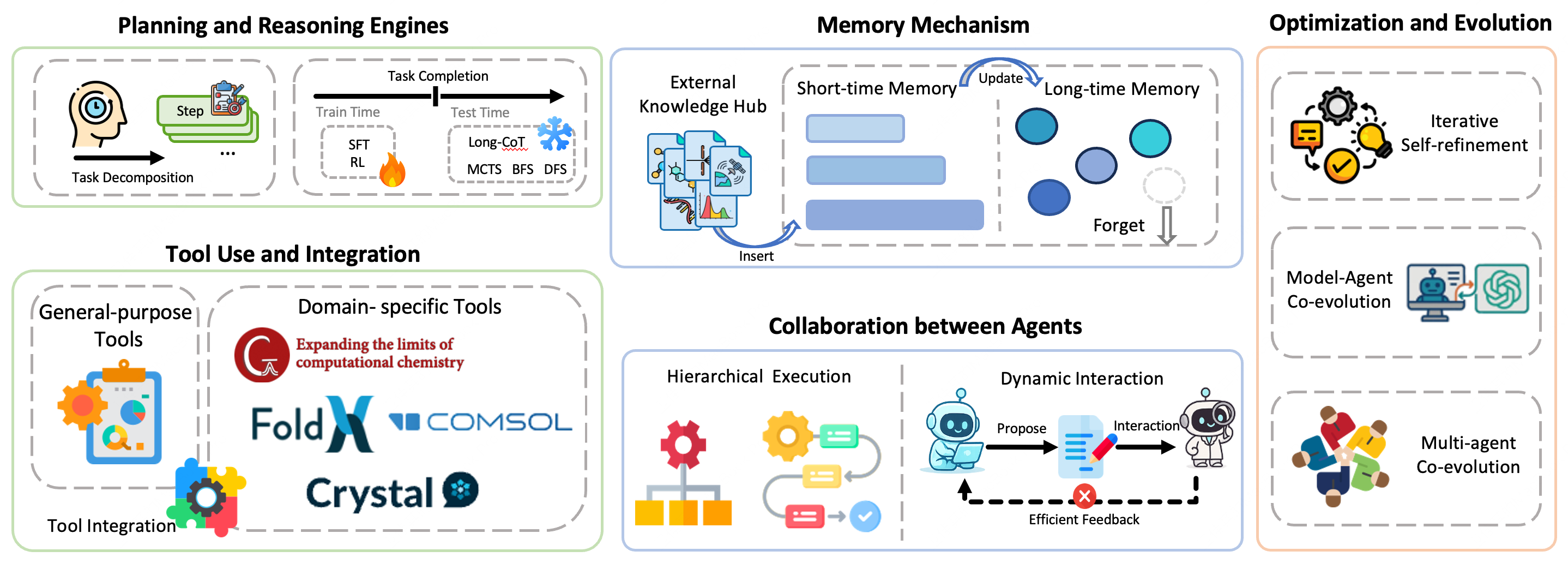
Figure 3: Core abilities of scientific agents.
The Dynamic Workflow of Agentic Science
Agentic Science operationalizes the scientific method into a structured four-stage cycle:
- Observation and Hypothesis Generation: Synthesizing information into novel, testable ideas.
- Experimental Planning and Execution: Designing resource-efficient, safety-compliant experiments.
- Data and Result Analysis: Parsing multimodal data to uncover mechanistic insights.
- Synthesis, Validation, and Evolution: Integrating results to validate hypotheses and refine strategies.
This workflow demonstrates agents' capability to autonomously adapt and iterate through discovery cycles.
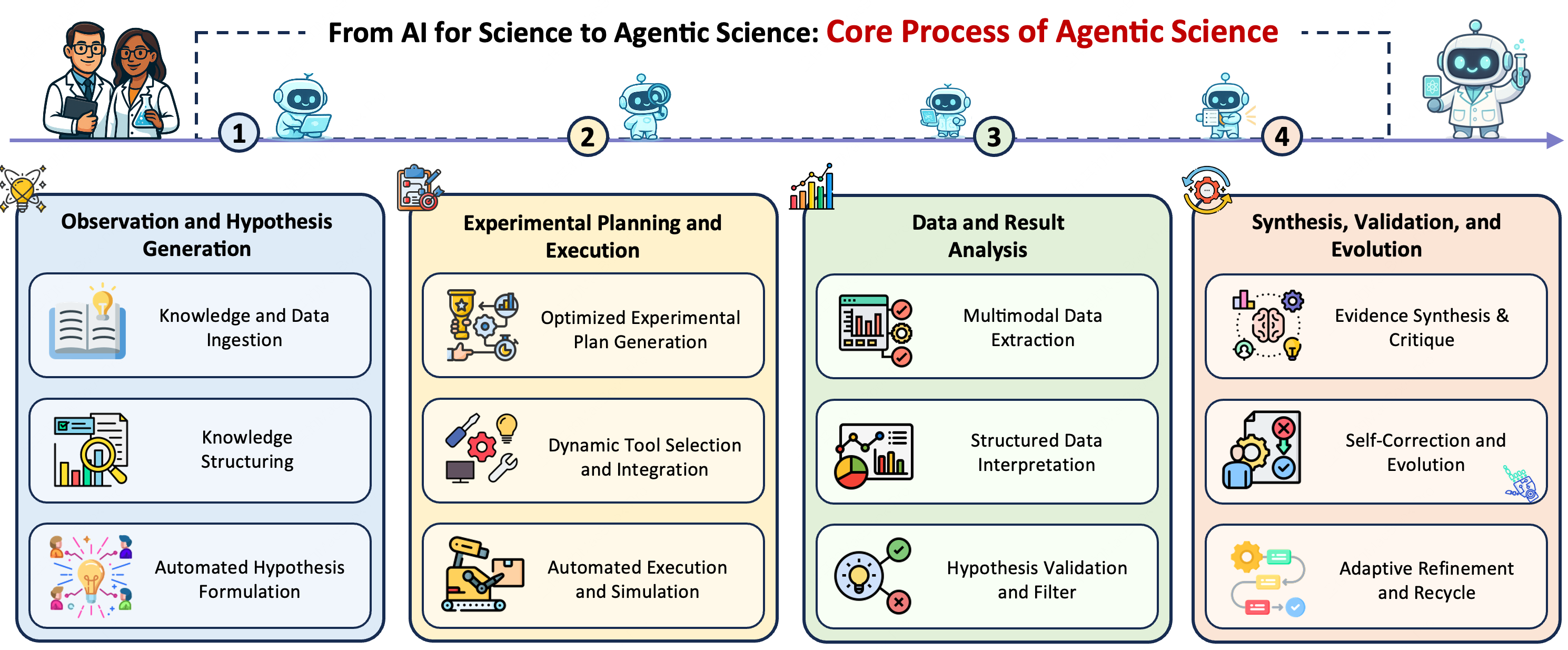
Figure 4: Core process of Agentic Science. Not all steps are required in every instance, and execution order may be dynamically adjusted based on agent objectives, context, and ongoing results.
Challenges in Agentic Science
The paper identifies significant challenges in deploying autonomous agents:
- Reproducibility and Reliability: Ensuring consistency in scientific findings despite AI-induced variability.
- Validation of Novelty: Differentiating genuine breakthroughs from sophisticated interpolations.
- Transparency: Maintaining clear, auditable reasoning pathways for scientific conclusions.
- Ethical Governance: Addressing societal impacts, accountability, and ethical dilemmas in agent-driven research.
These challenges necessitate a holistic view, integrating technical solutions with ethical oversight.
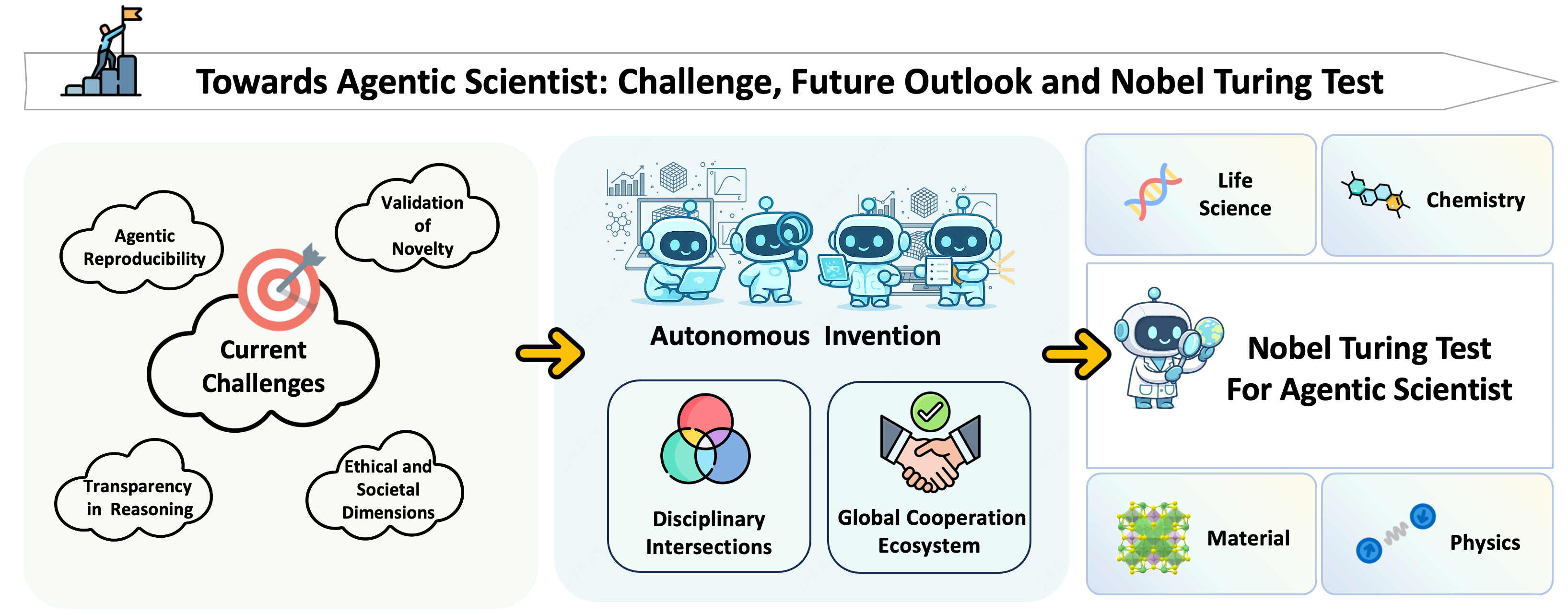
Figure 5: Exploring the Path to Agentic Scientists: Addressing Current Challenges, Enabling Autonomous Invention, and Pioneering the Nobel Turing Test Across Life Sciences, Chemistry, Materials, and Physics.
Conclusion
The paper "From AI for Science to Agentic Science" establishes Agentic Science as an innovative paradigm shaping the future of AI-driven research. By categorizing AI's evolution and mapping it across scientific domains, the authors provide a foundational framework to guide subsequent developments in designing autonomous scientific agents. As these systems increasingly exemplify capability with minimal human intervention, they promise to accelerate discovery, expand the bounds of scientific inquiry, and transform the landscape of research.