- The paper demonstrates the use of UV photoemission for precise single-electron charge neutralization in levitated nanodiamonds.
- It reveals that larger nanodiamonds exhibit faster neutralization rates, achieving millisecond-scale resolution critical for interferometry.
- The advancements pave the way for matter-wave interferometry experiments to test foundational principles in quantum mechanics and general relativity.
Neutralization of Levitated Charged Nanodiamond: Towards Matter-Wave Interferometry with Massive Objects
The paper "Neutralization of Levitated Charged Nanodiamond: Towards Matter-Wave Interferometry with Massive Objects" explores the potential use of nanodiamonds (NDs) for achieving matter-wave interferometry to probe quantum gravity. This essay provides an in-depth examination of the experimental methods and results associated with the neutralization of levitated NDs, emphasizing the implications and potential advancements in the field of quantum mechanics (QM) and general relativity (GR).
Introduction to Nanodiamonds in Quantum Interferometry
The core motivation for using nanodiamonds in matter-wave interferometry is to explore high-mass quantum superpositions, thereby testing foundational principles of QM and GR in novel regimes. By embedding a single spin within the ND, researchers aim to utilize Stern-Gerlach interferometry techniques to achieve coherent splitting and recombination in a spatial superposition. This approach has significant implications for testing hypotheses related to quantum gravity and spatial superposition at unprecedented scales.
Experimental Setup and Methodology
The experimental setup involves the use of a ring Paul trap for levitating charged NDs, driven by a high-voltage AC amplifier. The neutralization process predominantly utilizes UV photoemission, targeting the efficient removal of excess charges to minimize spatial decoherence in future interferometric experiments (Figure 1).
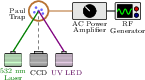
Figure 1: Schematic diagram of the experimental setup used for trapping and neutralizing nanodiamonds.
A notable aspect of this setup is the ability to detect and manipulate charges on individual NDs using UV light, greatly improving the control precision in charge dynamics compared to previous methods such as corona discharge and alpha radiation.
Photoemission Characteristics and Results
The investigation into the photoemission properties revealed that the threshold wavelength for efficient charge removal from NDs is approximately 270 nm, corresponding to a photon energy of 4.6 eV (Figure 2). These findings align with known work function values of diamond surfaces, highlighting the need to operate below this threshold for optimal neutralization efficiency.
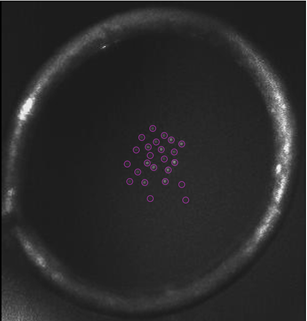
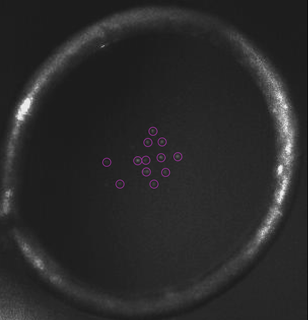
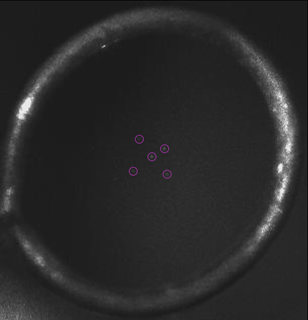
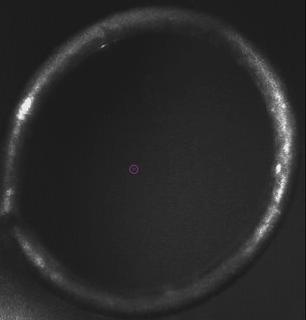
Figure 2: Threshold wavelength for photoemission from levitated ND, indicating efficient photoemission below 270 nm.
The research further demonstrates that larger particle sizes correlate with faster neutralization rates due to surface‐to‐volume ratio disparities impacting photoemission efficiency (Figure 3).
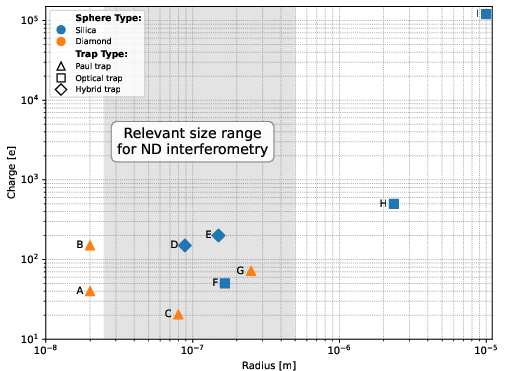
Figure 3: Trap lifetime of levitated NDs as a function of particle diameter, showcasing size-dependent neutralization rates.
Advancements in Charge Control
A pivotal achievement detailed in the paper is the single-electron charge manipulation using UV illumination, which provides discrete frequency steps as evidence of precise charge control (Figure 4). This marks a significant advancement over prior art, allowing for refined manipulation critical for interferometry tasks.
(Figure 4)
Figure 4: Single-electron charge manipulation using UV exposure, demonstrating frequency steps indicative of charge precision.
The study also reports a remarkable increase in neutralization rates, surpassing previous benchmarks by orders of magnitude. This is achieved using focused UV laser beams, pushing the capabilities towards millisecond-scale resolution per electron, which is crucial for preventing heating and maintaining coherence during charge manipulation (Figure 5).
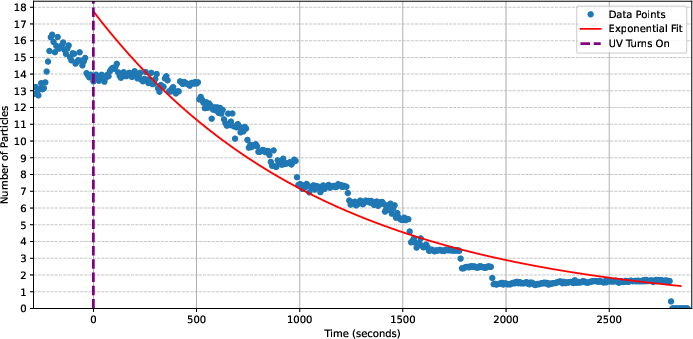
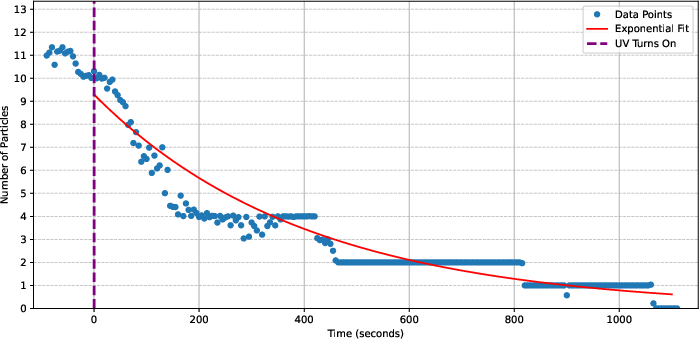
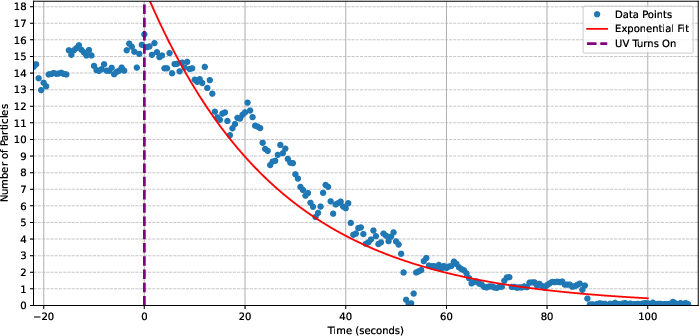
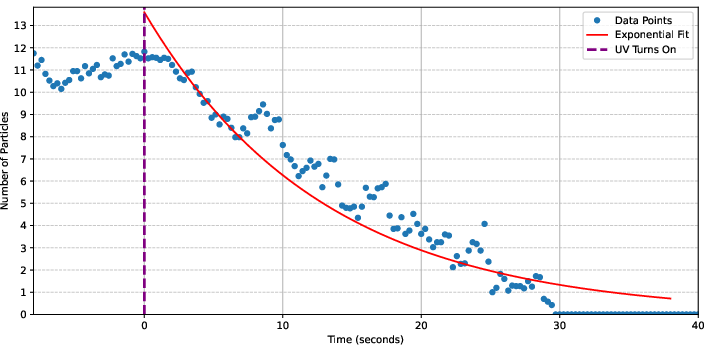
Figure 5: Rapid neutralization of NDs using a focused UV laser, achieving significant improvements in charge removal speed.
Implications and Future Work
The techniques and results described in this paper underscore the feasibility of utilizing UV-based methods for the fast and precise neutralization of NDs under ultra-high vacuum conditions—a critical prerequisite for implementing quantum interferometry at macroscopic scales. The advancements set the stage for experiments aiming to explore the intersection of quantum mechanics and general relativity with potential applications in testing theories related to quantum gravity, collapse models, and decoherence.
Continuous exploration into the dynamics of photoemission from ND surfaces, electron emission sources, and surface termination effects is necessary to optimize these processes further. Continuing to refine the experimental setup for improved control and measurement accuracy will be essential for advancing interferometry capabilities and probing deeper into fundamental physics.
Conclusion
This work demonstrates a crucial step forward in controlling the charge states of levitated NDs for quantum interferometry applications. The ability to efficiently neutralize and manipulate charges at these scales is vital for exploring and validating theoretical models of gravitation and quantum mechanics. Building on these findings, future research can focus on integrating these processes into larger-scale interferometry systems, providing unprecedented insight into the unification of the fundamental forces of physics.