- The paper introduces a joint optimization method that integrates multi-spectral imaging with 3D Gaussian Splatting to improve reconstruction fidelity across spectral bands.
- It evaluates separate, split, and joint strategies with advanced augmentations like SpecDelay and MSAD, demonstrating superior performance via PSNR, SSIM, and LPIPS metrics.
- Empirical results show enhanced geometric and spectral consistency in challenging outdoor scenes, offering practical insights for precision agriculture and remote sensing.
Integration of Multi-Spectral Imaging into 3D Gaussian Splatting: Strategies, Trade-offs, and Empirical Analysis
Introduction
This paper presents a systematic investigation into the integration of multi-spectral imaging (MSI)—including RGB, red, green, red-edge, and near-infrared (NIR) bands—into the 3D Gaussian Splatting (3DGS) framework. 3DGS is a state-of-the-art explicit radiance field method for real-time, high-fidelity 3D reconstruction from multi-view images. While 3DGS excels with RGB data, naive per-band optimization for additional spectra yields suboptimal reconstructions due to inconsistent geometry across spectral domains. The authors propose and evaluate three principal strategies for multi-spectral integration: Separate, Split, and Joint optimization, and introduce several training augmentations to address the challenges of spectral cross-talk and geometric fidelity.
Methodological Framework
Multi-Spectral Data Acquisition and Preprocessing
The input consists of multi-spectral images captured with five cameras: one RGB and four narrow-band multi-spectral cameras (R, G, RE, NIR). Each camera provides images with individual poses and intrinsics. A globally aligned sparse point cloud is assumed, typically obtained via Structure-from-Motion (SfM).
Integration Strategies
Separate Optimization
Each spectral band is reconstructed independently as a separate 3DGS model, with no shared geometry or parameters. This approach serves as a lower-bound baseline and is prone to geometric artifacts, especially in non-RGB bands.
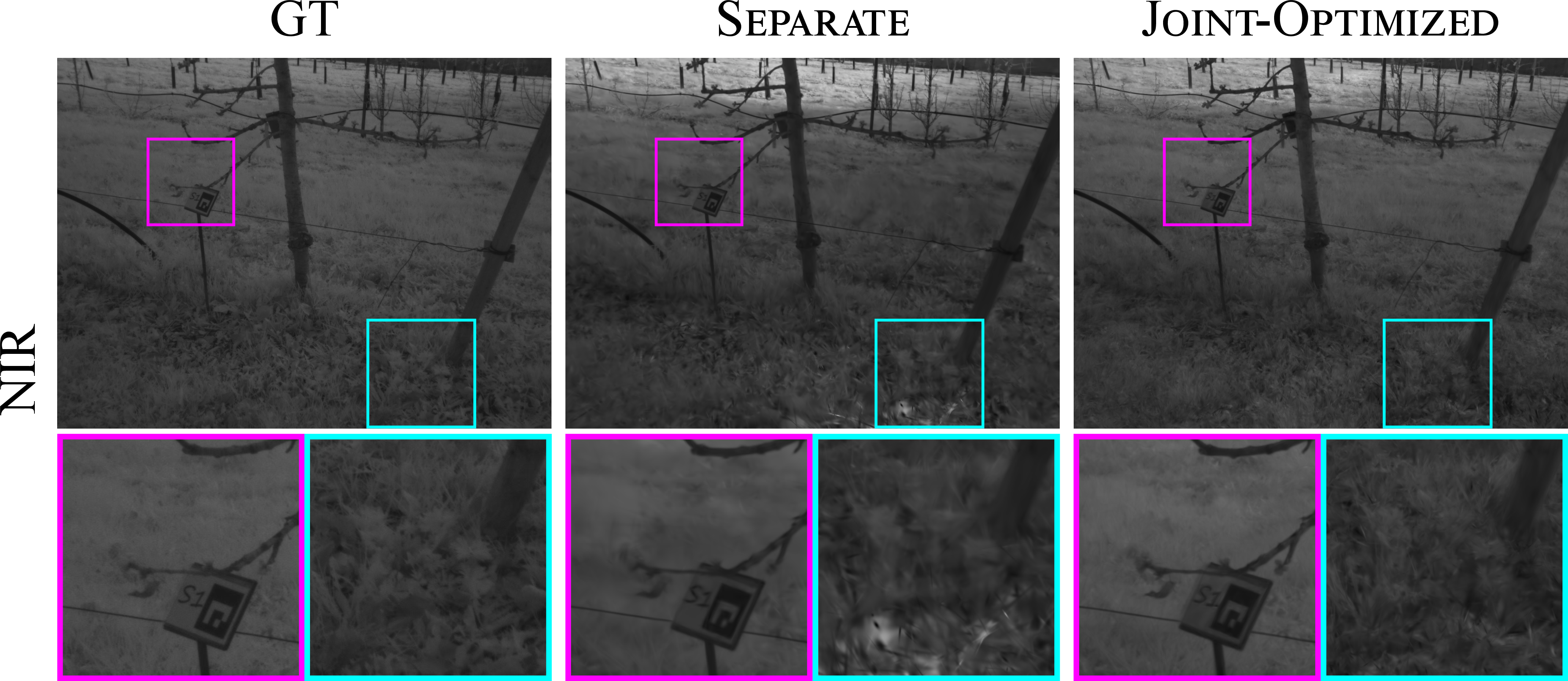
Figure 1: A visual comparison of NIR reconstructions using Separate and Joint-Optimized strategies, highlighting the geometric deficiencies of Separate and the improvements from spectral cross-talk in Joint-Optimized.
Split Optimization
An initial RGB 3DGS model is optimized, then its geometry is duplicated for each spectral band. Each band-specific model is further refined independently. This leverages the robust geometry from RGB while preventing reciprocal cross-talk.
Joint Optimization
All spectral bands are jointly optimized in a unified model, with each Gaussian primitive holding multiple spectral color coefficients (via spherical harmonics). During training, a random spectral channel is selected per iteration, and only that channel is rendered and optimized. This enables bidirectional spectral cross-talk and shared geometric refinement.
Training Augmentations
Spectral Delay (SpecDelay)
Joint optimization is deferred for the first n iterations (typically 30,000), during which only RGB data is used to establish stable geometry. Multi-spectral optimization commences thereafter, allowing cross-talk in both directions.
Extended ADC (ExtADC)
The Adaptive Density Control (ADC) module's densification period is extended (e.g., to 60,000 iterations) to accommodate the increased sample diversity from multi-spectral data.
Multi-Spectral Aware Densification (MSAD)
Per-primitive gradients are tracked independently for each spectral band, and densification is triggered if any band’s gradient exceeds a threshold. This increases the number of splats in regions with high spectral detail.
Spectral-Invariant Geometry (SIG)
Gaussian structural parameters are updated only with RGB samples, while spectral bands refine only their color coefficients. This restricts geometric updates to RGB, limiting cross-talk.
Figure 2: Schematic of training schemes for Joint strategy, illustrating the timing of ADC, SpecDelay, and color-only initialization steps.
Empirical Evaluation
Quantitative and Qualitative Results
Experiments were conducted on a multi-spectral outdoor dataset with seven scenes, each containing 81–136 images per channel. Metrics include PSNR, SSIM, and LPIPS, evaluated per band and averaged across scenes.
- Separate yields the lowest reconstruction quality, especially for non-RGB bands.
- Split improves non-RGB bands by leveraging RGB geometry but restricts cross-talk.
- Joint (with augmentations) achieves the highest overall quality, with Joint-Optimized (Joint + SpecDelay + MSAD) outperforming all other configurations in PSNR, SSIM, and LPIPS for both RGB and spectral bands.
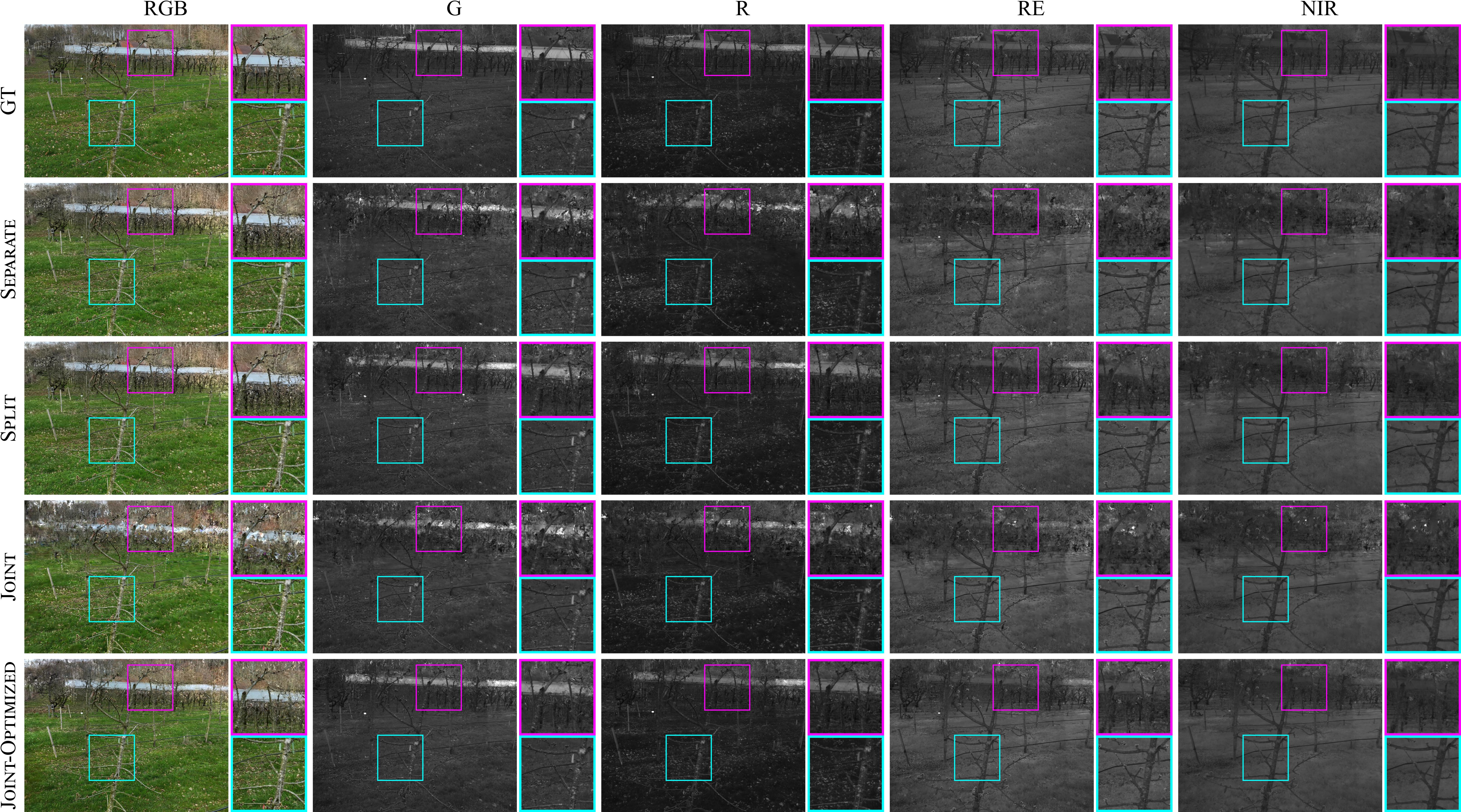
Figure 3: Visual comparison on the Single Tree scene across all spectral bands, demonstrating the superior geometric and spectral fidelity of Joint-Optimized.
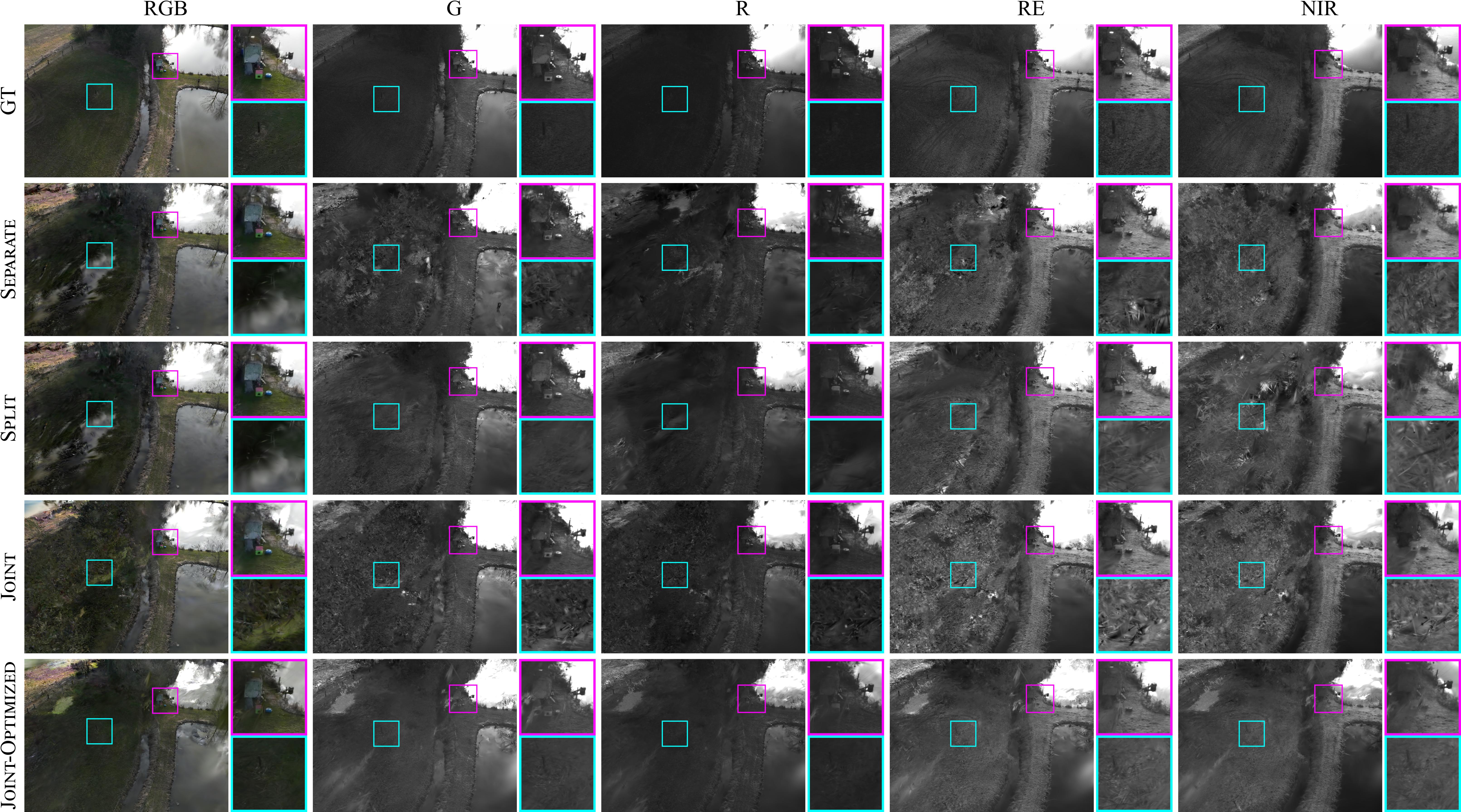
Figure 4: Visual comparison on the Lake scene, highlighting the improved detail and consistency in Joint-Optimized reconstructions.
Ablation Studies
Ablations of SpecDelay, ExtADC, MSAD, and SIG reveal:
- SpecDelay significantly boosts quality by stabilizing geometry before multi-spectral optimization.
- ExtADC further improves results by allowing more densification.
- MSAD increases the number of splats, selectively enhancing detail in high-gradient spectral regions.
- SIG generally degrades non-RGB reconstruction, but when combined with MSAD and SpecDelay, it yields the best RGB results, suggesting potential for RGB-centric applications.
Spectral Cross-Talk Analysis
Systematic addition of spectral bands to RGB demonstrates monotonic improvements in reconstruction quality for all bands. The largest gains are observed when combining RGB with green, red, and red-edge bands. The shared geometric representation in Joint-Optimized enables all bands to contribute to scene geometry, enhancing both RGB and spectral reconstructions.
Resource Requirements
Joint-Optimized models require approximately twice as many Gaussian splats as Separate models to represent the same scene, reflecting the increased complexity and detail captured in the joint representation. MSAD further increases splat count in regions with high spectral variance.
Limitations
- Geometric Cross-Talk Only: The Joint-Optimized configuration enables only geometric cross-talk; color cross-talk is not exploited. Recent neural approaches using per-splat feature vectors and shared MLPs may address this limitation.
- Shared Geometry Assumption: The method assumes consistent geometry across all spectral bands, which may not hold for modalities like thermal infrared, where object appearance can differ substantially.
Practical and Theoretical Implications
The integration of multi-spectral data into 3DGS via joint optimization and spectral cross-talk offers substantial improvements in 3D reconstruction fidelity. This has direct applications in precision agriculture, plant phenotyping, material identification, and other domains requiring multi-modal scene understanding. The demonstrated strategies and augmentations provide practical guidelines for robust multi-spectral 3DGS deployment.
Theoretically, the work highlights the importance of cross-modal information transfer in explicit radiance field models and suggests future directions in neural color encoding and adaptive geometry refinement.
Conclusion
This study provides a comprehensive analysis of multi-spectral integration strategies for 3D Gaussian Splatting. Joint optimization, augmented with SpecDelay and MSAD, yields superior reconstruction quality across all spectral bands, leveraging spectral cross-talk for enhanced geometric and color fidelity. The findings inform both practical deployment and future research directions, including neural color encoding and modality-specific geometry adaptation. The approach is particularly promising for agricultural and environmental applications, where multi-spectral data is prevalent and high-fidelity 3D reconstruction is critical.