- The paper's main contribution is an empirical analysis of 253 Claude.md files used to configure agentic coding tools, highlighting consistent structural patterns in manifest documentation.
- It uses data mining from GitHub and hierarchical content analysis to reveal the predominance of technical instructions over user-centric guidelines.
- The findings imply that structured, shallow hierarchies in manifests not only guide agent behavior but also enhance human-AI collaboration in code development.
Analysis of Agentic Coding Manifests in Claude Code
This paper presents an empirical analysis of agentic coding manifests, specifically "Claude.md" files. These manifests are critical in configuring agentic coding tools like Claude Code by defining project context, behavioral guidelines, and operational rules for AI agents. The study inspects Claude.md files from a wide array of open-source repositories, identifying patterns in their structure and content.
Introduction to Agentic Coding Manifests
Agentic coding tools automate software engineering tasks via natural language commands, breaking these commands into executable code tasks with minimal human oversight. The paper outlines the role of agent manifests, such as Claude.md files, in providing necessary context for AI agents to perform effectively. Despite their importance, a lack of comprehensive documentation for these manifests necessitates a trial-and-error approach by developers, which can hinder optimal tool utilization.
Methodology: Data Collection and Analysis
The study collected data from repositories with Claude.md files using the GitHub API, employing filters to ensure significant project activity post the introduction of Claude.md files. This resulted in 253 analyzed Claude.md files. A content analysis was conducted to identify structural patterns and common content themes using hierarchical header tracking and manual categorization. The research focuses on identifying prevalent instructional patterns, thereby providing insights into how developers configure these manifests to align AI behavior with project goals.
Results: Structural and Content Patterns
The paper reveals that Claude.md files adopt a predominantly shallow hierarchical structure. They usually begin with a main heading (H1), branch into moderate subsections (H2), and include finer details (H3), while deeper nesting remains rare (Figure 1).
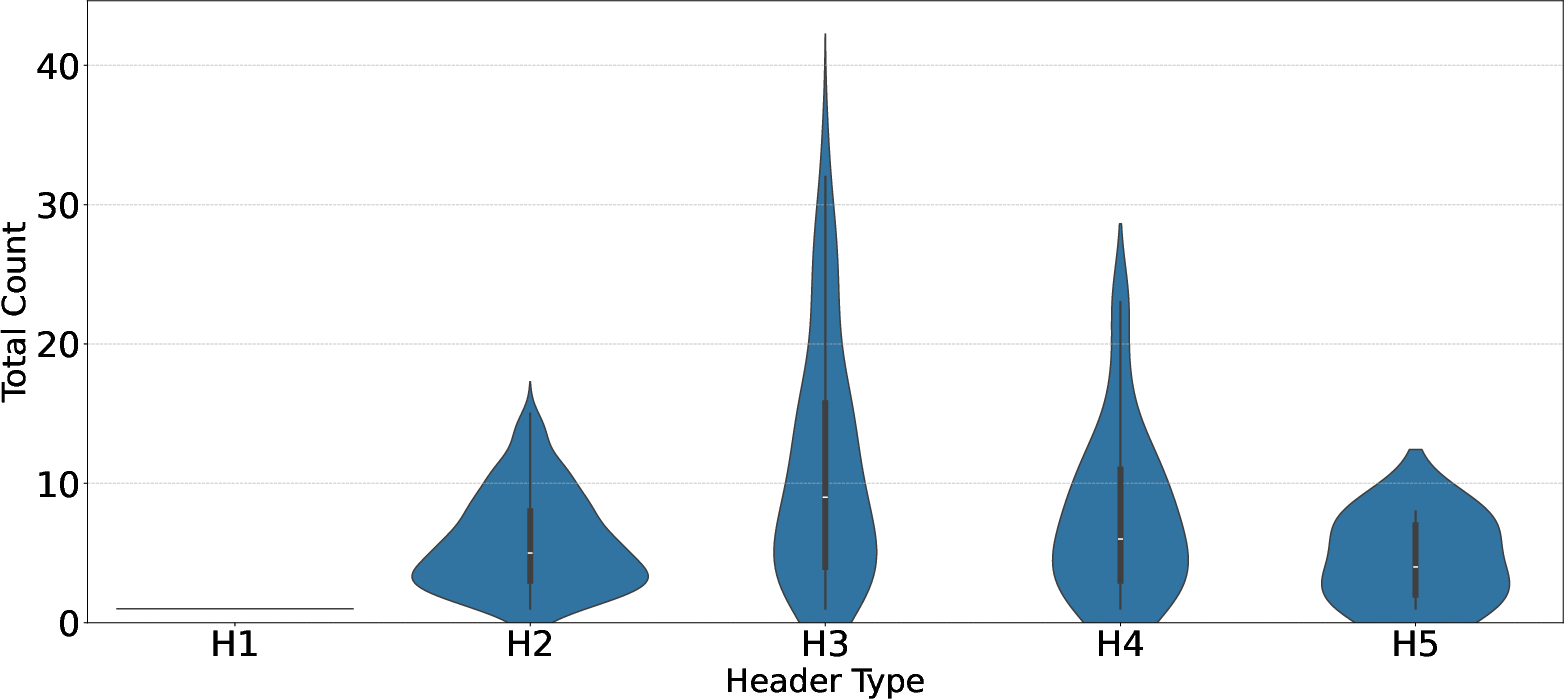
Figure 1: Distribution of header counts across Claude.md files (outliers removed).
Key content categories within these manifests, such as "Build and Run," dominate, emphasizing operational instructions, followed by "Implementation Details" and "Architecture," reflecting the operational focus of these documents. Less frequent are categories like "Performance," "Security," and "UI/UX," which indicates a prioritization of technical over user-centric aspects in these files.
Implications and Future Directions
The structured nature of Claude.md files aids in consistent agent behavior, yet their role extends beyond technical instructions. They also clarify AI roles within projects, fostering better human-agent collaboration. Moving forward, research should explore the maintenance dynamics of such manifests and their direct impact on AI performance and developer productivity. Comparative studies featuring other agentic coding tools like Codex and Copilot would further enrich understanding.
Conclusion
Analyzed Claude.md files showcase a preferred structured organization, mainly focusing on technical execution and AI role alignment. This pattern highlights the dual utility of these manifests: guiding operational tasks and facilitating effective collaboration between humans and AI in coding workflows. They underscore the need for evolving practices and future research to maximize the use of agentic coding manifests in software development.

