- The paper introduces a novel methodology that integrates VLBI astrometric priors into pulsar timing models.
- It employs a calibrated three-parameter Euler rotation to reconcile VLBI and timing reference frames, reducing red noise bias.
- The refined astrometric precision mitigates timing residual distortions, ultimately boosting gravitational wave detection sensitivity.
Improved Pulsar Timing Precision with VLBI Astrometric Priors in the NANOGrav 15-Year Data Set
Introduction and Motivation
High-precision pulsar timing is a cornerstone of gravitational wave (GW) detection in the nanohertz regime, as well as a probe of fundamental physics and Galactic structure. The accuracy of pulsar timing models is critically dependent on precise astrometric parameters—position, proper motion, and parallax. Traditionally, these parameters are estimated by fitting timing models to pulse time-of-arrival (TOA) data, but this approach is susceptible to biases, especially in the presence of red noise processes such as intrinsic spin noise or a stochastic GW background. These biases can lead to absorption of low-frequency power into the astrometric fit, reducing sensitivity to GWs and distorting parameter estimates.
Very Long Baseline Interferometry (VLBI) provides an independent, high-precision method for astrometric measurement, with the potential to break degeneracies and mitigate red noise absorption. However, integrating VLBI astrometry into timing models is nontrivial due to differences in reference frames and the limited number of millisecond pulsars (MSPs) with both high-quality VLBI and timing data. This work presents a rigorous methodology for incorporating VLBI-derived astrometric priors into pulsar timing models, leveraging a calibrated frame tie between VLBI and timing reference frames, and quantifies the impact on timing precision and noise absorption in the NANOGrav 15-year data set.
Reference Frame Calibration and Astrometric Corrections
A central technical challenge is the reconciliation of the VLBI (ICRS-based) and timing (ephemeris-based) reference frames. The authors employ a three-parameter Euler rotation to model the frame tie, following the formalism of Madison et al. (2013) and Wang et al. (2017). The rotation is parameterized as Ω=Rz(ϕ)Rx(θ)Rz(ψ), with small-angle approximations justified by the sub-milliarcsecond scale of the offsets.
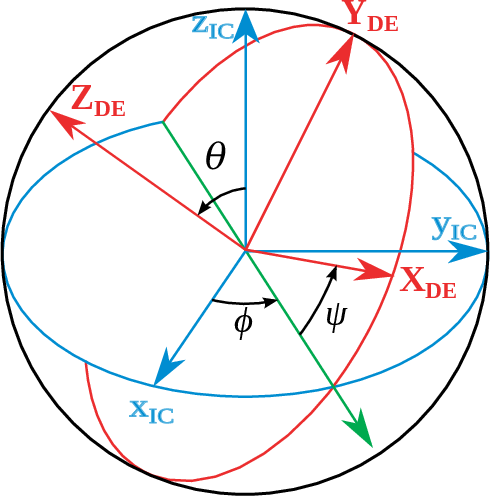
Figure 1: Celestial sphere diagram showing the sequence of Euler rotations, Rz(ϕ)Rx(θ)Rz(ψ), that transform the ICRS into the timing reference system.
The frame tie is calibrated using a set of MSPs with both VLBI and timing astrometry, after correcting for catalog differences and proper motion offsets. The resulting rotation parameters are Ax=−0.68±0.16 mas, Ay=0.15±0.61 mas, Az=0.70±0.63 mas, defining the transformation from the RFC (VLBI) to the JPL DE440 (timing) frame. This calibration yields significant improvement in the agreement between VLBI and timing astrometric PDFs.
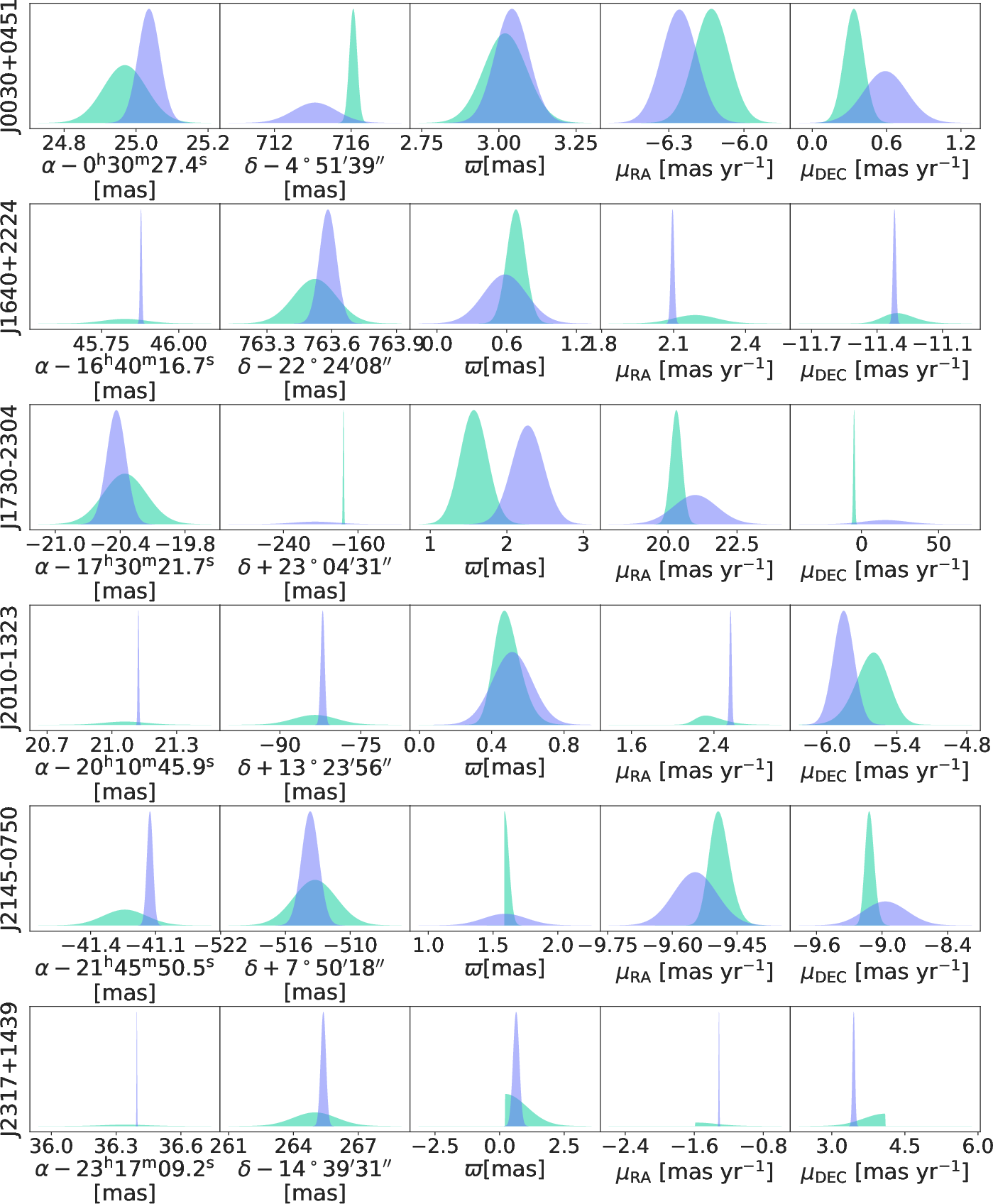
Figure 2: PDFs of the astrometric parameters derived using VLBI (green) or timing (blue), after using the frame tie to convert the VLBI measurements to the timing frame.
Bayesian Incorporation of VLBI Priors
The methodology proceeds by constructing a grid of trial timing solutions for each pulsar, sampling the astrometric parameter space within the overlap of the VLBI and timing constraints. For each trial solution, the likelihood is computed using the PINT timing package, with the astrometric parameters held fixed and all other timing and noise parameters refit. The likelihood incorporates both white and red noise via a non-diagonal covariance matrix.
VLBI-derived PDFs for each astrometric parameter are used as priors, and the posterior for each trial solution is computed via Bayes' theorem. The joint prior is the product of the individual parameter PDFs, evaluated at the sampled values.
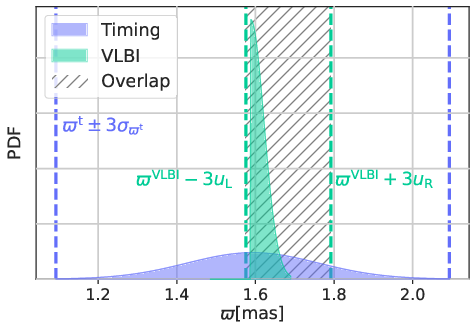
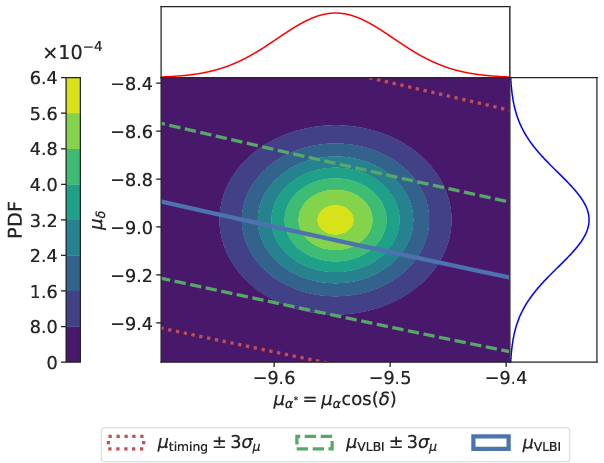
Figure 3: Parameter sampling for PSR J2145-0750, illustrating the overlap of timing and VLBI parallax PDFs and the selection of proper motion samples consistent with both constraints.
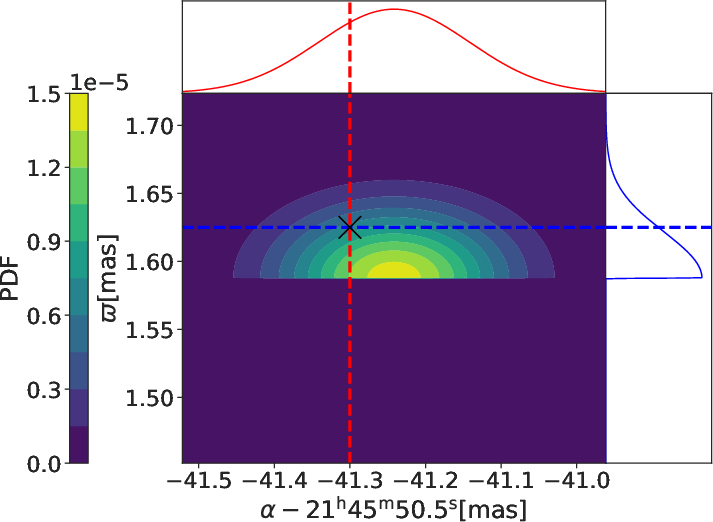
Figure 4: 2D example of prior calculation for a trial timing solution of J2145-0750, showing the evaluation of the VLBI-derived PDFs at the sampled parameter values.
Posterior Distributions and Astrometric Improvements
The resulting posterior distributions are sharply unimodal for most pulsars, indicating that the VLBI priors effectively constrain the astrometric solution. In several cases, the maximum-posterior solution deviates from the timing-only solution by up to 2σ, suggesting the presence of biases in the timing-derived astrometry, likely due to red noise absorption.
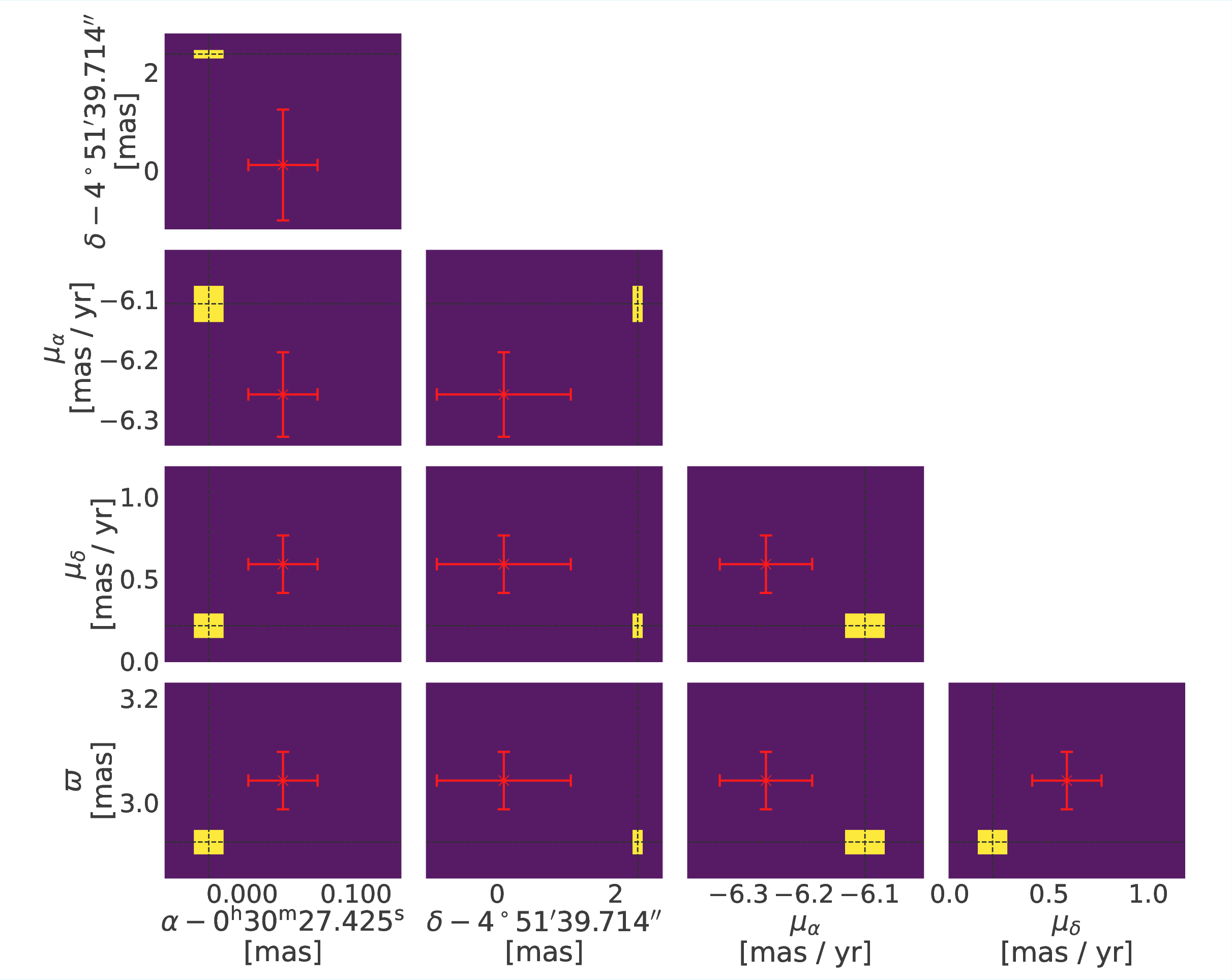
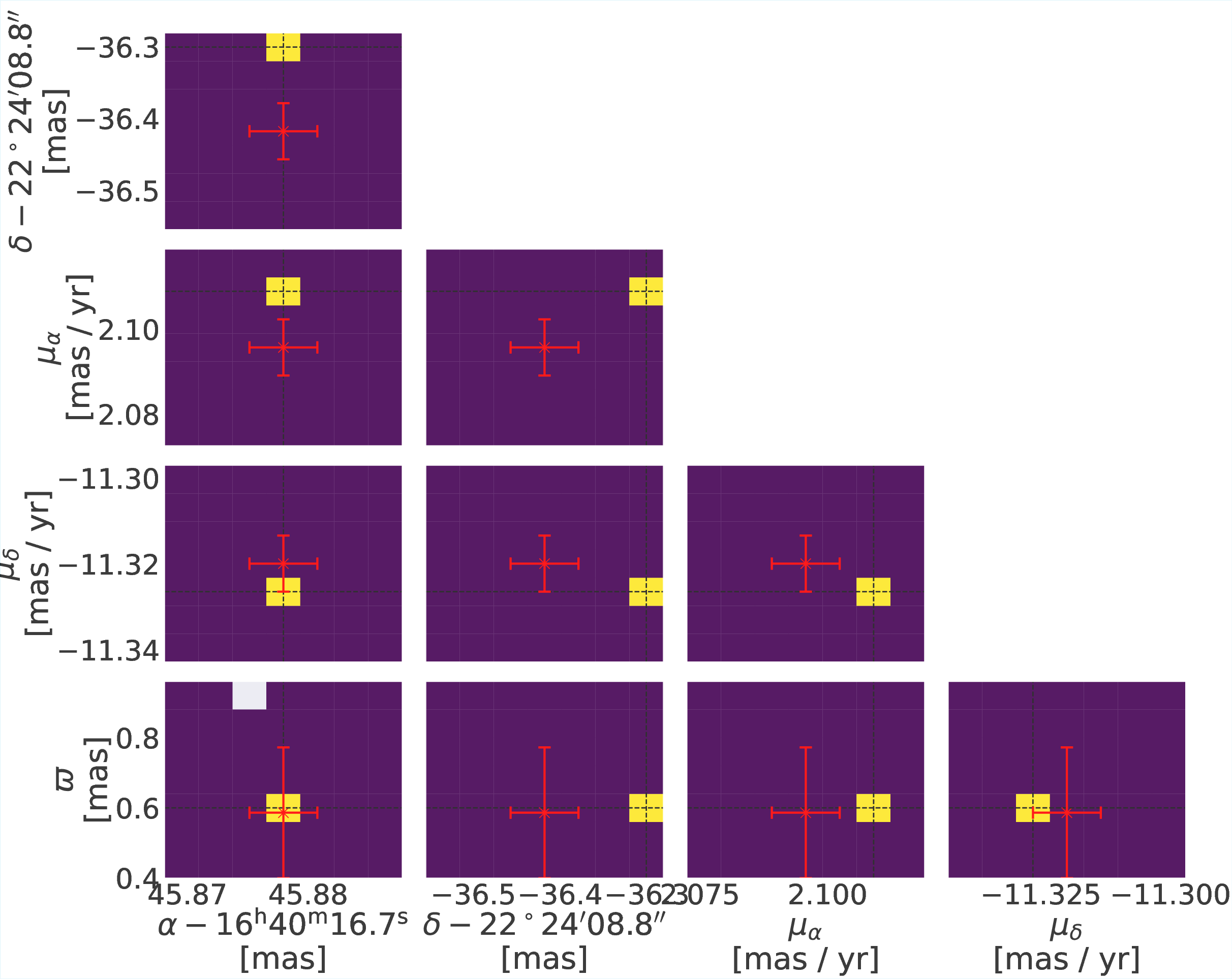
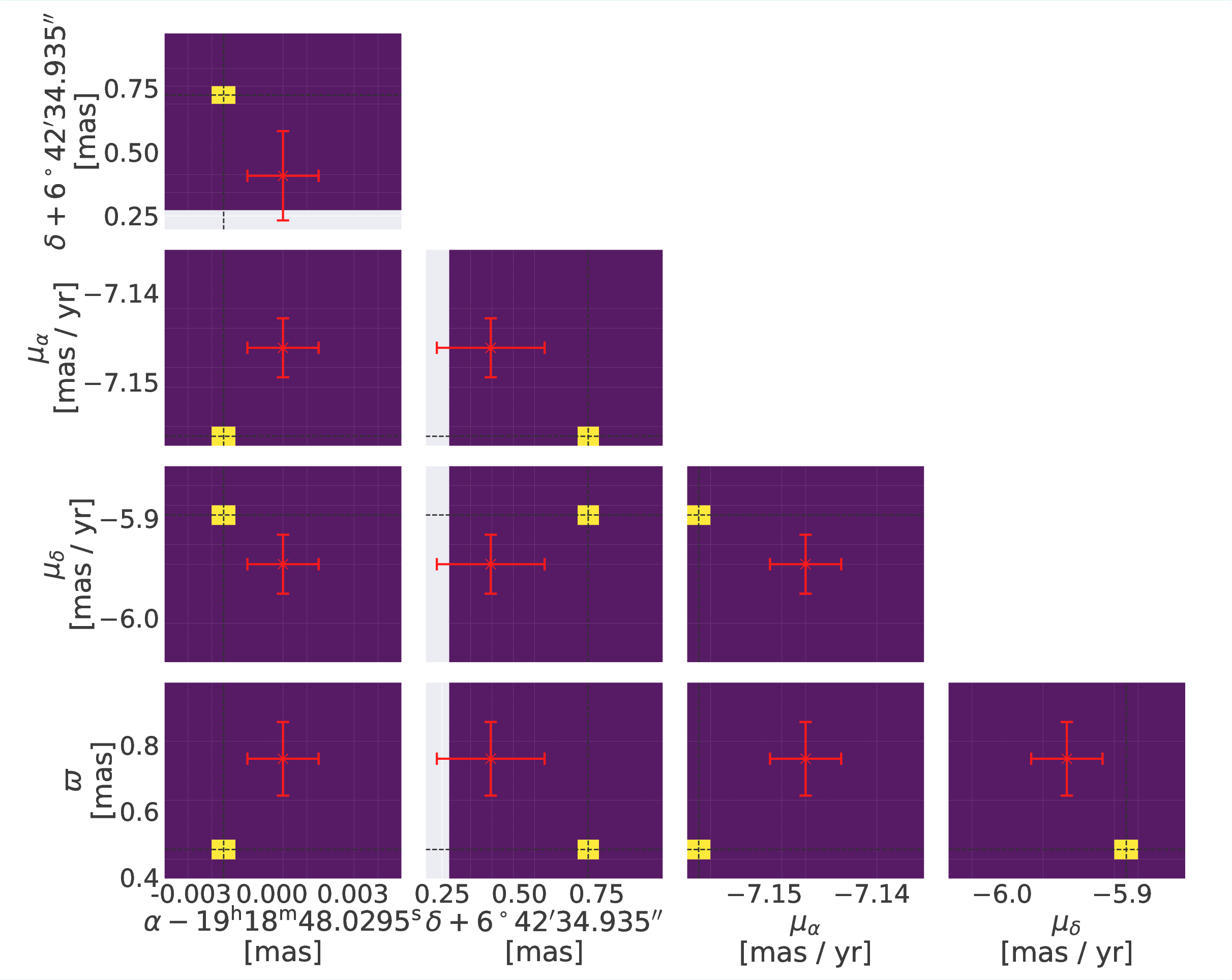
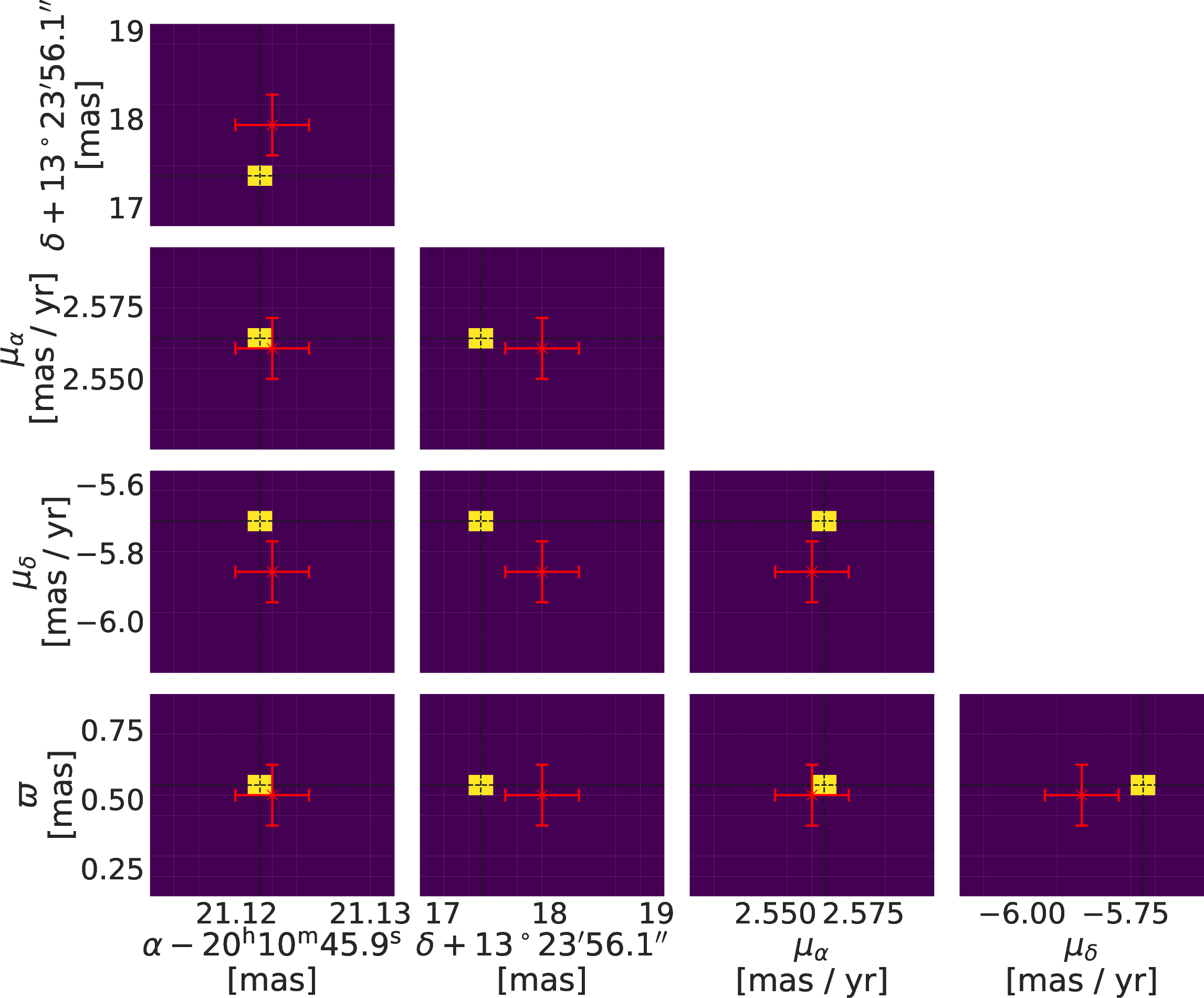
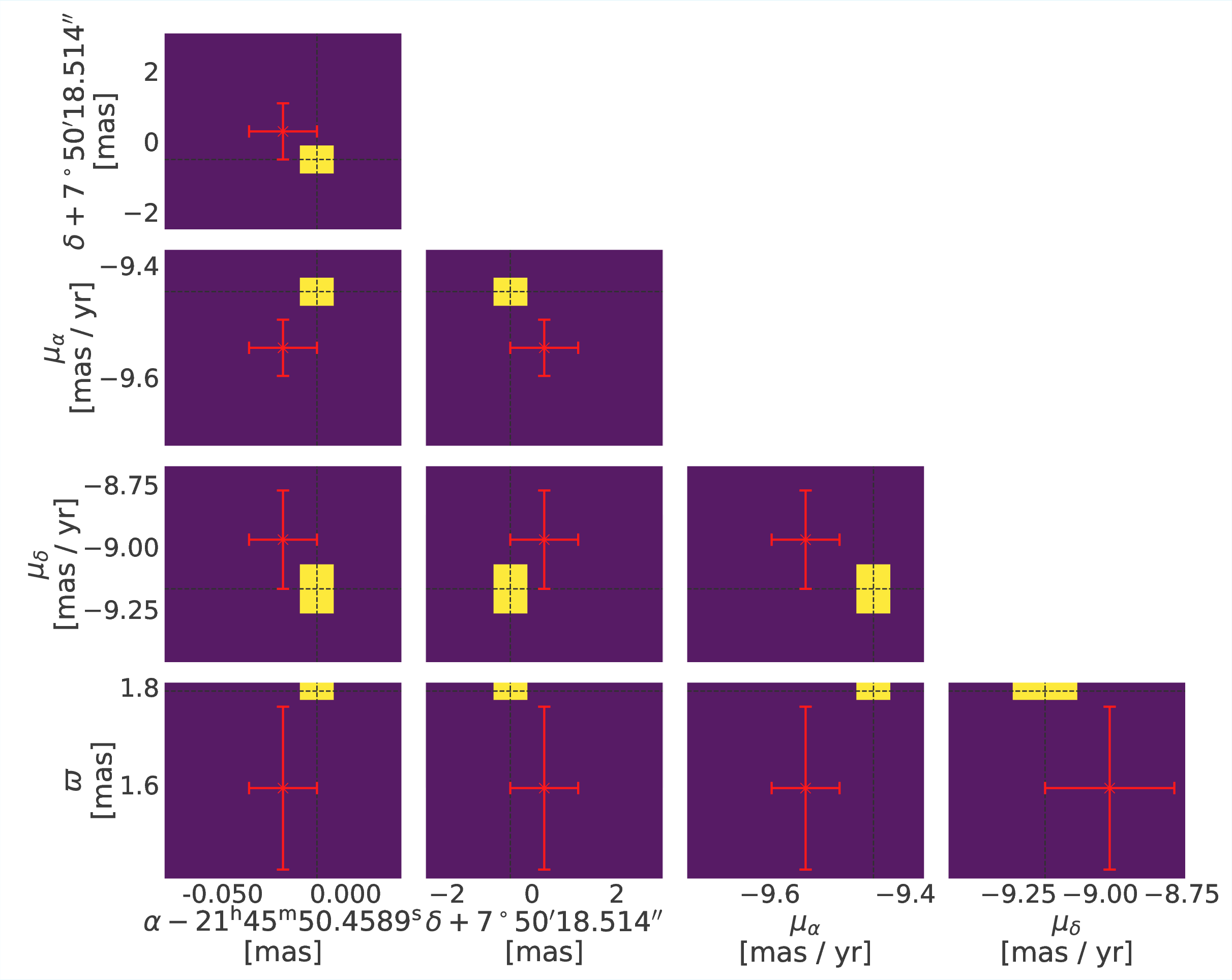
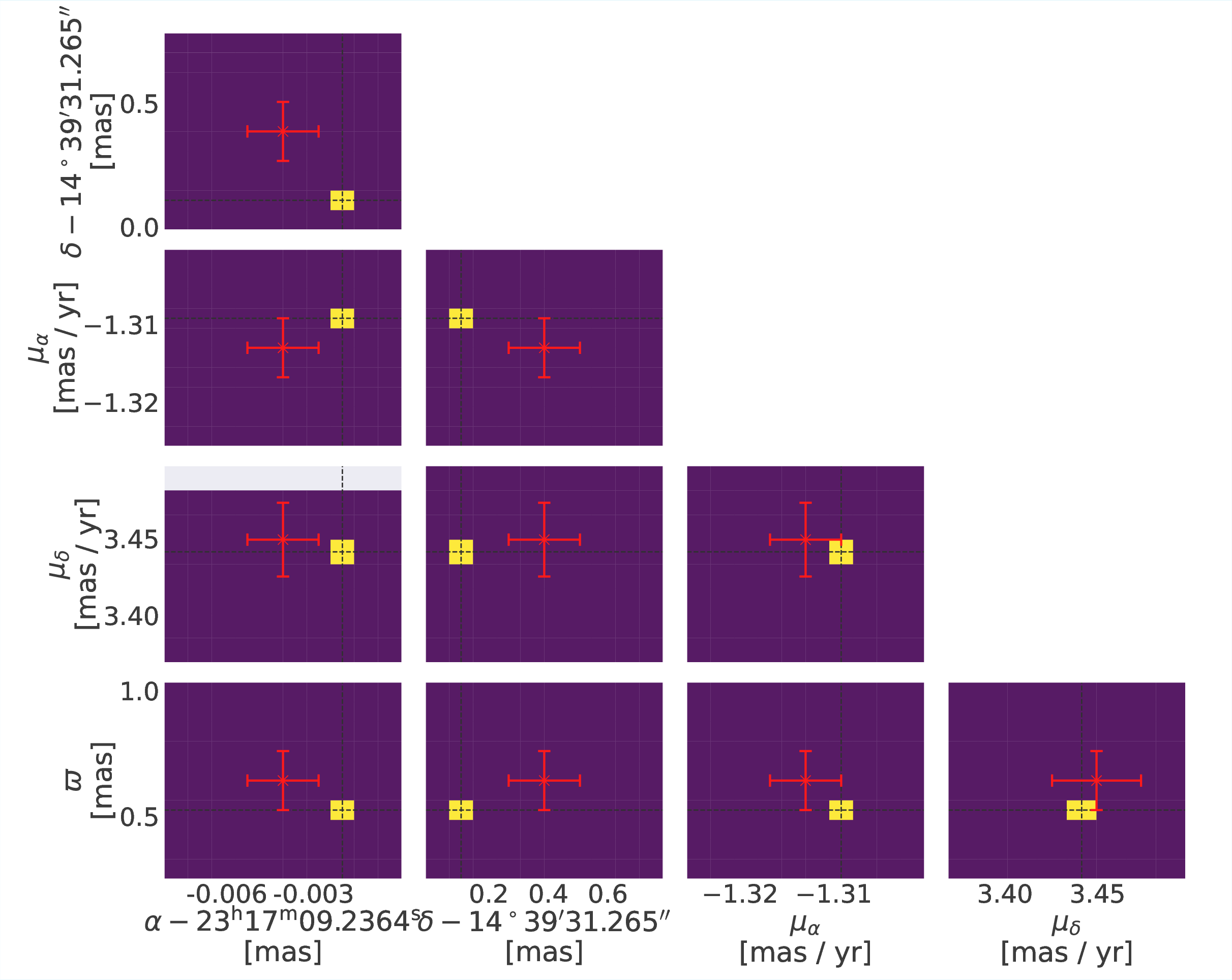
Figure 5: Corner plots of posterior probability for selected pulsars, showing the normalized posterior as a function of parameter pairs. The red error bars indicate the NG15 timing solution.
Impact on Timing Residuals and Power Absorption
A critical analysis is performed by comparing the timing residuals obtained using the NG15 timing model and the maximum-posterior astrometric solution. The differences exhibit sinusoidal structure at periods of 1 year and 6 months, consistent with position and parallax errors, with amplitudes up to ∼0.8 μs. Lomb-Scargle periodograms of the residual differences reveal strong power at these frequencies, indicating that astrometric misestimation can absorb GW signals at these harmonics.
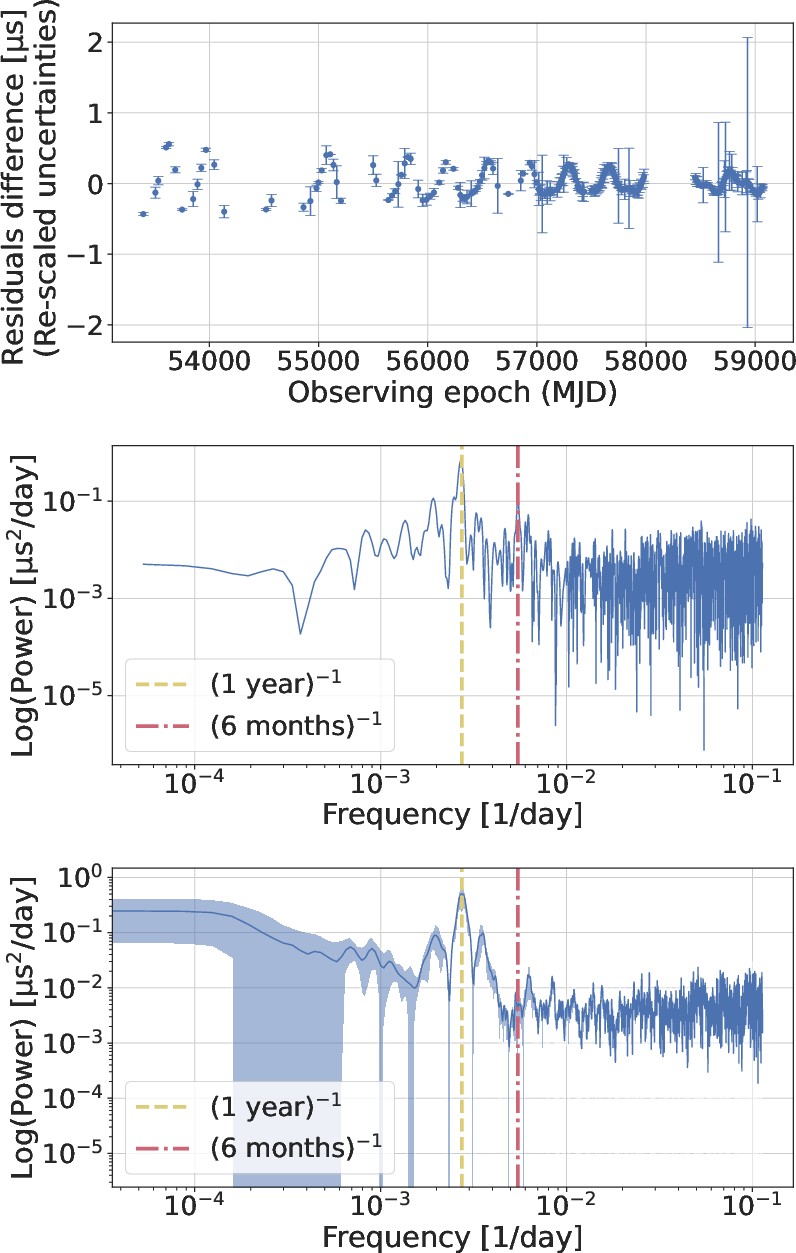
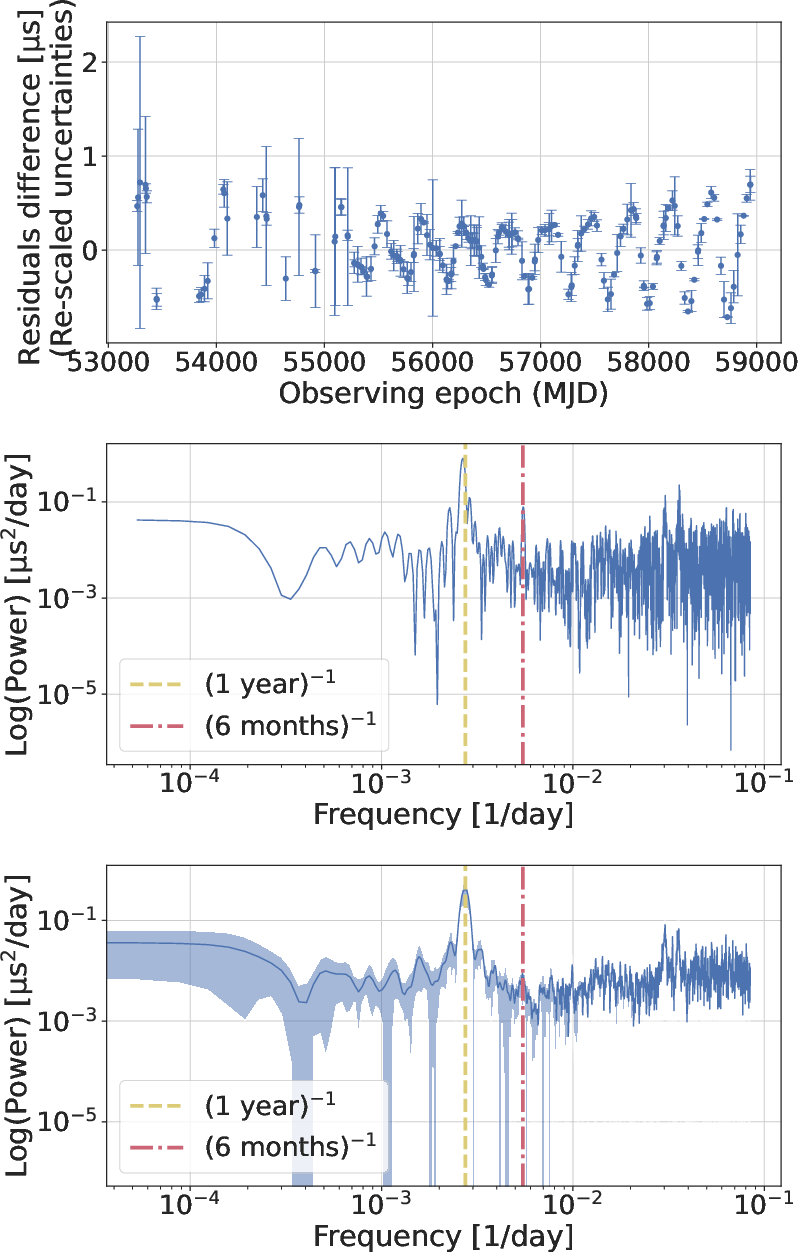
Figure 6: Top row: epoch- and frequency-averaged residual differences between the NG15 and maximum-posterior models. Middle row: Lomb-Scargle periodograms showing power at 1 year−1 and 6 months−1. Bottom row: Posterior-weighted average periodograms across the sampled parameter space.
At lower frequencies, the power spectrum is relatively flat for some pulsars (e.g., J0030+0451), indicating minimal red noise absorption in the optimal astrometric solution. However, when considering the full posterior-weighted parameter space, significant low-frequency power absorption is observed, especially away from the maximum-posterior solution. This demonstrates that astrometric fitting can reduce sensitivity to a stochastic GW background if not properly constrained.
Implications and Future Directions
The integration of VLBI astrometric priors into pulsar timing models demonstrably improves the robustness and accuracy of astrometric parameter estimation, reducing the risk of red noise absorption and enhancing GW sensitivity. The methodology is particularly valuable for newly discovered pulsars with short timing baselines, where timing-only astrometry is unreliable, and for MSPs with high levels of timing noise.
The results have direct implications for targeted GW searches at frequencies near 1 year−1, such as those for SMBHB candidates like 3C 66B. The observed power absorption at these frequencies may explain the non-detection of GW signals from such sources, as the signal is absorbed into the astrometric fit.
The work highlights the necessity for future VLBI campaigns to expand the sample of MSPs with high-precision astrometry and to report full covariance information for astrometric parameters. A more comprehensive and precise frame tie, incorporating both primary and secondary calibrator offsets, will further improve the integration of VLBI and timing data.
Conclusion
This study establishes a rigorous framework for incorporating VLBI astrometric priors into pulsar timing models, calibrated via a robust frame tie between reference systems. The approach yields improved astrometric precision, mitigates red noise absorption, and enhances GW detection sensitivity in PTA experiments. The findings underscore the importance of multi-technique astrometry and careful reference frame reconciliation in the era of precision GW astronomy. Future developments should focus on expanding VLBI coverage of MSPs, improving reference frame calibration, and integrating these methods into standard PTA analysis pipelines.