- The paper presents a comprehensive two-zone leptonic model to explain M87's TeV gamma-ray emissions, detailing both flare and low-state phenomena.
- It employs multi-wavelength SED analysis and a log-parabola electron injection spectrum to capture variability and spectral hardening observed in gamma rays.
- The study demonstrates that compact sub-parsec and extended kiloparsec jet contributions together account for the observed energy distribution and variability constraints.
Origin of TeV Gamma Rays from M87: Multi-Zone Leptonic Modelling of High and Low States
Introduction
The paper presents a comprehensive multi-wavelength analysis and modelling of the TeV gamma-ray emission from the radio galaxy M87, focusing on both high (flare) and low states. Leveraging recent LHAASO observations, the authors address the spatial and temporal characteristics of the emission, employing a time-dependent two-zone leptonic model to explain the spectral energy distributions (SEDs) across radio to TeV gamma-ray bands. The study integrates data from Fermi-LAT, Swift-XRT/UVOT, MOJAVE, MMDC, and archival sources, providing a detailed account of the emission mechanisms and their variability.
Long-Term Variability and Light Curve Analysis
The authors analyze 16.5 years of Fermi-LAT data, constructing binned light curves to investigate flux variability and the presence of GeV flares coincident with LHAASO-detected TeV flares. The Bayesian block method is applied to identify statistically significant flux enhancements.
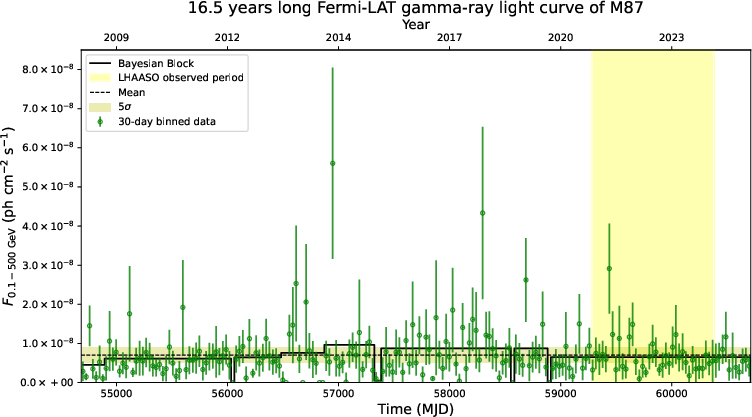
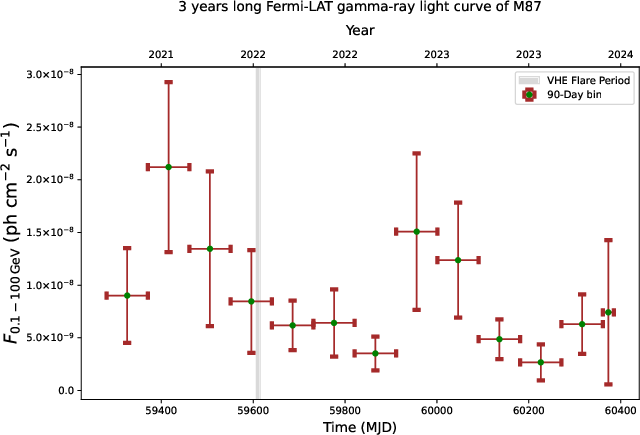
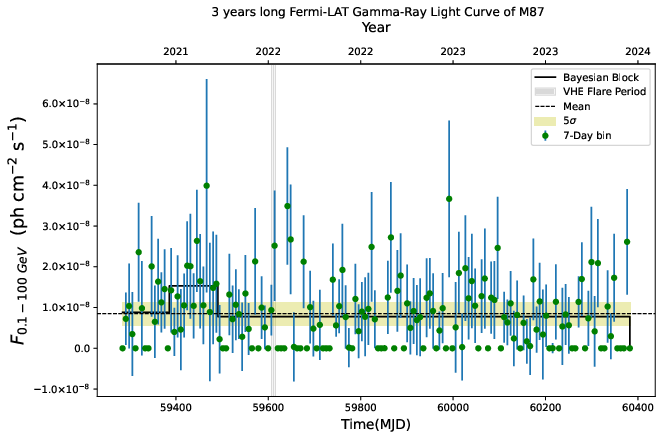
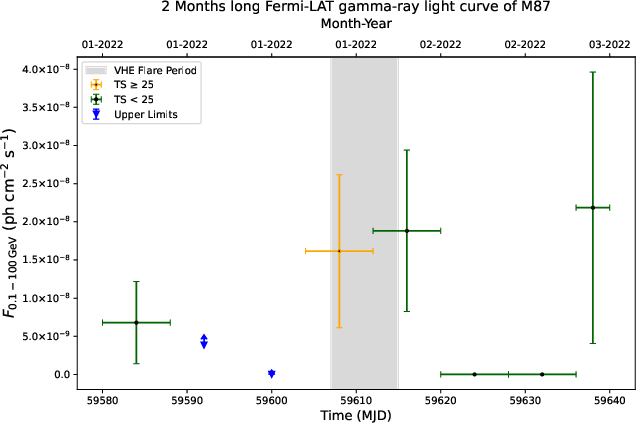
Figure 1: 16.5-year (MJD 54682–60712) long 30-day binned light curve of M87. The yellow shaded region marks the period of continuous LHAASO monitoring.
No statistically significant GeV flare is detected during the LHAASO flare period, even with finer temporal binning. The analysis demonstrates that the flux uncertainties in Fermi-LAT data preclude the identification of short-timescale GeV variability coincident with TeV flares, contradicting claims of simultaneous GeV-TeV flaring.
Multi-Wavelength Data Accumulation and SED Construction
The study compiles simultaneous and non-simultaneous data across radio, optical, UV, X-ray, and gamma-ray bands. Swift-XRT spectra for low states are best fit by a mekal + (TBabs*powerlaw) model, with derived plasma temperatures and spectral indices consistent with previous studies. Swift-UVOT data are corrected for galactic extinction and used to construct optical-UV SEDs. MOJAVE and MMDC provide radio and infrared coverage, while LHAASO, HAWC, HESS, VERITAS, and MAGIC contribute TeV data.
Spectral Modelling: Power Law vs. Log-Parabola
Maximum likelihood fits to Fermi-LAT SEDs are performed using both power-law and log-parabola models. The log-parabola model consistently yields superior fits for all activity phases, with statistically significant improvements in likelihood values. This supports a scenario where the electron energy distribution responsible for gamma-ray emission is intrinsically curved, likely due to radiative cooling and/or stochastic acceleration.
Two-Zone Leptonic Model: Sub-Parsec and Kiloparsec Jets
The core of the modelling effort is a two-zone leptonic scenario, implemented with the GAMERA code. The sub-parsec jet is responsible for synchrotron and synchrotron self-Compton (SSC) emission, dominating during flare states. The kiloparsec-scale jet contributes via external Compton (EC) scattering of starlight, dust, and CMB photons, which is essential to explain the hardening and extension of the TeV spectrum in low states.
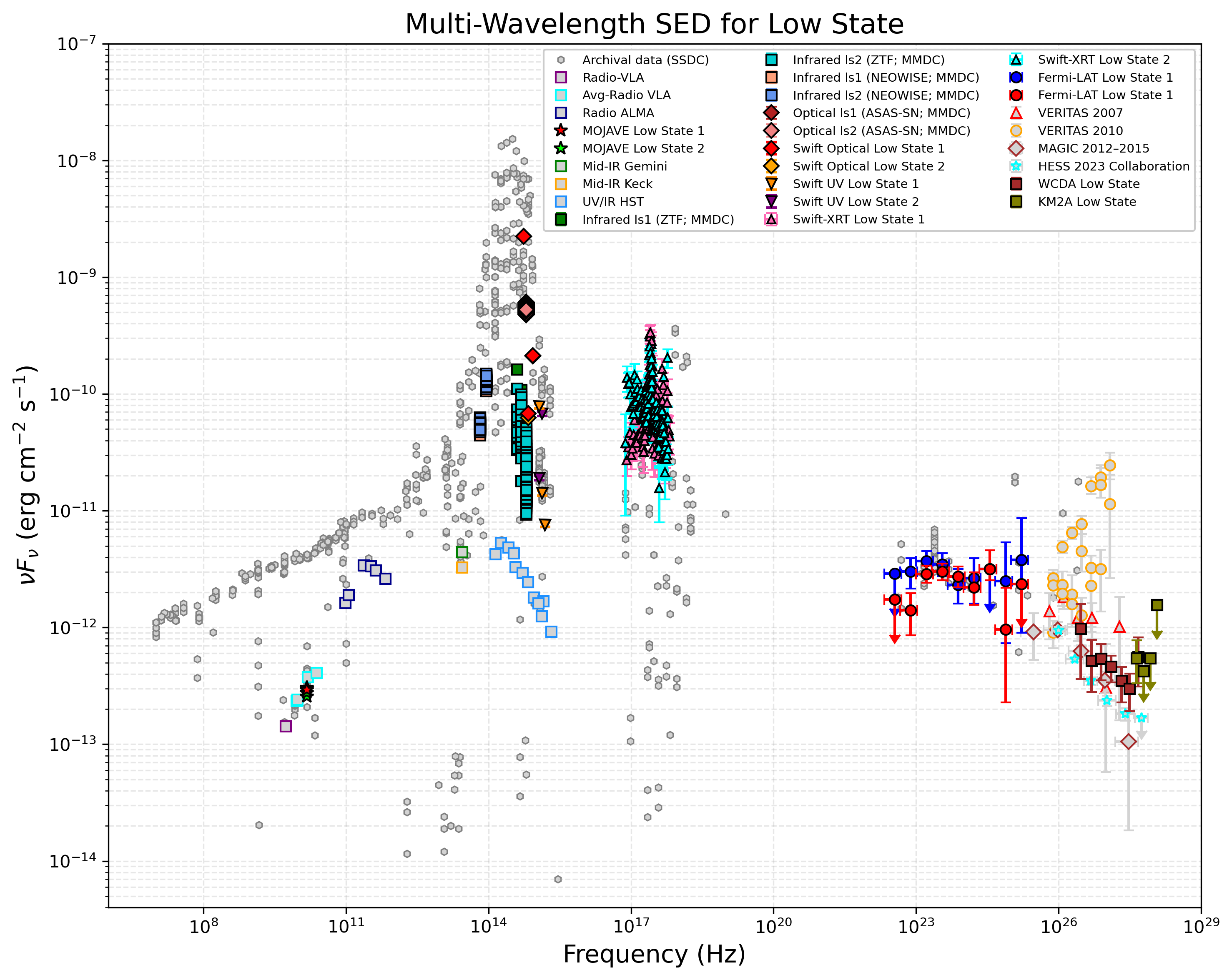
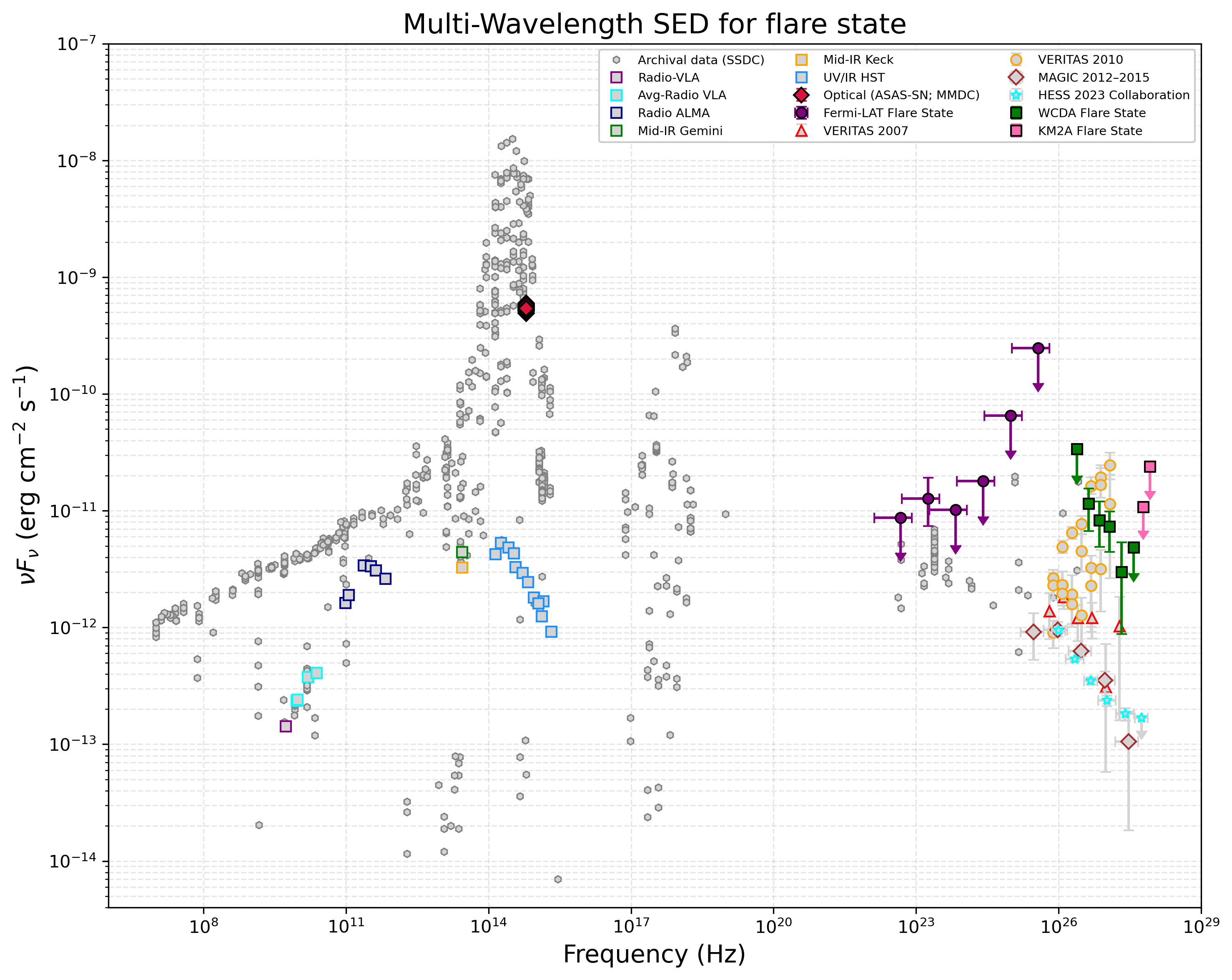
Figure 2: Multi-wavelength SED of M87 in the low state, showing contributions from both sub-parsec and kiloparsec jets.
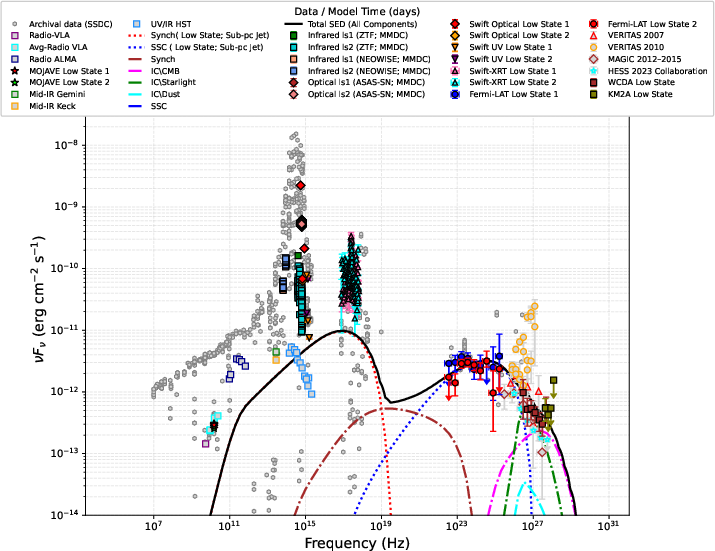
Figure 3: MW modelling of the low state of M87 with contributions from the sub-parsec and kiloparsec-scale jets.
During low states, the SSC emission from the sub-parsec jet accounts for the Fermi-LAT MeV–GeV data, but fails to explain the LHAASO TeV flux. The EC emission from the kiloparsec jet, particularly IC scattering of starlight, dominates at TeV energies and reproduces the observed spectral hardening near 20 TeV. The model parameters (magnetic field, Doppler factor, electron Lorentz factors) are consistent with VLBI and previous SED studies.
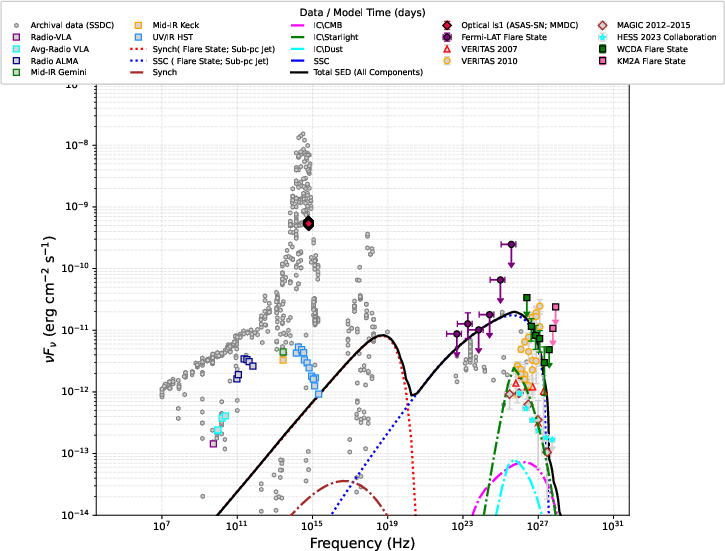
Figure 4: MW modelling of the flare state of M87 with contributions from the sub-parsec and kiloparsec-scale jets.
In the flare state, the SSC emission from a compact sub-parsec region (size constrained by day-scale variability) explains the simultaneous GeV–TeV data. The kiloparsec jet contribution is subdominant, and the total jet power remains well below the Eddington luminosity.
Numerical Results and Physical Implications
- Jet Power: The total kinetic jet power in both states is several orders of magnitude below the Eddington limit (LEdd≈8.19×1047 erg s−1), consistent with a low-luminosity AGN scenario.
- Spectral Hardening: The model reproduces the observed hardening of the TeV spectrum in the low state, attributed to EC emission from ultra-relativistic electrons in the kiloparsec jet.
- Variability Timescale: The flare state emission region size (R∼2.7×10¹⁵δ cm) matches constraints from LHAASO light curve analysis, supporting a compact origin near the SMBH.
- Model Selection: The log-parabola electron injection spectrum is favored, consistent with stochastic acceleration and radiative cooling processes.
Comparison with Previous Models
The paper critically evaluates alternative scenarios, including one-zone SSC, leptohadronic, and multi-zone models. One-zone SSC models fail to simultaneously fit the high and low energy SED components, especially in the presence of TeV spectral hardening. Leptohadronic models require additional components and do not naturally explain the observed variability and spectral features. The two-zone leptonic model presented here provides a unified explanation for both flare and low states, with physically motivated parameters and robust fits to the data.
Theoretical and Practical Implications
The results have significant implications for the understanding of particle acceleration and radiation mechanisms in AGN jets. The necessity of a kiloparsec-scale EC component in the low state suggests that large-scale jet structures play a crucial role in TeV gamma-ray production, challenging models that attribute all high-energy emission to compact regions near the SMBH. The flare state modelling supports scenarios involving magnetic reconnection or jet-star interactions as triggers for rapid variability.
Future observations with LHAASO-WCDA, LHAASO-KM2A, and high-resolution VLBI will be essential to further constrain the location, size, and physical conditions of the emission regions, as well as to test the predicted variability and spectral features.
Conclusion
This study provides a detailed, time-dependent, two-zone leptonic model for the TeV gamma-ray emission from M87, successfully explaining both flare and low states observed by LHAASO and other facilities. The model accounts for spectral hardening, variability timescales, and multi-wavelength SED features, with physically plausible parameters and jet powers. The findings underscore the importance of large-scale jet structures in AGN high-energy emission and set the stage for future multi-wavelength and time-domain studies of misaligned radio galaxies.