- The paper introduces a right-eigenstate mean-field approach that yields continuous solutions for non-Hermitian superfluidity under two-body loss.
- Detailed numerical analysis reveals a critical transition marked by a positive real condensation energy, highlighting system metastability.
- Comparison with the biorthogonal framework shows the right-eigenstate method better handles moderate dissipation and the destabilizing effects of backscattering.
Right-Eigenstate-Based Approach to Non-Hermitian Superfluidity
Introduction
The paper "Right-eigenstate-based approach to non-Hermitian superfluidity with two-body loss" investigates a novel non-Hermitian (NH) superfluid model that incorporates complex-valued interactions resulting from two-body loss, inspired by observations in ultracold atomic experiments. The focus lies on examining the utility of the right-eigenstate-based mean-field theory compared to the traditional biorthogonal framework. This approach provides continuous and smooth solutions, which are observed to capture the physicality of NH systems more faithfully than its biorthogonal counterpart.
Model Description
The NH superfluid model in the paper operates on a cubic lattice with Hamiltonian:
H=−w⟨n,m⟩∑cn†cm−μn∑cn†cn−Un∑cn↑†cn↓†cn↓cn↑
where U=U0+iγ/2 accounts for two-body loss rates. This formulation inherently introduces a complex-valued interaction, delineating between Hermitian closed and non-Hermitian open superfluid systems. The mean-field theory based on right eigenstates circumvents discontinuities found in the biorthogonal approach under moderate dissipation.
Numerical Solution to Gap Equations
The NH gap equation derived from the mean-field Hamiltonian is numerically solved, unveiling critical insights into system behavior under varying dissipation rates (γ). The right-eigenstate-based framework yields smooth solutions that reveal the continuous evolution of order parameters with changes in system parameters.
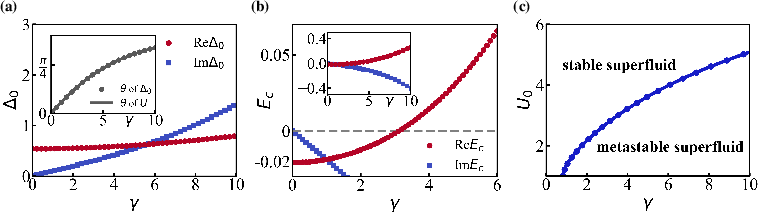
Figure 1: Numerical solutions derived from the NH gap equation, illustrating smooth changes in order parameters.
The real part of the condensation energy, ReEc, serves as an indicator for the energetic favorability of the NH superfluid state. The transition point, marked by ReEc>0, signals the shift to a metastable state driven by two-body losses.
Comparison with Biorthogonal Approach
A key segment of the work contrasts the two frameworks: the right-eigenstate versus the biorthogonal basis. The latter fails to yield nontrivial solutions under moderate dissipation, further resulting in discontinuities:
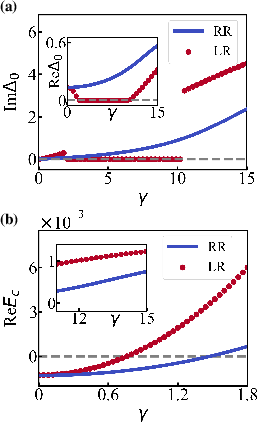
Figure 2: Comparison of solution continuity and condensation energy for different basis definitions.
The right-eigenstate approach's lower condensation energy underscores its efficacy in accurately describing the NH superfluid system.
Impact of Backscattering
Incorporating backscattering, an essential factor in realistic systems, shows that it profoundly influences superfluidity. The addition of backscattering leads to the detonation of the order parameter:
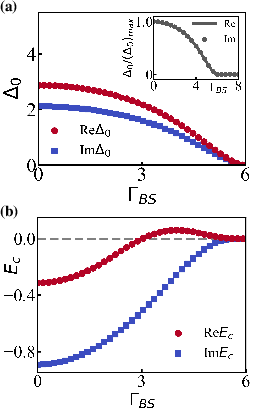
Figure 3: Destruction of superfluid phase with increased backscattering strength.
Numerical analysis here supports the idea that moderate backscattering, especially when paired with two-body loss, can destabilize the superfluid state entirely.
Phase Diagrams and Stability
The phase diagrams synthesize the interplay of interaction strength U0, backscattering ΓBS, and two-body loss γ. They identify distinct regions demarcated by superfluid stability:
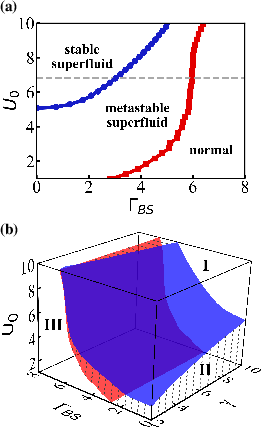
Figure 4: Phase diagram highlighting stability transitions in the U0-ΓBS plane.
Increasing ΓBS progressively shifts the system from stable to metastable superfluid regions, eventually culminating in a normal phase where Δ0=0.
Conclusion
The paper provides compelling evidence for employing a right-eigenstate-based framework in NH superfluid systems, particularly in scenarios with complex-valued interactions. By furnishing a more experimentally faithful approach, this research offers critical insights into NH phenomena and lays the groundwork for probing deeper into NH dynamics and potential topological states. The work promises rich exploration avenues, especially with tunable experimental platforms such as ultracold atomic systems.