- The paper introduces a framework that integrates real-world digital twins with game mechanics to enhance physical, cognitive, and social development.
- It employs sensor fusion, cloud-based architecture, and RESTful APIs to enable bi-directional influence between real-life activities and virtual gameplay.
- Evaluation reveals minimal resource impact and positive user feedback, highlighting the need for further empirical validation in promoting responsible gaming.
LifeSync-Games: A Framework for Reciprocal Integration of Real-Life Activities and Video Game Mechanics
Introduction
LifeSync-Games introduces a paradigm for video game design that leverages simplified digital twins to create reciprocal links between real-world activities and virtual gameplay. The framework is motivated by the need to address both the negative and positive impacts of video games on human development, moving beyond the traditional focus on risks such as addiction and isolation to actively promote self-regulation, physical activity, cognitive growth, and social well-being. LifeSync-Games distinguishes itself from serious games, affective games, gamification, and exergames by enabling bidirectional influence between real and virtual worlds, thus supporting a more holistic approach to responsible gaming.
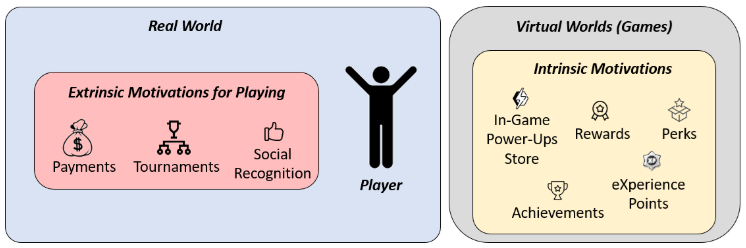
Figure 1: Model of separate worlds with motivations that encourage the use of video games.
Conceptual Foundations
The framework is grounded in several key theoretical domains: responsible game design, human development, digital twin technology, sensor integration, and motivational psychology. LifeSync-Games employs digital twins to represent players across physical, mental, and social dimensions, mapping real-world attributes—such as strength, attention, and empathy—onto in-game avatars. This mapping is facilitated by multimodal sensors, including physical devices (accelerometers, heart rate monitors, EEG headsets) and virtual sensors (social media activity, productivity metrics), which together enable a comprehensive and dynamic player profile.
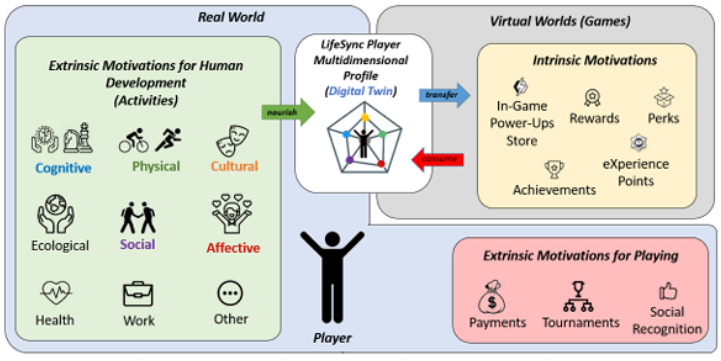
Figure 2: Conceptual model of LifeSync-Games with a simplified digital twin, linking the real and virtual worlds.
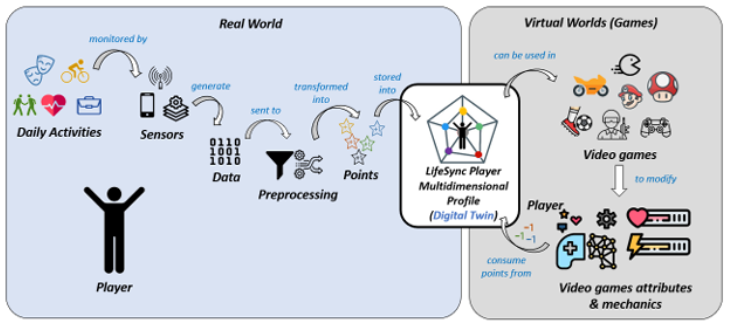
Figure 3: Conceptual model of the LifeSync-Games data flow, from the real world to virtual worlds.
Motivational constructs are central to the framework, with design strategies informed by self-determination theory and achievement motivation. The system is designed to balance intrinsic, extrinsic, and achievement-based motivations, encouraging meaningful engagement both inside and outside the game environment.
Technological Architecture
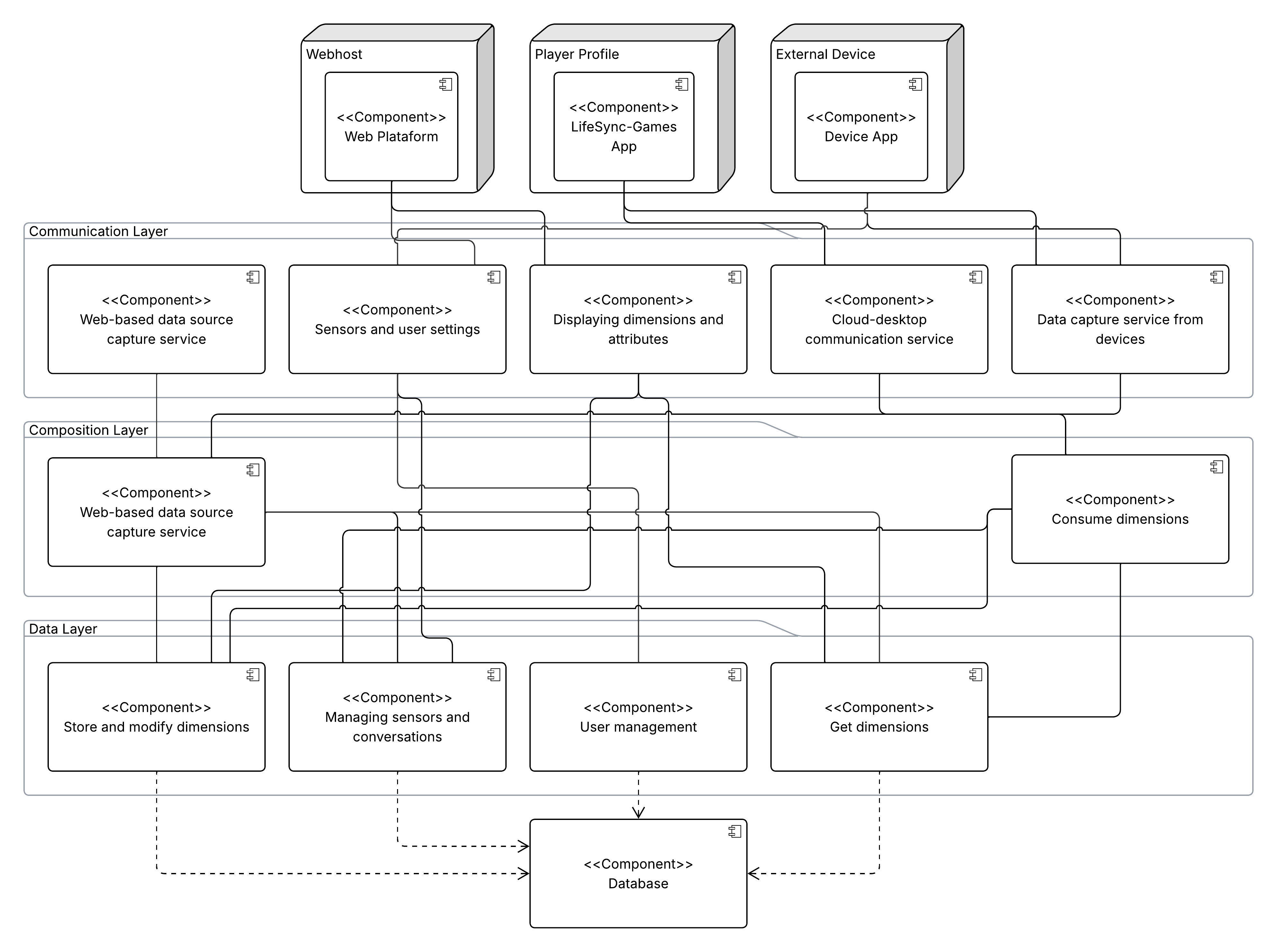
LifeSync-Games is implemented as a modular, cloud-based ecosystem comprising several core components:
Implementation Guidelines
The framework provides a structured methodology for integration into game development pipelines:
- Game Design Document (GDD): Specify mechanics influenced by real-world attributes, ensuring optional integration for players without LifeSync-Games profiles.
- Prototyping: Develop and validate prototypes with local or public cloud module deployments, iteratively refining mechanics and data mapping.
- Development: Full implementation using incremental approaches, transitioning to public cloud for formal testing.
- Evaluation: Employ technical (performance, compatibility) and user-centric (playability, usability) evaluation methods, including standardized instruments (HEP, SUS) and qualitative feedback.
- Publication: Distribute via the showcase platform and public repositories, fostering community engagement and adoption.
Evaluation and Results
Technical evaluations across the catalog indicate minimal impact on system resources (CPU, GPU, FPS), with positive user feedback regarding playability and engagement. The framework’s open-source nature has facilitated early adoption and community-driven development. However, the primary challenge remains the empirical validation of its impact on human development, necessitating longitudinal, mixed-methods research to assess outcomes in physical, mental, and social domains, as well as self-regulation.
Challenges and Future Directions
Key challenges include:
- Adoption and Visibility: Building a sustainable user and developer base.
- Technical Maintenance: Addressing cloud module obsolescence and ensuring low-latency, secure integration.
- Legal and Ethical Considerations: Mitigating privacy and security risks associated with sensitive data capture.
- Game Balance: Designing engaging mechanics that support health and educational goals without compromising user experience.
- Sensor Reliability: Preventing manipulation and cheating, with AI-based anomaly detection as a mitigation strategy.
- AI Integration: Enhancing gameplay and analytics through advanced AI modules.
Future work will focus on expanding sensor coverage, supporting additional platforms and engines, conducting rigorous impact studies, refining player profiling and analytics, and standardizing attribute quantification for balanced in-game rewards.
Conclusion
LifeSync-Games establishes a robust framework for integrating real-life activities with video game mechanics, promoting responsible gaming and multidimensional human development. Its modular architecture, comprehensive sensor integration, and open-source catalog position it as a versatile platform for both research and practical application. Addressing current challenges and advancing empirical validation will be critical for consolidating its role as a design paradigm that fosters conscious, reciprocal interaction between real and virtual worlds.