- The paper demonstrates episodic mass loss in evolved red supergiants by combining time-series photometry with optical and near-IR spectroscopy.
- It employs TiO-band diagnostics and MARCS atmospheric modeling to refine effective temperature estimates and spectral classifications.
- The study highlights significant photometric variability and dimming events, analogous to Betelgeuse’s Great Dimming, underscoring the need for advanced surveys.
Comprehensive Analysis of Dusty Red Supergiants in NGC 6822, IC 10, and WLM
Introduction
This study presents a detailed investigation of episodic mass loss in evolved massive stars, focusing on seven dusty red supergiants (RSGs) in three low-metallicity galaxies: NGC 6822, IC 10, and WLM. The physical mechanisms driving mass loss in RSGs remain poorly constrained, particularly in environments with sub-solar metallicity. The work leverages multi-epoch optical and near-infrared spectroscopy, empirical and theoretical temperature diagnostics, and time-series photometry to characterize the physical properties and variability of these RSGs, with the aim of identifying signatures of episodic mass loss.
Target Selection and Photometric Properties
The sample comprises six of the reddest, most dusty spectroscopically confirmed RSGs in NGC 6822 and IC 10, plus one in WLM. Selection was based on J-band brightness and IR excess, indicative of a history of mass loss. Color-magnitude diagrams (CMDs) in both mid-IR and near-IR bands reveal that nearly all targets exhibit significant IR excess, supporting their identification as dusty, mass-losing RSGs.
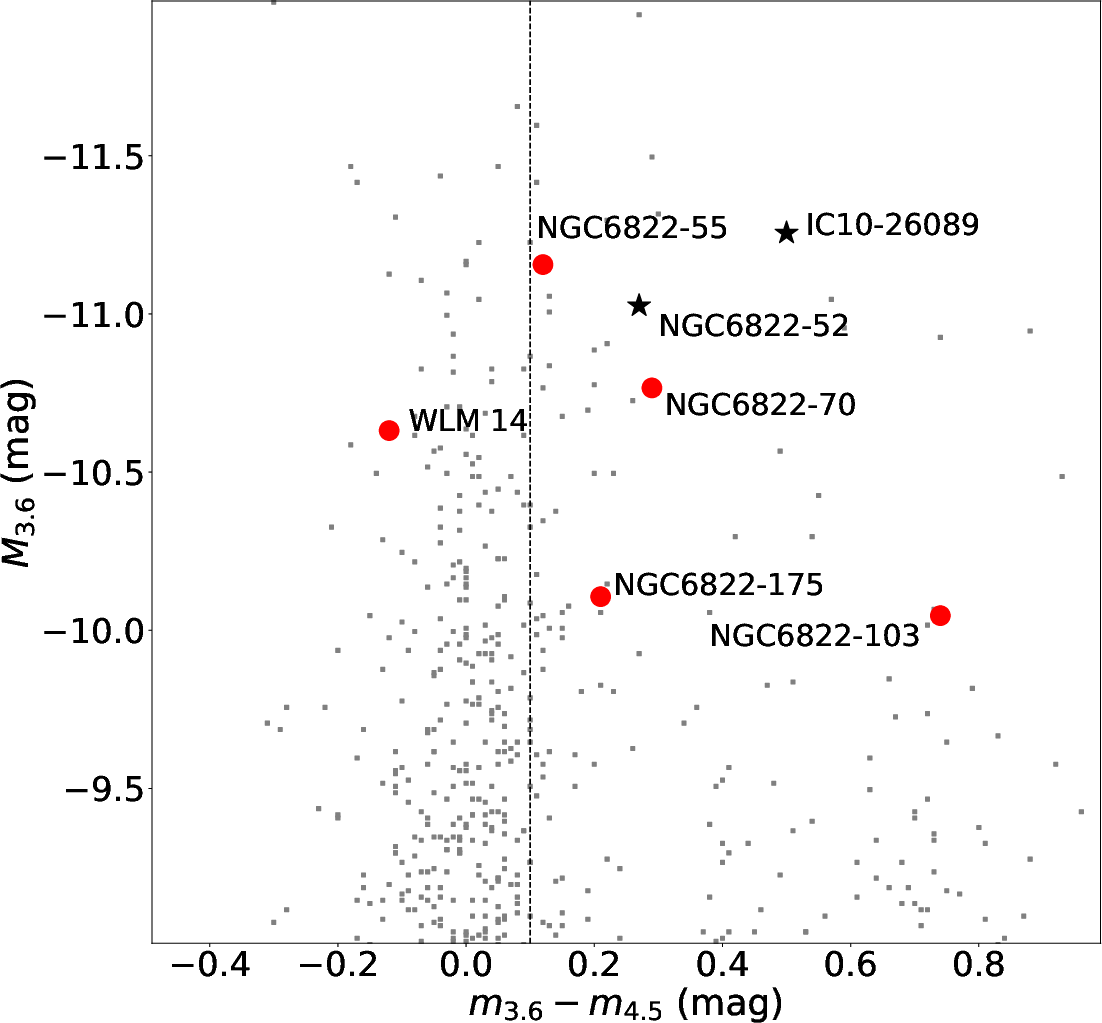
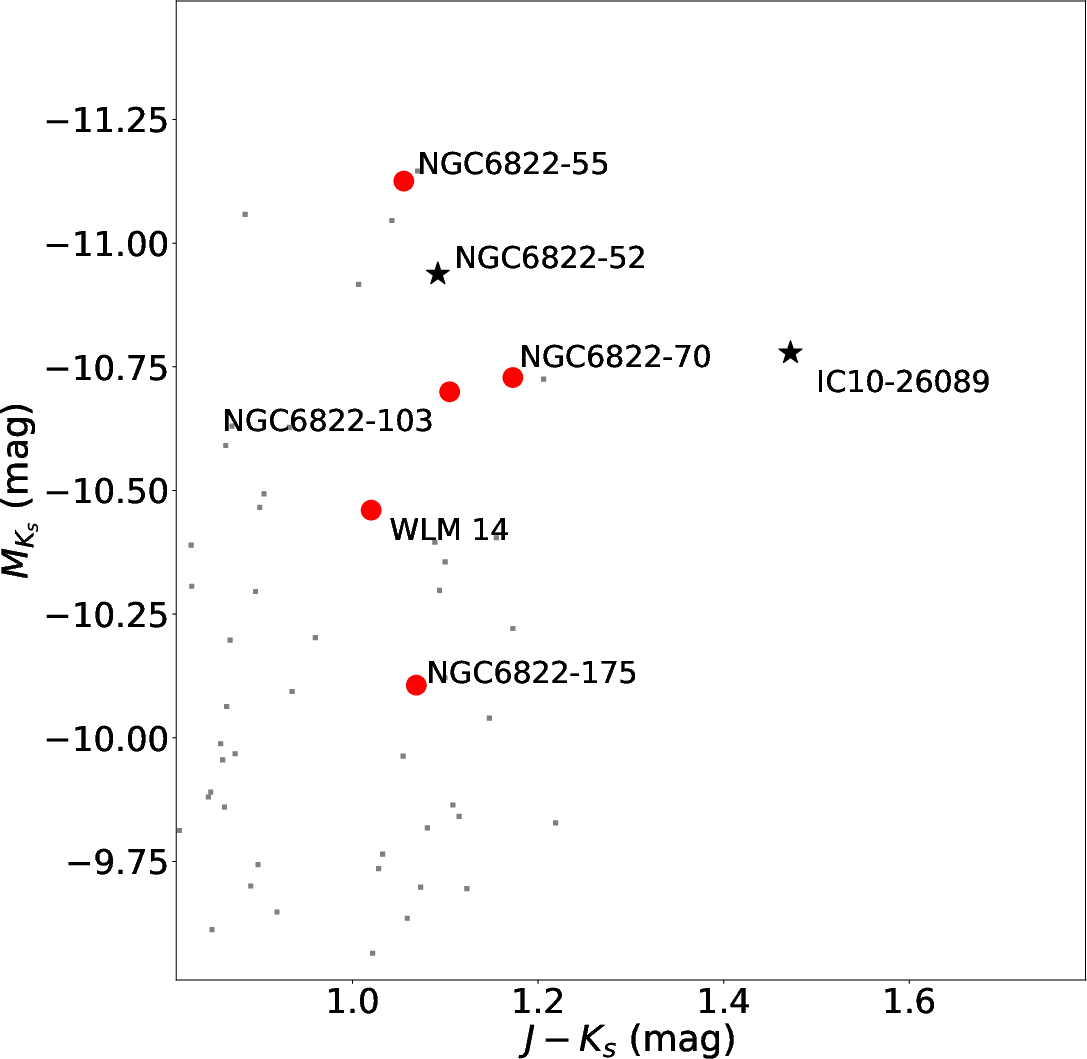
Figure 1: Mid-IR (left) and near-IR (right) CMDs for the seven targets, highlighting IR-excess and the color criterion for selection.
Spatial distribution analysis confirms the association of these targets with their host galaxies and mitigates foreground contamination using Gaia astrometry.
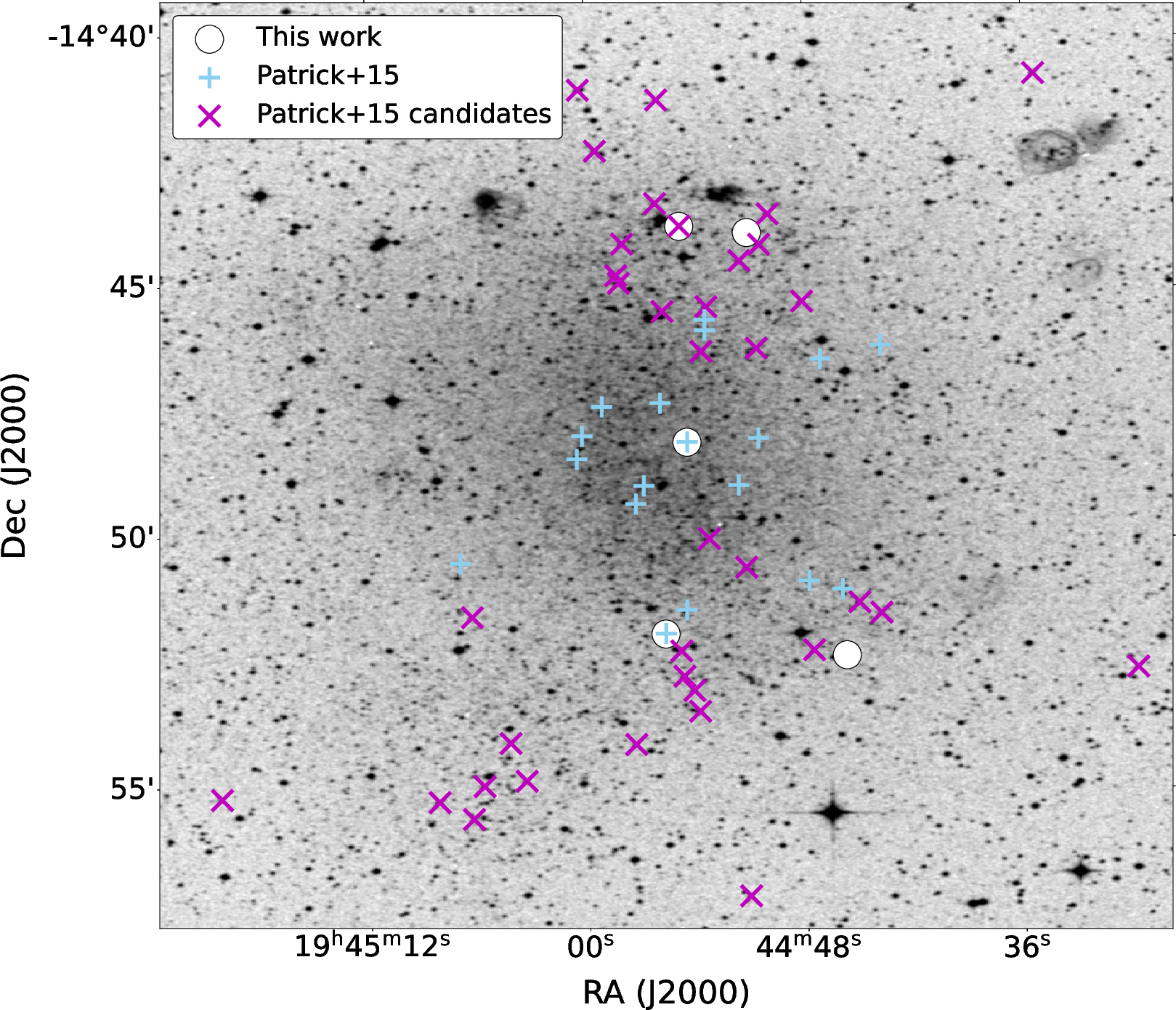
Figure 2: Spatial distribution of targets in NGC 6822, showing overlap with previous RSG candidate catalogs.
Spectroscopic Classification and Atmospheric Modeling
Optical spectra were reclassified using established spectral libraries, refining previous classifications and revealing spectral variability in four sources. The spectral types range from K4 to M4, with three late-type (M4) RSGs, consistent with the properties of the dusty RSG population.
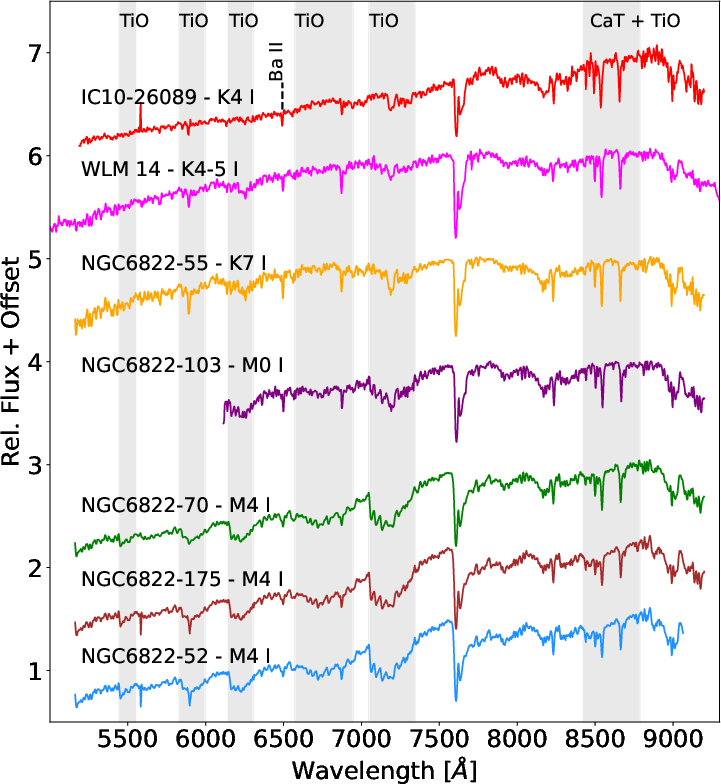
Figure 3: Revised spectral types of OSIRIS targets, ordered by TiO band strength.
For five targets with sufficient S/N, near-IR J-band spectra were modeled using MARCS atmospheric models corrected for nonlocal thermal equilibrium (NLTE) effects. The fitting process employed Bayesian nested sampling (Ultranest) to estimate effective temperature (Teff), surface gravity (logg), metallicity ([Fe/H]), microturbulent velocity (ξ), and radial velocity (vrad). The model grid spans 3300≤Teff≤4500 K, −0.5≤logg≤0.5, −1.0≤ [Fe/H] ≤0.0, and 2.0≤ξ≤6.0 km/s.
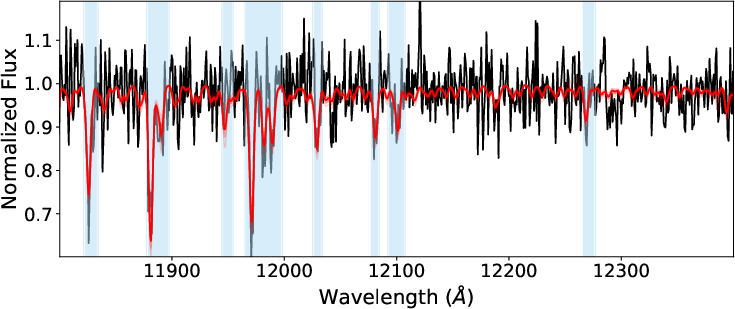
Figure 4: Observed spectrum of NGC6822-103 (black) and best-fitting model (red), with shaded regions indicating fitted spectral windows.
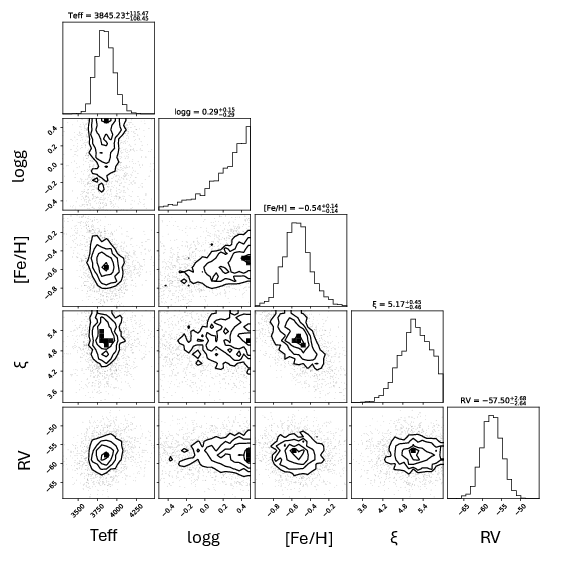
Figure 5: Cornerplot showing posterior distributions for Teff, logg, [Fe/H], ξ, and RV for NGC6822-103.
The derived parameters are consistent with previous studies within uncertainties, despite lower S/N. Notably, metallicity gradients are observed in NGC 6822, with outer targets exhibiting lower [Fe/H], in agreement with established trends.
Effective Temperature Diagnostics
Multiple methods were employed to estimate Teff, including empirical and theoretical J−Ks color relations, TiO band modeling, and scaling relations. Systematic offsets are observed: TiO-based temperatures are consistently lower than J-band and SED-based estimates, reflecting the formation of TiO bands in cooler, optically thin atmospheric layers and their sensitivity to metallicity and mass loss.
Photometric Variability and Light Curve Analysis
Optical, near-IR, and mid-IR light curves were constructed from ZTF, ATLAS, Gaia, Pan-STARRS1, NEOWISE, and other surveys. Two targets in NGC 6822 (NGC6822-52 and NGC6822-175) display pronounced photometric variability (ΔrZTF>1 mag, up to 2.5 mag), and mid-IR variability (∼0.5 mag), exceeding typical RSG variability. Lomb-Scargle periodogram analysis yields periods for three RSGs, consistent with empirical period-luminosity relations.
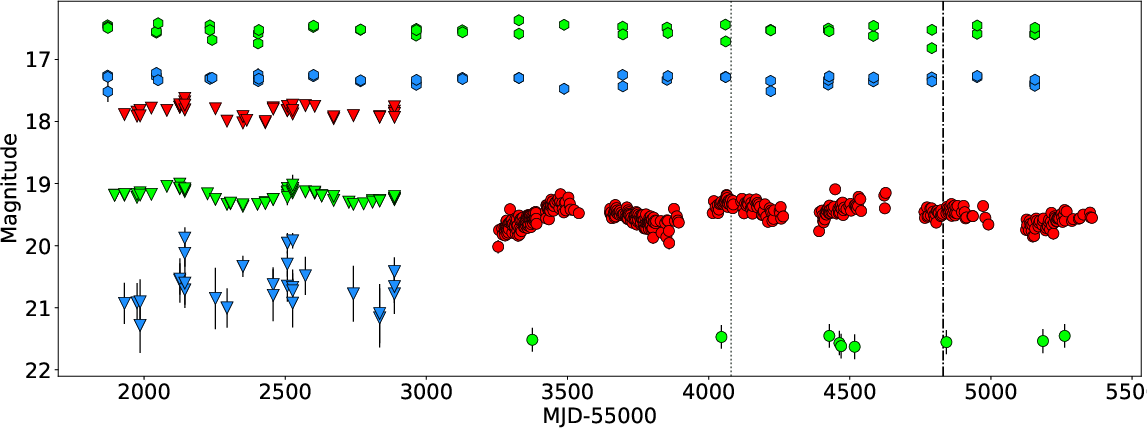
Figure 6: Light curve of NGC6822-52, showing multi-band variability and epochs of spectroscopic observations.
A candidate-dimming event is identified in NGC6822-175, with a duration of ∼550 days and amplitude >1.1 mag in r-band, also present in W1 mid-IR data. This event is analogous to the "Great Dimming" of Betelgeuse, suggesting a link between episodic mass ejection and photometric dimming.
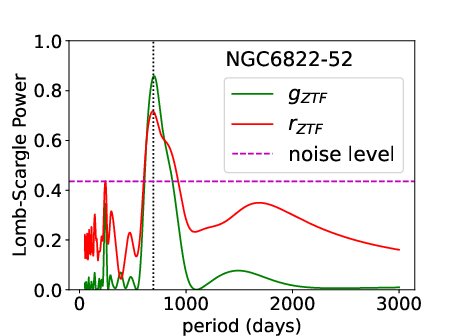
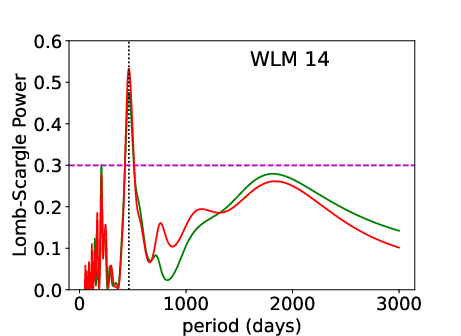
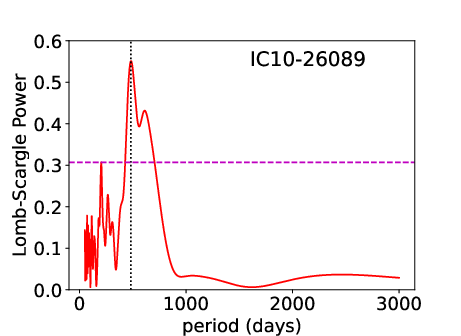
Figure 7: Periodograms for NGC6822-52, WLM~14, and IC10-26089, with measured periods indicated.
Evidence for Episodic Mass Loss
Four targets (NGC6822-52, NGC6822-55, NGC6822-175, IC10-26089) exhibit strong evidence for episodic mass loss, based on combined photometric and spectroscopic variability, IR excess, and position in the CMD and MADW1 diagnostic space. Spectral variability, including transitions between K and M types, and large-amplitude light curve changes, are interpreted as signatures of instability and mass ejection events. The candidate-dimming event in NGC6822-175 further supports this scenario.
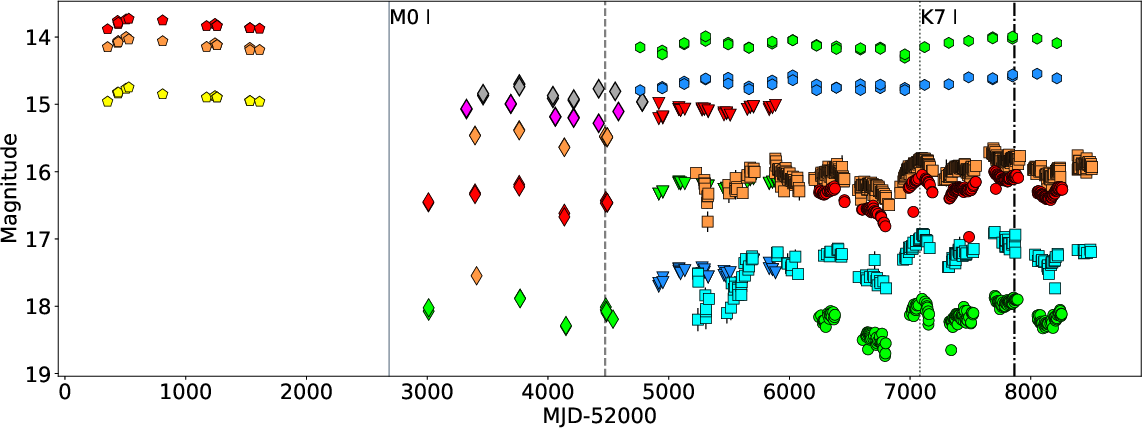
Figure 8: Zoom-in on the candidate-dimming event in NGC6822-175, comparing r-band and W1 light curves to Betelgeuse's Great Dimming.
Hertzsprung–Russell Diagram and Evolutionary Context
The targets are placed on an HR diagram alongside MIST evolutionary tracks for rotating stars at [Fe/H] = −0.5. J-band temperatures place the stars within the expected RSG locus, while TiO-based temperatures approach the Hayashi limit, highlighting methodological differences. The evolutionary tracks' limitations, including fixed mixing length and 1D modeling, are discussed in the context of RSG atmospheric complexity and mass loss.
Implications and Future Directions
This work demonstrates the utility of multi-epoch spectroscopy and time-series photometry in diagnosing episodic mass loss in dusty RSGs. The rarity of such events underscores the need for large-scale surveys and machine-learning classifiers to identify candidates across diverse environments. Upcoming facilities (Rubin LSST, JWST) will enable systematic studies of RSG variability and mass loss in distant galaxies, facilitating statistical characterization and improved constraints on the physical mechanisms involved.
Conclusion
The comprehensive analysis of seven dusty RSGs in NGC 6822, IC 10, and WLM reveals strong evidence for episodic mass loss in four targets, characterized by spectral and photometric variability, IR excess, and candidate-dimming events. The study highlights the importance of combining spectroscopic diagnostics with time-domain photometry to unravel the mass-loss history and evolutionary status of RSGs in low-metallicity environments. Future work leveraging large samples and advanced observational capabilities will be critical for elucidating the frequency and physical drivers of episodic mass loss in evolved massive stars.

