JWST observes the assembly of a massive galaxy at z~4
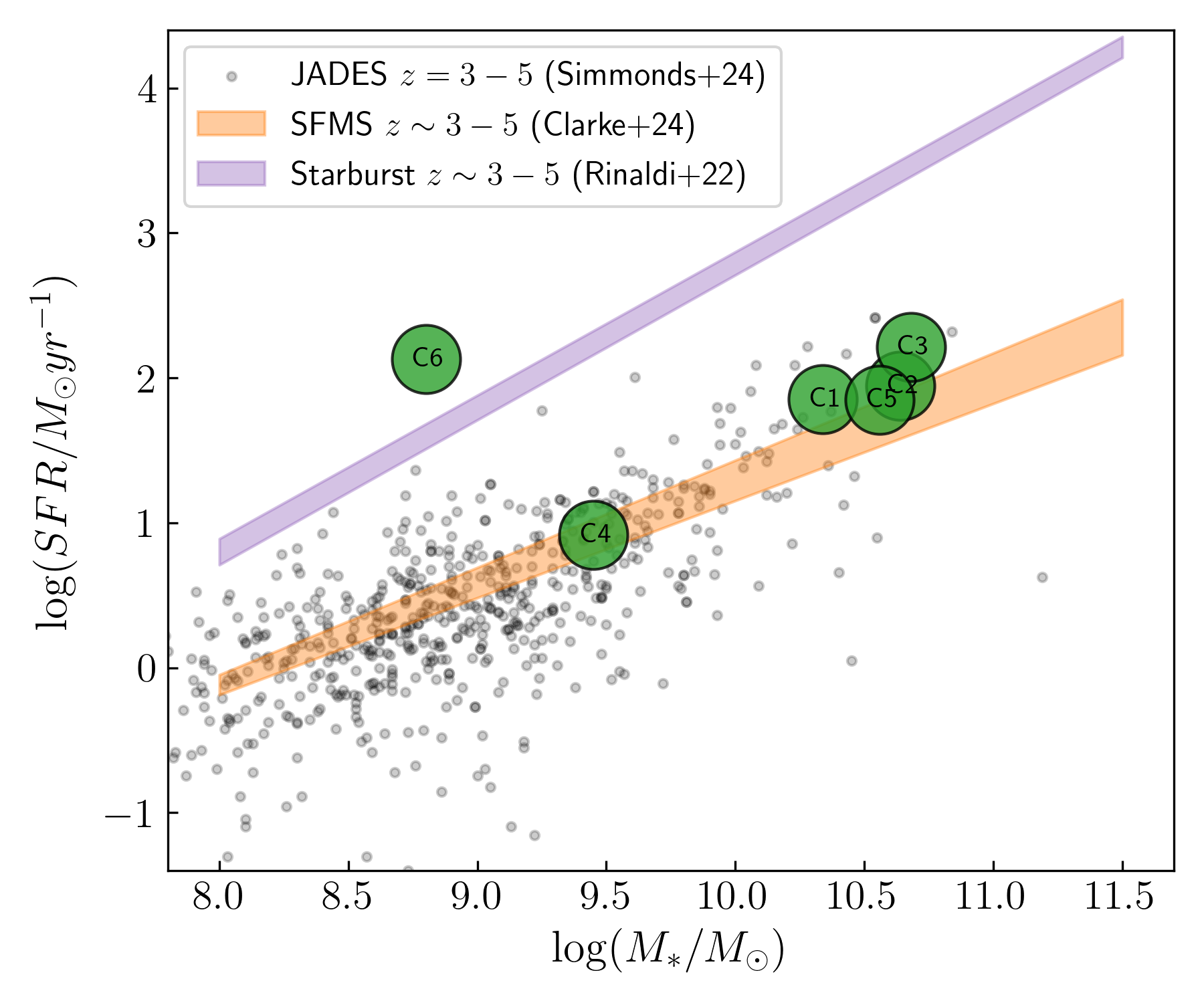
Abstract: We present JWST observations of the radio galaxy TGSSJ1530+1049, spectroscopically confirmed at $z=4.0$. NIRCam images and NIRSpec/IFU spectroscopy ($R=2700$) show that TGSSJ1530+1049 is part of one of the densest-known structures of continuum and line-emitting objects found at these redshifts. NIRCam images show a number of distinct continuum objects and evidence of interactions traced by diffuse emission, and the NIRSpec IFU cube reveals further strong line emitting regions. We identify six continuum and four additional strong Halpha emitting sources with weaker or no underlying continuum within the 3''x3'' IFU field. From spatial alignment with high-resolution radio data and emission line profiles, the radio AGN host galaxy is clearly identified. The bright Halpha emission (but not the optical components) is distributed remarkably linearly along the radio axis, suggestive of a biconical illumination zone by a central obscured AGN. The emission line kinematics indicate jet-gas interactions on scales of a few kpc. However, due to large relative velocities and presence of underlying continuum, the alignment with the radio structure appears to be, at least partly, caused by a particular configuration of interacting galaxies. At least four objects within a 10x10 (projected) kpc2 area which includes the radio source have high stellar masses (log($M_\star/M_\odot)>10.3$) and star formation rates in the range 70-163 $M_\odot$ yr${-1}$. Using a stellar mass-based analysis, we predict a total dark matter halo mass of $\approx10{13} M_\odot$. Based on the physical separations and velocity differences between the galaxies, it is expected that these galaxies will merge to form a massive galaxy within a few Gyr. The system qualitatively resembles the forming brightest cluster galaxies in cosmological simulations that form early through a rapid succession of mergers.
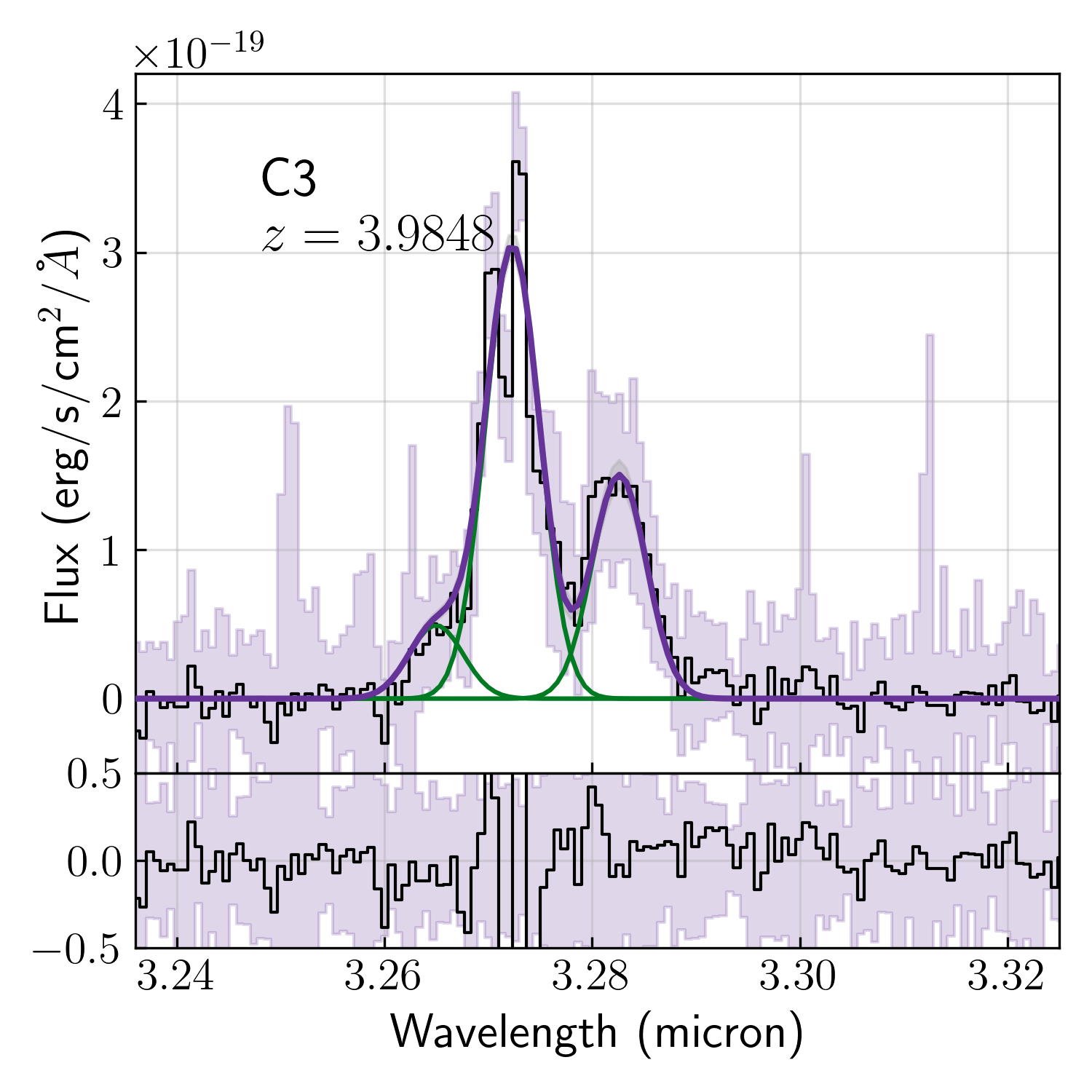
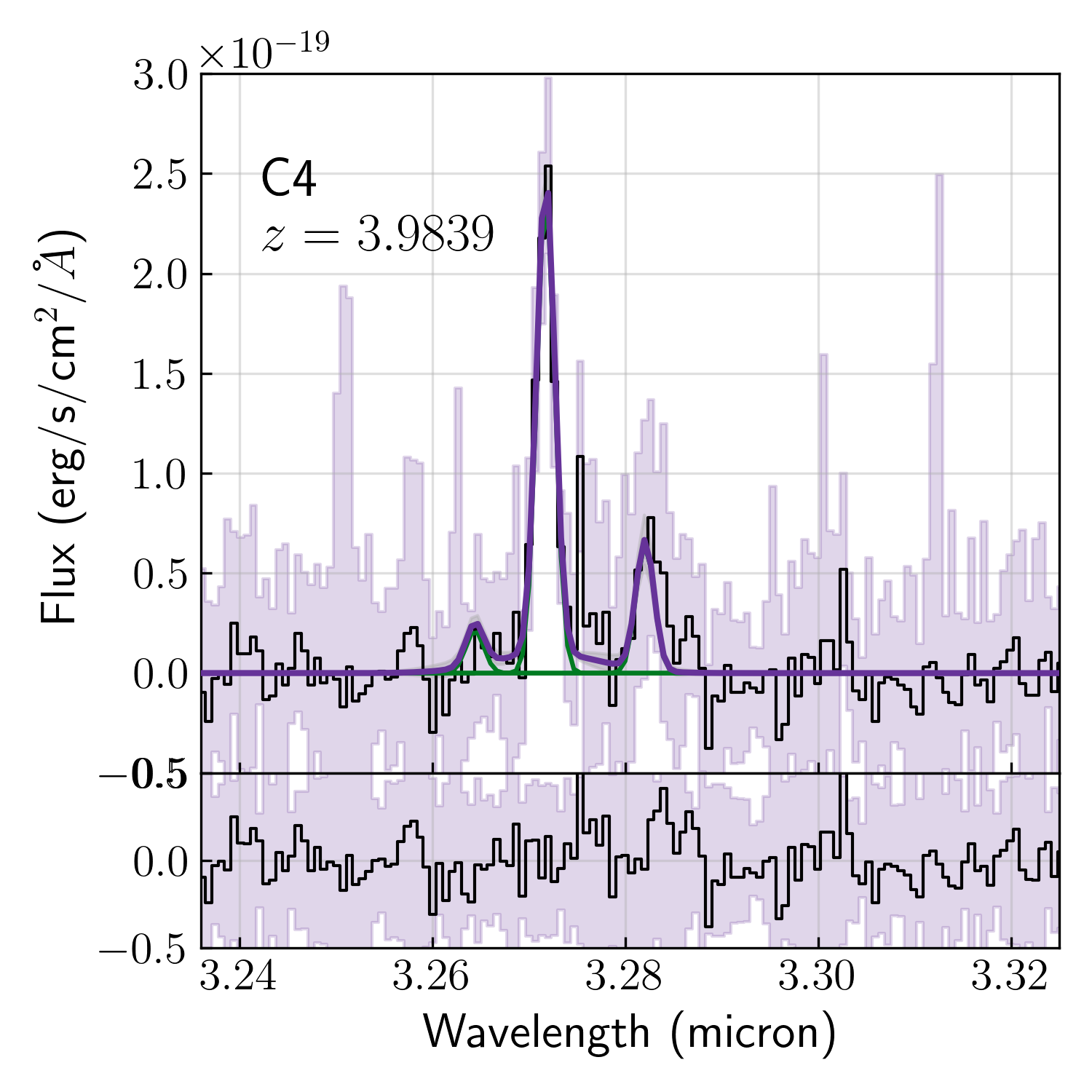
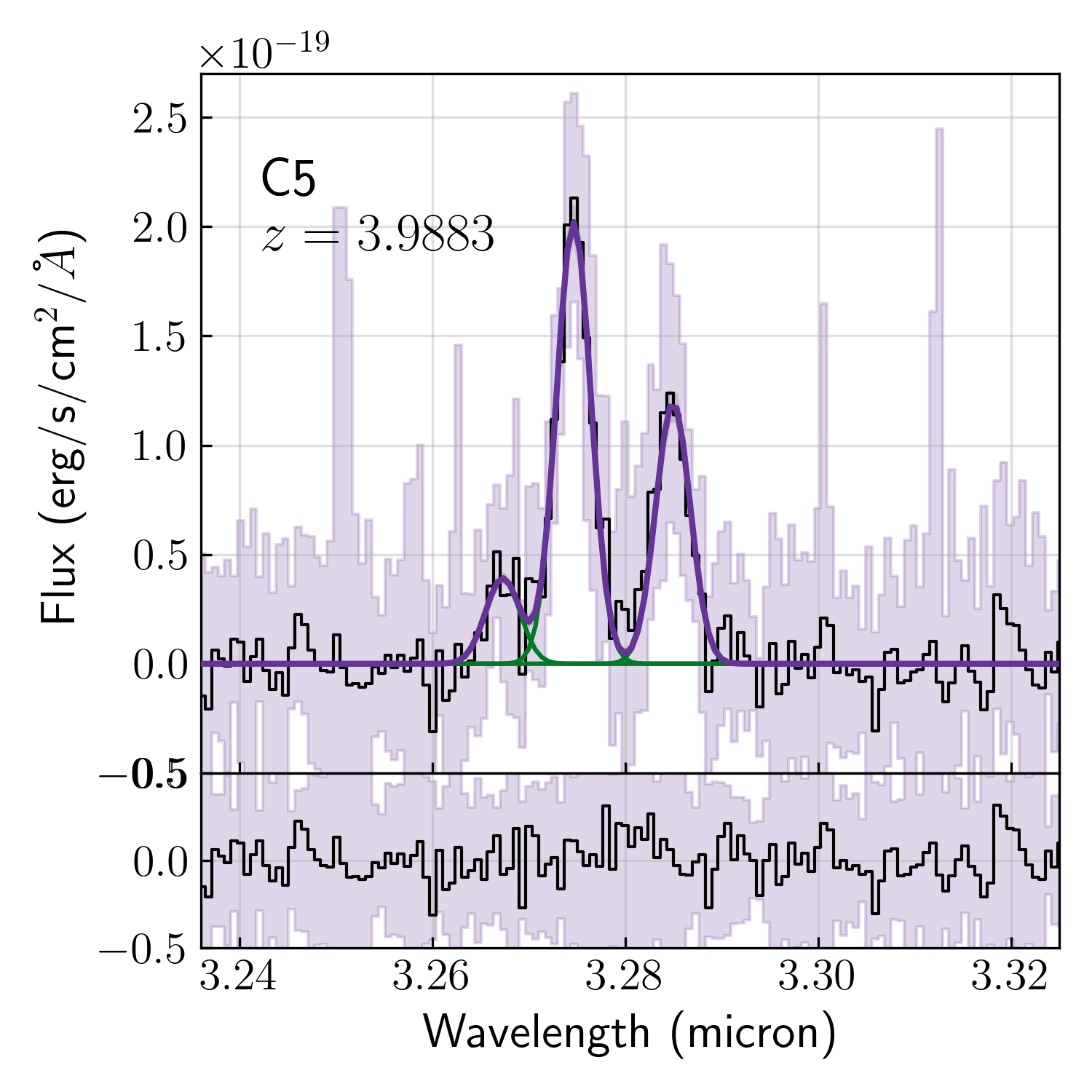
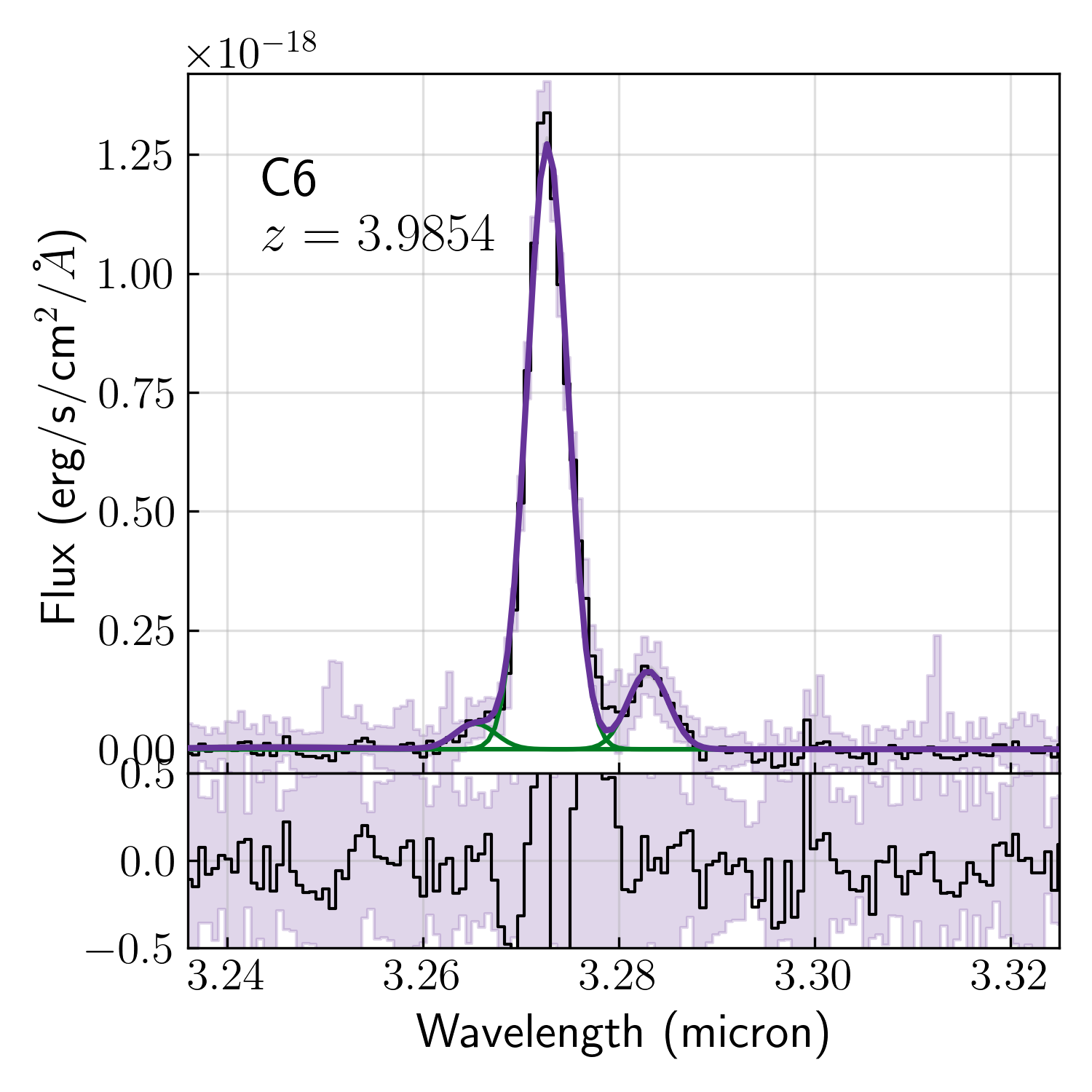
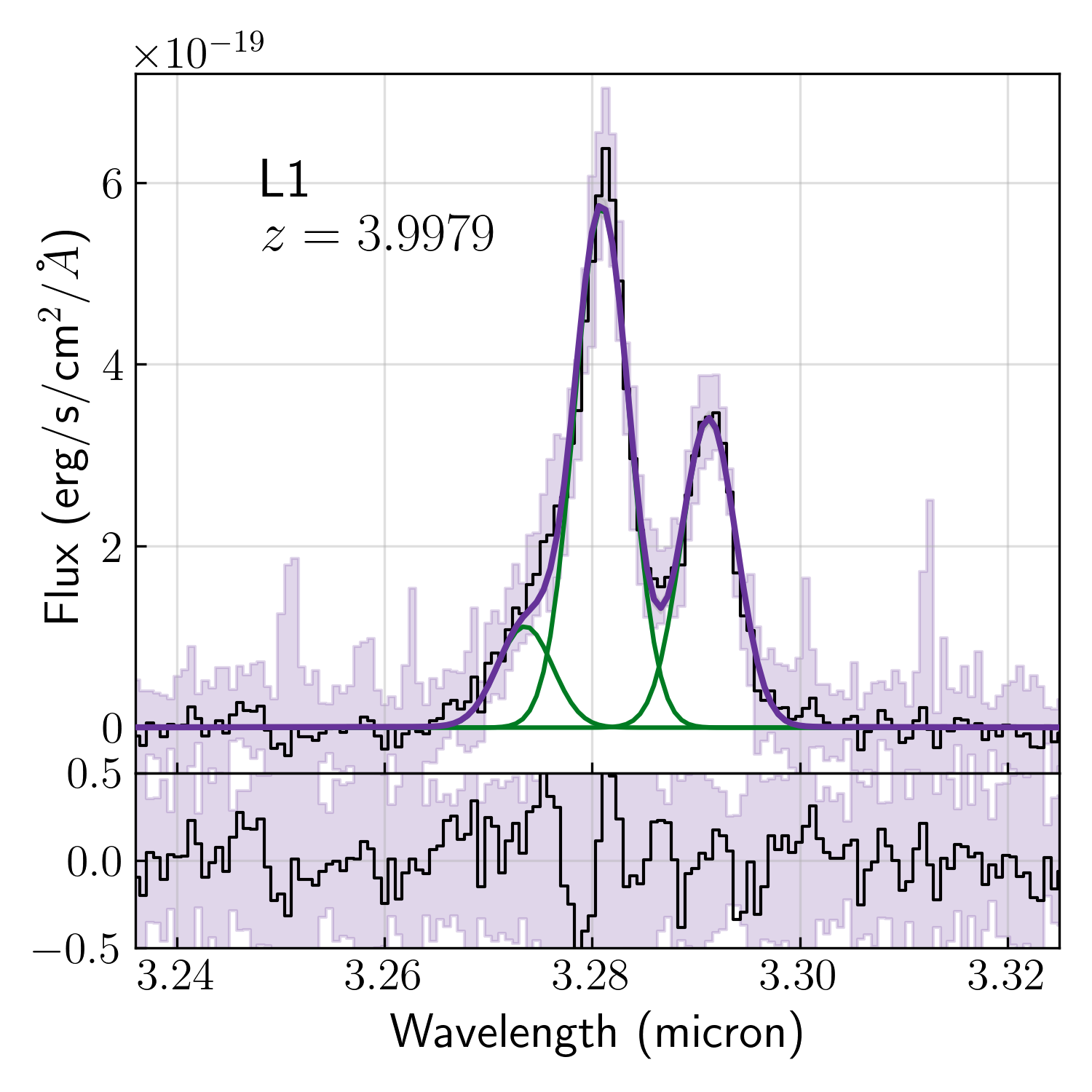
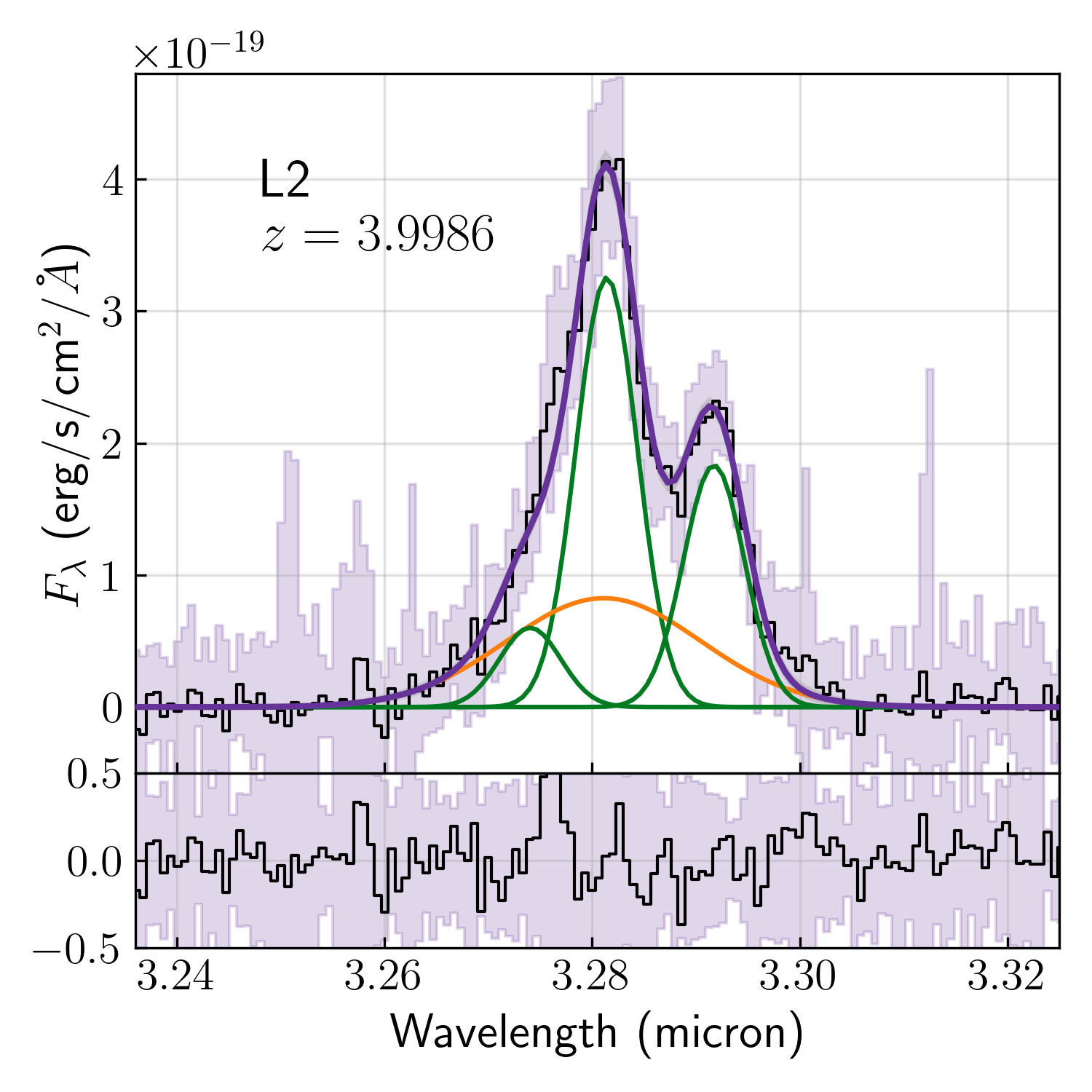
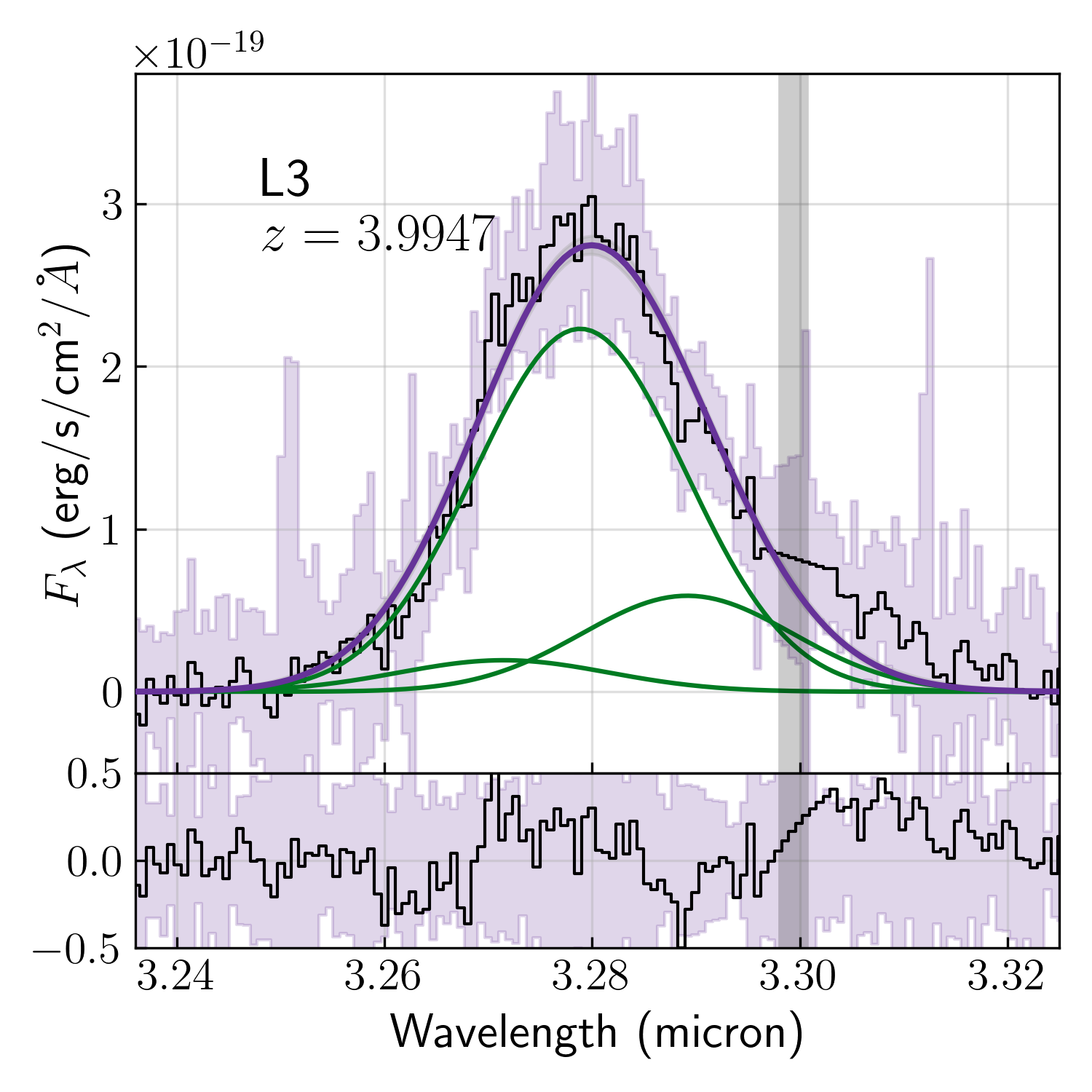
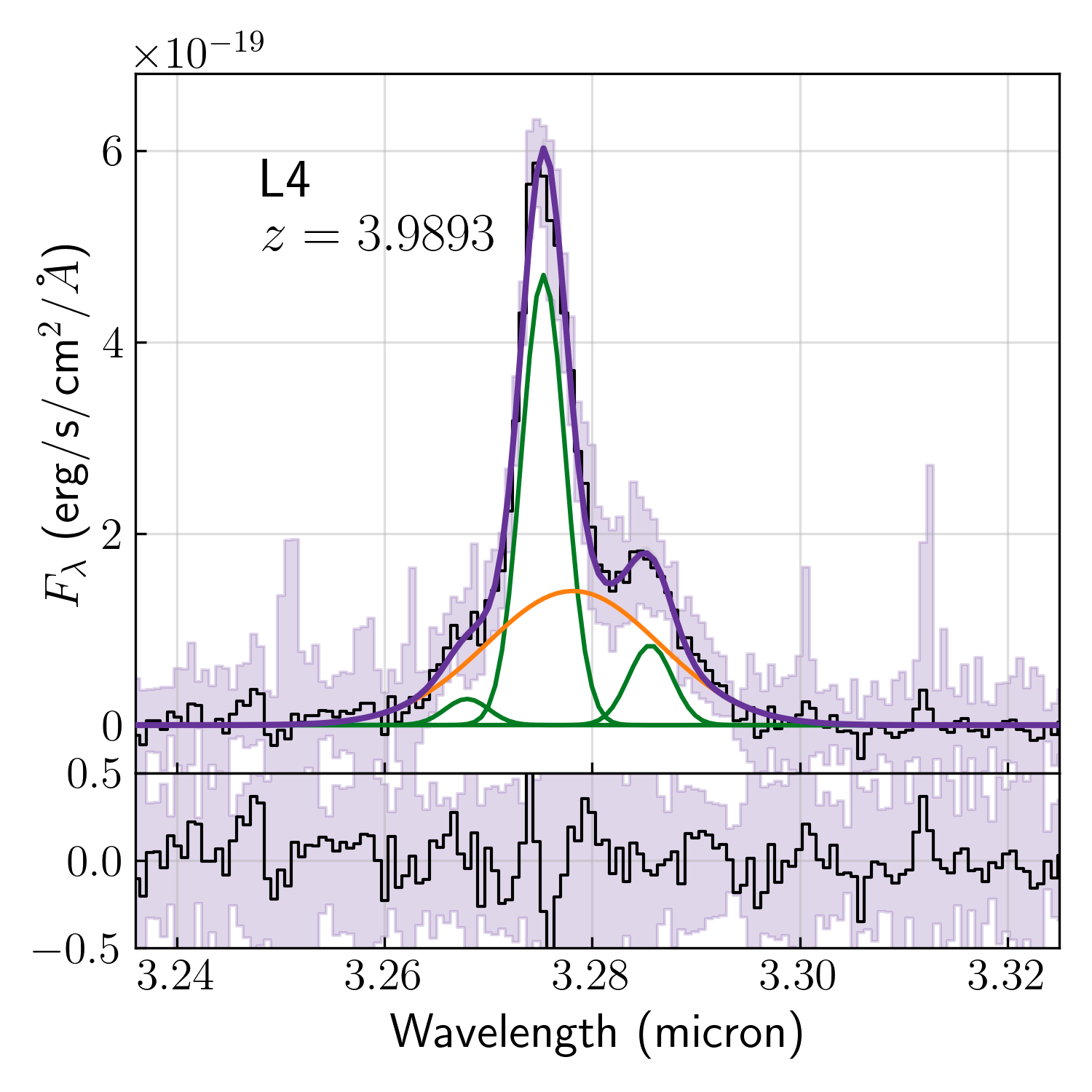
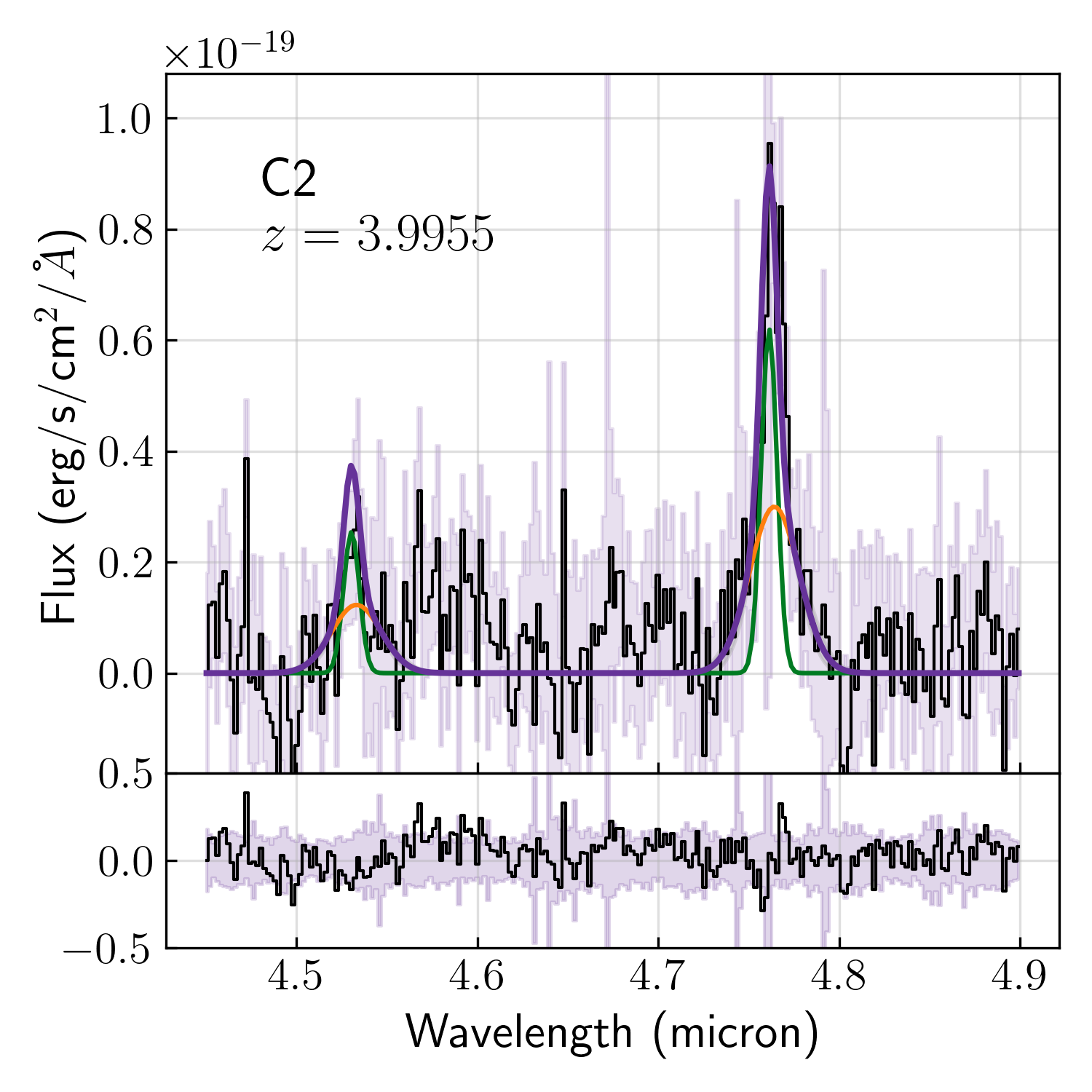
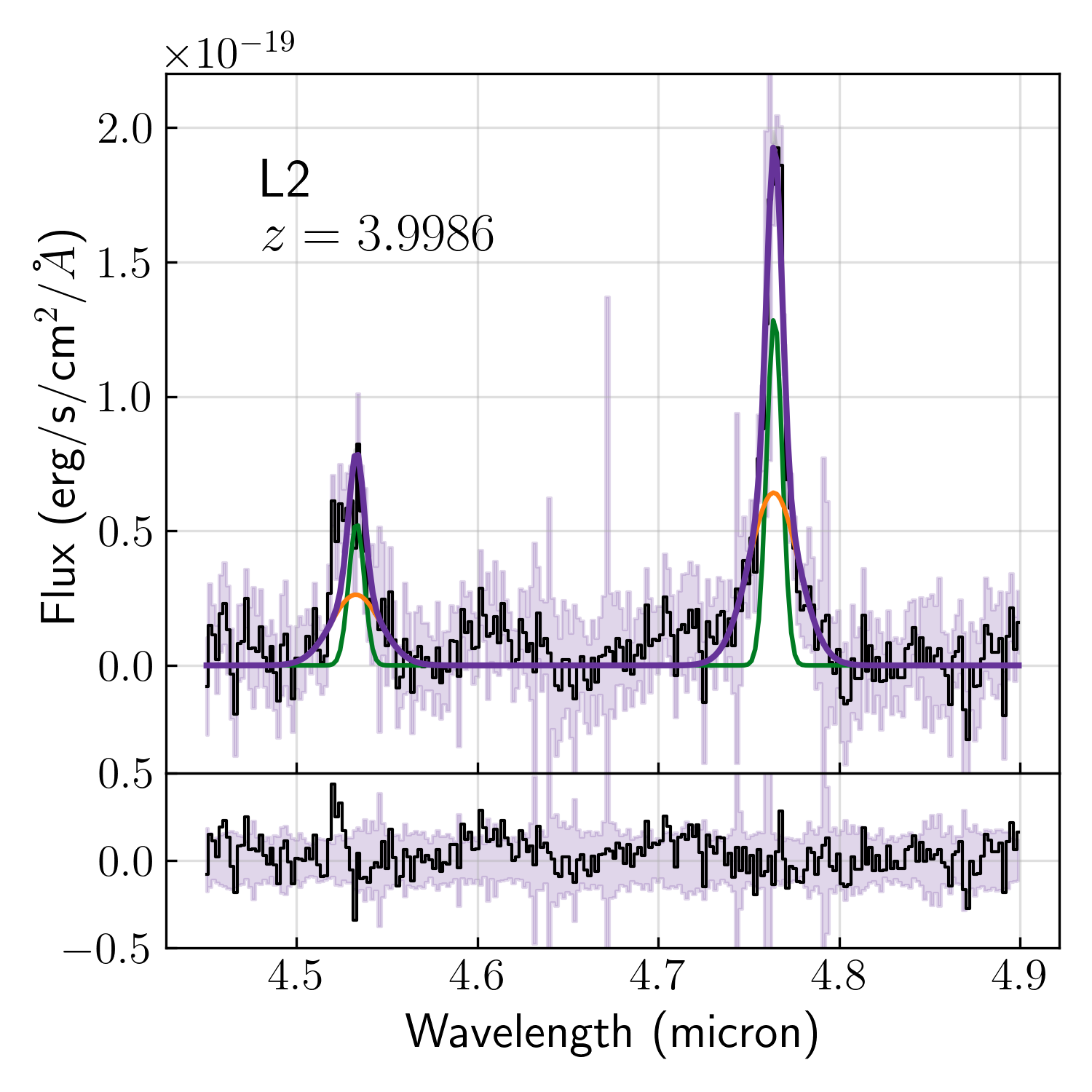
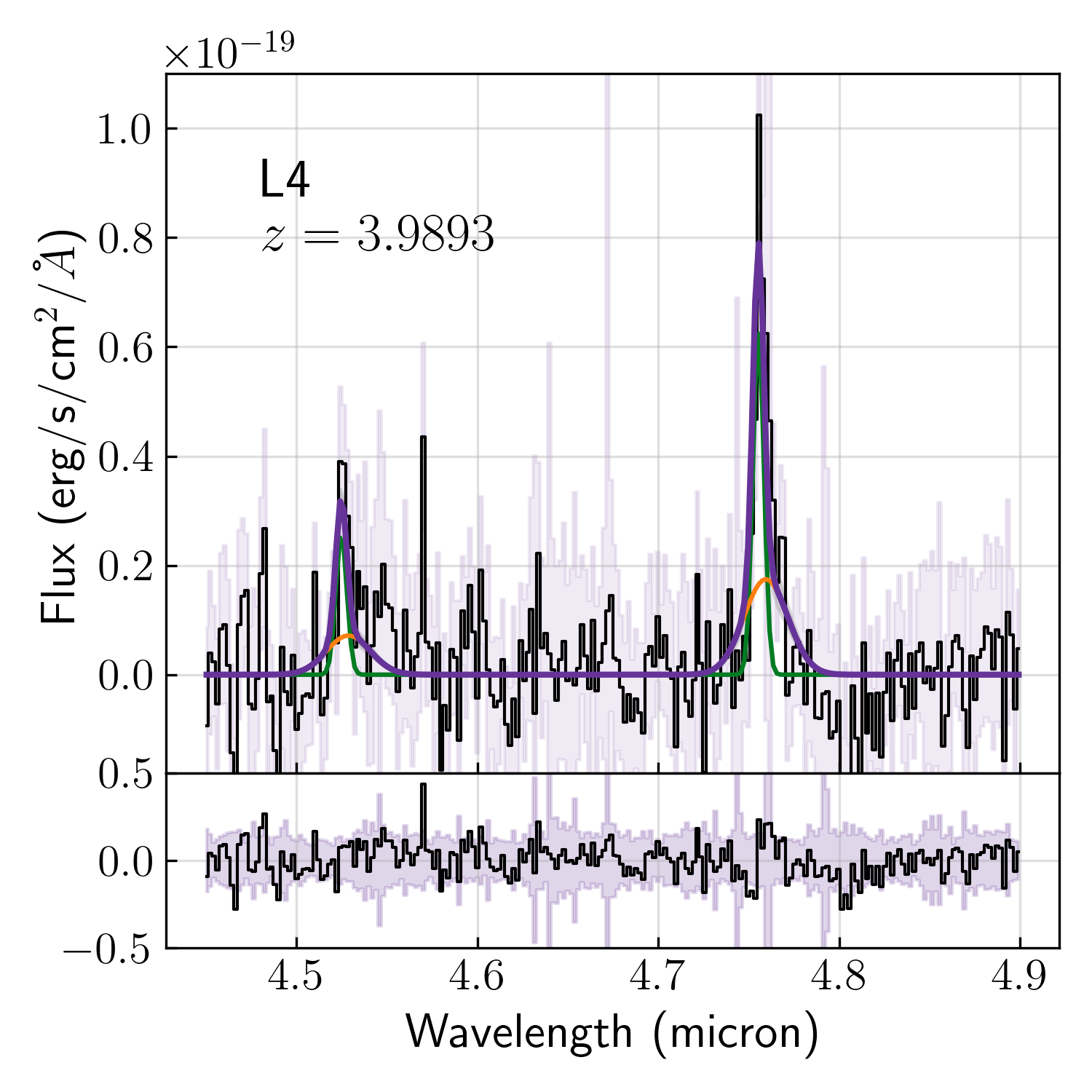
Paper Prompts
Sign up for free to create and run prompts on this paper using GPT-5.
Top Community Prompts
Explain it Like I'm 14
What this paper is about
This paper shows how the James Webb Space Telescope (JWST) caught a massive galaxy in the act of being built when the Universe was still very young (about 1.5 billion years old). The team studied a powerful “radio galaxy” called TGSS J1530+1049 at a distance we call redshift z ≈ 4. They discovered it isn’t a single calm galaxy—it’s a crowded, chaotic scene where several young galaxies and gas clouds are interacting, lit up by a central supermassive black hole. Over time, these pieces are expected to merge into one huge galaxy.
The big questions the researchers asked
- What exactly is happening around this young radio galaxy—are we seeing one object, or many smaller galaxies coming together?
- How is the central supermassive black hole (an active galactic nucleus, or AGN) affecting the gas nearby—for example, with jets and outflows?
- How much mass and star formation is in this system, and will these parts eventually combine into a giant galaxy?
- What does this teach us about how today’s biggest galaxies formed long ago?
How they studied it (in everyday language)
The team used multiple tools like a detective uses different clues:
- JWST’s NIRCam camera took very sharp pictures in infrared light. Think of this as seeing the “shape” of the stars and dust—where the galaxies’ starlight is strongest.
- JWST’s NIRSpec IFU (Integral Field Unit) took a “rainbow” at every tiny spot in the image. That rainbow (spectrum) shows bright lines from glowing gas—for example, the H-alpha line from hydrogen. From these lines, you can:
- Measure precise distances (redshift).
- See how fast gas is moving toward or away from us (like a traffic map using the Doppler effect).
- Estimate how dense and energized the gas is (using line ratios).
- High-resolution radio images from other telescopes showed two bright “hotspots” made by jets launched from the central black hole—like firehoses spraying out energy.
- They combined all this information to figure out where the black hole is, where stars are, where gas is, and how everything is moving.
Key idea: The IFU is like taking a mini-spectrum at every pixel, so you can make maps of gas brightness, speed, and turbulence across the scene.
What they found and why it matters
Here are the highlights:
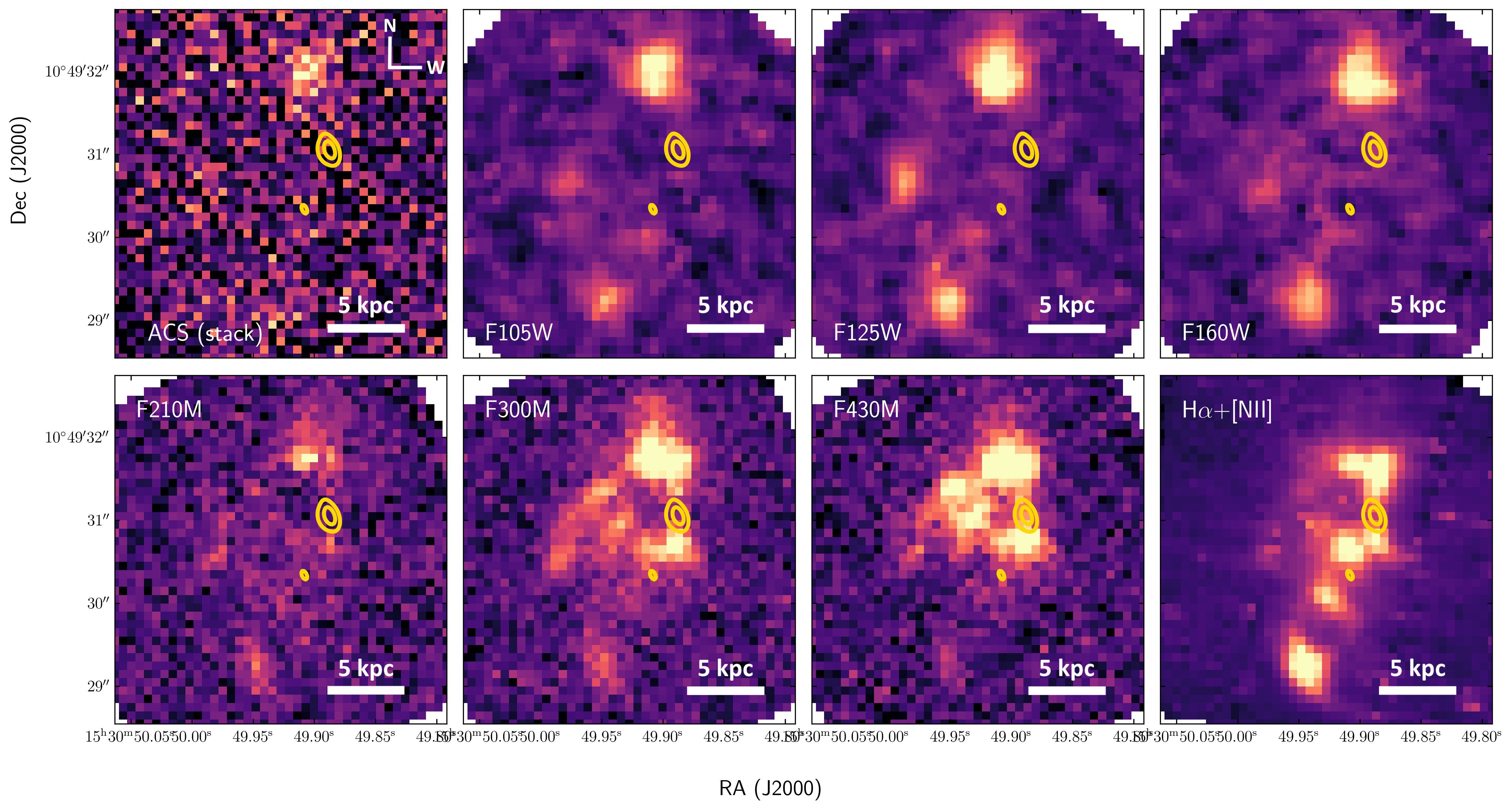
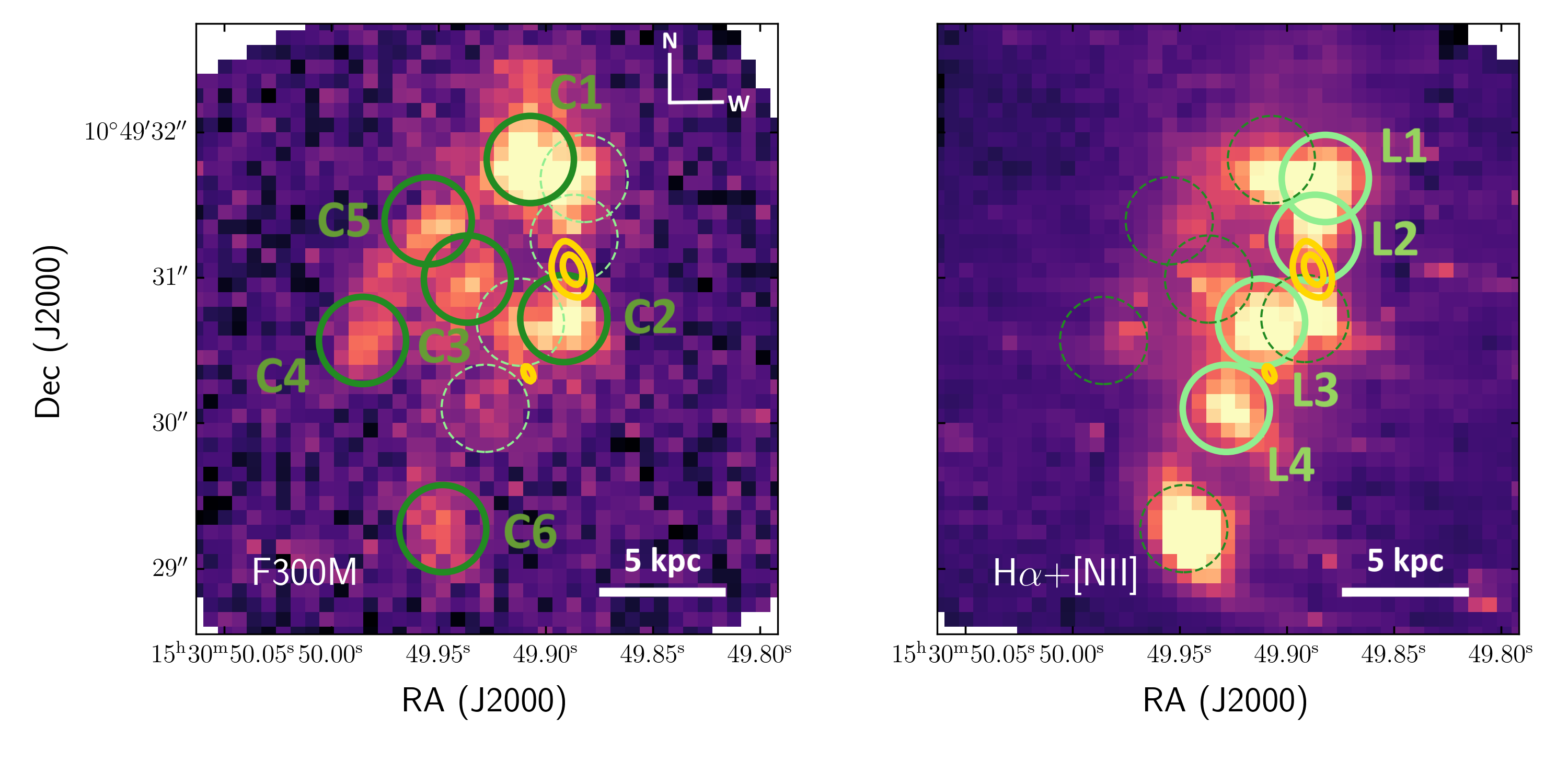
- It’s a crowd, not a loner: Within a small region only about 10 by 10 thousand light-years across (tiny on galaxy scales), they found at least six bright “continuum” sources (strong in starlight) and four extra clumps bright in gas emission. This is one of the densest structures known at this early time.
- The black hole’s “home” is identified: The radio hotspots line up on either side of one starlight source called C2, marking it as the galaxy hosting the active black hole.
- A striking straight line of glowing gas: Bright hydrogen gas (H-alpha) forms a nearly straight line that lines up with the radio axis—the path of the jets. This suggests the black hole is lighting up gas in narrow cones (like two flashlights pointing in opposite directions) and/or the jets are stirring and shocking the gas along that line.
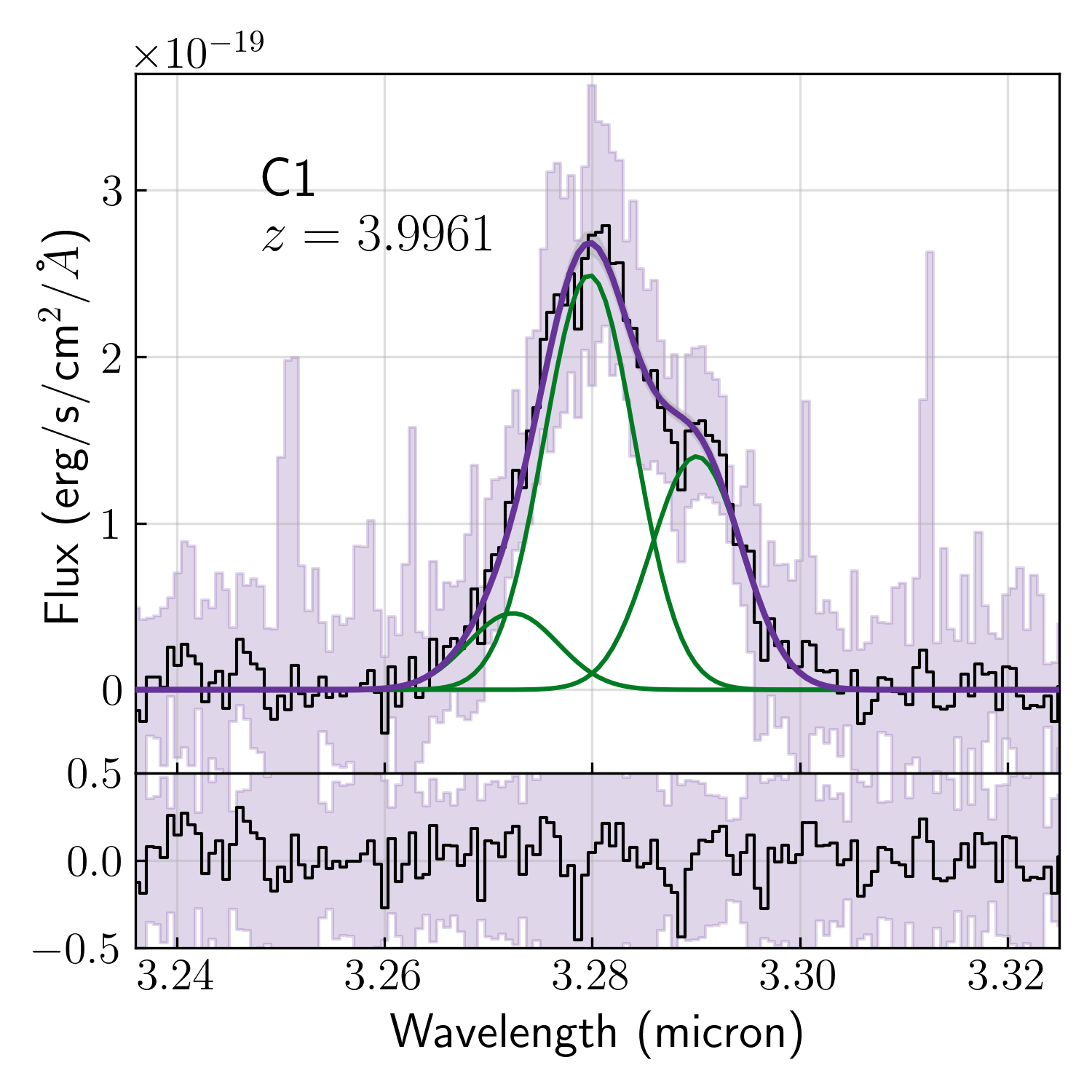
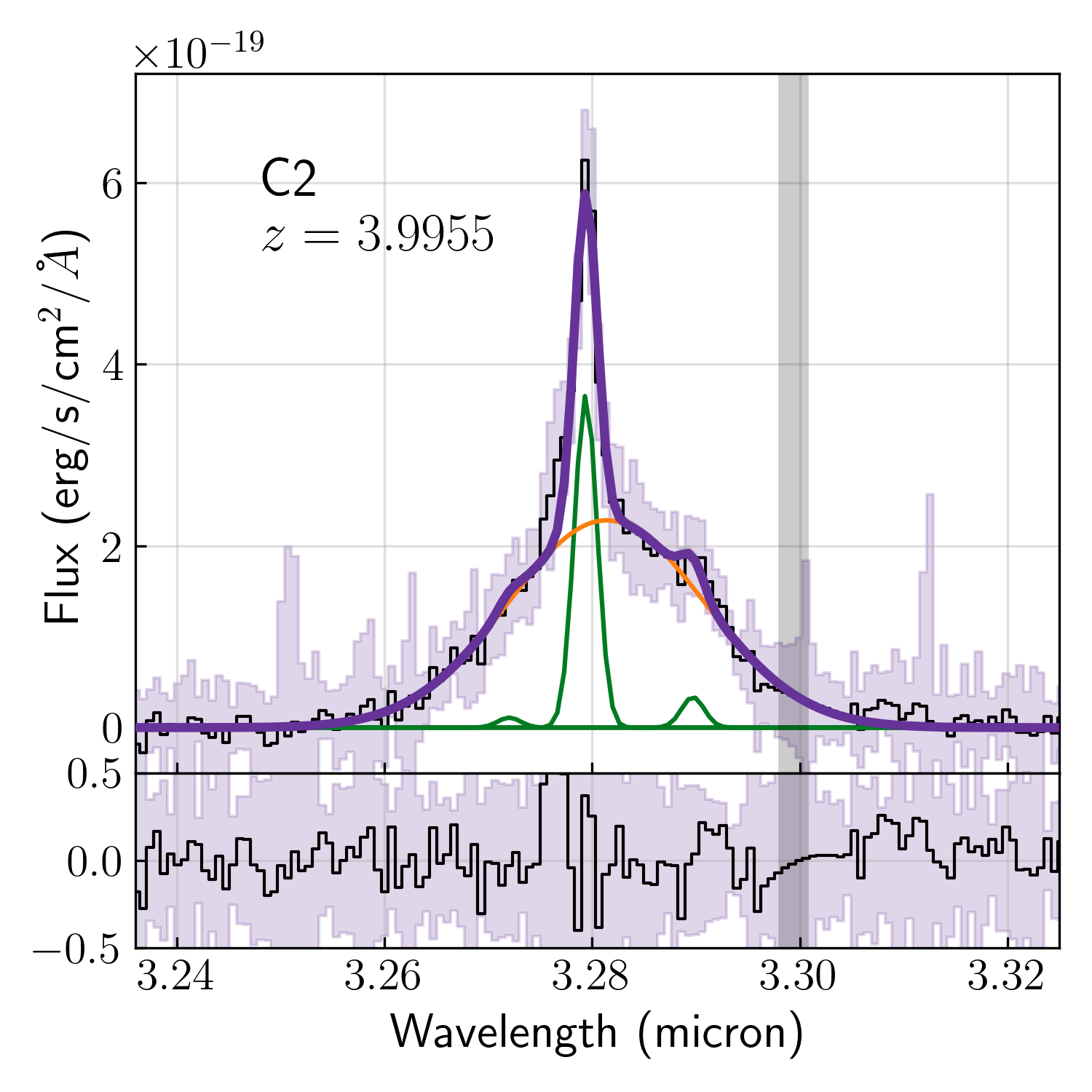
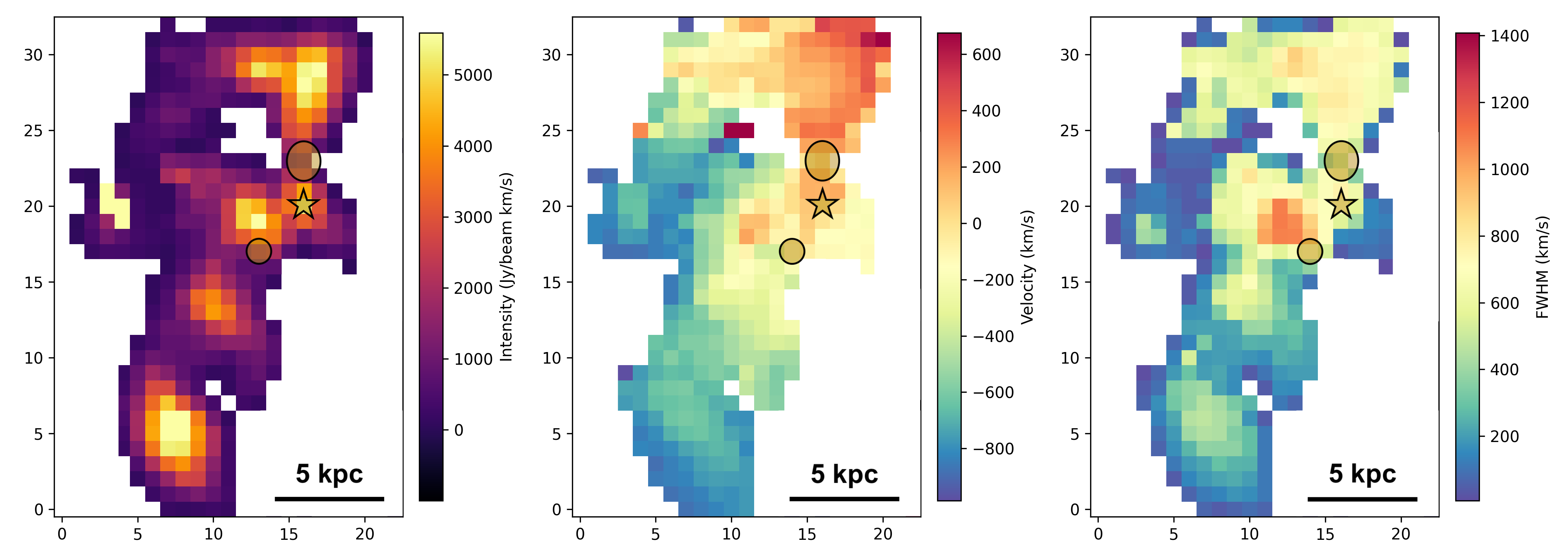
- Fast, stormy gas near the jets: Some places show very broad emission lines—evidence of gas moving at up to about 2,000 km/s. That’s like powerful winds or turbulence. It’s strongest where the southern jet appears to slam into a gas cloud, showing jet–gas interaction.
- Not just jets—mergers too: The gas speeds across the whole region show different groups moving at different velocities and a large-scale shift from red to blue across the field. That pattern looks like multiple galaxies orbiting and interacting, not a simple rotating disk. In short, both mergers and the black hole’s activity are shaping this system.
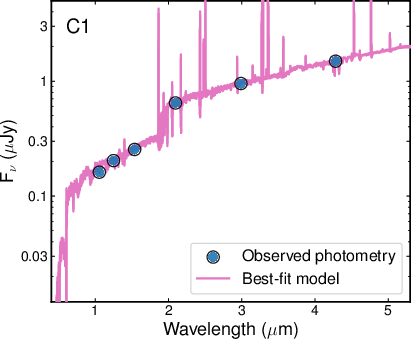
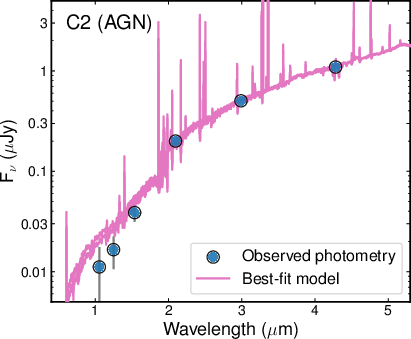
- Massive and busy: At least four galaxies in the core have large stellar masses (each more than about 2 × 10¹⁰ Suns) and are rapidly forming new stars (about 70–160 Suns per year). Together they likely live in a heavy dark matter “halo” of about 1013 Suns—think of it as a big invisible bubble of gravity holding the group together.
- A corrected distance: Earlier, a single faint line suggested a farther distance (z ≈ 5.7). JWST’s multiple clear lines show the true redshift is z ≈ 4.0. That’s solid because many lines all agree.
Why this is important:
- It’s a direct view of how a giant galaxy is built: by many smaller pieces crashing together while a central black hole lights up and stirs the gas.
- It supports theories and computer simulations that predict the biggest galaxies (like the brightest ones at cluster centers today) form early through rapid, repeated mergers in dense environments.
What this means for the bigger picture
- Galaxy growth: We’re seeing a “construction site” for a future monster galaxy. In a few billion years, these parts should merge into one of the largest galaxies in a cluster.
- Black hole feedback: The black hole’s jets and winds can push, heat, and light up gas. That feedback likely affects when and where new stars form.
- Cosmic environments: Finding such a dense knot of galaxies at z ≈ 4 shows JWST can uncover the crowded neighborhoods where massive galaxies and clusters start to take shape.
- Better tools, better answers: JWST’s ability to map stars and gas together—and to measure detailed gas motions—lets astronomers test how much of galaxy growth comes from mergers versus black hole activity.
In simple terms: This study is like watching a city being built from many neighborhoods joining together, while a powerful central “engine” both lights up and shakes the surroundings. JWST lets us watch that building process when the Universe itself was still a teenager.
Knowledge Gaps
Unresolved knowledge gaps, limitations, and open questions
Below is a consolidated list of what remains uncertain or unexplored in this study, framed to enable targeted follow-up work.
- Nature and drivers of the emission-line alignment:
- Disentangle the relative roles of biconical AGN illumination, jet-driven shocks, and tidal/merger-induced gas compression in producing the linear Hα morphology; requires full optical/near-IR diagnostic coverage (e.g., [O III]/Hβ, [O I]/Hα, [S II]/Hα), spatially resolved shock/photoionization modeling (e.g., MAPPINGS), and deeper, lower-surface-brightness radio maps to capture diffuse jets/lobes.
- Incomplete line diagnostics hamper ionization-source classification:
- Absence of Hβ and [O III]5007 coverage prevents use of standard BPT diagnostics to separate AGN, shocks, and star formation; NIRSpec G235H/G140H observations are needed to cover [O II]3726,3729, [Ne III]3869, Hβ, [O III]4363,5007 at z≈4.
- No Balmer decrement (Hα/Hβ) measurements, precluding extinction correction of line ratios and robust SFR estimates from recombination lines.
- Electron density and temperature constraints are limited:
- [S II]6716,6731 doublet is blended by large intrinsic widths, making ne estimates model-dependent; complementary density tracers ([O II]3726/3729, transauroral [S II]4068,4076, [Ar IV]4711,4740) are not observed.
- Electron temperature (Te) is assumed (104 K) owing to lack of [O III]4363; direct Te measurements are required for robust metallicity and ionization-parameter estimates.
- Broad-line origin and AGN characterization remain ambiguous:
- Detection of broad [S III] supports an outflow-dominated origin for broad Hα, but does not exclude a (possibly weaker) nuclear BLR in C2; high-S/N nuclear spectral decomposition (e.g., PSF-fitting with NIRSpec IFU, MIRI high-resolution spectroscopy, [Ne V]14.3/24.3 μm) and X-ray data are needed to confirm BLR presence and AGN bolometric power.
- Lack of mid-IR and X-ray constraints obscures the AGN’s obscuration level, accretion rate, and the possibility of multiple obscured AGN among the massive companions (e.g., C1, C6).
- Outflow energetics and feedback are not quantified:
- Mass outflow rates, momentum and kinetic power are not derived due to missing extinction, geometry, and ne constraints; multi-line, spatially resolved modeling (Hα, [N II], [S II], [O III], [S III]) with density maps is required to quantify feedback efficiency and compare to jet/AGN power.
- Gas content, phases, and kpc-scale dynamics are unknown:
- No measurements of cold/neutral gas reservoirs or CGM (e.g., ALMA [C II]158 μm, CO ladders, dust continuum; deep Lyα narrow-band/IFU mapping) to constrain gas mass, depletion times, and fueling.
- Lack of systemic redshift tracers (e.g., CO/[C II]) limits separation of rotation, inflow, and outflows; current moment maps may blend kinematic components and suffer from beam smearing.
- Radio properties and jet history are underconstrained:
- Existing high-resolution radio data may resolve out diffuse/aged plasma; need deeper, multi-frequency, matched-uv radio imaging (JVLA/MeerKAT/LOFAR/e-MERLIN) and spectral-aging analysis to constrain jet power, age, duty cycle, and jet–ISM coupling scale.
- Jet–ISM coupling is inferred qualitatively; quantitative shock modeling tied to observed line ratios/widths is lacking.
- Merger dynamics and fate of the system are not dynamically established:
- The inference that the system will merge into a massive galaxy is qualitative; N-body/hydrodynamic simulations tailored to observed masses, separations, and LOS velocities, plus systemic redshifts from cold gas, are needed to robustly estimate merging timescales and assembly history.
- The systemic velocity of the AGN host (C2) may be biased by outflowing gas; secure systemic redshifts from stellar absorption or cold gas are needed to anchor kinematic modeling.
- Stellar population and SED-modeling limitations:
- Sparse photometric coverage (F210M, F300M, F430M and HST WFC3) and lack of MIRI constraints leave strong age–dust–metallicity degeneracies; PSF homogenization and line-contamination corrections (e.g., Hγ/Hδ in F210M) are not fully quantified.
- Use of single-star population models (no binaries), assumed SFHs, and potential diffuse light contamination introduce systematic uncertainties in stellar masses, ages, and SFRs; broader filter coverage (including F356W/F444W/MIRI), rigorous PSF-matched photometry, and nebular continuum/emission modeling are required.
- Star formation rates inferred from Hα are unreliable where AGN/shocks dominate; independent SFR tracers (rest-FIR with ALMA/MIRI, radio continuum) are needed.
- Environmental context is only partially mapped:
- The claim of an exceptionally dense structure is based on a 3″×3″ IFU field; a wide-field spectroscopic census (NIRSpec MOS/IFU mosaics, VLT/MO, ALMA [C II] redshifts) is needed to quantify overdensity, 3D structure, and halo membership beyond the IFU footprint.
- The halo mass (~1013 M⊙) inferred from stellar mass–halo mass relations is highly uncertain in a non-virialized, merging system; dynamical mass estimates (satellite kinematics, clustering) are needed for validation.
- Diffuse ionized and stellar components are not quantified:
- Extended low-surface-brightness line and continuum emission is seen but not measured; deeper IFU and imaging data are needed to quantify the diffuse ionized gas mass, ionization conditions, and stellar tidal features.
- Kinematic analysis methodology constraints:
- Moment maps (intensity-weighted) can misrepresent multi-component kinematics; full spaxel-by-spaxel multi-component fitting with PSF-convolved 3D modeling (e.g., LZIFU, GalPak3D) is needed to separate rotation, outflows, and shocks.
- Ambiguity surrounding the earlier z≈5.72 Lyα detection:
- The origin of the previously reported Lyα line remains unresolved (spurious vs. background source); wide-field IFU/narrow-band searches are needed to identify any background emitter and reassess selection biases in ultra-steep-spectrum radio galaxy samples.
Practical Applications
Overview
This paper reports JWST/NIRCam imaging and NIRSpec/IFU spectroscopy of the high-redshift radio galaxy TGSS J1530+1049 at z≈4.0. It reveals a dense, interacting system of multiple massive galaxies and line-emitting clumps, with strong Hα emission aligned along the radio axis and kinematics consistent with AGN-driven outflows and jet–gas interactions. The authors integrate multi-instrument data (JWST, HST, EVN/e-MERLIN), develop a robust processing and astrometric registration workflow, perform detailed emission-line diagnostics, and conduct joint spectro-photometric SED fitting to infer stellar masses, star-formation rates, and halo mass (≈1013 M⊙). The system resembles a forming brightest cluster galaxy (BCG) in cosmological simulations.
Below are practical applications derived from these findings, methods, and innovations.
Immediate Applications
- Use high‑z radio galaxies (HzRGs) as beacons to identify protocluster environments
- Sector: Academia (astronomy), policy (observatory time allocation)
- Application: Prioritize HzRGs with ultra‑steep radio spectra and compact morphologies as targets to efficiently locate dense, merging systems likely to form BCGs.
- Tools/workflows: Cross‑match low‑frequency surveys (e.g., TGSS ADR1) with JWST/NIRCam medium‑band imaging.
- Dependencies/assumptions: Access to radio catalogs and JWST imaging; generalizability from single‑object case; careful redshift confirmation (avoid mis-ID as Lyα).
- JWST IFU cube processing enhancements for faint high‑z targets
- Sector: Software/infrastructure (astronomical data processing), academia
- Application: Adopt the paper’s pipeline steps (Stage 1–3, “Shepherd’s method” cube weighting,
lacosmicoutlier rejection) and custom 1/f noise subtraction to improve cube fidelity for low‑surface‑brightness emission. - Tools/workflows: JWST pipeline v1.9.6, CRDS pmap jwst_1084,
lacosmic. - Dependencies: Calibration updates may change behavior; requires expertise in JWST pipeline and quality control.
- Multi‑instrument astrometric registration workflow
- Sector: Software, academia
- Application: Align NIRSpec/IFU cubes to NIRCam images by convolving cubes with filter curves and minimizing residuals in normalized difference images; achieve ≈0.1″ alignment accuracy.
- Tools/workflows: Synthetic image generation via filter transmission, residual minimization; validation with VLBI astrometry (<10 mas).
- Dependencies: Accurate filter transmission curves; stable WCS solutions; sufficient S/N in continuum.
- Emission‑line diagnostics to distinguish BLR vs outflowing/turbulent gas
- Sector: Academia (galaxy/AGN physics), software (analysis tools)
- Application: Fit Hα+[N II] with narrow+ broad components; use [S III] to rule out BLR if broad forbidden components are present; map kinematics to locate jet–ISM coupling zones.
- Tools/workflows:
lmfitGaussian modeling; moment maps (intensity, velocity, FWHM). - Dependencies: Spectral resolution (R≈2700 sufficient for Hα+[N II], marginal for [S II]); robust continuum subtraction.
- Electron density and ionization mapping at z≈4
- Sector: Academia (ISM studies), software
- Application: Derive n_e from [S II] λ6716/λ6731 (via
pyneb) and use S32 ≡ [S III]/[S II] to gauge ionization hardness; identify shock/AGN‑dominated regions vs star formation. - Tools/workflows:
pyneb; blended‑line deconvolution for [S II]. - Dependencies: Assumed T_e≈104 K; unresolved [S II] doublet requires constrained deblending; errors propagate for low S/N.
- Joint spectro‑photometric SED fitting for clump‑scale mass/SFR estimates
- Sector: Academia (galaxy assembly), software
- Application: Use
BAGPIPESwith two‑component SFHs on combined JWST/HST photometry and IFU spectra to estimate M⋆, SFRs (70–163 M⊙/yr), and ages of subcomponents; identify “HST‑dark” dusty massive galaxies missed by UV selection. - Tools/workflows:
BAGPIPES, MILES library, τ‑models + bursts; aperture‑matched extractions and background estimation. - Dependencies: SFH model assumptions; stellar population models (single‑star, no binaries); consistent photometric zero‑points.
- Survey target selection strategy for intrinsically red high‑z galaxies
- Sector: Academia (survey design), software
- Application: Use NIRCam medium bands (F300M, F430M) to flag massive, dusty “HST‑dark” galaxies; combine with HzRG selection for merger‑rich environments.
- Tools/workflows: Color cuts in JWST medium bands; radio spectral index filters (α≈−1.4).
- Dependencies: Depth of JWST imaging; contamination by low‑z red galaxies mitigated by spectroscopic follow‑up.
- Radio follow‑up planning for jet–gas interaction studies
- Sector: Academia (radio astronomy), policy
- Application: Design EVN/e‑MERLIN/VLA programs to detect diffuse/lobe emission extending beyond hotspots to test the extent of jet‑driven ionization; adjust resolution to avoid resolving out extended flux.
- Tools/workflows: Multi‑array scheduling; matched‑beam imaging; spectral aging analyses.
- Dependencies: Telescope time; sensitivity limits; u‑v coverage appropriate for scales >5–30 kpc.
- Education and training resources leveraging 3D IFU cubes
- Sector: Education, outreach
- Application: Create lab modules on galaxy assembly and AGN feedback using this dataset (moment maps, SED fitting, line diagnostics); citizen science projects to identify alignment effects and mergers in JWST images.
- Tools/workflows: Public MAST datasets; Jupyter notebooks with
pyneb,lmfit,BAGPIPES. - Dependencies: Open access to data; simplified pipelines; instructor support.
Long‑Term Applications
- Calibration of AGN feedback and BCG assembly in cosmological simulations
- Sector: Academia (theory/simulation), software
- Application: Use observed outflow velocities (FWHM≈2000 km/s), electron densities, ionization parameters, and multi‑clump masses to tune subgrid AGN feedback and merger trees; benchmark forming‑BCG scenarios at z≈4 in simulations.
- Tools/workflows: Parameter optimization against hydrodynamic simulations (e.g., IllustrisTNG, EAGLE); synthetic IFU cube generation for forward modeling.
- Dependencies: Larger samples to reduce cosmic variance; consistent comparison frameworks; accurate halo mass inference (≈1013 M⊙ here).
- Automated ML systems for multi‑wavelength merger and alignment detection
- Sector: Software/AI, academia
- Application: Train models to identify radio–line alignment, broad/narrow line mixtures, and “HST‑dark” components across IFU cubes and NIRCam images; accelerate discovery of forming massive galaxies.
- Tools/workflows: 3D CNNs on spectral cubes; graph‑based cross‑instrument association; labeled training sets from JWST+radio.
- Dependencies: Sizable curated datasets; standardized metadata; careful treatment of selection biases.
- High‑z protocluster catalogs anchored on HzRGs
- Sector: Academia, policy
- Application: Build catalogs of dense environments around HzRGs, integrating JWST, HST, and radio data to inform strategic large‑program proposals and next‑gen survey designs (ELTs, SKA).
- Tools/workflows: Cross‑survey data integration; probabilistic halo mass estimation from stellar mass sums.
- Dependencies: Uniform processing across fields; telescope time allocation; community data standards.
- Instrumentation and survey design implications
- Sector: Instrumentation, policy
- Application: Advocate for spectrographs with slightly higher resolution in 0.6–1.0 μm rest‑frame (observer frame 2–4 μm at z≈4) to resolve [S II]; plan SKA–JWST synergy surveys targeting jet–ISM physics; consider medium‑band filters optimized for key lines at z≈4.
- Tools/workflows: Design studies; filter optimization; joint scheduling.
- Dependencies: Funding, technical feasibility, competing science priorities.
- Cross‑domain transfer of spectral cube processing methods
- Sector: Healthcare (medical imaging), remote sensing, software
- Application: Adapt spectral deblending, 1/f noise correction, and moment‑map analytics to hyperspectral medical imaging (e.g., pathology, retinal scans) and Earth observation.
- Tools/workflows: Cube building with “Shepherd’s method”; constrained multi‑Gaussian fitting; denoising routines (
lacosmic‑like outlier rejection analogs). - Dependencies: Domain‑specific validation; regulatory requirements; performance benchmarking vs incumbents.
- Integrated multi‑wavelength visualization and analysis platforms
- Sector: Software/infrastructure
- Application: Develop user‑friendly platforms that co‑register radio, IFU, and imaging data; offer emission‑line diagnostic calculators (n_e, S32), kinematics, and SED fitting in one environment.
- Tools/workflows: Web‑based GUIs; containerized pipelines; interoperability with MAST and radio archives.
- Dependencies: Sustained maintenance; data rights; UI/UX design.
- Strategic observing campaigns to trace cluster formation timelines
- Sector: Academia, policy
- Application: Longitudinal programs combining JWST, ELT-class IFUs, and SKA to track the assembly of massive galaxies and clusters from z≈4 to lower redshift, informed by this case study.
- Tools/workflows: Time‑domain coordination (multi‑facility); standardized analysis protocols.
- Dependencies: Multi‑year funding; international collaboration; scheduling constraints.
Assumptions and Dependencies (cross‑cutting)
- Scientific assumptions: Flat ΛCDM cosmology (Planck 2020), T_e≈104 K for
pyneb, interpretation of broad forbidden lines as outflows (not BLR), halo mass from stellar mass scaling. - Data/instrumental dependencies: JWST pipeline versioning and calibrations (CRDS maps), IFU spectral resolution (R≈2700), potential missing diffuse radio emission due to resolution/sensitivity, accurate astrometry.
- Generalizability: Single system; broader validation requires statistically significant samples.
- Resource constraints: Access to JWST/ELT/SKA time, high‑performance computing for simulations/ML, expert personnel for pipeline operations.
Glossary
- 1/f noise: Low-frequency noise that decreases in power as frequency increases, often present in detector electronics and requiring special subtraction. "we added a custom step in Stage 2 of the pipeline to characterize and subtract the $1/f$ noise from each frame."
- Active galactic nucleus (AGN): A compact, extremely luminous region at a galaxy’s center powered by accretion onto a supermassive black hole. "suggestive of a biconical illumination zone by a central obscured AGN."
- BAGPIPES: A software package for fitting galaxy spectral energy distributions to infer physical properties like mass and star formation history. "The publicly available fitting code BAGPIPES \citep{Carnall2018, Carnall2019} was used to perform spectro-photometric SED fitting for the continuum sources C1-C6."
- Balmer break: A discontinuity in a galaxy’s spectrum at 3646 Å caused by absorption in stellar atmospheres, useful for estimating ages. "NIRCam F300M and F430M images that probe the spectrum well beyond the Balmer break show a complex region of prominent clumps and diffuse emission within 1\arcsec\ of the C1 component (C2-C5)."
- biconical illumination zone: A pair of cone-shaped regions illuminated by anisotropic radiation from an obscured AGN. "The bright H emission (but not the optical components) is distributed remarkably linearly along the radio axis, suggestive of a biconical illumination zone by a central obscured AGN."
- broad-line region (BLR): Dense, rapidly moving gas close to the black hole that produces Doppler-broadened emission lines. "Allowing for a broadened H component enables us to investigate whether there is evidence for (1) a broad-line region (BLR; traced by broad H but absence of broad [N II])"
- collisional de-excitation: Suppression of an emission line when collisions in dense gas depopulate excited states before photons are emitted. "which means that for densities \,cm, the [S III] doublet will be suppressed by collisional de-excitation."
- critical density: The electron density at which collisional de-excitation balances radiative decay for a given transition. "The critical density of the [S III] lines is \,cm"
- drizzling algorithm: An image resampling technique that combines dithered exposures to improve resolution and sampling. "The final mosaic images were resampled to smaller pixel scales ... using the drizzling algorithm in Stage 3."
- electron density: Number of free electrons per unit volume in ionized gas, often derived from density-sensitive line ratios. "To calculate the electron density from the [S II] doublet ratio, we employ pyneb \citep{pyneb} fixing the gas temperature to \,K."
- enhanced Multi-Element Remotely Linked Interferometer Network (e-MERLIN): A UK radio interferometer providing intermediate angular resolution between connected arrays and VLBI. "and at 100 mas-scale resolution with the enhanced Multi-Element Remotely Linked Interferometer Network (e-MERLIN), are presented \citep{gabanyi25}."
- European VLBI Network (EVN): A global network of radio telescopes performing very long baseline interferometry for milliarcsecond resolution imaging. "In a companion paper, new radio observations at milliarcsecond (mas) scale angular resolution with the European VLBI Network (EVN)... are presented \citep{gabanyi25}."
- FWHM (full width at half maximum): A measure of spectral line or image feature width defined at half of its maximum intensity. "The broad component has a width of about 2000 km s (FWHM), implying a strong galaxy-scale outflow driven by the AGN."
- HST-dark: Sources not detected (or very faint) in Hubble Space Telescope bands but visible at longer wavelengths. "most of the components are `HST-dark', i.e., they are faint at rest-frame UV and bright at redder wavelengths."
- IFU (Integral Field Unit): A spectroscopic instrument mode that records a spectrum at every spatial element across a 2D field, producing a data cube. "TGSSJ1530 was observed with the JWST/NIRspec in IFU mode on July 14-15 (UT), 2023"
- ionization cone: A conical region of ionized gas illuminated by anisotropic radiation, commonly associated with obscured AGN. "whereas in the case of a classical ionization cone, one would expect a radial fall-off in the line fluxes with distance from the AGN nucleus."
- jet-gas interactions: Physical processes where radio jets impact and accelerate or heat interstellar or circumgalactic gas. "Due to jet-gas interactions, the morphology, kinematics and ionization properties of the emission line gas are often peculiar"
- JWST/NIRCam: The Near Infrared Camera on JWST, providing high-resolution imaging across near-IR wavelengths. "NIRCam images show a number of distinct continuum objects and evidence of interactions traced by diffuse emission"
- JWST/NIRSpec: The Near Infrared Spectrograph on JWST, enabling spectroscopy from 0.6–5.3 µm, including IFU mode. "In this article, we present JWST/NIRSpec IFU observations of the HzRG TGSS J1530+1049"
- K-band: Near-infrared photometric band centered near 2.2 µm, used to trace older or dust-embedded stellar populations. "Follow-up deep near infrared imaging revealed a faint -band detection consistent with the position of the radio source"
- kiloparsec (kpc): An astronomical distance unit equal to 1,000 parsecs (~3,260 light-years). "The diameter of the maps correspond to a projected physical size of about 21 kpc at ."
- ΛCDM cosmology: The standard cosmological model with a cosmological constant (Λ) and cold dark matter (CDM). "Throughout this paper we assume a flat CDM cosmology as determined by the \citet[] [ km s Mpc, ]{planck20}"
- Mikulski Archive for Space Telescopes (MAST) Portal: NASA’s archive for HST, JWST, and other mission data. "The Stage 1 products downloaded from the Mikulski Archive for Space Telescopes (MAST) Portal"
- milliarcsecond (mas): An angular measurement equal to one-thousandth of an arcsecond, enabling extremely high-resolution imaging. "new radio observations at milliarcsecond (mas) scale angular resolution with the European VLBI Network (EVN)"
- Moment 1: The intensity-weighted mean velocity map derived from spectral cubes, indicating kinematic structure. "Intensity (left), intensity-weighted velocity or Moment 1 (middle), and FWHM (right) maps centered around the H+[N II] emission"
- narrow line region (NLR): Lower-density, extended gas around an AGN producing narrow emission lines; can show broader components due to outflows. "(2) out-flowing or turbulent gas in the narrow line region (NLR; traced by broad emission of both H and other forbidden lines)."
- nebular gas: Ionized gas in and around galaxies producing emission lines; often associated with star formation or AGN. "HzRGs tend to offer a clear view of their host galaxy including dust, nebular gas, and stellar populations"
- nodding (in-scene): A JWST observing technique that alternates the target’s position within the field to enable local background subtraction. "Nodding in-scene was performed to maximize the on-source exposure time and determine the background locally and in real-time."
- pathloss correction: A calibration step accounting for throughput losses due to the instrument’s optical path geometry. "flat-fielding, pathloss correction, distortion correction and photometric calibration."
- photometric calibration: Processing to convert measured counts to physically meaningful flux units. "flat-fielding, pathloss correction, distortion correction and photometric calibration."
- protoclusters: Overdense regions in the early universe that are the precursors of present-day galaxy clusters. "They have also been shown to probe relatively dense galactic environments, including protoclusters"
- pyneb: A Python package for computing physical conditions in ionized nebulae from emission line ratios. "To calculate the electron density from the [S II] doublet ratio, we employ pyneb \citep{pyneb}"
- S32 (ionization proxy): The [S III]/[S II] flux ratio used as a proxy for the ionization parameter or hardness of the radiation field. "Therefore, [S III]/S II ratio gives an indication about the `hardness' of the main ionizing source."
- SED (spectral energy distribution): A plot or dataset of a source’s energy output across wavelengths, used to infer physical properties. "The variation in brightness over the larger wavelength range shows that the SEDs of the individual sources in this complex system vary substantially."
- Shephard's method: A weighting option for resampling in cube building that interpolates values based on inverse distance. "Stage 3 processing was then performed, which included the 3D data cube building step, where we used the “Shephard’s method” weighting option in the pipeline."
- supermassive black hole (SMBH): A black hole with mass millions to billions of times the Sun’s, typically residing in galaxy centers. "Their radio emission is associated with large jets of relativistic plasma that are driven by activity of a central supermassive black hole \citep[SMBH;] []{rees84,blandford19}."
- synchrotron: Nonthermal radiation emitted by charged particles spiraling in magnetic fields, common in radio jets. "High-redshift () radio galaxies (HzRGs) are the host galaxies of powerful radio synchrotron sources in the early Universe"
- ultra-steep radio spectral index: A very negative radio spectral slope (α), often used to select high-redshift radio sources. "was selected as a candidate high redshift object ... on the basis of its ultra-steep radio spectral index"
- Very Long Baseline Interferometry (VLBI): A radio technique combining widely separated antennas to achieve milliarcsecond resolution. "In all panels, the radio VLBI contours at 1.4\,GHz from \citet{gabanyi25} are shown."
- world coordinate system (WCS): A metadata framework mapping image pixels to celestial coordinates. "the processing steps included world coordinate system (WCS) correction, background subtraction ... flat-fielding, pathloss correction, distortion correction and photometric calibration."
Collections
Sign up for free to add this paper to one or more collections.